10 Easy Cottage Garden Flowers That Bloom All Summer (Beginner’s Complete Guide)
A cottage garden is one of the most romantic, colourful and rewarding styles of gardening you can create. Overflowing with blooms, buzzing with bees and bursting with charm — it looks effortless, but the secret is simply choosing the right flowers.
These 10 easy cottage garden flowers are all beginner-friendly, long-blooming and absolutely stunning planted together. Each one comes with full growing details so you know exactly what soil to use, how to grow it, how long until it blooms, and where to position it in your garden layout.
1. Lavender (Lavandula angustifolia)

Lavender is the ultimate cottage garden flower — fragrant, drought-tolerant, loved by pollinators and breathtakingly beautiful in full bloom. Its soft purple spikes pair perfectly with roses, foxgloves and geraniums for that classic English cottage look.
How to Grow Lavender
Lavender is easy once you understand one golden rule: it hates wet feet. Plant in the sunniest spot in your garden and never let it sit in waterlogged soil.
- Start seeds: 8–10 weeks indoors before last frost, or direct sow in spring
- Germination: 14–21 days
- Spacing: 30–45 cm (12–18 inches) apart
- Care: Prune lightly after first bloom to encourage reblooming. Do not cut into old woody stems.
Soil Needed
Well-drained, sandy or chalky soil. pH 6.5–7.5. If your soil is heavy clay, add plenty of horticultural grit before planting. Lavender actually prefers poor soil — do not add rich compost or fertilizer as this produces lush leaves at the expense of flowers.
Cultivation Duration
- Time to first bloom from seed: 12–16 weeks
- Plant type: Hardy perennial
- Lifespan: Blooms reliably for 10–15 years once established
Bloom Season
June – September (one of the longest blooming cottage flowers)
Best Garden Layout Position
🌿 Front border or path edging. Plant lavender in rows or soft drifts along the front of beds. It stays compact and neat, making it ideal for edging. For a Pinterest-perfect look, plant in sweeping curves in front of roses.
Varieties to try: Hidcote (deep purple, compact), Munstead (pale purple, very hardy), Vera (tall, fragrant)
💡 Beginner Tip: Do NOT over-water. Root rot is the number one killer of lavender. When in doubt, leave it alone.
2. Foxglove (Digitalis purpurea)

Foxgloves are the dramatic tall spires that give a cottage garden its iconic vertical structure. Their spotted tubular flowers in shades of pink, purple and white are irresistible to bumblebees and create the most beautiful backdrops in the garden.
How to Grow Foxglove
Foxglove seeds are tiny and need light to germinate — do not cover them with soil.
- Sow seeds: Scatter on the surface of moist compost in spring or early summer
- Germination: 14–21 days (do not bury seeds — they need light)
- Spacing: 45 cm (18 inches) apart
- Care: Water regularly in dry spells. Stake tall varieties in exposed gardens.
Soil Needed
Moist, humus-rich, well-drained soil. pH 5.5–6.5. Dig in a good amount of garden compost before planting to enrich the soil. Foxgloves prefer slightly acidic conditions and thrive in dappled shade under trees or along shaded fences.
Cultivation Duration
- Time to first bloom: Plants sown in spring bloom the following year (year 2)
- Plant type: Biennial (blooms in its second year) or short-lived perennial
- Self-seeds: Prolifically — allow seed pods to dry on the plant for a constant free supply of new plants
Bloom Season
June – August (second-year plants)
Best Garden Layout Position
🌿 Mid to back border. Use foxgloves as tall vertical accents behind lower-growing plants. They look spectacular planted in small groups of 3–5 behind lavender, peonies or geraniums.
Varieties to try: Camelot Cream, Pam’s Choice (white with burgundy spots), Sutton’s Apricot
💡 Beginner Tip: Foxglove self-seeds prolifically. Let a few pods dry on the plant at the end of summer and you will have free plants appearing all over the garden next spring.
3. Echinacea / Coneflower (Echinacea purpurea)

Echinacea is the workhorse of the cottage garden — tough, drought-tolerant, long-blooming and loved by every bee and butterfly in the neighbourhood. Its daisy-like flowers with prominent spiky centres look stunning from midsummer right into autumn.
How to Grow Echinacea
Echinacea germinates best after a period of cold, mimicking its natural winter conditions.
- Start seeds: Cold stratify in fridge for 4 weeks, then sow indoors 8 weeks before last frost
- Or: Direct sow outdoors in autumn to stratify naturally over winter
- Germination: 10–21 days after stratification
- Spacing: 45–60 cm (18–24 inches) apart
- Care: Very low maintenance once established. Deadhead to encourage more blooms.
Soil Needed
Average to poor, well-drained soil. pH 6.0–7.0. Echinacea tolerates clay soils better than most cottage flowers. It does not need rich or heavily amended soil — too much fertility produces weak, floppy stems. A light top dressing of compost in spring is all it needs.
Cultivation Duration
- Time to first bloom from seed: 12–15 weeks (after stratification)
- Plant type: Hardy perennial
- Lifespan: Long-lived — plants expand into larger clumps each year and can be divided every 3–4 years
Bloom Season
July – October (one of the best late-season cottage flowers)
Best Garden Layout Position
🌿 Mid border. Plant in bold clusters of 3–5 plants for maximum visual impact. Combine with rudbeckia for a stunning late-summer pairing in complementary colours. Works beautifully in both formal cottage layouts and informal wildflower-style planting.
Varieties to try: Magnus (large rose-pink flowers), White Swan (pure white), Cheyenne Spirit (mixed warm tones)
💡 Beginner Tip: Leave the seedheads standing through autumn and winter — birds absolutely love eating the seeds, and the architectural dried heads look beautiful with frost on them.
4. Sweet William (Dianthus barbatus)

Sweet William is one of the most charming and old-fashioned cottage garden flowers with its tightly packed clusters of bicoloured blooms in rich reds, pinks and whites. It has a warm, clove-like fragrance that is absolutely intoxicating on summer evenings.
How to Grow Sweet William
Sweet William is a biennial, meaning it puts on leafy growth in its first year and produces flowers in its second.
- Sow seeds: Outdoors in late spring to early summer for flowers the following year
- Or: Start indoors 8–10 weeks before last frost for earlier blooms
- Germination: 7–14 days
- Spacing: 20–30 cm (8–12 inches) apart
- Care: Water at the base — avoid wetting foliage to prevent fungal issues. Deadhead regularly.
Soil Needed
Fertile, well-drained, neutral to slightly alkaline soil. pH 6.0–7.5. If your soil is too acidic, add a small amount of garden lime before planting. Sweet William dislikes waterlogged conditions — good drainage is essential.
Cultivation Duration
- Time to first bloom: Year 2 from seed (biennial)
- Plant type: Biennial or short-lived perennial
- Tip: Sow a new batch every year to ensure continuous blooms season after season
Bloom Season
May – July (wonderful for late spring and early summer colour)
Best Garden Layout Position
🌿 Front to mid border or path edging. Sweet William’s compact habit makes it ideal for the front of beds. Pair with forget-me-nots and tulips in spring for a classic layered cottage display. Plant in small groups for maximum impact rather than lone single plants.
Varieties to try: Auricula-Eyed Mixed (stunning bicoloured), Heart Attack (deep velvety red), Sweet Black Cherry
💡 Beginner Tip: Deadhead spent flower clusters regularly to extend the blooming season well into late summer.
5. Hardy Geranium / Cranesbill (Geranium)

Hardy geraniums (cranesbills) are the perfect cottage garden ground cover — reliable, long-flowering, and completely unfussy. They fill gaps beautifully, suppress weeds and produce a constant flush of delicate saucer-shaped flowers from late spring right through summer.
How to Grow Hardy Geranium
Hardy geraniums are among the easiest cottage garden plants to establish from seed or division.
- Start seeds: 12–16 weeks before last frost indoors
- Germination: 7–21 days (can be erratic — patience required)
- Or: Divide existing plants in spring — much faster and more reliable
- Spacing: 30–45 cm (12–18 inches) apart
- Care: Cut back hard after the first flush of flowers — this triggers a second flush within weeks
Soil Needed
Moist but well-drained, moderately fertile soil. pH 5.8–6.5. Hardy geraniums are incredibly adaptable and will grow in almost any garden soil that is not waterlogged. They thrive in partial shade — ideal for tricky spots under trees or shrubs.
Cultivation Duration
- Time to first bloom from seed: 16–20 weeks
- Plant type: Hardy perennial
- Lifespan: Very long-lived — some varieties grow reliably for 20+ years
Bloom Season
May – October (especially long-blooming with deadheading)
Best Garden Layout Position
🌿 Front border or ground cover under roses and shrubs. Hardy geraniums are the ideal filler plant — they spread naturally to cover bare soil, suppress weeds and create that relaxed, romantic spillover effect that defines the cottage garden style. Plant at the feet of roses for a classic combination.
Varieties to try: Rozanne (blue-violet, extremely long flowering), Johnson’s Blue, Wargrave Pink
💡 Beginner Tip: After the first bloom, shear the whole plant back to the ground. It will regrow and rebloom within 3–4 weeks — like magic.
6. Hollyhock (Alcea rosea)

Hollyhocks are the towering icons of the cottage garden — tall, stately spires of ruffled blooms in every colour from palest cream to deep velvety burgundy. They look absolutely spectacular grown against stone walls, wooden fences or picket gates and are arguably the most Pinterest-worthy cottage garden plant of all.
How to Grow Hollyhock
Hollyhocks are easy to grow from seed and very forgiving for beginners.
- Sow seeds: Direct outdoors in spring or early summer (or indoors 6–8 weeks before last frost)
- Germination: 10–14 days
- Spacing: 45–60 cm (18–24 inches) apart
- Care: Stake tall varieties to prevent wind damage. Water deeply but infrequently.
Soil Needed
Rich, well-drained soil. pH 6.0–8.0. Dig in aged compost before planting. Hollyhocks are surprisingly tolerant of poor soil but produce the most spectacular blooms in rich, well-prepared ground. They do particularly well against south-facing walls where the soil warms up quickly.
Cultivation Duration
- Time to first bloom: Year 2 from seed (biennial) but some varieties bloom in year 1
- Plant type: Biennial or short-lived perennial — self-seeds freely to maintain a permanent colony
- Lifespan: Individual plants live 2–3 years but self-seeding keeps them going indefinitely
Bloom Season
June – August
Best Garden Layout Position
🌿 Back border against walls, fences or structures. Hollyhocks are at their absolute best planted against a backdrop — a stone wall, wooden fence or cottage wall. They create the ultimate cottage garden backdrop and photograph beautifully. Plant a mix of colours in a loose group for maximum drama.
Varieties to try: Chater’s Double (fully ruffled pompom flowers), Nigra (near-black), Halo Blush (pale pink with dark eye)
💡 Beginner Tip: Watch for rust fungus — orange powdery spots on leaves. Remove affected leaves promptly and always water at the base rather than overhead.
7. Calendula / Pot Marigold (Calendula officinalis)
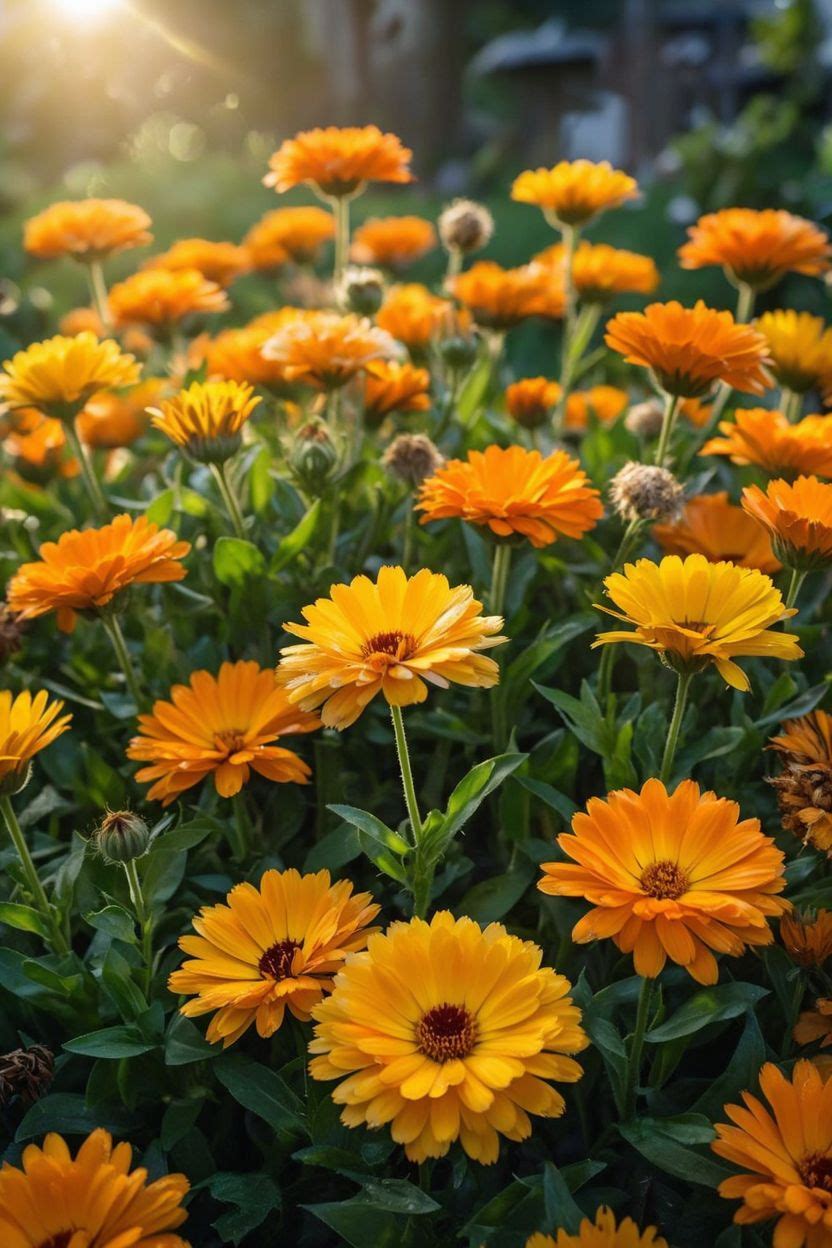
Calendula is the easiest and most cheerful flower you can grow — bright, bold, impossibly long-blooming and so simple that even complete beginners can have great success. In a cottage garden, it adds warm golden tones that contrast beautifully with softer pinks and purples.
How to Grow Calendula
Calendula is one of the best direct-sow flowers and genuinely one of the simplest plants to grow from seed.
- Sow seeds: Direct outdoors after last frost, or 4–6 weeks before last frost for earlier blooms
- Germination: 5–14 days (one of the fastest-germinating cottage garden flowers)
- Spacing: 30 cm (12 inches) apart
- Care: Deadhead constantly — the more you pick, the more it blooms. This is not optional!
Soil Needed
Average to poor, well-drained soil. pH 5.5–7.0. Calendula does not need rich soil — in fact too much fertility produces lush leaves but far fewer flowers. It grows beautifully in ordinary garden soil with no amendments needed. An ideal flower for low-maintenance gardeners.
Cultivation Duration
- Time to first bloom from seed: 8–12 weeks — one of the fastest bloomers on this list
- Plant type: Annual — but self-seeds so reliably it effectively returns every year
- Bloom length: From early summer until the first hard frosts of autumn
Bloom Season
April – October — the longest blooming window of any flower on this list
Best Garden Layout Position
🌿 Front border, containers or gap filler. Calendula is perfect for filling spaces between larger plants while they establish. Mass plant for a bold warm-toned impact. Also excellent in pots and containers near the front door. Works beautifully between blue and purple flowers as a colour contrast.
Varieties to try: Indian Prince (deep orange with mahogany reverse), Citrus Twist (lemon yellow), Touch of Red (orange with red-tipped petals)
💡 Beginner Tip: The secret to non-stop blooms is constant deadheading. Pick every faded flower every few days and the plant will reward you with months of colour.
8. Delphinium (Delphinium elatum)

Delphiniums are the jewels of the cottage garden — tall, magnificent spires in the most extraordinary shades of blue that no other garden flower can match. They are slightly more demanding than the other plants on this list but the results are so spectacular they are absolutely worth it.
How to Grow Delphinium
Delphiniums need a little extra care but are very achievable for motivated beginners.
- Start seeds: Chill in fridge for 1 week before sowing, then start indoors 8 weeks before last frost
- Germination: 14–21 days (keep cool at 55–65°F for best results)
- Spacing: 60–90 cm (24–36 inches) apart
- Care: Always stake — delphiniums will blow over without support. Cut spent spikes to the base for a second flush in late summer.
Soil Needed
Rich, fertile, well-drained soil. pH 6.5–7.5. Delphiniums are hungry plants that need well-prepared, nutrient-rich soil to perform their best. Dig in generous amounts of compost before planting and feed with a balanced fertilizer in spring. They do not tolerate waterlogged soil — good drainage is critical.
Cultivation Duration
- Time to first bloom from seed: 16–20 weeks
- Plant type: Hardy perennial — returns reliably each year
- Bloom flushes: Two flushes per year with correct deadheading (June–July, then September)
Bloom Season
June – July (first flush), September (second flush after cutting back)
Best Garden Layout Position
🌿 Back border as a dramatic focal point. Delphiniums must go at the back of the border where their tall spires create a stunning vertical backdrop. Plant in groups of 3 for maximum impact. They look extraordinary behind roses, peonies and foxgloves in a layered cottage border.
Varieties to try: Black Knight (deep violet-purple), Guardian Blue (mid blue), New Millennium Series (very robust for beginners)
💡 Beginner Tip: After the first flowering spike finishes, cut it all the way down to ground level. Feed with liquid fertilizer and you will get a second flush of blooms in September.
9. Cosmos (Cosmos bipinnatus)

Cosmos is the most carefree and romantic flower you can grow in a cottage garden. Its feathery, fern-like foliage and delicate saucer-shaped flowers create a beautiful airy, dreamy effect that moves gently in every breeze. It blooms prolifically for months with virtually no effort.
How to Grow Cosmos
Cosmos is one of the absolute easiest flowers to grow from seed — perfect for beginners.
- Sow seeds: Direct outdoors after last frost — simply scatter and press in lightly
- Germination: 7–14 days (very reliable)
- Spacing: Thin to 30–45 cm (12–18 inches) apart
- Care: Almost none. No feeding, minimal watering. Deadhead to extend blooming season.
Soil Needed
Poor to average, well-drained soil. pH 6.0–8.0. This is the most important rule with cosmos: do NOT fertilize and do NOT plant in rich soil. Too much nitrogen produces enormous leafy plants with very few flowers. Poor, ordinary garden soil produces the best results — this is the perfect flower for problem spots with thin, unimproved soil.
Cultivation Duration
- Time to first bloom from seed: 7–8 weeks — one of the fastest on this list
- Plant type: Annual — but self-seeds so freely it is effectively permanent in the garden
- Blooms: Continuously from midsummer until first frosts
Bloom Season
July – October
Best Garden Layout Position
🌿 Mid to back border in drifts. Cosmos looks best planted in loose flowing drifts rather than rigid rows. Its airy habit fills the middle and back of the border with a romantic haze of colour. Combine with rudbeckia and zinnias for a beautiful late-summer display that lasts until first frost.
Varieties to try: Purity (pure white, very elegant), Versailles Pink (soft pink, long stems for cutting), Rubenza (rich ruby red)
💡 Beginner Tip: The secret to cosmos success is deliberate neglect. Poor soil, no fertilizer, minimal watering. The more you leave it alone, the better it blooms.
10. Rudbeckia / Black-Eyed Susan (Rudbeckia hirta)

Rudbeckia is the golden anchor of the late-summer cottage garden — cheerful, tough, drought-tolerant and absolutely glowing with golden yellow daisy flowers with their distinctive dark brown centres. When other flowers are fading in the summer heat, rudbeckia is just hitting its stride.
How to Grow Rudbeckia
Rudbeckia is reliable, adaptable and easy to grow from seed.
- Start seeds: Indoors 8–10 weeks before last frost OR direct sow outdoors in early spring
- Germination: 7–21 days (press seeds onto soil surface — needs light to germinate)
- Spacing: 30–45 cm (12–18 inches) apart
- Care: Very low maintenance. Deadhead for longer blooming. Leave seedheads for birds in autumn.
Soil Needed
Average to poor, well-drained soil. pH 6.0–7.0. Rudbeckia is exceptionally adaptable — it tolerates clay, drought and poor soil better than almost any other cottage garden flower. It genuinely thrives on neglect, making it the perfect low-maintenance anchor plant for beginners.
Cultivation Duration
- Time to first bloom from seed: 10–12 weeks
- Plant type: Short-lived perennial or biennial — self-seeds very reliably for a permanent garden presence
- Lifespan: Individual plants last 2–4 years with self-seeding maintaining the colony
Bloom Season
July – October (one of the best flowers for late summer and autumn colour)
Best Garden Layout Position
🌿 Mid to back border in large drifts. Plant rudbeckia in generous groups — a drift of 5–7 plants in the mid to back border creates a stunning golden mass in late summer. It combines beautifully with echinacea (same bloom time, perfectly complementary colours) and cosmos for a spectacular late-season display.
Varieties to try: Goldsturm (classic, very reliable), Indian Summer (extra large flowers), Toto (compact, good for front border)
💡 Beginner Tip: Rudbeckia and echinacea are the perfect pair — plant them together for a stunning gold and pink combination that blooms simultaneously from July to October.
Quick Reference Chart — All 10 Flowers at a Glance
| Flower | Soil | Sun | Bloom Season | Type | Difficulty |
|---|---|---|---|---|---|
| Lavender | Sandy, poor, well-drained | Full sun | June–Sept | Perennial | ⭐ Easy |
| Foxglove | Moist, humus-rich | Part shade–full sun | June–Aug | Biennial | ⭐ Easy |
| Echinacea | Average, well-drained | Full sun | July–Oct | Perennial | ⭐ Easy |
| Sweet William | Fertile, well-drained | Full sun–part shade | May–July | Biennial | ⭐ Easy |
| Hardy Geranium | Any, well-drained | Sun or shade | May–Oct | Perennial | ⭐ Easy |
| Hollyhock | Rich, well-drained | Full sun | June–Aug | Biennial | ⭐ Easy |
| Calendula | Poor, well-drained | Full sun–part shade | April–Oct | Annual | ⭐ Very Easy |
| Delphinium | Rich, fertile | Full sun | June–July + Sept | Perennial | ⭐⭐ Moderate |
| Cosmos | Poor, well-drained | Full sun | July–Oct | Annual | ⭐ Very Easy |
| Rudbeckia | Any, tolerates clay | Full sun–part shade | July–Oct | Short perennial | ⭐ Easy |
Best Garden Layout Ideas for These 10 Flowers
The key to a beautiful cottage garden is layering plants by height so every plant is visible and the border looks full and lush from front to back.
Layout 1 — Classic Three-Layer Cottage Border
This is the most popular cottage garden layout and the best starting point for beginners. It works beautifully along fences, walls and property boundaries.
Back row (90cm+ tall): Hollyhock, Delphinium, Foxglove (mature)
Middle row (45–90cm): Echinacea, Cosmos, Rudbeckia, Foxglove (young)
Front row (30–45cm): Lavender, Sweet William, Geranium, Calendula
Best for: Rectangular beds along fences or walls. The classic cottage garden approach.
💡 Design tip: Stick to a 3-colour palette — for example soft pink + purple + white — for a cohesive, magazine-worthy look rather than a chaotic jumble of colours.
Layout 2 — Island Bed (Viewed from All Sides)
A freestanding bed set into a lawn, viewed from all directions. Tallest plants in the centre, graduating outward to the lowest at the edges.
Centre: Delphinium, Hollyhock Middle ring: Foxglove, Echinacea, Cosmos, Rudbeckia Outer edge: Lavender, Geranium, Calendula, Sweet William
Best for: Round or oval island beds. Creates a beautiful garden centrepiece.
💡 Design tip: Add a rustic wooden obelisk or metal tuteur in the very centre to give vertical structure and a focal point through winter when plants have died back.
Layout 3 — Romantic Pathway Garden
Plants overflow softly from both sides of a path, creating a romantic enclosed corridor effect as you walk through. One of the most photographed cottage garden styles.
At path edge (soft spillers): Lavender, Sweet William, Geranium Behind path edge: Echinacea, Rudbeckia, Cosmos Back backdrop against fence/wall: Hollyhock, Delphinium, Foxglove
Best for: Straight or gently curved garden paths. The most photogenic layout for social media.
💡 Design tip: Allow plants to gently self-seed into the cracks of stone or gravel paths for the most natural, romantic cottage look.
Layout 4 — Cut Flower Cottage Garden
Flowers grown in practical but beautiful rows — perfect for anyone who loves bringing freshly cut flowers indoors. Orderly yet overflowing with bloom.
Row 1 (front): Calendula, Sweet William Row 2 (middle): Echinacea, Rudbeckia, Cosmos Row 3 (back): Delphinium, Foxglove, Hollyhock
Best for: Rectangular raised beds or kitchen garden plots. Can be combined with vegetables and herbs.
💡 Design tip: Leave a narrow path of stepping stones between rows so you can reach every plant easily for cutting without disturbing the display.
Beginner Soil Preparation Guide
Good soil preparation is the foundation of a thriving cottage garden. Most of these flowers are low-maintenance, but giving them a good start makes all the difference.
Step 1 — Test Your Soil pH
Buy a simple pH test kit from any garden centre for just a few pounds. Most cottage garden flowers prefer pH 6.0–7.0 (slightly acidic to neutral).
- Soil too acidic? Add garden lime and work it in
- Soil too alkaline? Add sulphur or ericaceous compost
Step 2 — Improve Your Soil
- Dig in 2–3 inches of garden compost or well-rotted manure before planting
- If you have heavy clay soil, add horticultural grit to improve drainage
- For calendula, cosmos and rudbeckia — no improvement needed. These flowers actively prefer poorer soil.
Step 3 — Prepare the Surface
- Remove all weeds including roots before planting or sowing
- Rake to a fine crumbly texture for direct seed sowing
- Water the bed the day before planting to settle the soil
Essential Cottage Garden Tips for Beginners
- 🌸 Mix annuals and perennials — annuals (cosmos, calendula) bloom the first year while perennials establish; together they give you colour every single season
- 💧 Water at the base — overhead watering encourages fungal disease on many cottage garden flowers
- ✂️ Deadhead regularly — removing spent blooms encourages weeks of additional flowering on almost every plant here
- 🌿 Allow self-seeding — foxglove, cosmos, calendula and rudbeckia all self-seed freely. Leave a few spent flowerheads to drop seed for a constant free supply of new plants
- 🐝 Plant in groups — a drift of 5 echinacea plants has far more visual impact than 5 single plants dotted separately around the garden
- 📅 Succession sow annuals — sow calendula and cosmos every 3–4 weeks from spring for non-stop colour from early summer until frost
When to Plant — Month by Month Guide
| Month | What to Do |
|---|---|
| January–February | Order seed potatoes and seed packets. Start delphinium seeds indoors (cold stratify first) |
| March | Start foxglove, echinacea, sweet william and geranium seeds indoors |
| April | Harden off seedlings. Direct sow calendula outdoors in mild areas |
| May | Plant out hardy seedlings after last frost. Direct sow cosmos and rudbeckia |
| June | Plant out remaining seedlings. Direct sow hollyhock for next year |
| July–August | Sow sweet william and foxglove outdoors for next year’s blooms |
| September | Collect seeds from self-seeding plants. Cut delphiniums back for second flush |
| October | Plant spring bulbs between cottage flowers for early colour |
| November–December | Mulch beds to protect roots. Plan next year’s colour scheme |
Final Thoughts
A cottage garden filled with these 10 flowers will reward you with months of continuous colour, fragrance and beauty from late spring right through until the first frosts of autumn.
The real secret of the cottage garden is not perfection — it is abundance and joy. Let plants self-seed, allow flowers to tumble over path edges, mix colours freely and simply enjoy the process.
Start with the easiest options — calendula, cosmos, rudbeckia and hardy geraniums — and add more variety each year as your confidence grows. Before long you will have a garden that looks like it has been there for decades. 🌸🌿✨
Pin this guide to save for your garden planning season!