Berry Trellis Ideas: Best Supports for Blackberries, Raspberries & More
Growing berries at home is incredibly rewarding, but without the right support, berry canes can sprawl, tangle, and become difficult to manage. A trellis system keeps your berry plants upright, improves airflow, maximises sunlight exposure, and makes harvesting easy and enjoyable.
Whether you are growing blackberries, raspberries, blueberries, or gooseberries, this guide covers the best trellis ideas, materials, DIY methods, and setup tips for home gardens and terraces.
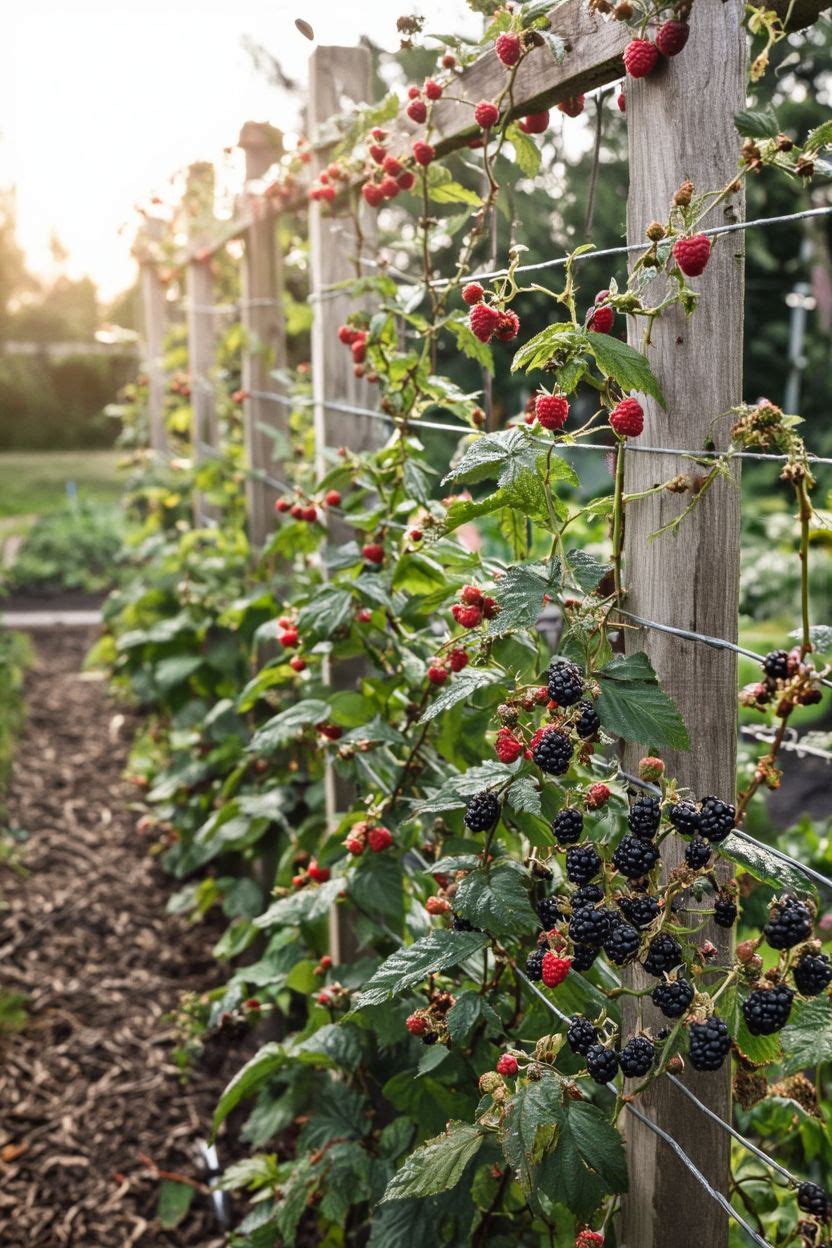
1. Why Do Berry Plants Need a Trellis?
Berry plants, especially blackberries and raspberries, produce long canes that grow aggressively. Without support, they fall over, crowd each other, and become prone to fungal diseases due to poor air circulation.
A good trellis system solves all of this. It keeps canes organised and upright, allows sunlight to reach all parts of the plant, makes pruning and harvesting much easier, and extends the productive life of your berry plants.
Even compact or dwarf varieties benefit from some form of support as they grow and fruit heavily.
2. Types of Berry Trellis Systems
There are several proven trellis designs used by home gardeners and commercial growers alike. Choose one based on your space, budget, and the type of berry you are growing.
A. Two-Wire Trellis (Most Popular)
This is the most widely used trellis system for raspberries and blackberries. Two horizontal wires are stretched between wooden or metal posts — one wire at about 60 cm height and another at 120 to 150 cm height.
New canes are tied to the upper wire and fruiting canes are trained along the lower wire. This separation makes pruning simple and keeps the plant organised.
Best for: Raspberries, blackberries, tayberries
Materials needed: Wooden posts or metal T-posts, galvanised wire, wire tensioners, zip ties or garden twine
Estimated Cost: ₹800 – ₹2,500 for a 3-metre row
B. T-Bar Trellis
The T-bar trellis uses posts shaped like the letter T, with wires running along both arms of the T. This allows canes to spread outward on both sides, creating a wider growing zone and better sunlight exposure.
This system is ideal for vigorous varieties that produce heavy canes and lots of lateral growth.
Best for: Blackberries, marionberries, loganberries
Materials needed: T-shaped wooden or metal posts, two rows of wire per post
Estimated Cost: ₹1,500 – ₹4,000 for a 3-metre row
C. Fan Trellis (Wall-Mounted)
A fan trellis is fixed directly to a wall or fence and spreads outward in a fan shape. Canes are tied in a spreading pattern radiating from the base. This works beautifully for small gardens, terraces, and compact spaces where floor space is limited.
Best for: Gooseberries, redcurrants, fan-trained blackberries
Materials needed: Wall anchors, horizontal wires at 30 cm intervals, garden ties
Estimated Cost: ₹600 – ₹1,800
D. Single Post and Wire Trellis
One sturdy central post is placed at each end of the row, and a single wire is run at 90 to 120 cm height. Canes are loosely tied to this single wire. This is the simplest and most affordable option for beginner gardeners.
Best for: Dwarf raspberries, smaller berry varieties
Materials needed: Two end posts, one wire
Estimated Cost: ₹400 – ₹1,000
E. Cattle Panel or Wire Mesh Trellis
A large rectangular wire mesh panel — similar to those used for livestock fencing — is staked upright in the garden. Berry canes grow through and around the mesh naturally, requiring minimal tying.
This is a very low-maintenance option that works especially well for thornless blackberries.
Best for: Thornless blackberries, climbing raspberries
Materials needed: Galvanised wire mesh panel, metal stakes
Estimated Cost: ₹1,200 – ₹3,000
F. Wooden Ladder Trellis (Decorative)
For gardeners who want beauty alongside function, a wooden ladder trellis is a stylish option. Wooden rungs act as horizontal supports at different heights, and canes are weaved through the rungs as they grow.
This trellis doubles as a garden feature and looks attractive even in the off-season.
Best for: Gooseberries, blueberries trained as espaliers, smaller berry plants
Materials needed: Treated timber, wood screws, outdoor paint or sealant
Estimated Cost: ₹1,500 – ₹5,000 depending on size
3. Best Materials for Berry Trellises
Choosing the right materials ensures your trellis lasts for many seasons without rusting, rotting, or sagging under the weight of heavy canes.
Posts
Wooden posts made from treated timber or bamboo are affordable and easy to work with. Metal T-posts and star pickets are more durable and ideal for long rows. Concrete posts are the most permanent option and require no maintenance.
For home gardens, wooden posts of 5 to 8 cm thickness at a height of 150 to 180 cm work well for most berry varieties.
Wire
Always use galvanised or stainless steel wire for berry trellises. Standard gauge wire between 12 and 14 gauge is strong enough to hold heavy canes without sagging. Plastic-coated wire is also a good choice as it is rust-resistant and gentle on plant stems.
Avoid using thin craft wire or string — these degrade quickly and may cut into plant stems under tension.
Fasteners and Ties
Use soft garden twine, rubber plant ties, or fabric strips to attach canes to the wire. Avoid metal twist ties or nylon rope that can cut into the canes as they grow thicker.
4. How to Set Up a Simple Two-Wire Berry Trellis
Setting up a basic two-wire trellis is a weekend project that any beginner can complete.
Step 1: Mark your row and dig post holes at each end, approximately 50 cm deep. If your row is longer than 3 metres, add a middle support post.
Step 2: Place your posts in the holes and pack the soil tightly around the base. For extra stability, use a small amount of concrete.
Step 3: Attach a wire tensioner or eyelet screw to the top of each post. Run the first wire at 60 cm height and the second wire at 120 to 150 cm height. Pull each wire taut and secure at both ends.
Step 4: Plant your berry canes along the base of the trellis, spacing them 45 to 60 cm apart.
Step 5: As canes grow, gently tie new growth to the upper wire and train fruiting canes along the lower wire using soft garden ties.
5. Berry-Specific Trellis Tips
Different berry types have slightly different support needs.
Raspberries produce new canes every year. Use the two-wire system and remove old fruited canes after harvest. Train new canes upward along the top wire each season.
Blackberries are vigorous and thorny. Use a strong T-bar or two-wire system with heavy gauge wire. Train new canes in one direction and fruiting canes in the opposite direction to avoid tangling.
Blueberries are bushy and do not usually need trellising, but a simple stake or short fence around the plant helps protect it from wind and keeps the shape tidy.
Gooseberries respond well to fan training on a wall-mounted trellis. This encourages even fruiting and makes harvesting easier without getting scratched by thorns.
6. Space-Saving Trellis Ideas for Terraces and Small Gardens
If you have limited space, these ideas help you grow berries vertically and efficiently.
Use a wall-mounted fan trellis to grow berry plants flat against a sunny wall or fence. Stack vertical pallet planters with individual berry plants in pots attached to wire supports. Use corner trellises to make use of unused terrace corners for a single blackberry or gooseberry plant. Grow dwarf raspberry varieties in large containers with a central bamboo support frame.
Even one or two well-supported berry plants can produce a generous harvest in a small space.
7. Budget Summary for Berry Trellis Systems
| Trellis Type | Best Berry | Estimated Cost |
|---|---|---|
| Single Post and Wire | Dwarf Raspberries | ₹400 – ₹1,000 |
| Two-Wire Trellis | Raspberries, Blackberries | ₹800 – ₹2,500 |
| Fan Trellis (Wall) | Gooseberries, Redcurrants | ₹600 – ₹1,800 |
| T-Bar Trellis | Blackberries | ₹1,500 – ₹4,000 |
| Wire Mesh Panel | Thornless Blackberries | ₹1,200 – ₹3,000 |
| Wooden Ladder Trellis | Blueberries, Gooseberries | ₹1,500 – ₹5,000 |
Tip: Start with a simple two-wire trellis. It works for almost every berry type, costs very little, and can be built in a single afternoon with basic tools.
Final Thoughts
A good trellis is one of the best investments you can make for your berry garden. It keeps plants healthy, makes maintenance simple, and dramatically improves your harvest year after year.
Choose a trellis system that suits your space and berry type, use quality materials that will last multiple seasons, and enjoy the satisfaction of a well-organised, productive berry garden.
Start with one row, get comfortable with training your canes, and expand your berry patch season by season.
Images and Pinterest pin links will be added once visuals are ready.