Best Herb Combinations to Grow Together (Beginner-Friendly Guide)
Growing herbs becomes easier and more successful when you plant the right herbs together. Some herbs support each other’s growth, while others help repel pests or improve flavor.
This guide explains the best herb combinations beginners should grow together, whether in pots, balconies, or small gardens.
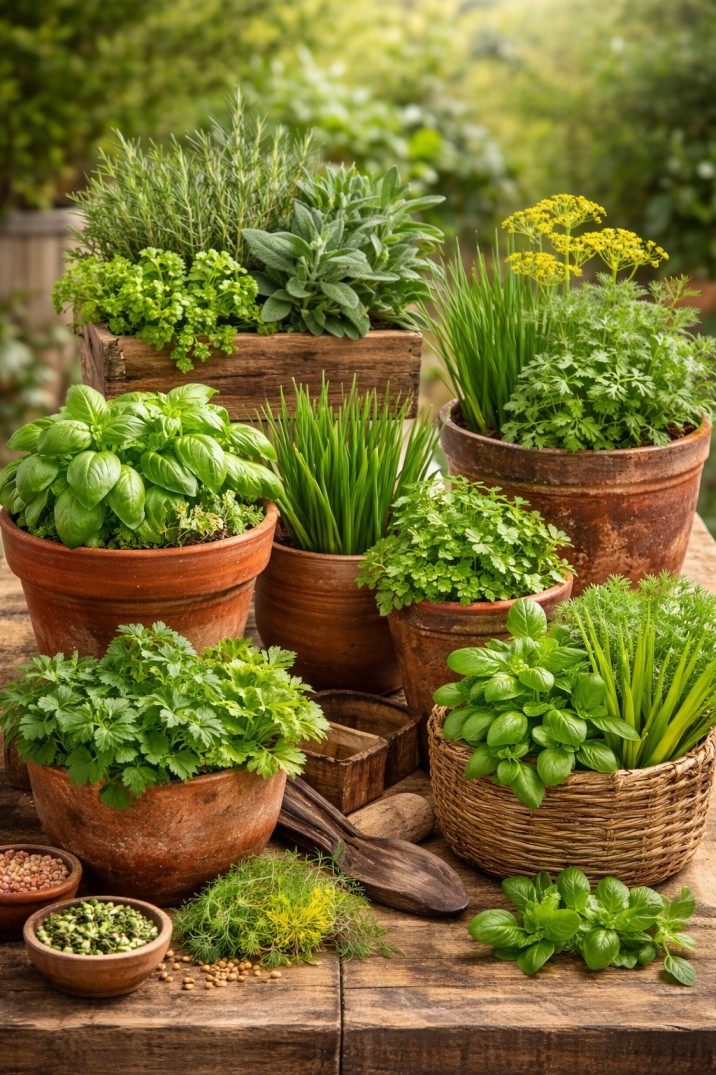
Basil and Parsley
Basil and parsley grow well together because they have similar water and sunlight needs. Basil helps repel insects, while parsley grows steadily alongside it. This combination is perfect for kitchen gardens.
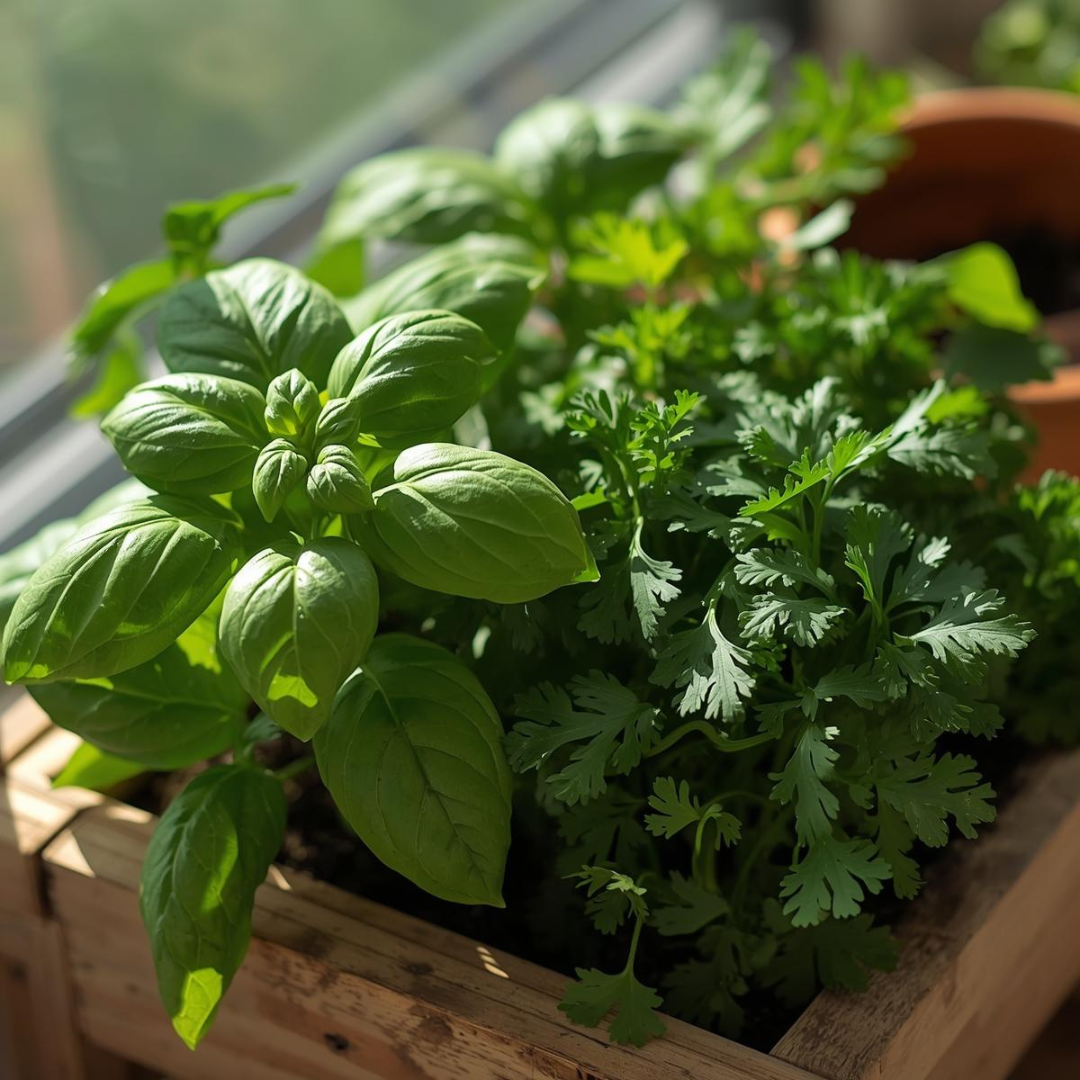
Basil and Oregano
Both herbs love full sunlight and well-drained soil. Oregano acts as a natural pest repellent, protecting basil. They are commonly used together in cooking, making them a practical pair.
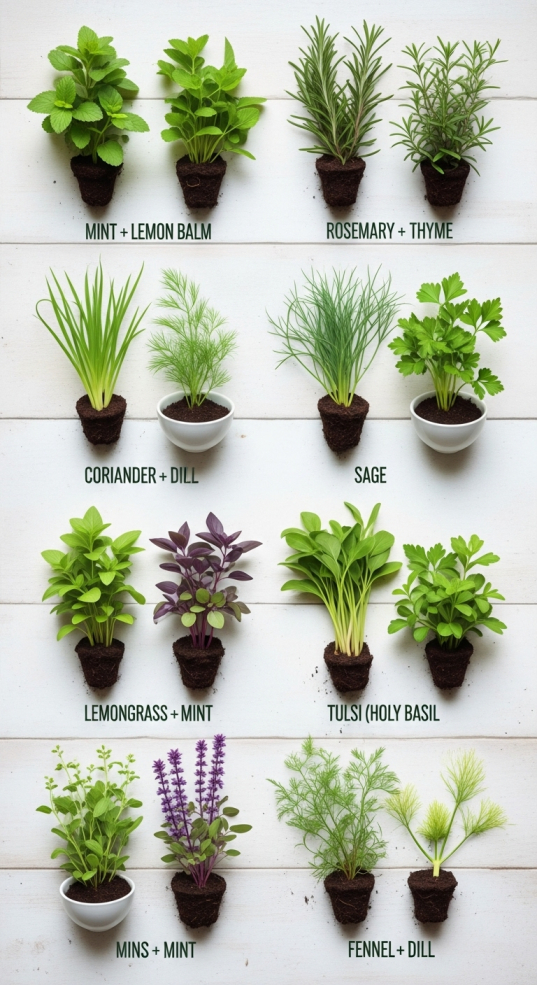
Mint and Lemon Balm
Mint and lemon balm belong to the same family and grow aggressively. Plant them together in a container to control spreading. Both herbs prefer partial sunlight and moist soil.
Rosemary and Thyme
These Mediterranean herbs love dry soil and full sun. They require very little water and grow well together in pots. This combination is ideal for beginners who tend to overwater plants.
Sage and Rosemary
Sage and rosemary thrive in similar conditions and need good air circulation. Both are drought-tolerant and long-lasting, making them a low-maintenance combination.
Coriander and Dill
Coriander and dill grow quickly and prefer cooler temperatures. They can be grown together during early seasons. Let some plants flower to attract beneficial insects.
Chives and Parsley
Chives help repel pests and protect parsley from insects. Both grow well in containers and require moderate watering and sunlight.
Lemongrass and Mint
Lemongrass grows tall while mint spreads horizontally, making them compatible. This combination works well in large pots or garden beds and helps repel mosquitoes.
Tulsi (Holy Basil) and Mint
Tulsi and mint grow well in warm climates and need regular watering. Tulsi provides shade for mint during hot days, improving growth.
Fennel and Dill (Separate Container)
Although fennel should not be planted with most herbs, it grows well with dill if kept in a separate container. This avoids growth inhibition while allowing easy care.
Why Growing Herbs in Combination Works
Herb combinations work because many herbs have similar needs for sunlight, water, and soil. When planted together correctly, herbs can protect each other from pests, improve growth, and make better use of space. This method is also known as companion planting and is especially useful for beginners.
Best Herb Combinations Based on Sunlight
Full Sun Herb Combinations
These herbs need at least 6 hours of sunlight daily and grow best together:
- Basil + Oregano + Thyme
- Rosemary + Sage + Thyme
- Lavender + Rosemary
These combinations are ideal for balconies, terraces, and sunny windowsills.
Partial Sun Herb Combinations
These herbs tolerate less sunlight and grow well together:
- Mint + Parsley
- Coriander + Chives
- Lemon Balm + Mint
They are perfect for indoor spaces or shaded balconies.
Herb Combinations Based on Water Needs
Low Water Herb Combinations
These herbs prefer dry soil and should not be overwatered:
- Rosemary + Thyme
- Sage + Lavender
- Oregano + Thyme
Planting these together prevents root rot and makes watering easier.
Moderate to High Water Herb Combinations
These herbs enjoy moist soil and frequent watering:
- Basil + Parsley
- Mint + Lemon Balm
- Coriander + Dill
Keeping them together avoids under-watering issues.
Kitchen-Friendly Herb Combinations
These herb combinations are commonly used together in cooking, making harvesting easy:
- Basil + Oregano + Parsley (Italian cooking)
- Coriander + Mint (Indian and Asian dishes)
- Rosemary + Thyme (Roasted foods and grilling)
Growing cooking-based combinations saves time and space.
Container Herb Combination Ideas
Small Pot (8–10 inch)
- Basil + Parsley
- Chives + Parsley
Medium Pot (12–14 inch)
- Mint + Lemon Balm
- Coriander + Dill
Large Pot or Grow Bag
- Lemongrass + Mint
- Rosemary + Thyme + Oregano
Always ensure pots have proper drainage holes.
Balcony Herb Combination Layout Idea
- Place sun-loving herbs near balcony edges
- Keep moisture-loving herbs slightly shaded
- Use separate pots for aggressive growers like mint
- Rotate pots occasionally for even growth
This setup improves airflow and plant health.
Common Beginner Mistakes With Herb Combinations
- Mixing dry-soil herbs with water-loving herbs
- Planting mint directly in open soil
- Overcrowding pots
- Ignoring sunlight differences
Avoiding these mistakes increases success rate dramatically.
Seasonal Herb Combination Tips
Summer
- Basil + Mint
- Lemongrass + Tulsi
Winter
- Coriander + Parsley
- Dill + Chives
Choosing seasonal combinations improves growth and flavor.
Herb Combinations Beginners Should Avoid
- Mint with other herbs in open soil (it spreads aggressively)
- Fennel with basil or coriander
- Lavender with moisture-loving herbs
Tips for Growing Herb Combinations Successfully
- Group herbs with similar sunlight needs
- Match watering requirements
- Use containers to control fast-growing herbs
- Prune regularly to encourage healthy growth
Final Thoughts
Growing herbs together saves space, improves plant health, and makes gardening easier for beginners. Start with just one or two combinations, observe how they grow, and expand gradually.
Herb gardening is all about learning by doing 🌿. Start with one or two herb combinations, observe how they grow, and adjust watering and sunlight. Herb combinations reduce effort, save space, and help beginners gain confidence quickly.
Once you succeed with combinations, expanding your herb garden becomes easy and enjoyable 🌿