Terrace Gardening for Beginners: Tools, Plants & Smart Growing Tips
Terrace gardening is one of the best ways to grow fresh vegetables, herbs, and flowers at home, especially in cities where space is limited. With the right planning and simple methods, your terrace can become a productive green space.
Below is a complete beginner-friendly guide to terrace gardening, covering tools, plant selection, starting steps, water management, sunlight control, and space-saving ideas.
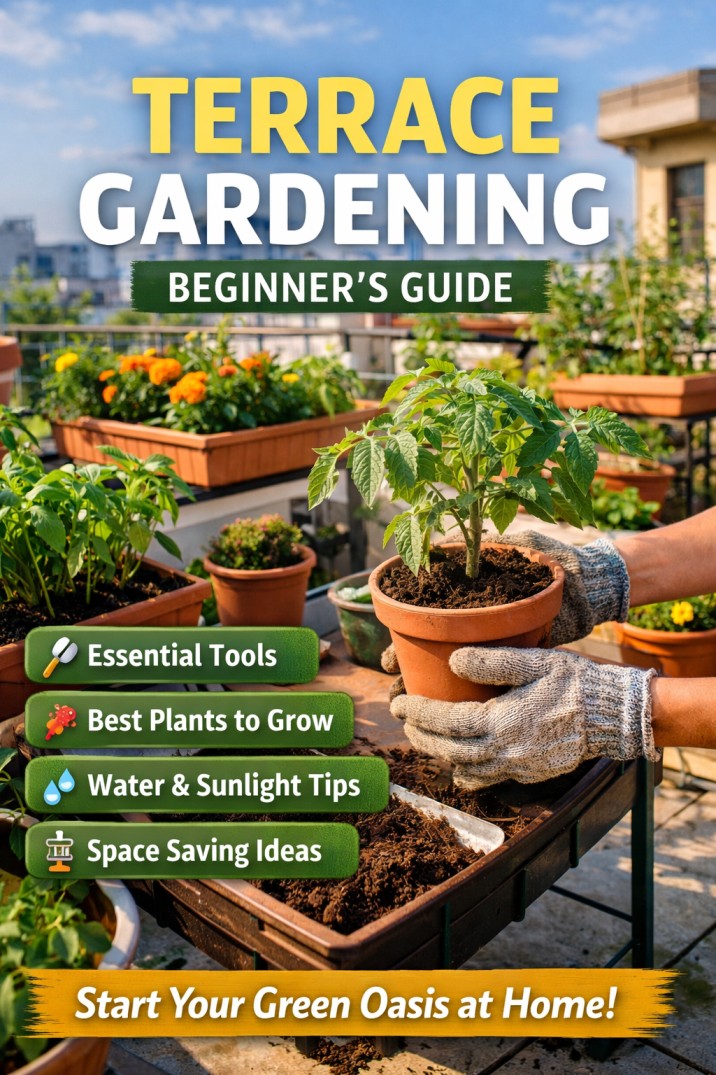
1. Tools Required for Terrace Gardening
Having the right tools makes terrace gardening simple and stress-free. You do not need expensive equipment to start.
Basic tools include a hand trowel for planting, pruning shears for trimming plants, gardening gloves for hand protection, and a watering can or hose pipe for watering. A spray bottle is useful for applying organic pest control solutions like neem oil.
Always use pots or grow bags with proper drainage holes to avoid waterlogging.
2. Selecting the Right Plants for Terrace Gardening
Choosing the right plants is the most important step for beginners.
Leafy vegetables like spinach, coriander, and methi grow well in small containers. Vegetables such as tomatoes, chillies, brinjal, and okra perform well in medium-sized grow bags. Herbs like tulsi, mint, curry leaves, and lemongrass are ideal for terrace gardens.
Select plants based on the amount of sunlight your terrace receives.
3. How to Start Terrace Gardening
Before planting, ensure your terrace is strong and properly waterproofed. Distribute pots evenly to avoid excess load in one area.
Prepare a good potting mix using garden soil, cocopeat, compost, and sand. This mix provides nutrients, moisture retention, and proper drainage. Place small stones or broken bricks at the bottom of pots before adding soil.
Plant seeds or saplings gently and water lightly.
4. Water Management for Terrace Gardens
Water management plays a key role in plant health. Overwatering is a common mistake.
In summer, plants usually need watering once a day, preferably in the morning or evening. In winter, watering every two to three days is enough. Always check soil moisture before watering.
Mulching and simple drip irrigation systems help save water and maintain soil moisture.
5. Sunlight Management on the Terrace
Sunlight is essential for plant growth. Most vegetables and flowering plants need five to seven hours of sunlight daily.
Observe sunlight movement on your terrace. Place sun-loving plants in brighter areas and shade-tolerant plants in partial shade. During extreme heat, use shade nets to protect plants.
Rotate pots weekly for even growth.
6. Smart Space Management Tricks
Limited space should never stop you from gardening.
Use vertical racks, wall-mounted planters, and hanging pots to save space. Arrange taller plants at the back and smaller ones in front to ensure proper sunlight.
Movable pots help with seasonal adjustments.
7. Regular Care and Maintenance
Terrace gardens need regular care. Remove dry leaves, prune plants when needed, and add organic compost every few weeks.
Neem oil spray helps control pests naturally. Daily observation keeps plants healthy and productive.
Final Thoughts
Terrace gardening is a rewarding habit that brings greenery, freshness, and peace into daily life. With the right tools, proper plant selection, balanced water and sunlight management, and smart space planning, anyone can build a successful terrace garden.
Start small, stay consistent, and enjoy the process — nature always gives back.