Increase IQ of Kids by These Toys: 5 Science-Backed Learning Tools Every Parent Should Know
Every parent wants to give their child the best possible start in life. While genetics play a role in intelligence, research in developmental psychology consistently shows that the right play experiences during childhood can meaningfully strengthen cognitive skills — including problem-solving, memory, spatial reasoning, and mathematical thinking.
The toys a child plays with aren’t just entertainment. They are, quite literally, building their brain.
In this article, we look at five thoughtfully selected educational toys that support different dimensions of cognitive development. These aren’t gimmicks. Each one is grounded in how children actually learn — through hands-on exploration, challenge, and play.
Why Toys Matter for Cognitive Development
Before diving into specific products, it’s worth understanding why certain toys help build intelligence.
The human brain is remarkably plastic during childhood. Every time a child solves a puzzle, figures out a pattern, or calculates a number in their head, neurons fire and form new connections. Cognitive scientists call this “productive struggle” — the mental effort of working through a challenge is what builds capability.
Toys that involve:
- Spatial reasoning (rotating shapes, fitting pieces)
- Mathematical thinking (counting, operations, logic)
- Sequential problem-solving (step-by-step challenges)
- Fine motor + cognitive coordination (drawing, writing, building)
…are among the most effective tools for cognitive development in children aged 3–12.
1. Coogam Wooden Blocks Puzzle — Spatial Intelligence & Logical Thinking
| Best for: Ages 3–8 | Skill focus: Spatial reasoning, pattern recognition, problem-solving |
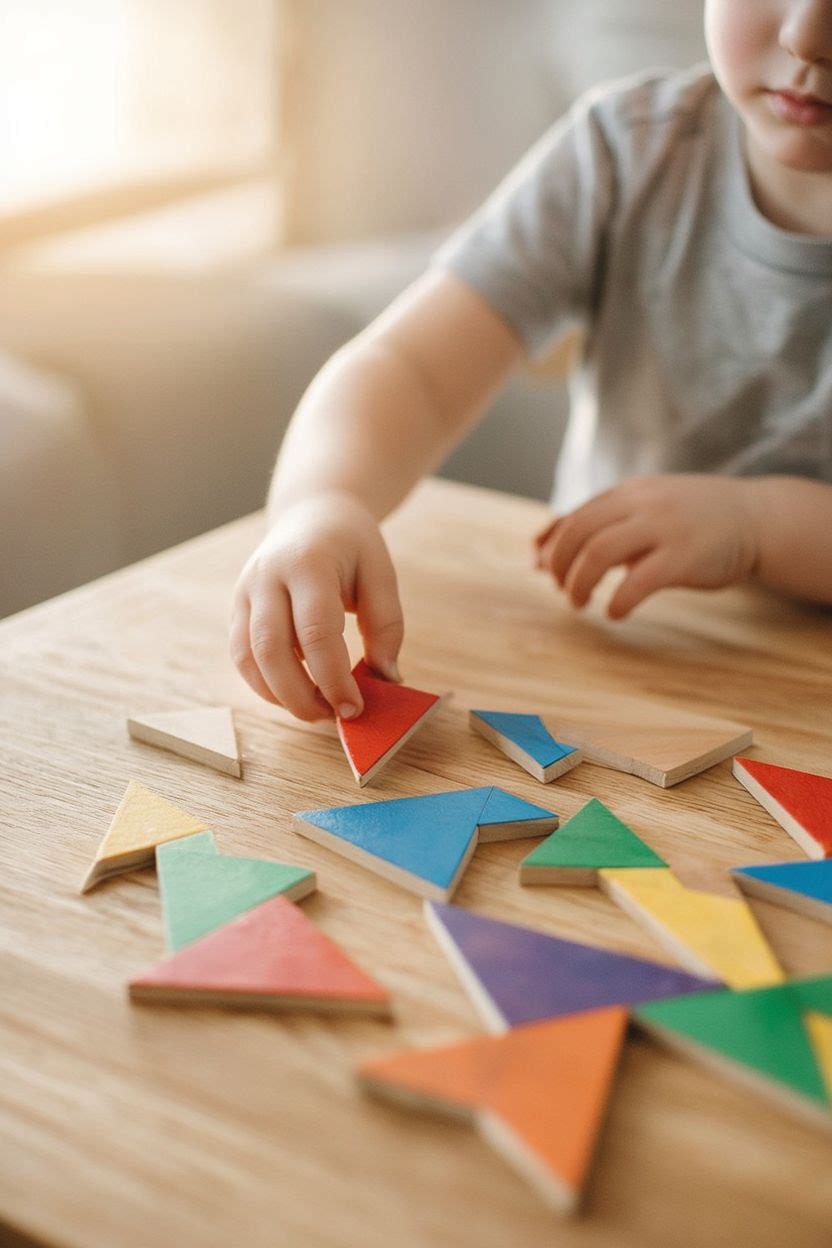
Tangrams are one of the oldest and most studied tools for building spatial intelligence in children. Originating in ancient China, these geometric puzzles require children to mentally rotate, flip, and combine shapes to form target images — a process that directly exercises the brain’s visuospatial processing centers.
The Coogam Wooden Blocks Puzzle brings this classic learning method into a colorful, tactile format with 40 pieces. The set includes multiple shape types and challenge cards, meaning children at different developmental stages can all benefit from it.
What children learn from this toy:
Spatial reasoning is one of the strongest predictors of success in STEM subjects. When children manipulate the wooden blocks — rotating a triangle to see if it fits a gap, combining two shapes to form a rectangle — they are training the same mental muscles used in geometry, engineering, and architecture later in life.
Pattern recognition is another key benefit. Children learn to identify how shapes relate to each other, which forms the foundation of mathematical and logical thinking.
Persistence and frustration tolerance also develop naturally. A puzzle that doesn’t come together on the first try teaches children to try a different approach — one of the most valuable cognitive habits a child can develop.
The wooden construction adds a sensory layer that digital alternatives simply cannot provide. The weight, texture, and sound of wooden pieces engage more of the brain during play.
2. Target Math Game — Mental Arithmetic & Number Sense
| Best for: Ages 8+ | Skill focus: Mental math, arithmetic fluency, strategic thinking |
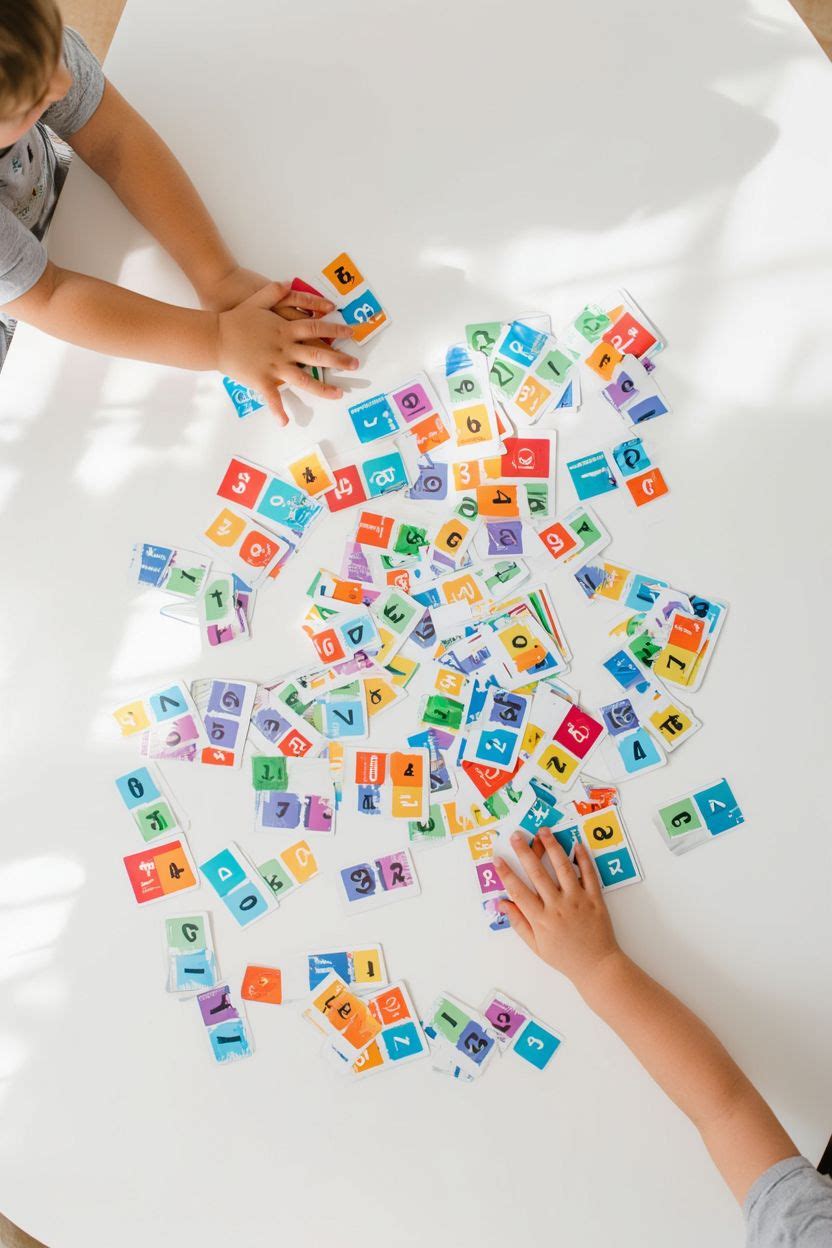
Mathematical fluency — the ability to work with numbers quickly and accurately — is one of the clearest markers of academic readiness. Yet many children struggle with arithmetic not because they lack intelligence, but because they haven’t had enough enjoyable practice with numbers.
The Target Math Game was developed with teacher input and is widely recommended in classroom settings. It’s a fast-paced card game in which players use addition, subtraction, multiplication, and division to hit a target number — making every round a different mental challenge.
What children learn from this toy:
Number flexibility is perhaps the most valuable skill here. When a child has multiple operations available and must figure out how to reach a specific target, they’re not just calculating — they’re thinking strategically about numbers. This kind of flexible thinking is a core component of mathematical intelligence.
Working memory gets a meaningful workout. Players must hold the target number in mind while simultaneously calculating possible routes to reach it — training short-term memory and mental focus.
Speed and accuracy under pressure builds a type of cognitive confidence that translates directly to classroom performance. Children who are comfortable with numbers don’t fear math tests; they approach them as puzzles.
The competitive, game-based format also means children want to practice. Unlike worksheets or drills, a card game provides intrinsic motivation to keep playing — and therefore keep learning.
3. SmartGames IQ Love — Advanced Logic & Sequential Reasoning
| Best for: Ages 7–Adult | Skill focus: Logic, deductive reasoning, strategic planning |
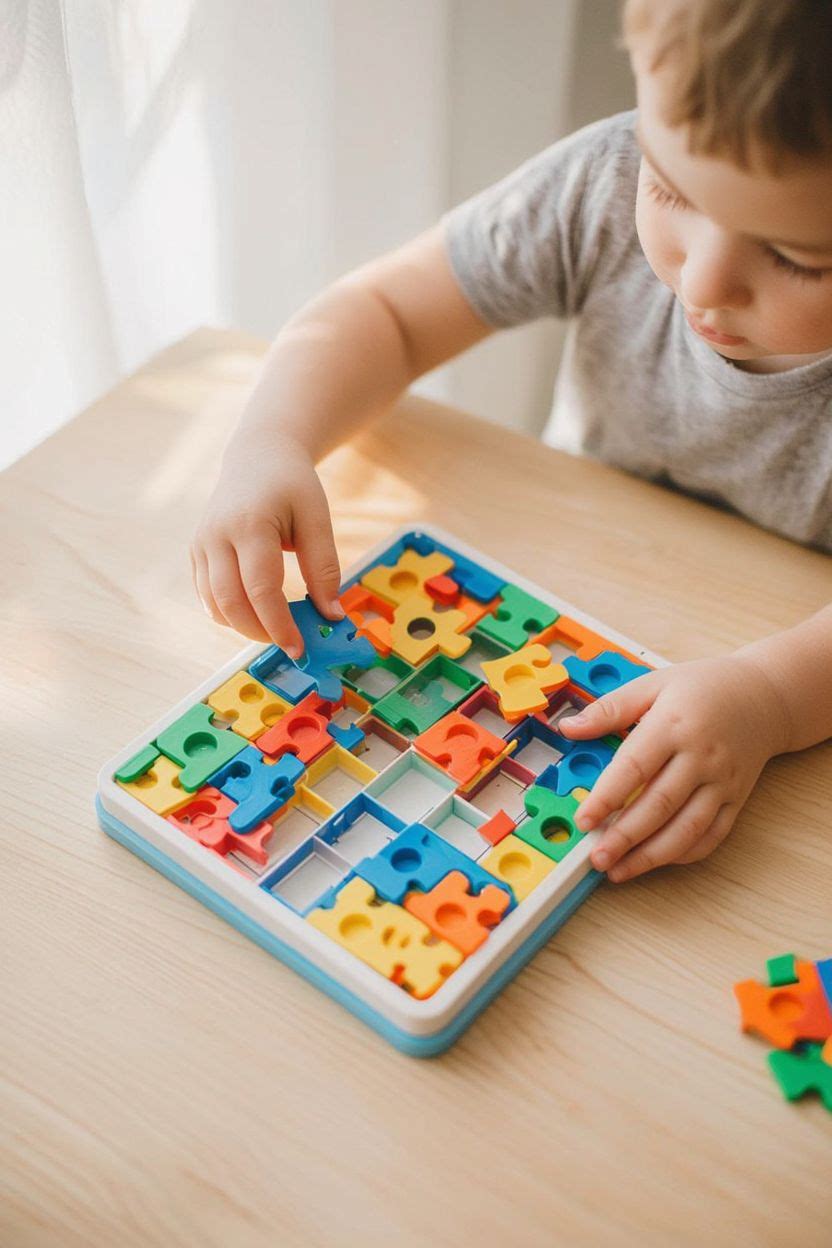
The SmartGames brand has built a strong reputation among educators and cognitive development researchers for creating single-player puzzle games that are genuinely challenging — and genuinely effective.
IQ Love is a compact travel puzzle with 120 progressive challenges that require children (and adults) to place interlocking puzzle pieces onto a grid so that every space is filled. The challenges range from beginner to expert, making it suitable for a wide developmental range.
What children learn from this toy:
Deductive reasoning is the core skill being trained. Each puzzle starts with some pieces already placed, and children must figure out — through logic, not guesswork — where the remaining pieces must go. This mirrors the reasoning style used in mathematics proofs, scientific thinking, and analytical problem-solving.
Planning ahead is another crucial skill. Unlike tangrams, where each move is relatively independent, IQ Love requires children to think several steps forward: “If I place this piece here, will there still be room for that one?” This is classic executive function training.
Progressive difficulty ensures the brain is always being challenged at the right level — a concept known in psychology as “the zone of proximal development.” The 120-challenge structure means the toy grows with the child, remaining useful and stimulating over months or years.
The compact format also makes it ideal for travel, waiting rooms, and any situation where a child needs quiet, independent activity.
4. TECJOE LCD Writing Tablet — Fine Motor Skills & Creative Expression
| Best for: Ages 3–8 | Skill focus: Fine motor development, creativity, early literacy |

While puzzle-based toys build analytical thinking, creative and expressive tools develop a different but equally important set of cognitive capacities. Drawing, writing, and visual expression are among the earliest ways children process and communicate ideas.
The TECJOE LCD Writing Tablet (pack of 4, with colorful 8.5-inch screens) provides a screen-based drawing surface that is pressure-sensitive, erasable, and completely mess-free. Children can draw, write letters, practice numbers, and express themselves endlessly without paper or ink.
What children learn from this toy:
Fine motor development is directly linked to cognitive development in young children. The precise movements required to write letters and draw shapes strengthen the neural pathways that support reading, writing, and attention. Occupational therapists frequently use drawing activities as a cognitive development tool for this reason.
Pre-literacy and pre-numeracy skills develop naturally when children practice forming letters and numbers in a low-pressure, self-directed way. Because the tablet erases instantly, there’s no fear of “getting it wrong” — children are free to experiment.
Visual-spatial thinking is exercised whenever a child plans what to draw and then executes it. Translating a mental image onto a surface requires coordination between imagination and motor output — a cognitively rich activity.
Focus and self-regulation also benefit. Drawing requires sustained attention and the ability to stay with a task — skills that are foundational to all academic learning.
The colorful screens and the satisfying erase button make this toy genuinely appealing to toddlers and early school-age children, who will return to it again and again.
5. LeapFrog 2-in-1 LeapTop Touch — Early Digital Literacy & Language Development
| Best for: Ages 2–5 | Skill focus: Vocabulary, early literacy, letters, music, interactive learning |

For very young children, the bridge between play and learning is at its most porous. Toddlers and preschoolers absorb language, concepts, and patterns at an extraordinary rate — and the quality of their learning environment matters enormously during these years.
The LeapFrog 2-in-1 LeapTop Touch is designed specifically for this developmental window. It mimics the look of a laptop — something children are naturally curious about — while delivering age-appropriate content in an interactive format. It functions as both a laptop and a tablet with a touchscreen.
What children learn from this toy:
Alphabet recognition and letter-sound relationships are introduced through interactive activities that connect seeing a letter, hearing its name, and hearing its sound. This multi-sensory approach is well-supported by research on early literacy development.
Vocabulary expansion happens through songs, stories, and naming games. Children at this age are in a critical window for language acquisition, and varied, engaging vocabulary exposure directly predicts reading ability in later years.
Cause-and-effect understanding develops as toddlers learn that pressing a specific key produces a specific result. This is a foundational concept in both logical thinking and early science exploration.
Number and color recognition are introduced in context, making them meaningful rather than rote. Children remember concepts better when they’re embedded in engaging, interactive experiences.
The toy’s design also builds digital familiarity in a safe, controlled way — helping children feel comfortable with technology without exposing them to screens that are passive or developmentally inappropriate.
Choosing the Right Toy for Your Child’s Age and Stage
Not every toy is right for every child. Here’s a quick reference:
| Toy | Recommended Age | Primary Cognitive Skill |
|---|---|---|
| Coogam Wooden Blocks Puzzle | 3–8 years | Spatial reasoning |
| Target Math Game | 8+ years | Mental arithmetic |
| SmartGames IQ Love | 7+ years | Logic & planning |
| TECJOE LCD Writing Tablet | 3–8 years | Fine motor & creativity |
| LeapFrog LeapTop Touch | 2–5 years | Language & early literacy |
A Note on Screen Time vs. Hands-On Play
Several of the toys on this list involve screens or digital interaction. This is worth addressing directly.
Research distinguishes between passive screen time (watching videos) and interactive screen time (engaging with educational content that responds to the child’s input). The American Academy of Pediatrics and most developmental researchers agree that the key variable is not the presence of a screen, but the nature of the interaction.
The digital toys on this list — the LCD writing tablets and the LeapFrog LeapTop — require active participation. The child is drawing, pressing, responding, and experimenting. This is categorically different from watching a video, and the cognitive benefits are similarly different.
That said, balance matters. A mix of physical, tactile play (wooden puzzles, card games) and interactive digital tools gives children the richest developmental environment.
Final Thoughts
Intelligence is not a fixed quantity handed out at birth. It is a capacity that develops through experience, challenge, and engagement. The toys children play with — especially in the first decade of life — are among the most powerful tools available for shaping that development.
The five products in this article were selected not because they are flashy or popular, but because each one targets a specific, research-supported dimension of cognitive growth. Used regularly and in ways that genuinely engage the child, they can make a meaningful difference in how children think, learn, and approach challenges.
The best investment you can make in a child’s IQ isn’t a tutor or a curriculum. It’s play — the right kind, with the right tools.
This article contains affiliate links. If you purchase through these links, we may earn a small commission at no additional cost to you. We only recommend products we genuinely believe offer value to children and families.