When a Baby Cries: How to Console, Calm, and Care for Your Baby
Crying is a baby’s first and most important way of communicating. For new parents, a crying baby can feel stressful and confusing, but crying is not a bad sign. It simply means your baby needs something. Understanding the reasons behind crying helps parents respond calmly and confidently.
Below is a complete guide explaining why babies cry, how to console them, and practical tips to stop excessive crying while providing the right care.
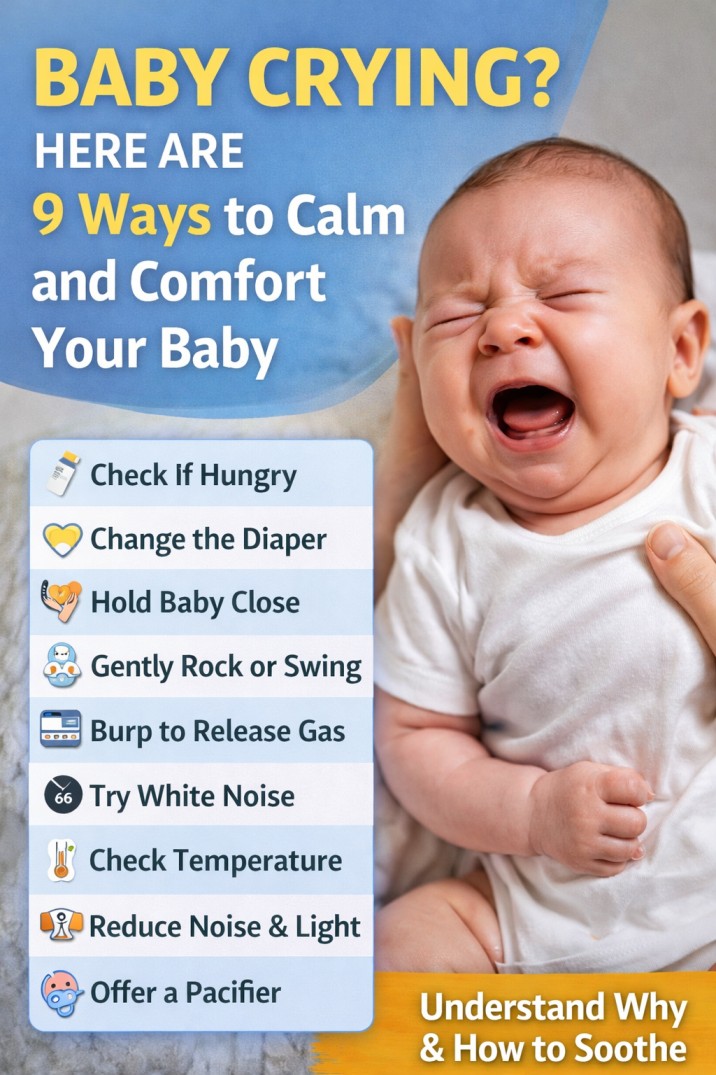
Why Do Babies Cry?
Babies cry because they cannot speak. Every cry is a message. Sometimes the reason is clear, and sometimes it takes patience to understand.
Common reasons include hunger, a wet diaper, tiredness, discomfort, gas, overstimulation, or the need for comfort. Crying does not mean bad parenting — it means your baby is communicating.
Hunger: The Most Common Cause of Crying
Hunger is the most frequent reason babies cry, especially newborns.
Signs of hunger include sucking fingers, turning the head toward touch, smacking lips, and short repetitive cries. Feeding your baby calmly often stops the crying quickly. After feeding, burping is important to release trapped gas.
Diaper Discomfort and Hygiene
A wet or dirty diaper can make babies uncomfortable and fussy.
Check diapers regularly and change them promptly. Clean gently, dry the area properly, and use diaper cream if needed. Many babies calm down immediately after a fresh diaper change.
Sleep and Overtired Crying
Babies often cry because they are too tired, not because they want attention.
Signs of tiredness include eye rubbing, yawning, red eyelids, and sudden fussiness. Creating a quiet sleep environment, dimming lights, and gently rocking the baby can help them settle.
Comfort and Physical Touch
Babies feel safest when they are close to their parents.
Holding your baby, skin-to-skin contact, gentle rocking, and soft patting provide reassurance. Your warmth, heartbeat, and smell help calm your baby naturally.
Gas and Digestive Discomfort
Gas pain can cause intense crying, especially after feeding.
Signs include pulling legs toward the chest, arching the back, and crying shortly after feeding. Burp your baby properly, hold them upright, gently massage the tummy, or move their legs in a bicycle motion to help release gas.
Temperature and Clothing Check
Babies cannot regulate body temperature well.
Check the baby’s neck or back to see if they are too hot or cold. Avoid overdressing and use soft, breathable fabrics. Adjusting clothing often helps stop crying quickly.
Overstimulation and Sensory Overload
Too much noise, bright light, or too many people can overwhelm a baby.
If your baby cries suddenly in crowded or noisy places, move to a quiet room, reduce light, and hold them gently. A calm environment helps babies relax.
Soothing Techniques That Help Calm a Crying Baby
Different babies respond to different soothing methods.
Swaddling, gentle rocking, soft shushing sounds, white noise, or offering a pacifier can help. Trying combinations patiently is often effective.
When Crying May Mean Illness
Sometimes crying can be a sign of illness or pain.
If your baby has a fever, refuses feeding, cries in a high-pitched tone, or seems unusually weak, consult a pediatrician immediately. Trust your instincts as a parent.
What Parents Should Avoid
Never shake a baby, shout, or panic. Avoid ignoring prolonged crying and do not compare your baby to others. Every baby is different and develops at their own pace.
Taking Care of Yourself as a Parent
A crying baby can be emotionally exhausting.
Take deep breaths, ask for help when needed, and take short breaks if overwhelmed. A calm parent helps create a calm baby.
Final Thoughts
Crying is a natural and important part of babyhood. By understanding why your baby cries and responding with patience, love, and care, you build trust and emotional security.
This phase will pass, but the bond you create by responding to your baby’s needs will last a lifetime.