Urban Balcony Garden Ideas: Transform Your Outdoor Space Into a Green Oasis
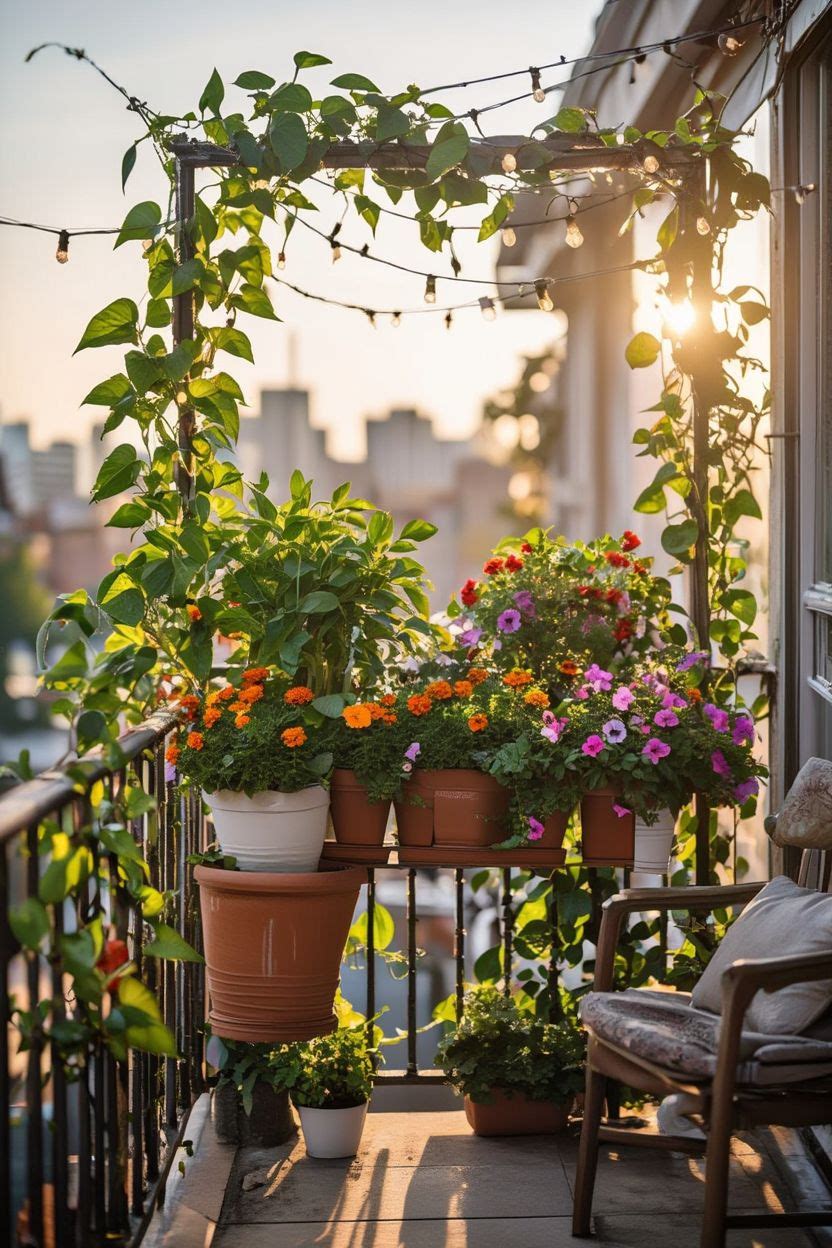
Living in the city doesn’t mean giving up on your dream of a green, flourishing garden. Your balcony — no matter how compact — holds incredible potential. With the right ideas, a little creativity, and some planning, you can transform that overlooked outdoor slab into a beautiful, productive garden sanctuary. Whether you’re dreaming of fresh herbs for your kitchen, a riot of colourful blooms, or a private leafy retreat, this guide has everything you need.
Why Start a Balcony Garden?
Urban living often disconnects us from nature. A balcony garden bridges that gap beautifully. Here’s why it’s worth every effort:
- Mental well-being — Greenery reduces stress, lifts mood, and improves focus.
- Fresh produce at your fingertips — Grow your own herbs, salads, tomatoes, and chillies.
- Improved air quality — Plants filter pollutants and increase oxygen levels.
- Aesthetic appeal — A well-designed balcony garden is stunning and adds value to your home.
- Sustainability — Growing your own food, even partially, reduces your carbon footprint.
1. Assess Your Balcony Before You Begin
Before buying a single pot, take stock of your space:
Sunlight — Track how many hours of direct sunlight your balcony receives. South and west-facing balconies typically get the most sun. This determines what plants will thrive.
Wind exposure — High-rise balconies can be very windy. You may need windbreaks or choose wind-tolerant plants.
Weight limits — Large containers filled with wet soil are heavy. Check your building’s load-bearing capacity and opt for lightweight containers and potting mixes when needed.
Size and layout — Measure your space carefully so you can plan vertical structures, furniture, and planter arrangements without overcrowding.
2. Choose the Right Containers
Containers are the backbone of any balcony garden. The good news? Almost anything can become a planter.
Best container options:
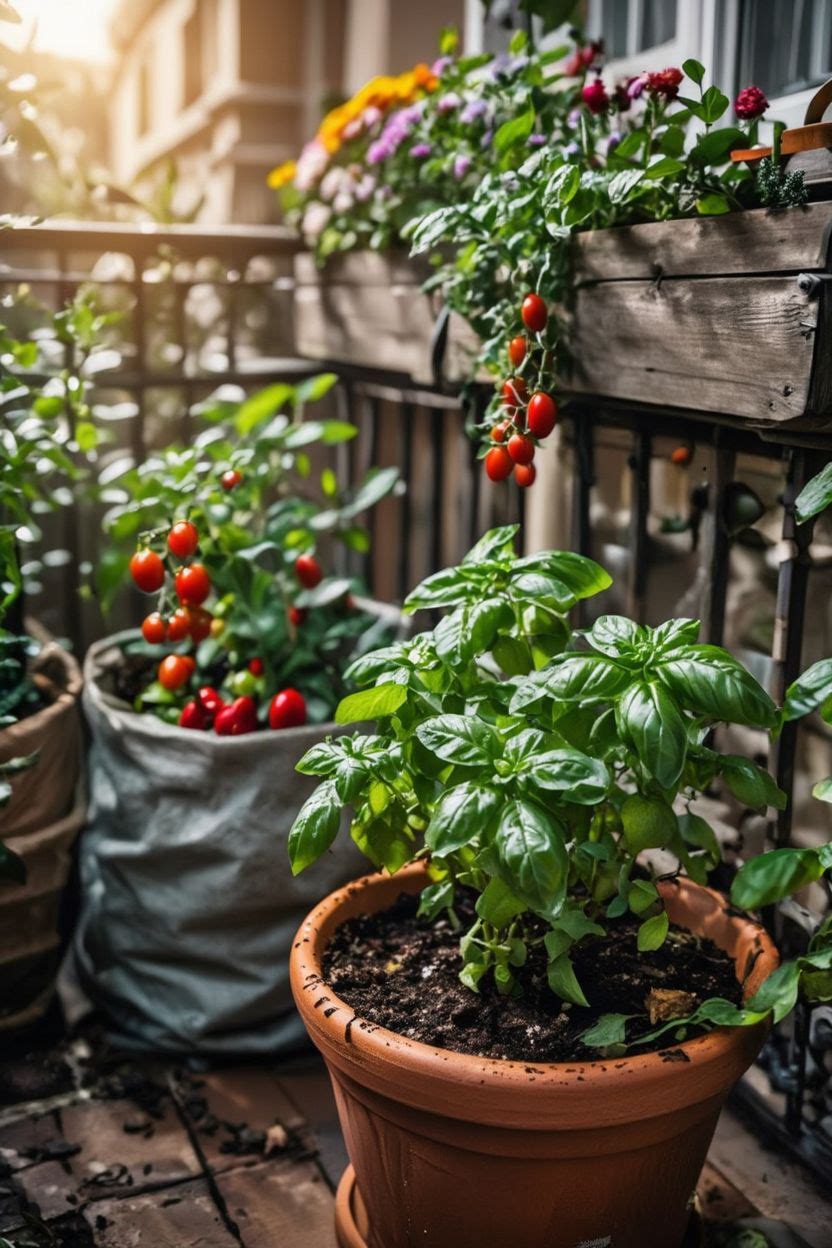
- Terracotta pots — Classic and breathable, but heavy. Great for herbs and succulents.
- Fabric grow bags — Lightweight, promote healthy root growth, and are perfect for vegetables like tomatoes and peppers.
- Window boxes — Ideal for railings; grow herbs, strawberries, or trailing flowers.
- Self-watering planters — A game-changer for busy gardeners; maintain consistent moisture.
- Recycled containers — Wooden crates, metal tins, colanders, and even old boots can become quirky planters.
Pro tip: Always ensure containers have drainage holes to prevent root rot.
3. Go Vertical — Maximise Every Inch
Space is precious on a balcony. Think upward, not just outward. Vertical gardening is the single most effective way to multiply your growing area.
Vertical garden ideas:
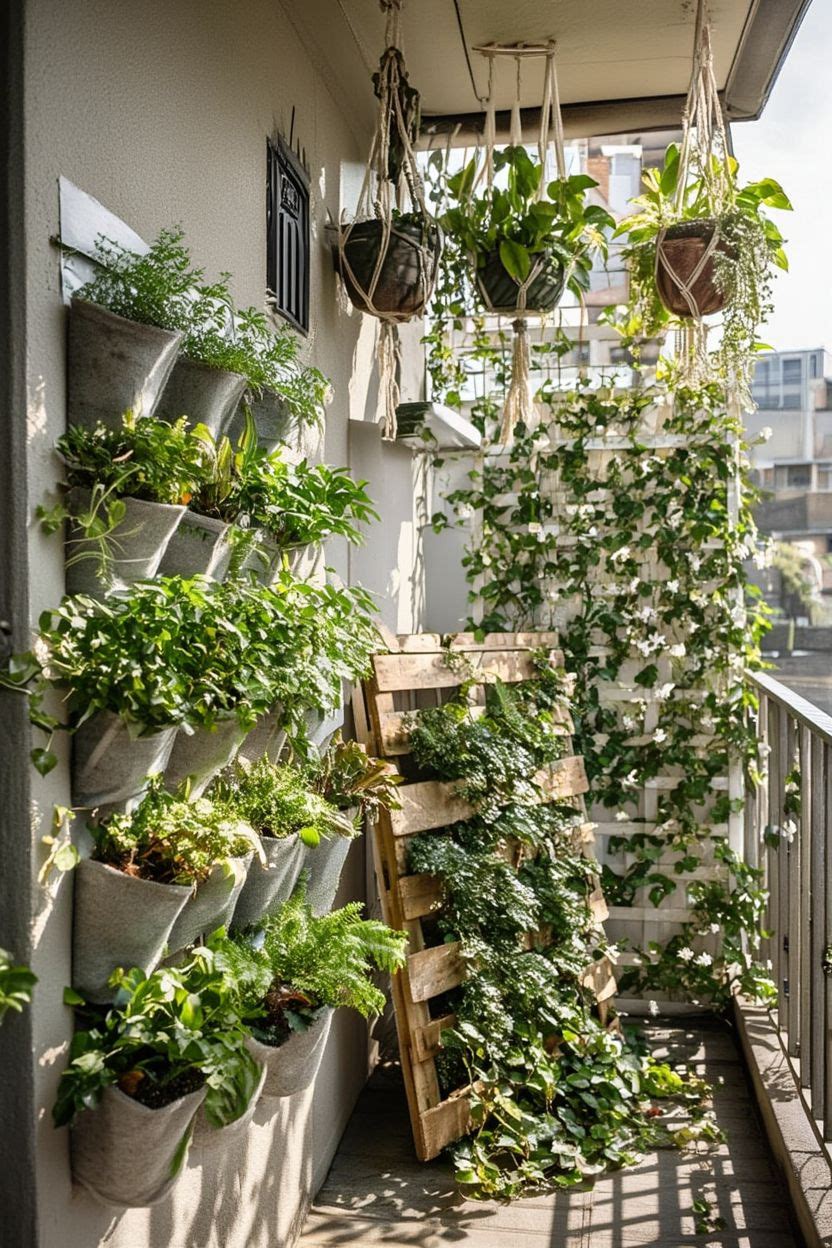
- Wall-mounted pocket planters — Felt or fabric pockets attached to walls are perfect for herbs and small flowers.
- Pallet gardens — Upcycle wooden pallets into layered vertical planters.
- Tiered plant stands — Stack multiple levels of pots in a compact footprint.
- Trellis and climbing plants — Fix a trellis to a wall and train cucumbers, beans, jasmine, or passion fruit to climb.
- Hanging baskets — Suspend from the ceiling or railings for trailing plants like petunias, lobelia, or ferns.
4. Best Plants for Urban Balcony Gardens
Choosing the right plants is crucial. Here’s a curated list by category:
Herbs (Easiest to Grow)
Herbs are the perfect starting point for beginner balcony gardeners. They’re compact, useful, and rewarding.
| Herb | Sunlight Needed | Watering |
|---|---|---|
| Basil | Full sun (6+ hrs) | Regular |
| Mint | Partial shade | Frequent |
| Coriander | Partial sun | Moderate |
| Rosemary | Full sun | Low |
| Curry Leaf | Full sun | Moderate |
| Lemongrass | Full sun | Regular |
Tip: Keep mint in its own container — it’s invasive and will take over shared pots.
Vegetables for Balcony Containers
You can grow a surprising amount of food on a balcony:
- Tomatoes (cherry varieties are ideal)
- Chillies and peppers
- Lettuce and spinach
- Radishes and spring onions
- Beans (pole beans grow vertically)
- Brinjal (eggplant)
- Methi (fenugreek)
Flowers for Colour and Pollinators
Flowers don’t just look beautiful — they attract pollinators that help your vegetables thrive.
- Marigolds — Vibrant, sun-loving, and pest-repelling.
- Petunias — Cascading beauties perfect for hanging baskets.
- Portulaca — Drought-tolerant and brilliantly colourful.
- Bougainvillea — Stunning climber for sunny, warm balconies.
- Geraniums — Long-blooming and easy to maintain.
- Impatiens — Ideal for shady balconies.
Low-Maintenance Options
Short on time? These plants practically look after themselves:
- Succulents and cacti
- Snake plant (Sansevieria)
- ZZ plant
- Pothos
- Aloe vera
5. Balcony Garden Design Styles
Your garden should reflect your personality. Here are some popular design themes to inspire you:
Tropical Paradise
Think bold, lush, and dramatic. Use large-leafed plants like elephant ears, bird of paradise, and palms. Add bamboo screens for privacy and warm-toned accessories.
Cottage Garden Feel
Soft, romantic, and abundant. Mix lavender, roses, geraniums, and herbs in terracotta pots. Add vintage-style furniture and fairy lights for a dreamy effect.
Minimalist Japanese Zen
Clean lines, restrained planting, and carefully chosen elements. Use gravel, moss, bamboo, and a few architectural plants like ornamental grasses or bonsai.
Mediterranean Kitchen Garden
Terracotta everywhere, filled with herbs, tomatoes, and chillies. Add olive or citrus trees in large pots. Use wrought iron furniture and warm earthy tones.
Urban Jungle Boho
Mix and match pot sizes, textures, and plant varieties for a lush, layered, slightly wild look. Hanging macramé planters, trailing pothos, and monstera are essentials here.
6. Soil and Fertiliser: Getting the Foundation Right
Balcony plants rely entirely on you for their nutrition. Garden soil straight from the ground is too heavy and often harbours pests.
Use a quality potting mix that includes:
- Coco peat (lightweight, retains moisture)
- Perlite or vermiculite (improves drainage and aeration)
- Compost (natural slow-release nutrition)
Fertilising tips:
- Use a balanced NPK liquid fertiliser every 2–3 weeks during the growing season.
- Compost tea is an excellent organic alternative.
- Top-dress pots with fresh compost every few months.
- Succulents and cacti need little to no fertiliser.
7. Watering Wisely
Balcony containers dry out far faster than in-ground soil, especially in summer. Overwatering and underwatering are the two most common plant killers.
Smart watering strategies:
- Check soil moisture before watering — push your finger an inch into the soil. Water only if it feels dry.
- Water in the morning to reduce evaporation and prevent fungal issues.
- Self-watering pots maintain consistent moisture and reduce watering frequency.
- Drip irrigation or ollas (clay pot irrigation) are excellent for holidays or busy schedules.
- Group plants together — they create a microclimate that retains humidity.
8. Dealing With Wind and Harsh Weather
Wind is a significant challenge on many urban balconies, especially on higher floors.
Wind protection solutions:
- Install bamboo or reed screens along railings.
- Use a trellis with climbing plants as a natural windbreak.
- Choose compact, bushy plants that don’t catch wind as easily.
- Secure tall pots with anti-tip measures or place them in sheltered corners.
In extreme heat:
- Move sensitive plants to shade during the hottest part of the day.
- Mulch the top of pots with coco husk or gravel to retain moisture.
- Use light-coloured pots that reflect heat rather than absorbing it.
9. Lighting for Low-Light Balconies
North-facing or heavily shaded balconies need not despair. Many beautiful plants thrive in indirect or filtered light.
Best plants for shady balconies:
- Ferns (Boston fern, maidenhair)
- Impatiens
- Begonias
- Peace lily
- Pothos and philodendrons
- Coleus (stunning foliage)
Supplement with grow lights if you want to grow vegetables or herbs in a low-light space. LED grow lights are energy-efficient and effective.
10. Create a Cosy Balcony Garden Retreat
A balcony garden isn’t just about plants — it’s about creating a space you love spending time in.
Ideas to make it magical:
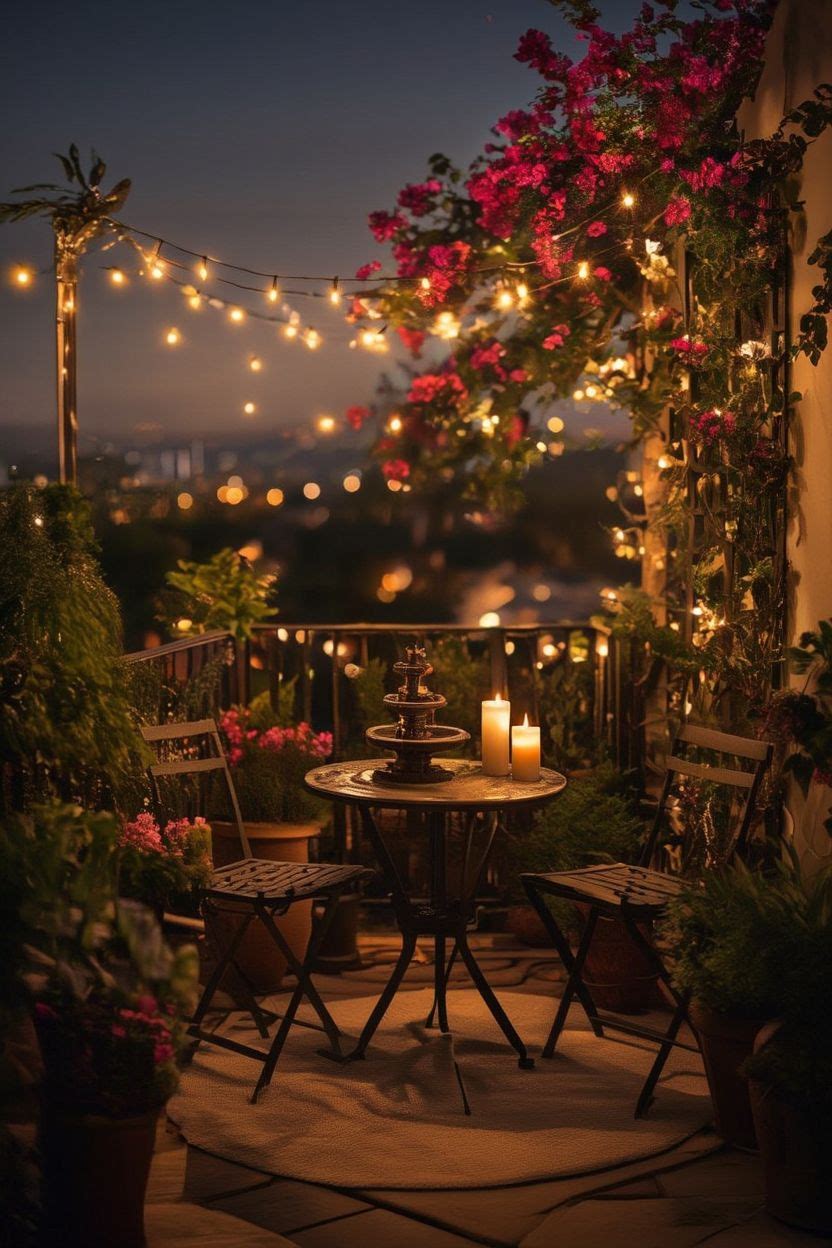
- Outdoor seating — Even a small bistro set or a couple of folding chairs transforms a balcony into a living space.
- Fairy lights or solar lanterns — Nothing creates ambience quite like soft evening lighting.
- Outdoor rug — Define the space and add warmth underfoot.
- Water feature — A small tabletop fountain adds soothing sound and attracts birds.
- Privacy screens — Bamboo rolls, wooden lattice, or tall planters create a sense of seclusion.
- Scented plants — Jasmine, lavender, gardenias, and lemon-scented verbena make the air divine.
11. Composting on a Balcony
Yes, you can compost even without a garden! Balcony composting is easier than you think.
Options:
- Worm bin (vermicomposting) — A compact bin with red wigglers breaks down kitchen scraps into rich compost. Odour-free when managed correctly.
- Bokashi system — Ferments food waste (including meat and dairy) quickly and compactly. Great for apartments.
- Small tumbler composter — Works well on larger balconies.
Kitchen scraps like vegetable peels, coffee grounds, and eggshells become free, nutrient-rich food for your plants.
12. Pest Management Without Chemicals
Balcony gardens aren’t immune to pests, but you can keep them in check naturally.
Common balcony pests and organic solutions:
| Pest | Organic Solution |
|---|---|
| Aphids | Neem oil spray, ladybugs |
| Mealybugs | Isopropyl alcohol on cotton swab |
| Spider mites | Water misting, neem oil |
| Fungus gnats | Allow soil to dry out, sticky traps |
| Whiteflies | Yellow sticky traps, neem oil |
Preventive measures:
- Inspect new plants before introducing them to your balcony.
- Avoid overwatering (creates ideal conditions for pests and disease).
- Plant companion herbs like basil and marigolds — they naturally deter many pests.
13. Seasonal Balcony Gardening in India
India’s diverse climate means your balcony garden will change with the seasons.
Summer (March–June):
- Focus on heat-tolerant plants: portulaca, bougainvillea, okra, chillies.
- Water more frequently; shade sensitive plants.
Monsoon (July–September):
- A blessing for gardeners! Growth is lush and rapid.
- Watch for fungal diseases; improve air circulation.
- Perfect time to propagate and multiply plants.
Winter (October–February):
- Ideal growing season for vegetables: spinach, methi, peas, radish, cabbage.
- Great for flowers: marigolds, pansies, petunias, snapdragons.
- Many herbs thrive in cool temperatures.
Quick-Start Balcony Garden Plan for Beginners
If you’re just starting out, keep it simple. Here’s a beginner-friendly setup:
- 3 herb pots — Basil, mint, coriander
- 2 vegetable containers — Cherry tomatoes, chillies
- 2 flowering pots — Marigolds, petunias
- 1 trailing plant — Pothos or money plant for railings
- 1 statement plant — A small bougainvillea or snake plant
This modest collection gives you colour, fragrance, fresh produce, and greenery — without overwhelming a beginner.
Final Thoughts
Your balcony is a blank canvas waiting to come alive. Urban balcony gardening is one of the most rewarding hobbies you can take up — it connects you to nature, provides fresh food, beautifies your home, and gives you a peaceful outdoor retreat right in the heart of the city.
Start small, experiment freely, and don’t be discouraged by the occasional plant loss. Every experienced gardener has a graveyard of learning experiences behind them. The joy is in the journey — and in the first tomato you pick from a pot you planted yourself.
Happy gardening! 🌿
Have a balcony garden of your own? Share your tips and photos in the comments below — we’d love to see your green space!