25 Landscape Yard Ideas to Transform Your Outdoor Space (Any Budget, Any Size)
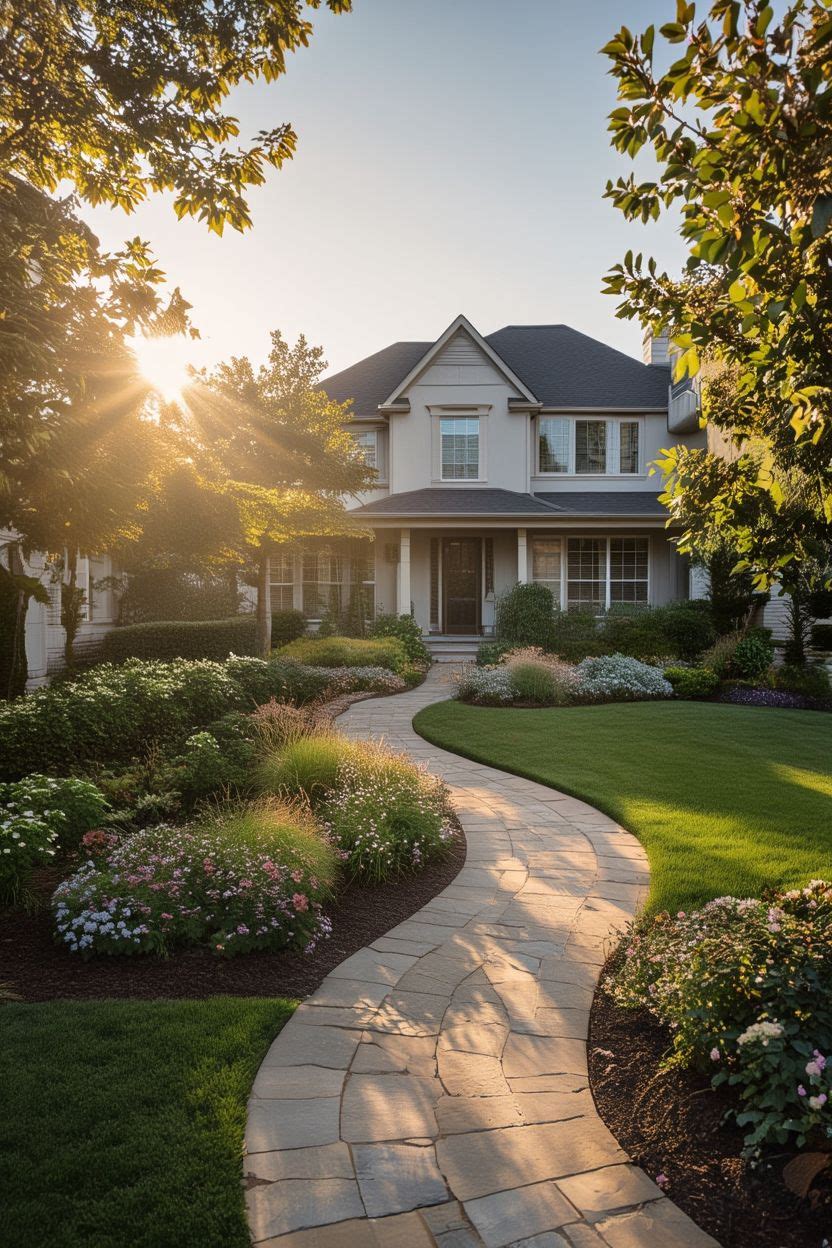
Landscaping your yard doesn’t have to mean hiring a design firm or spending tens of thousands of dollars. Some of the most beautiful yards you’ve ever admired were built gradually, one bed and one plant at a time, by regular homeowners who figured it out as they went.
This guide covers 25 practical landscape yard ideas — for front yards, backyards, small spaces, and tight budgets. Whether you want curb appeal, a relaxing retreat, or a productive edible landscape, there’s something here that will work for your space.
1. Start With a Plan (Even a Simple One)
Before you dig anything, spend a little time thinking through what you actually want from your yard. The best landscapes aren’t random — they solve problems and reflect how the space gets used.
Ask yourself:
- Who uses the yard? Kids, dogs, adults who entertain, or someone who just wants low maintenance?
- What do you look at most? Your view from inside the house matters as much as curb appeal
- How much time can you give it? Be honest — a high-maintenance design you can’t keep up becomes an eyesore fast
- What’s your budget? Knowing if you have $200 or $2,000 shapes every decision
You don’t need professional software. A rough sketch on graph paper, one square = one foot, is enough to get started.
2. Front Yard Landscape Ideas
Your front yard is the first thing anyone sees. A little effort here pays off more than almost anywhere else — for curb appeal, property value, and your own enjoyment pulling into the driveway.
2.1 Curved Garden Beds Along the Foundation
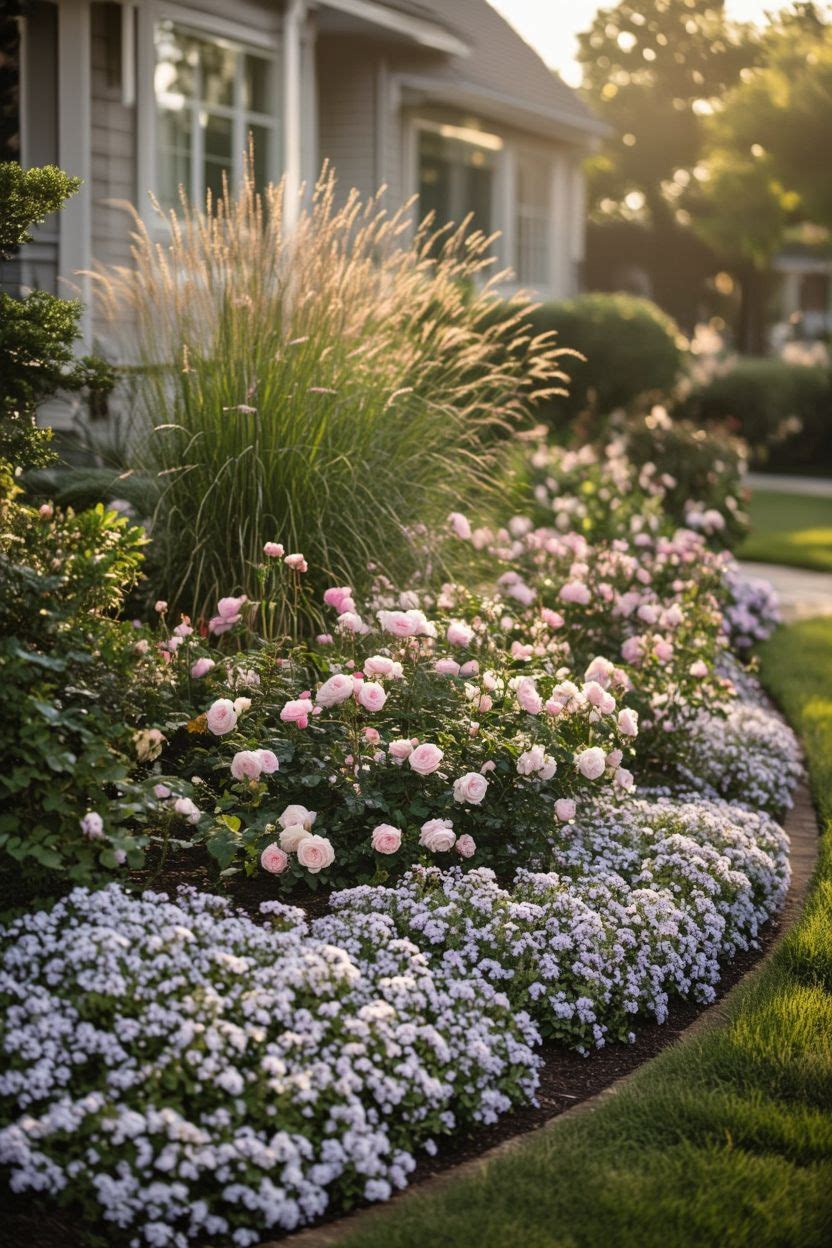
Straight-edged beds look dated. Curved beds that follow the natural line of your home soften the architecture and look far more intentional.
How to do it:
- Use a garden hose to lay out the curve before you dig — move it until it looks right, then mark with spray paint
- Fill with a mix of flowering shrubs in back, perennials in the middle, and low groundcover in front
- Mulch 2–3 inches deep to suppress weeds and keep things tidy
Plants that work well:
- Knockout roses (Rosa ‘Knockout’) — $15–$25 each, blooms all season
- Ornamental grasses like Karl Foerster (Calamagrostis acutiflora) — $12–$20 each
- Creeping phlox (Phlox subulata) as groundcover — $8–$15 per flat
Cost estimate: $150–$600 depending on bed size and plant choices
2.2 A Welcoming Pathway to the Front Door
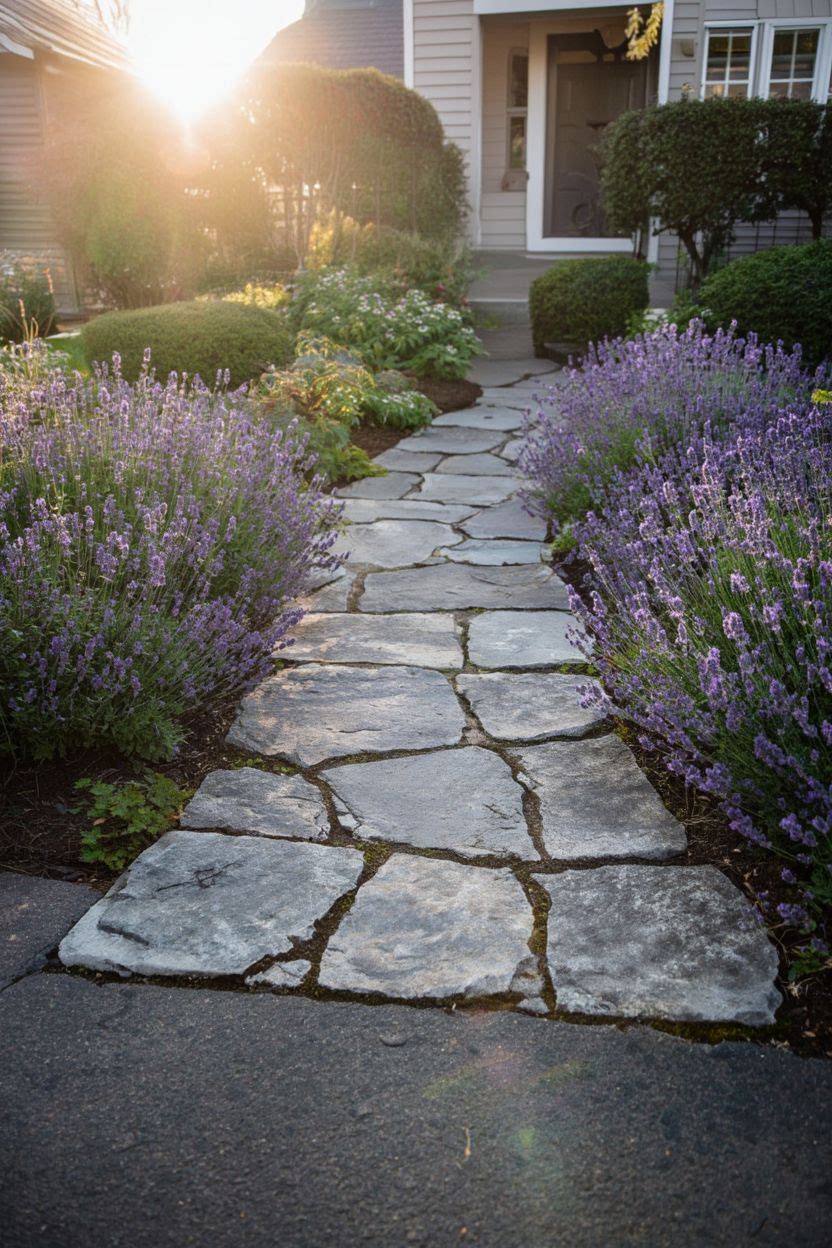
A defined path doesn’t just look good — it guides visitors and keeps foot traffic off your lawn. Materials range from budget-friendly to premium.
| Material | Cost per Sq Ft | Look | DIY Friendly? |
|---|---|---|---|
| Stepping stones | $1–$3 | Casual, natural | Yes |
| Concrete pavers | $3–$8 | Clean, modern | Yes |
| Flagstone | $5–$15 | Rustic, elegant | Moderate |
| Brick | $4–$10 | Classic, traditional | Moderate |
| Gravel + edging | $2–$5 | Cottage, relaxed | Yes |
Line the path with low plants — lavender (Lavandula angustifolia), catmint (Nepeta), or ornamental alliums — and the whole front yard pulls together.
2.3 Low-Maintenance Lawn Alternatives
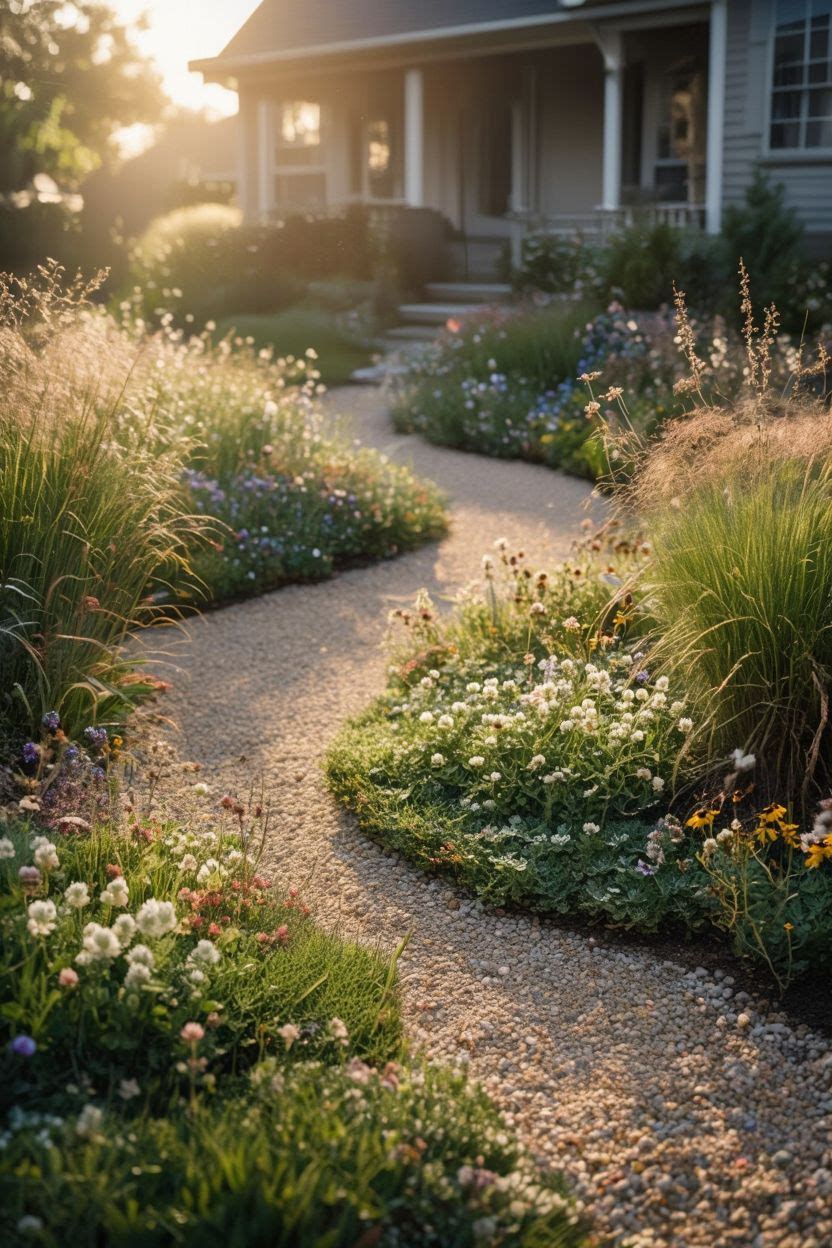
Grass is high maintenance and often the biggest water user in the yard. Many homeowners are swapping all or part of their lawn for alternatives that look just as good with far less work.
Popular lawn alternatives:
- Clover lawn — stays green, fixes nitrogen, tolerates drought. Seed costs around $15 for a small yard
- Native groundcovers — creeping thyme (Thymus serpyllum), buffalo grass (Bouteloua dactyloides), or blue grama grass (Bouteloua gracilis)
- Decomposed granite or river rock with drought-tolerant plantings
- Mixed perennial meadow — plant once, minimal care after year one
3. Backyard Landscape Ideas
The backyard is where you actually live — where kids play, meals are eaten outdoors, and relaxing happens. Landscaping here should prioritize how you use the space first, looks second.
3.1 Define Zones With Purpose
A well-landscaped backyard usually has two or three distinct zones:
- Entertainment zone — patio, deck, or gravel area for seating and dining
- Garden zone — beds, raised planters, or lawn for visual interest and planting
- Buffer zone — screening plants, fences, or hedges that create privacy
You don’t need a huge yard for this. Even a 20×30 foot backyard can have all three zones if you plan the layout before you plant.
3.2 Patio or Seating Area With Planted Borders
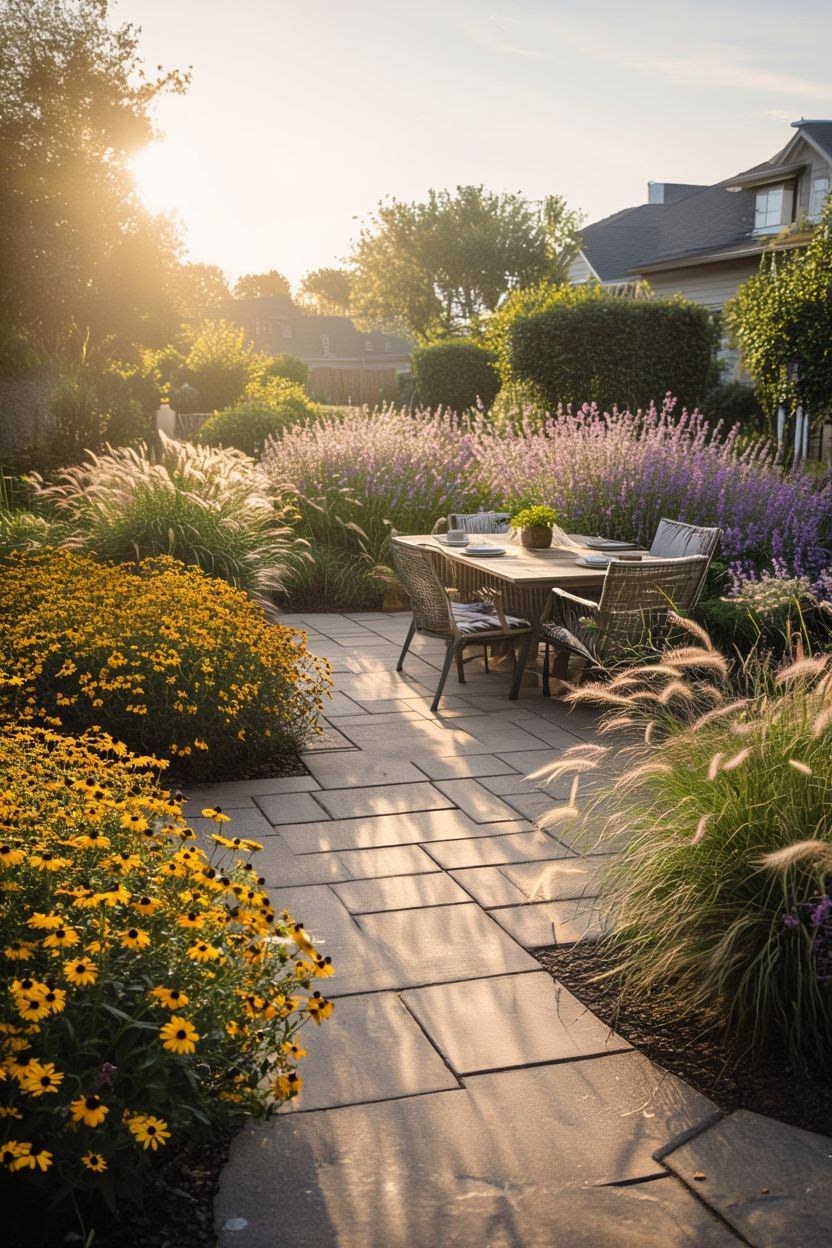
A paved or gravel seating area anchors the backyard and gives you a destination. Surround it with planted borders and you get the feel of sitting inside a garden rather than just in a yard.
Simple patio build options:
- Gravel patio with edging — $2–$5 per sq ft, DIY weekend project
- Paver patio — $8–$20 per sq ft installed, $4–$8 DIY
- Decomposed granite — $1–$3 per sq ft, easy to install
Border plants that look great around a patio:
- Black-eyed Susan (Rudbeckia hirta) — $6–$10 each
- Russian sage (Perovskia atriplicifolia) — $12–$18 each
- Ornamental grasses for height and movement
3.3 Privacy Screening With Plants
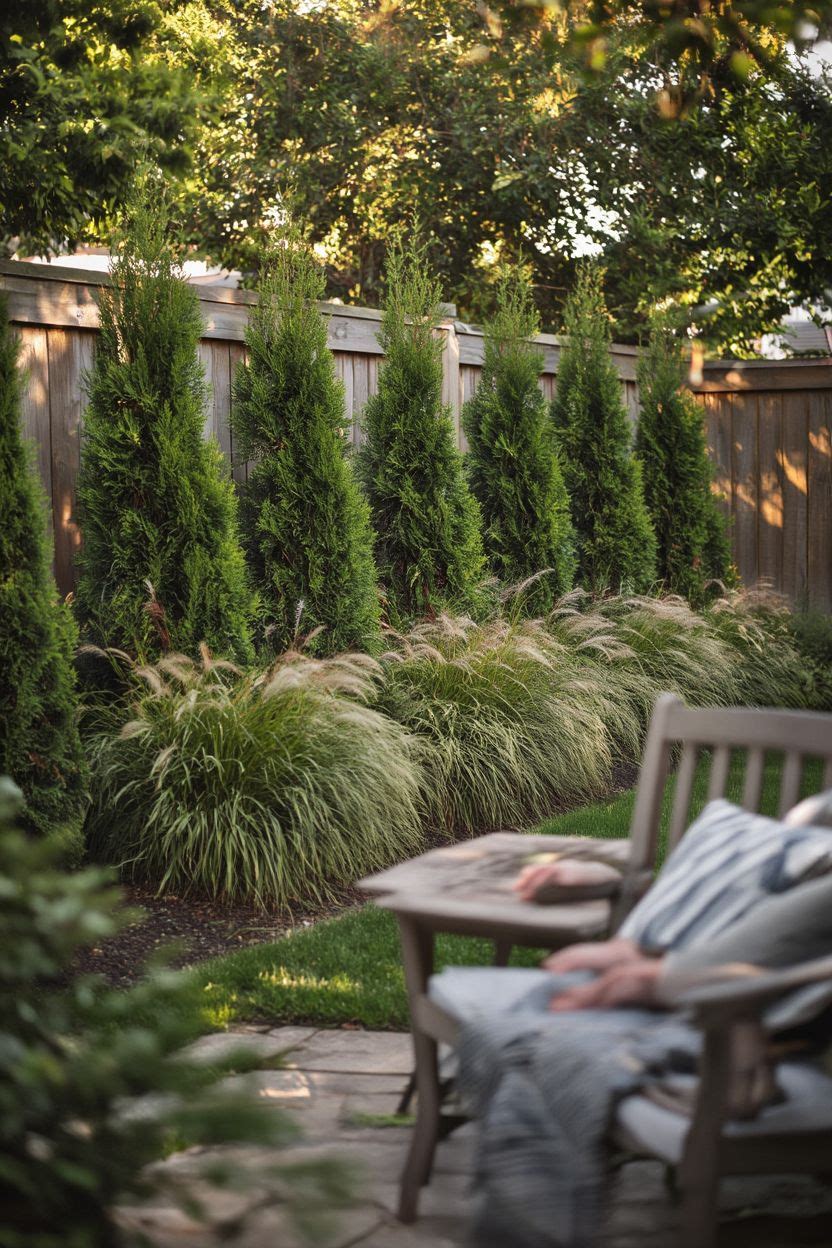
A solid fence blocks views but creates a hard, closed feeling. Plant-based privacy screens feel more natural and are often cheaper.
Best plants for privacy screening:
| Plant | Height | Growth Speed | Cost Each | Notes |
|---|---|---|---|---|
| Emerald Green Arborvitae | 10–15 ft | Slow | $25–$60 | Classic, dense, evergreen |
| Sky Pencil Holly | 6–10 ft | Medium | $20–$45 | Narrow, formal look |
| Bamboo (clumping) | 10–20 ft | Fast | $30–$80 | Needs containment |
| Leyland Cypress | 15–25 ft | Very fast | $20–$50 | Large spaces only |
| Karl Foerster Grass | 4–6 ft | Fast | $12–$20 | Seasonal, graceful |
Plant in staggered rows for a more natural look and faster coverage.
4. Landscape Ideas for Small Yards
Small yards can be just as beautiful as large ones — they just need more intentional design. Every plant and every square foot earns its place.
4.1 Vertical Gardening and Wall Planters
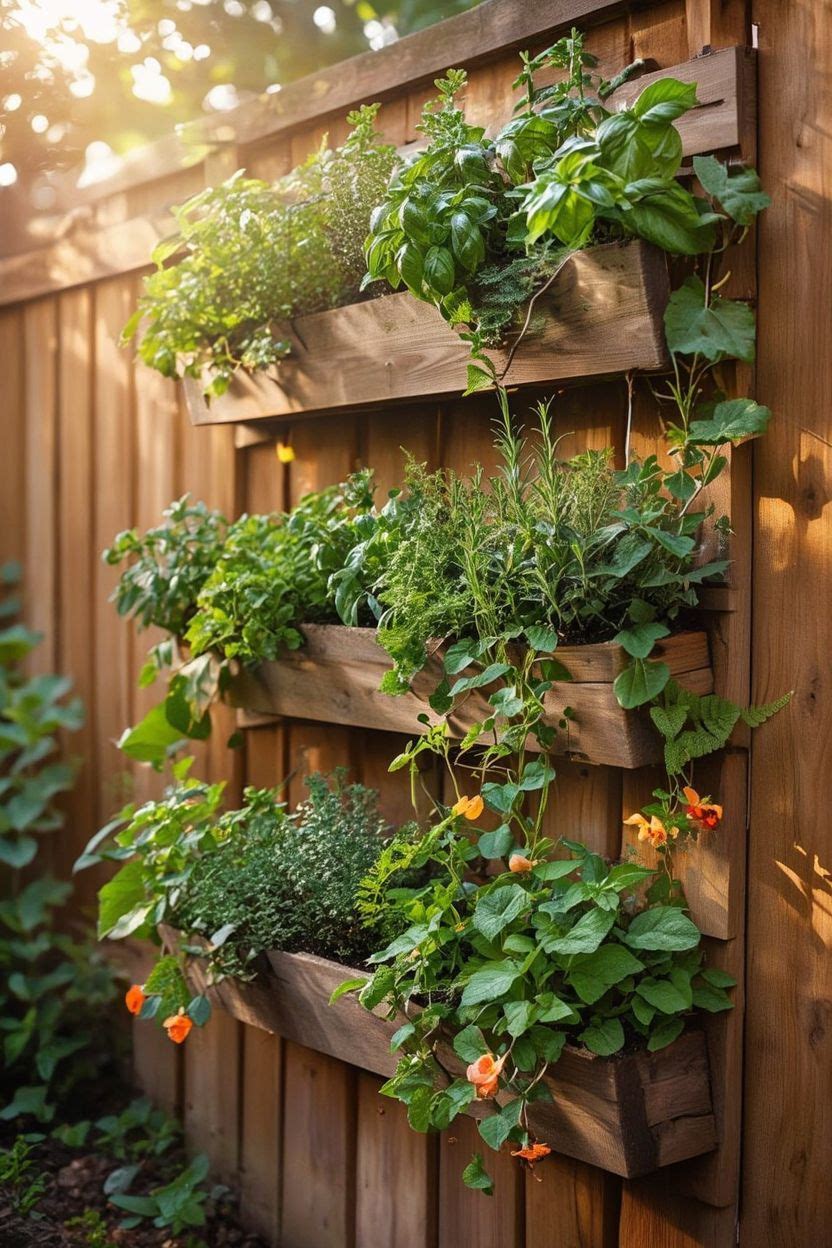
When you’re short on floor space, go up. Vertical gardens use fences, walls, and trellises as planting surfaces — adding greenery without taking up any ground space.
Options:
- Pocket planters hung on a fence — $20–$60
- Pallet garden with soil and cuttings — free to $20
- Wall-mounted planter systems — $40–$150
- DIY trellis with climbing plants — $5–$30
Best plants for vertical gardens: herbs (basil, mint, thyme), strawberries, trailing nasturtiums (Tropaeolum majus), and small ferns.
4.2 Raised Garden Beds as Landscape Features
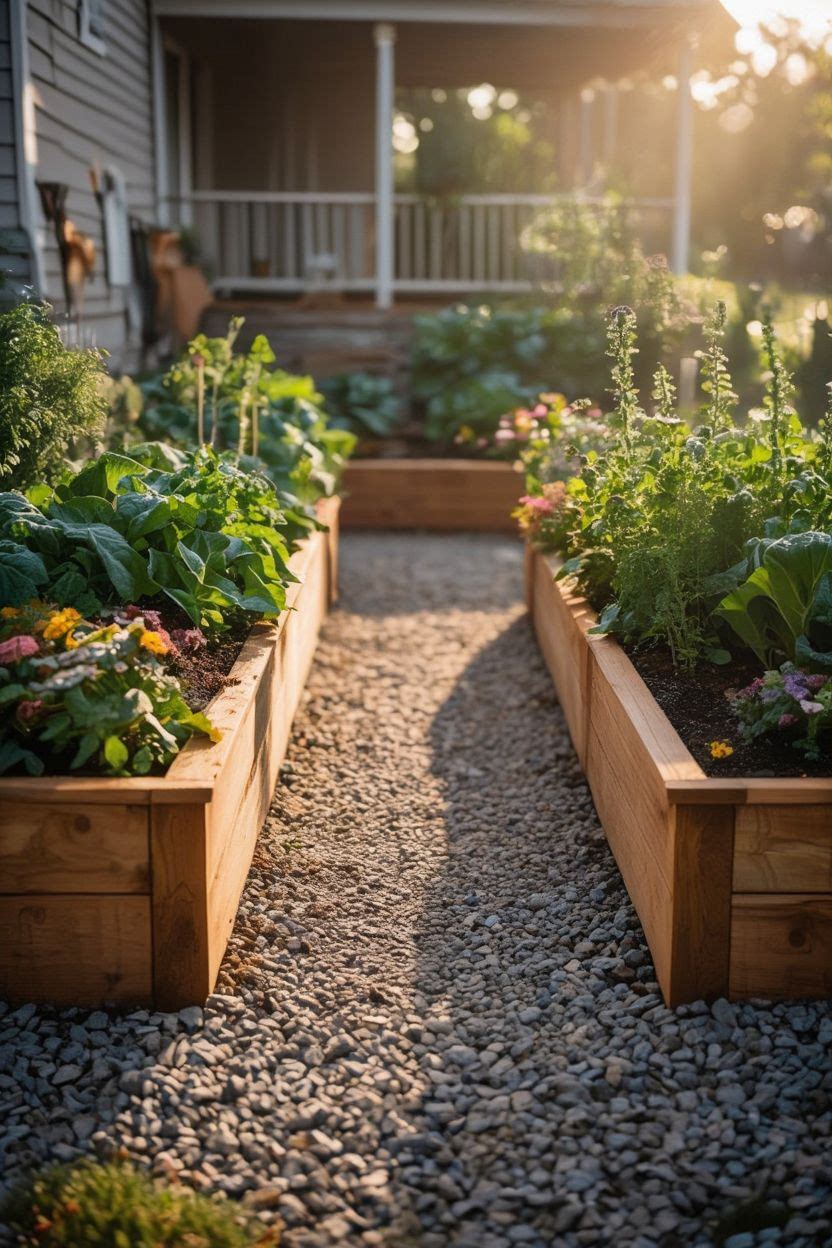
Raised beds don’t just grow vegetables — they’re landscape features in their own right. A well-built raised bed from cedar or composite lumber looks intentional and organized, and the paths between beds can be gravel, bark, or stepping stones.
Standard raised bed sizes:
- 4×4 feet — $40–$80 to build, perfect for a patio corner
- 4×8 feet — $60–$120, the most popular size
- Tiered beds — add visual interest and height
Fill with a quality mix: 60% topsoil, 30% compost, 10% perlite or coarse sand. This “Mel’s Mix” approach grows almost everything exceptionally well.
5. Budget Landscape Ideas (Under $500)
You don’t need a big budget to make a big impact. These ideas prove it.
5.1 Mulch and Define Your Existing Beds
Fresh mulch is the single cheapest thing you can do for instant landscape improvement. A 2–3 inch layer of shredded hardwood mulch costs $3–$5 per bag or $25–$45 per cubic yard in bulk. For most yards, 3–5 cubic yards covers existing beds beautifully.
Pair fresh mulch with clean edging and the yard looks professionally maintained, even if the plants haven’t changed.
5.2 Plant Perennials, Not Annuals
Annuals need replanting every year. Perennials come back on their own. Spending $100 on perennials now saves you $100 every year afterward.
Reliable, affordable perennials:
- Coneflower (Echinacea purpurea) — $5–$12 each, pollinators love it
- Daylily (Hemerocallis) — $8–$15 each, virtually indestructible
- Hostas — $6–$20 each, perfect for shade
- Salvia (Salvia nemorosa) — $8–$15 each, long blooming, drought tolerant
- Sedum/Stonecrop — $6–$12 each, thrives in poor soil
5.3 Add a Focal Point
Every great landscape has a focal point — something your eye goes to first. It doesn’t have to be expensive:
- A birdbath ($25–$80)
- A large decorative pot with a dramatic plant ($30–$100)
- A small water feature ($40–$150)
- A bold specimen plant like a Japanese maple (Acer palmatum) ($60–$200)
One strong focal point does more for a landscape than scattering ten small items around the yard.
6. Low-Maintenance Landscape Ideas
The best landscape is one you can actually keep up with. These designs look great with minimal weekly effort.
6.1 Native Plant Landscaping
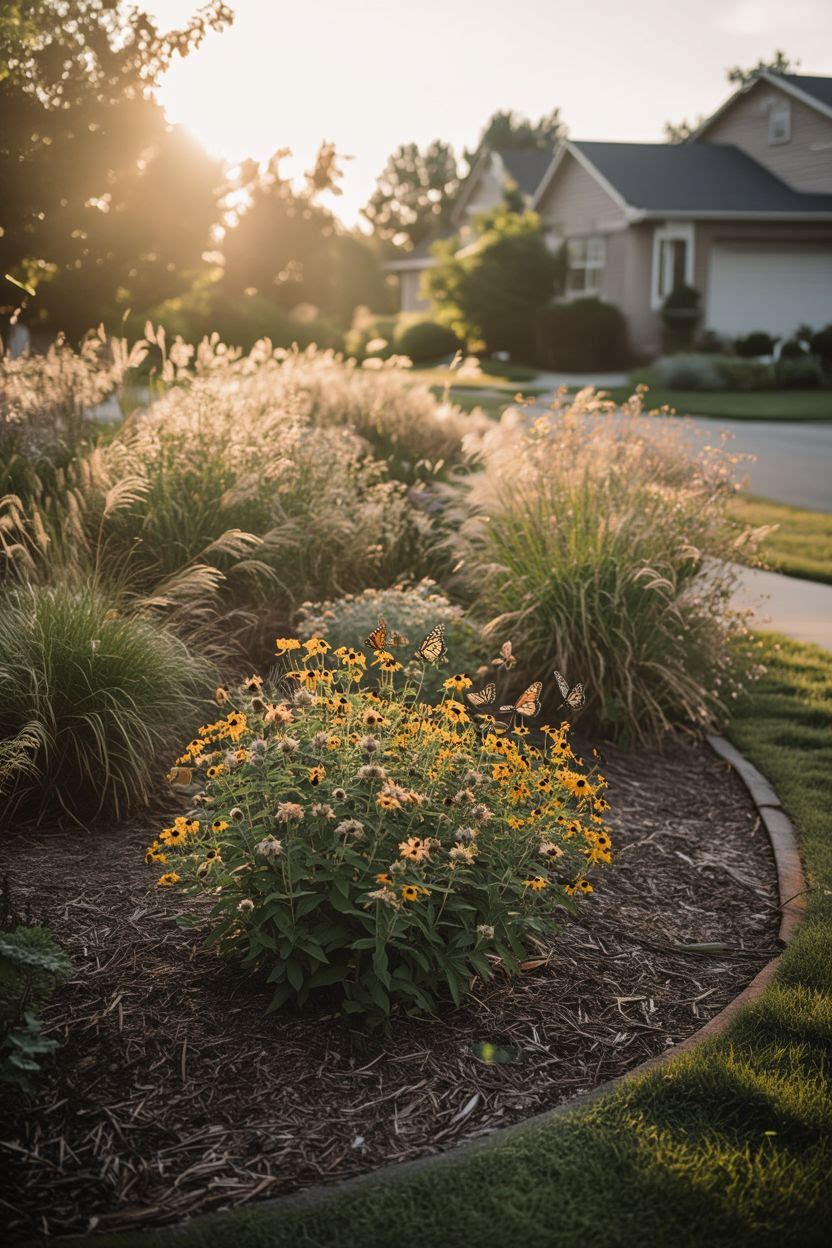
Native plants are adapted to your local soil, rainfall, and climate. Once established, most need no fertilizer, little extra water, and minimal care. They also support local birds, bees, and butterflies.
Popular native plants by region (US):
| Region | Good Native Choices |
|---|---|
| Northeast | Coneflower, black-eyed Susan, wild columbine, native asters |
| Southeast | Beautyberry, muhly grass, native azaleas, blazing star |
| Midwest | Prairie dropseed, wild bergamot, compass plant, ironweed |
| Southwest | Desert marigold, penstemon, agave, native salvias |
| Pacific NW | Oregon grape, red flowering currant, sword fern, camas |
Start with your local cooperative extension service for a free list of natives for your specific area.
6.2 Rock and Gravel Garden
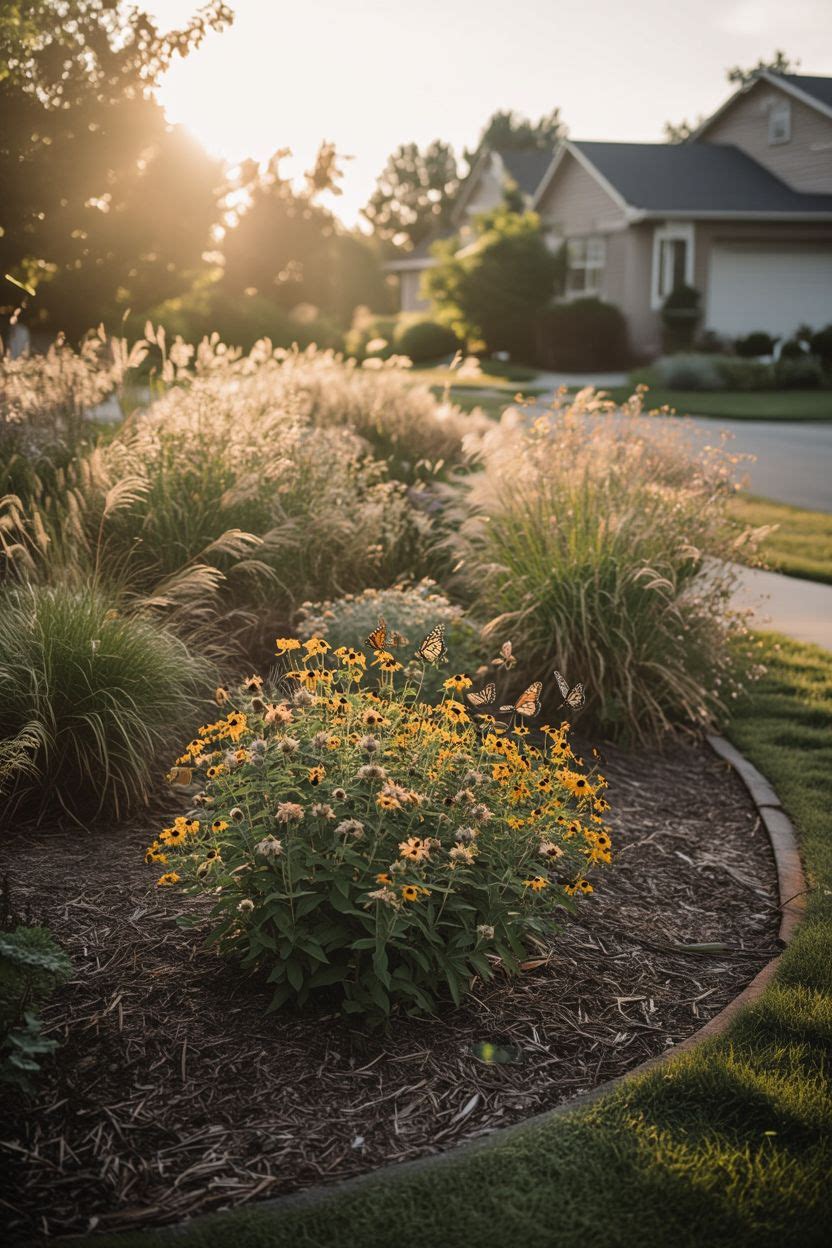
Rock and gravel gardens are beautiful, virtually weed-free once established, and use almost no water. They work especially well in dry climates, on slopes, or in areas where grass refuses to grow well.
How to build a simple rock garden:
- Clear and level the area
- Lay landscape fabric (optional — some prefer no fabric for a natural look)
- Place larger boulders first — odd numbers look most natural
- Fill in with gravel or decomposed granite
- Plant drought-tolerant specimens in pockets of good soil
Best plants: sedums, ice plant (Delosperma), hen-and-chicks (Sempervivum), lavender, ornamental grasses
Cost estimate: $200–$800 depending on size and rock type
7. Quick Landscape Wins — High Impact, Low Effort
| Idea | Cost | Time | Impact |
|---|---|---|---|
| Fresh mulch on all beds | $50–$150 | 2–3 hours | Very high |
| Define bed edges with a spade | $0 | 1–2 hours | High |
| Add 3 matching large pots to patio | $60–$150 | 1 hour | High |
| Plant one bold specimen tree | $60–$200 | 2 hours | Very high |
| Install solar path lights | $20–$60 | 1 hour | Medium |
| Paint fence or garden wall | $30–$80 | 4–6 hours | High |
| Add a birdbath or water dish | $25–$80 | 30 min | Medium |
Final Thoughts
Landscaping your yard is one of the most rewarding home improvement projects you can take on. It improves your quality of life every single day, increases property value, and — if you plant the right things — gets easier to maintain as the years go by.
The most important thing is to start. Pick one area — the foundation bed, the side gate, the patio corner — and work on that first. Do it well, learn from it, and expand from there. A yard that took five years to build is still a beautiful yard.
Don’t let the size of the vision stop you from making the first move. Buy three plants. Edge one bed. Lay a path of stepping stones. The rest follows naturally.
What landscape project are you tackling first? Drop a comment below — I’d love to hear what you’re working on.