25 Vertical Balcony Garden Ideas for Apartments in 2026 (Small Space, Big Impact)
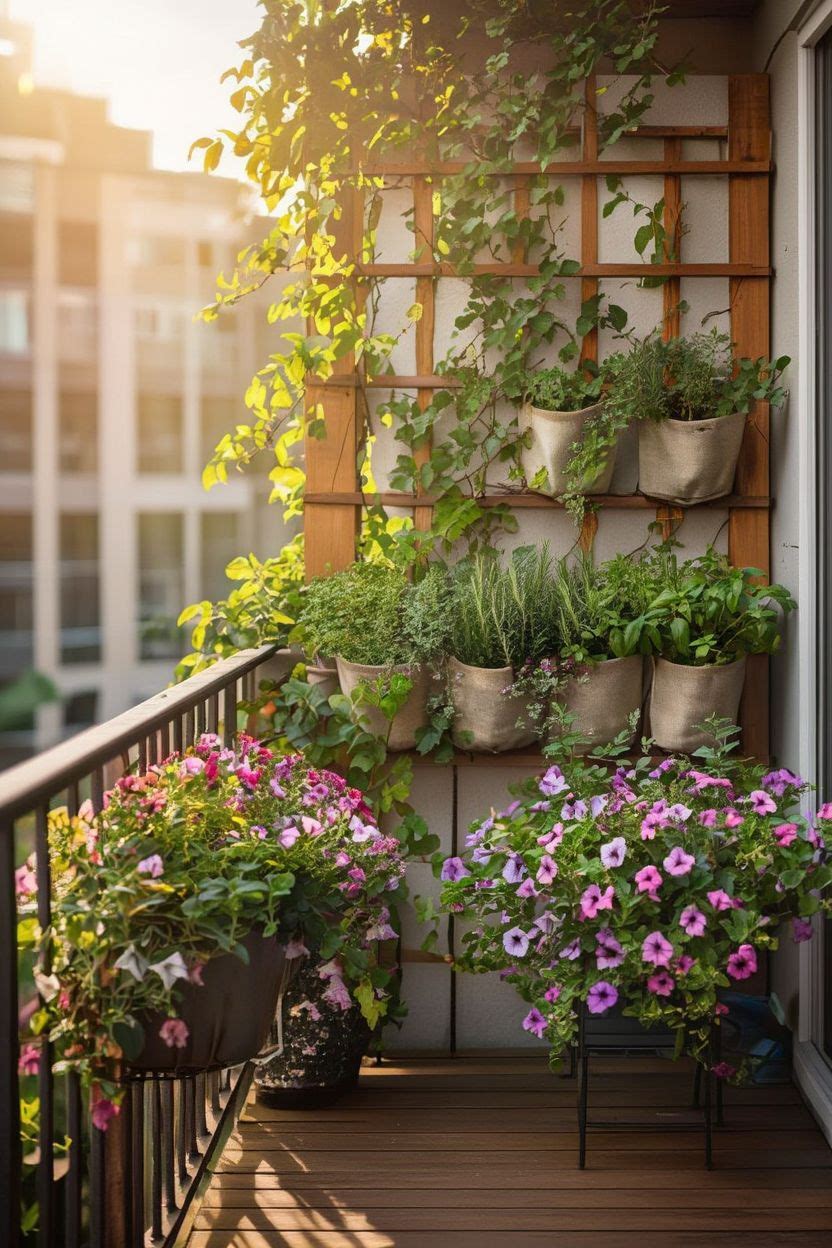
Got a tiny balcony and a big dream to grow things? You’re not alone. Millions of apartment renters and condo owners are turning bare concrete railings and blank walls into jaw-dropping vertical gardens — even in just 30 square feet of space.
This guide covers everything you need to know about vertical balcony gardening in 2026: the best structures, the easiest plants, costs to expect, and beginner-friendly tips that actually work. No garden bed required.
1. Why Vertical Gardening is Perfect for Balconies
Most apartment balconies are small — often under 50 sq ft. Going vertical is simply the smartest way to grow more in less floor space. Instead of spreading outward, you build upward.
Here’s why it works so well for apartment dwellers:
- No ground required — everything hangs, mounts, or leans against the wall or railing
- Better airflow — plants on vertical structures dry faster, reducing mold and rot
- Privacy screen — a wall of greenery blocks nosy neighbors naturally
- Temperature buffer — plants on west or south-facing walls can cool your apartment by several degrees
- Aesthetic upgrade — a green wall is an instant visual transformation
| Benefit | Horizontal Garden | Vertical Garden |
|---|---|---|
| Space required | 50–100 sq ft minimum | 5–20 sq ft on wall |
| Floor load | Higher | Lower (wall-mounted) |
| Privacy effect | Low | High |
| Visual impact | Moderate | Very High |
| Best for apartments | ❌ Rarely | ✅ Always |
2. Planning Your Vertical Balcony Garden
Before you buy anything, spend 10 minutes on this planning checklist. It’ll save you money and frustration.
2.1 Know Your Sunlight
Your balcony direction decides almost everything.
| Direction | Sun Hours | Best For |
|---|---|---|
| South-facing | 6–8 hrs | Tomatoes, peppers, herbs, most flowers |
| East-facing | 3–5 hrs morning | Ferns, lettuce, strawberries |
| West-facing | 3–5 hrs afternoon | Herbs, succulents, lavender |
| North-facing | Under 2 hrs | Shade plants, ferns, hostas |
2.2 Check Weight Limits
Most apartment balconies can hold 40–60 lbs per sq ft. Heavy ceramic pots, wet soil, and large wooden structures add up fast. Stick to:
- Lightweight grow bags instead of ceramic
- Fabric wall pockets instead of heavy planters
- Aluminum or plastic frames instead of wood for large structures
When in doubt, check your building’s balcony load specs or ask your building manager.
2.3 Renter vs. Owner Rules
If you’re renting, avoid drilling into walls or railings without written permission. Good news — most vertical systems today are designed to be renter-friendly:
- Tension rods between floor and ceiling
- Railing clip systems that require zero holes
- Freestanding towers that move with you
3. Best Vertical Garden Structures for Balconies
3.1 Wall Pocket Planters
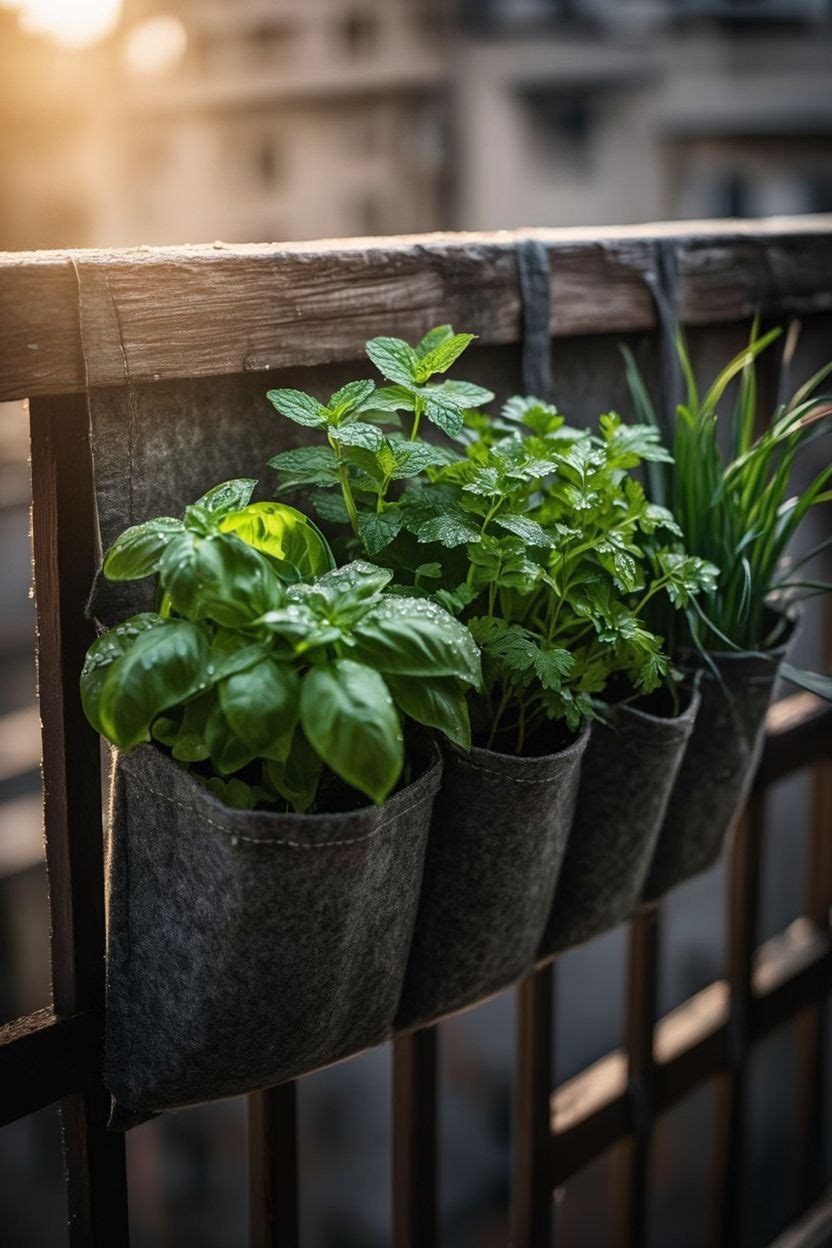
These fabric or felt pockets mount on a wall or fence and hold individual plants. They’re lightweight, affordable ($15–$40 for a 12-pocket set), and great for herbs and strawberries.
Best brands in 2026: Mifaso, Mkono, Vonhaus
Pros: Cheap, easy to install, portable
Cons: Dry out faster, need daily watering in summer
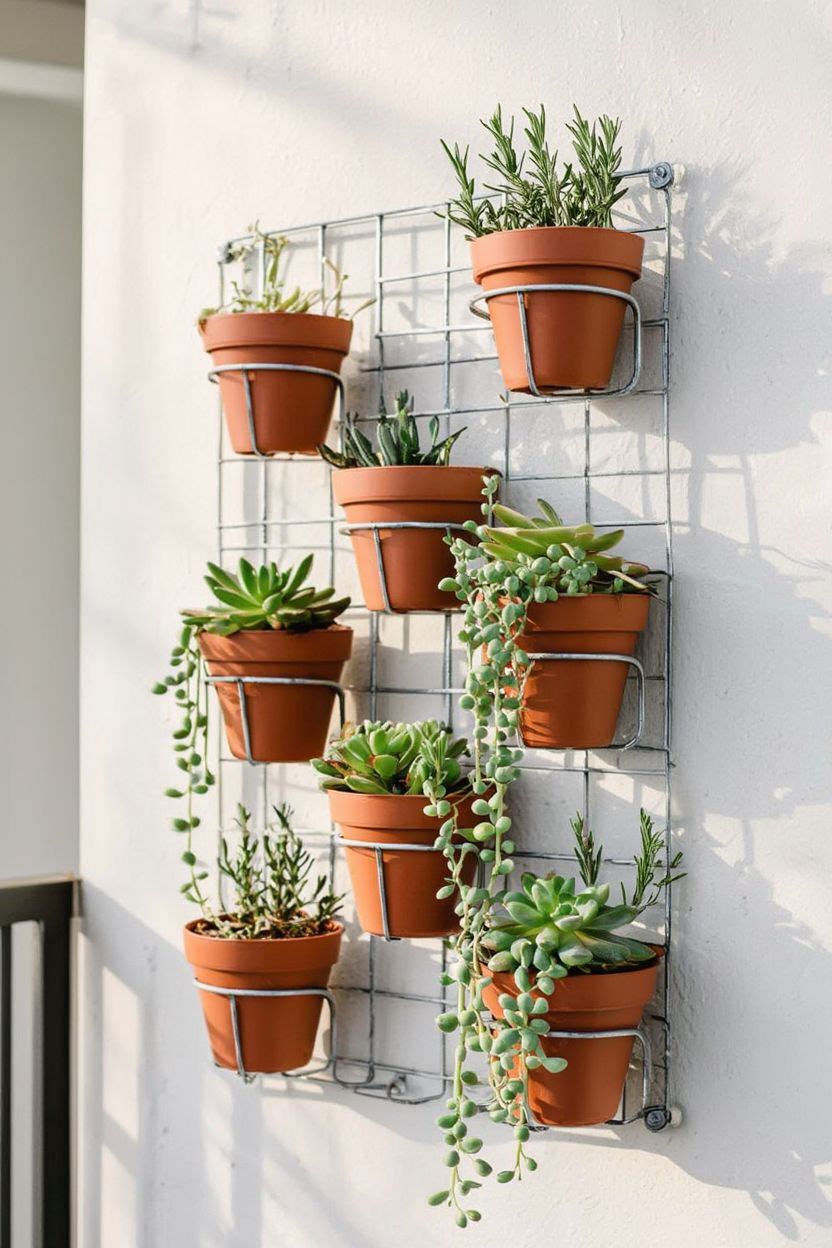
3.2 Pallet-Style Planter Frames
Wooden or metal grid frames that sit against your wall or hang from a railing. You slot in individual small pots. Very Instagram-friendly.
Cost: $40–$120 depending on size and material
Best for: Succulents, small herbs, trailing plants
3.3 Tower Planters
Tall, freestanding columns with multiple planting pockets stacked vertically. Some rotate so every plant gets sun. Great for strawberries and lettuce.
Cost: $30–$80
Best for: Strawberries, lettuce, herbs, compact flowers
3.4 Trellis + Climbing Plants
A simple trellis (wood, metal, or bamboo) leaned against the wall or zip-tied to the railing gives climbing plants a place to grow. This is the most natural-looking option.
Cost: $15–$50
Best for: Beans, peas, cucumbers, morning glory, passionflower
3.5 Rail Planters
These clip or hook directly onto your balcony railing. No drilling, totally renter-safe. Come in rectangular boxes that line the railing edge.
Cost: $20–$60 per planter
Best for: Petunias, herbs, trailing succulents, small peppers
| Structure | Cost | Renter Safe | Watering Needs | Best For |
|---|---|---|---|---|
| Wall pocket | $15–$40 | ✅ Yes | Daily | Herbs, strawberries |
| Pallet frame | $40–$120 | ✅ Most | Every 2 days | Succulents, herbs |
| Tower planter | $30–$80 | ✅ Yes | Every 2 days | Lettuce, strawberries |
| Trellis | $15–$50 | ✅ Yes | Every 3 days | Climbers, vines |
| Rail planter | $20–$60 | ✅ Yes | Every 2 days | Flowers, trailing herbs |
4. Best Plants for Vertical Balcony Gardens
These plants have been proven winners for vertical setups in apartments — chosen for compact size, high yield, and visual appeal.
4.1 Herbs
The easiest and most rewarding category for beginners. Most herbs:
- Thrive in small containers
- Don’t need deep roots
- Grow back after cutting (perennial or semi-perennial)
- Save you $3–$6 per bunch at the grocery store
Top herbs for vertical balcony gardens:
- Basil (Ocimum basilicum) — loves heat and sun, grows fast. Buy seedlings ($2–$3 each) rather than seeds for speed.
- Mint (Mentha spp.) — grows aggressively, so keep it in its own pocket. Perennial.
- Chives (Allium schoenoprasum) — almost unkillable, great in rail planters.
- Parsley (Petroselinum crispum) — slow grower but rewarding. Needs 4+ hours of sun.
- Thyme (Thymus vulgaris) — drought-tolerant, perfect for high shelves you can’t water every day.
- Oregano (Origanum vulgare) — spreads nicely in pockets, very low maintenance.
4.2 Strawberries
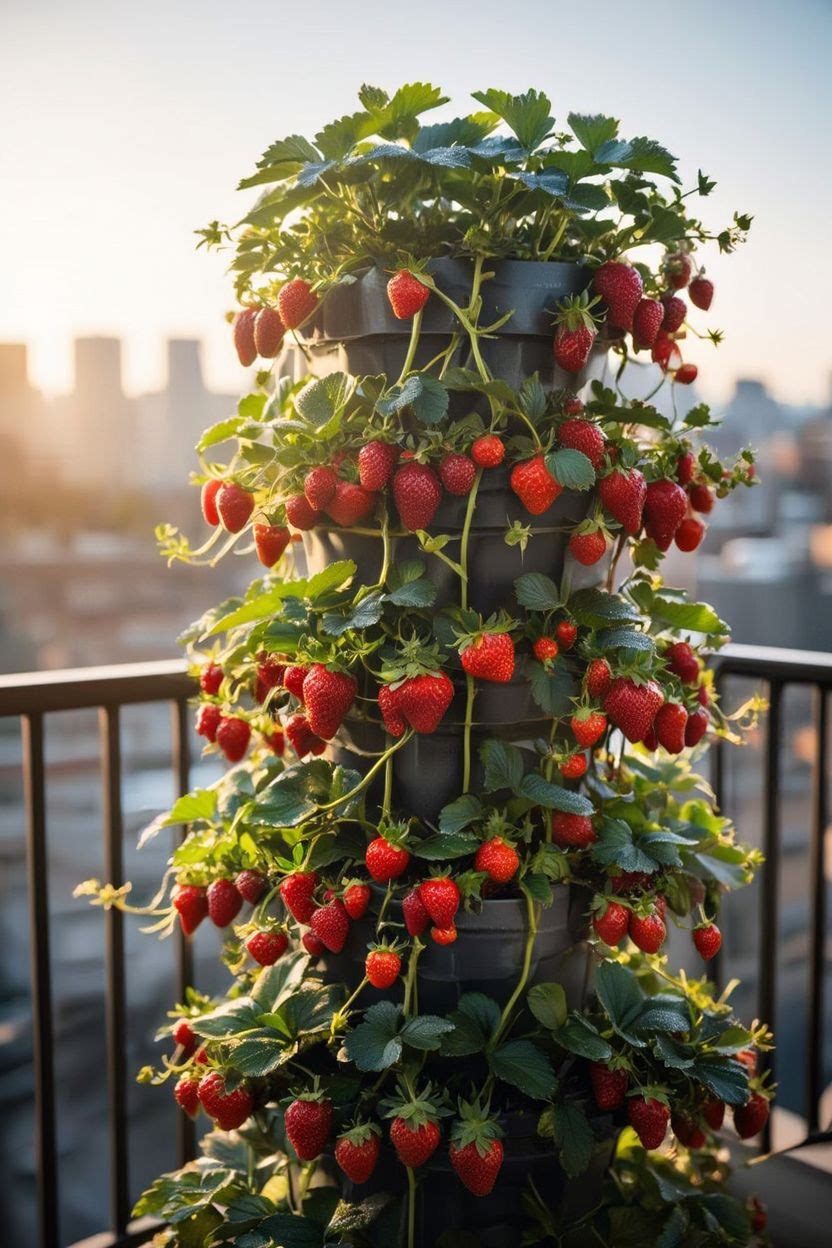
Strawberries (Fragaria × ananassa) are made for vertical towers. The runners naturally cascade downward and look beautiful.
- Variety to grow: Everbearing types like ‘Albion’ or ‘Seascape’ — they fruit all season, not just once
- Cost to start: $8–$15 for 6 bare root plants
- Sun needed: 6+ hours
- Pro tip: Let no more than 3 runners develop per plant or the fruit gets small
4.3 Lettuce and Salad Greens
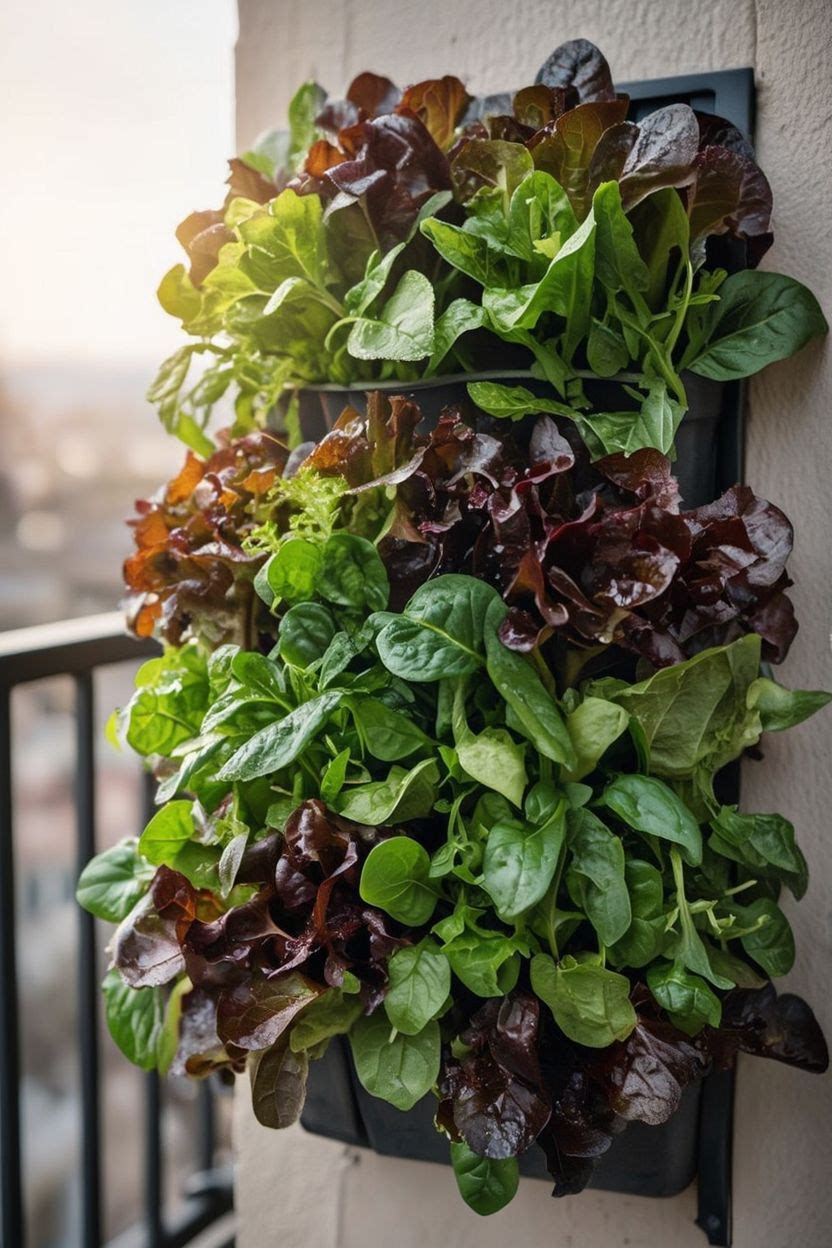
Lettuce (Lactuca sativa) is a vertical garden superstar. Shallow roots, fast-growing, and you can harvest outer leaves without killing the plant.
- Best varieties: ‘Butterhead’, ‘Red Leaf’, ‘Oak Leaf’
- Harvest style: Cut-and-come-again — just snip what you need
- Best in: Wall pockets, tower planters, rail boxes
- Sun needed: 3–5 hours (tolerates partial shade)
- Cost: $2–$4 for a full seed packet (grows dozens of plants)
Also try: Arugula, spinach, Swiss chard — all work the same way.
4.4 Climbing Vegetables
If you have a south or west-facing balcony with a trellis, these give incredible returns:
- Bush beans (Phaseolus vulgaris) — compact, high yield, $2–$3 per seed pack
- Cherry tomatoes — ‘Tumbling Tom’ or ‘Tiny Tim’ varieties stay compact. Expect $4–$6 per seedling.
- Mini cucumbers — train them up a trellis. One plant can produce 20+ cucumbers.
- Sugar snap peas (Pisum sativum) — love cooler temps (spring and fall), very fast growers
4.5 Flowers for Pollination and Beauty
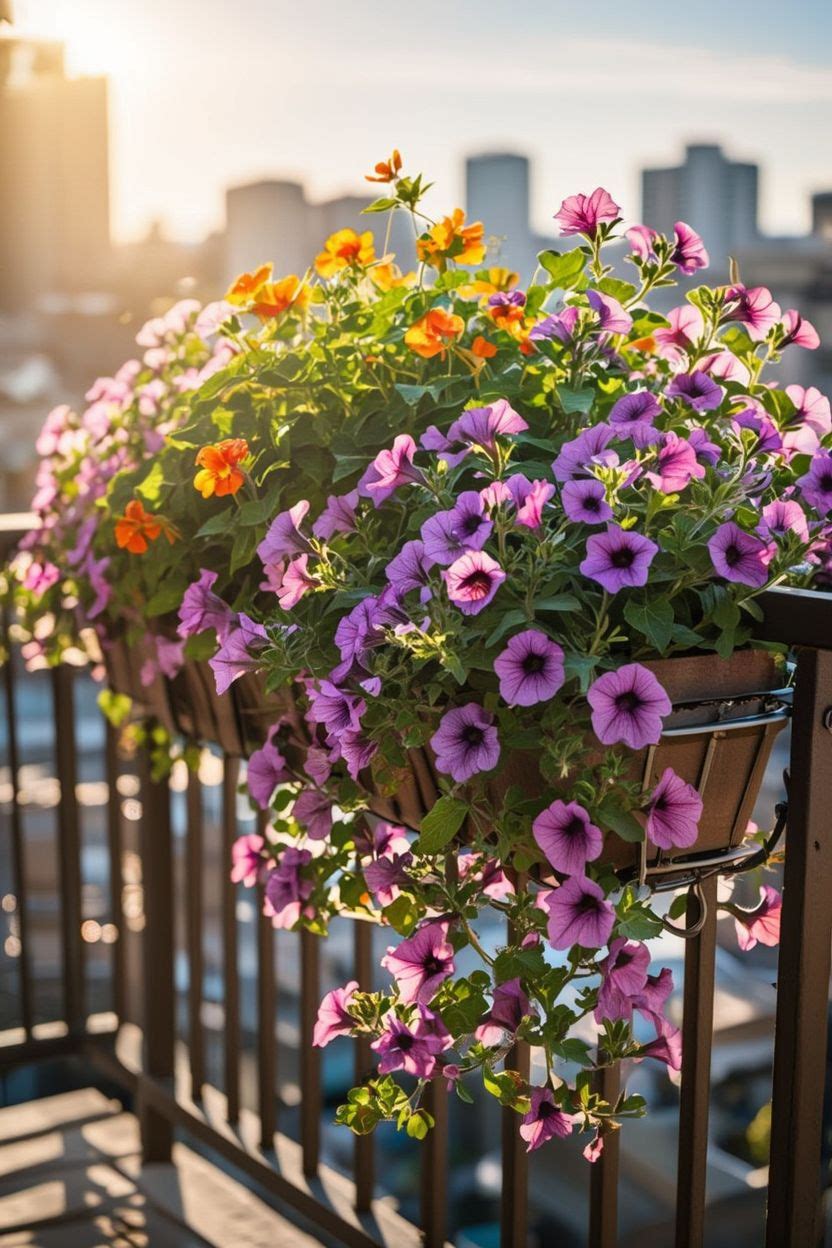
Don’t underestimate flowers. They attract pollinators (which boost your vegetable yields), act as natural pest deterrents, and make the whole setup look intentional.
- Petunias (Petunia ×hybrida) — trail beautifully over rail planters, come in every color
- Nasturtiums (Tropaeolum majus) — edible flowers, fast-growing, deter aphids naturally
- Marigolds (Tagetes spp.) — repel pests, love sun, incredibly low maintenance
- Morning glory (Ipomoea purpurea) — fast-climbing vine, covers a trellis in 4–6 weeks
4.6 Succulents and Low-Water Plants
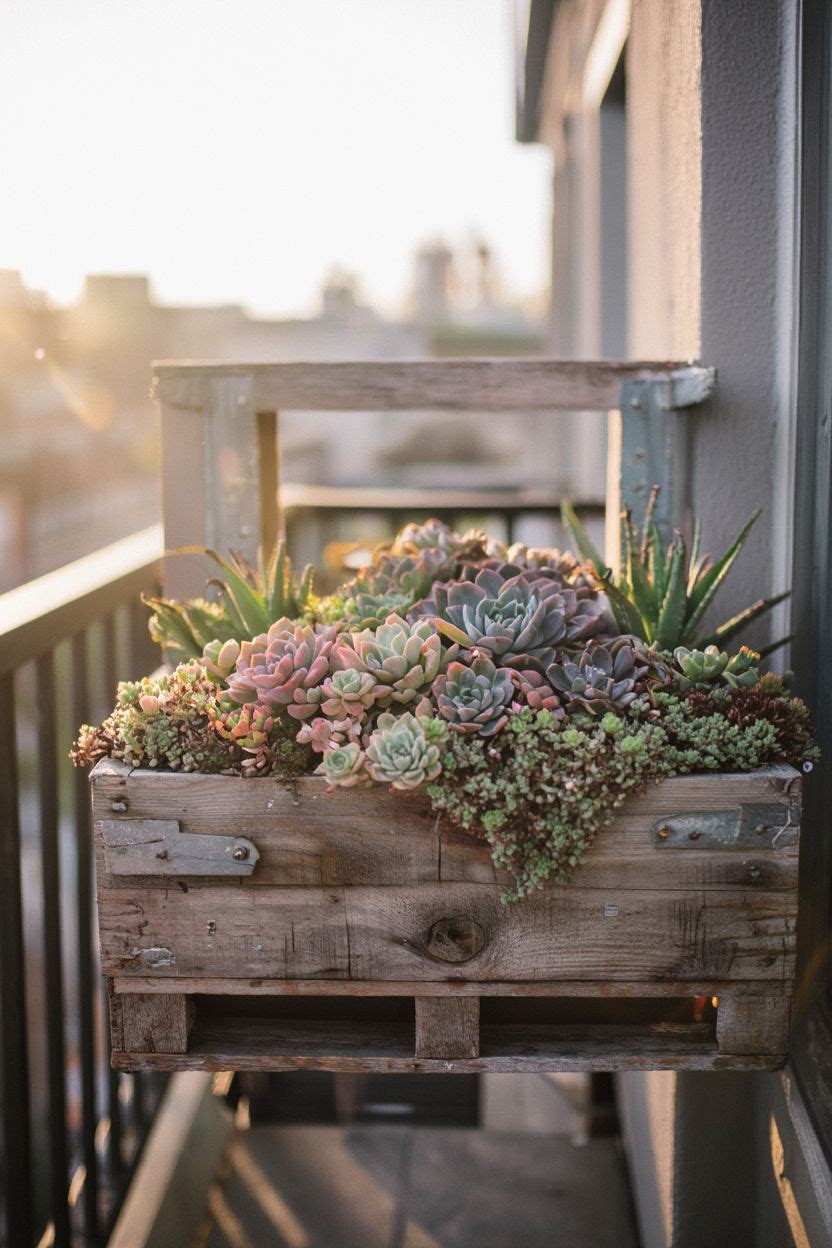
Perfect for hot, south-facing balconies or anyone who travels often. These survive on very little water.
- Echeveria — rosette-shaped, stunning in pallet frames
- Sedum (Sedum spp.) — drought-proof, spreads to fill gaps
- Aloe vera (Aloe barbadensis) — useful for sunburns, very easy
- Hens and chicks (Sempervivum) — multiplies itself, almost impossible to kill
5. Soil, Watering, and Fertilizing for Vertical Gardens
5.1 Best Soil Mix
Don’t use regular garden soil in vertical planters — it compacts and stops draining. Use:
- Lightweight potting mix (not “potting soil” — the word “mix” matters)
- Add 20–30% perlite for drainage
- Optional: coco coir to retain moisture without waterlogging
Budget soil mix recipe (per 10L pot):
- 7L potting mix: ~$4
- 2L perlite: ~$2
- 1L compost: ~$1
- Total: ~$7 per planter
5.2 Watering Tips for Vertical Setups
Vertical planters dry out 2–3× faster than ground containers because of increased airflow and surface area. Solutions:
- Self-watering inserts — reservoirs in the bottom of pockets ($5–$15 extra)
- Drip irrigation kits — timer-controlled, set and forget. A basic kit covers 10–20 plants for $25–$50.
- Morning watering — always water in the morning so leaves dry before night (reduces fungal issues)
- Finger test — stick your finger 1 inch into soil. Water only when it’s dry at that depth.
5.3 Fertilizing
Containers need more frequent feeding because nutrients wash out with each watering.
| Fertilizer Type | Cost | Frequency | Best For |
|---|---|---|---|
| Liquid tomato feed | $8–$15 | Weekly | Fruiting plants |
| Slow-release pellets | $10–$20 | Every 2–3 months | All plants |
| Worm castings | $12–$25 | Monthly | Everything |
| Compost tea | Free (DIY) | Every 2 weeks | All plants |
6. Budget Breakdown: Starting a Vertical Balcony Garden
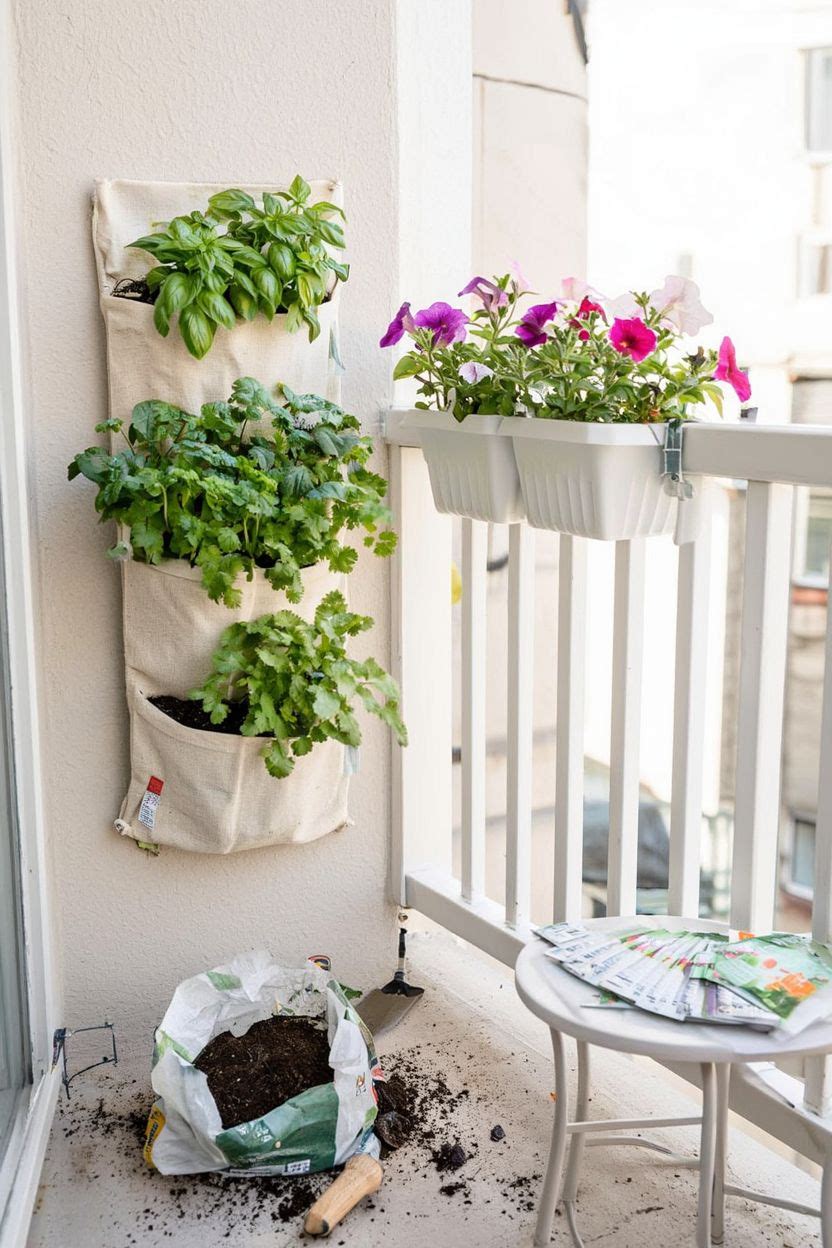
Here’s what a realistic starter setup costs in 2026:
Starter Budget: Under $75
| Item | Cost |
|---|---|
| 12-pocket fabric wall planter | $18 |
| 2 railing clip boxes | $35 |
| Potting mix (20L bag) | $12 |
| Perlite (small bag) | $6 |
| Seed packets (herbs + lettuce) | $10 |
| Total | ~$81 |
Mid-Range Setup: $150–$250
| Item | Cost |
|---|---|
| Tower planter | $55 |
| Trellis + climbing plants | $45 |
| Wall grid with pots | $65 |
| Drip irrigation timer kit | $40 |
| Quality potting mix + perlite | $25 |
| Total | ~$230 |
Premium Setup: $400–$600
Includes self-watering systems, raised planter boxes, automatic irrigation, grow lights for shade balconies, and premium plants.
7. Tips for Specific Balcony Challenges
7.1 Windy High-Rise Balconies
Wind is the biggest killer on floors above the 5th. Protect plants by:
- Choosing stocky, compact varieties over tall ones
- Installing windbreak mesh on railings (also creates privacy)
- Using heavier containers or staking tall plants
- Placing wind-sensitive plants (basil, beans) inside the wind shadow of hardier ones
7.2 Shaded North-Facing Balconies
Don’t give up — you just need different plants:
- Ferns, hostas, peace lily (ornamental)
- Mint, parsley, chives (edible — tolerate low light)
- Consider a portable LED grow light ($30–$80) to supplement on very dark balconies
7.3 Intense Heat (South-Facing, Upper Floors)
- Choose heat-tolerant varieties: sweet potatoes, peppers, basil, rosemary
- Use light-colored pots — dark pots absorb heat and cook roots
- Mulch the top of containers to reduce moisture loss
- Water in the early morning only
8. Final Thoughts
A vertical balcony garden in 2026 isn’t just about growing food or flowers — it’s about reclaiming your space and making something alive in a city environment.
You don’t need a big budget, a big balcony, or years of experience. Start with a $18 fabric wall planter and a few herb seedlings. Watch them grow. Add more as your confidence builds.
The biggest mistake beginners make is trying to do everything at once. Pick one structure, two or three plants, and just get started. Adjust next season based on what worked.
Your balcony — no matter how small — has room for green.