10 Balcony Herb & Vegetable Garden Ideas That Actually Work in Small Spaces
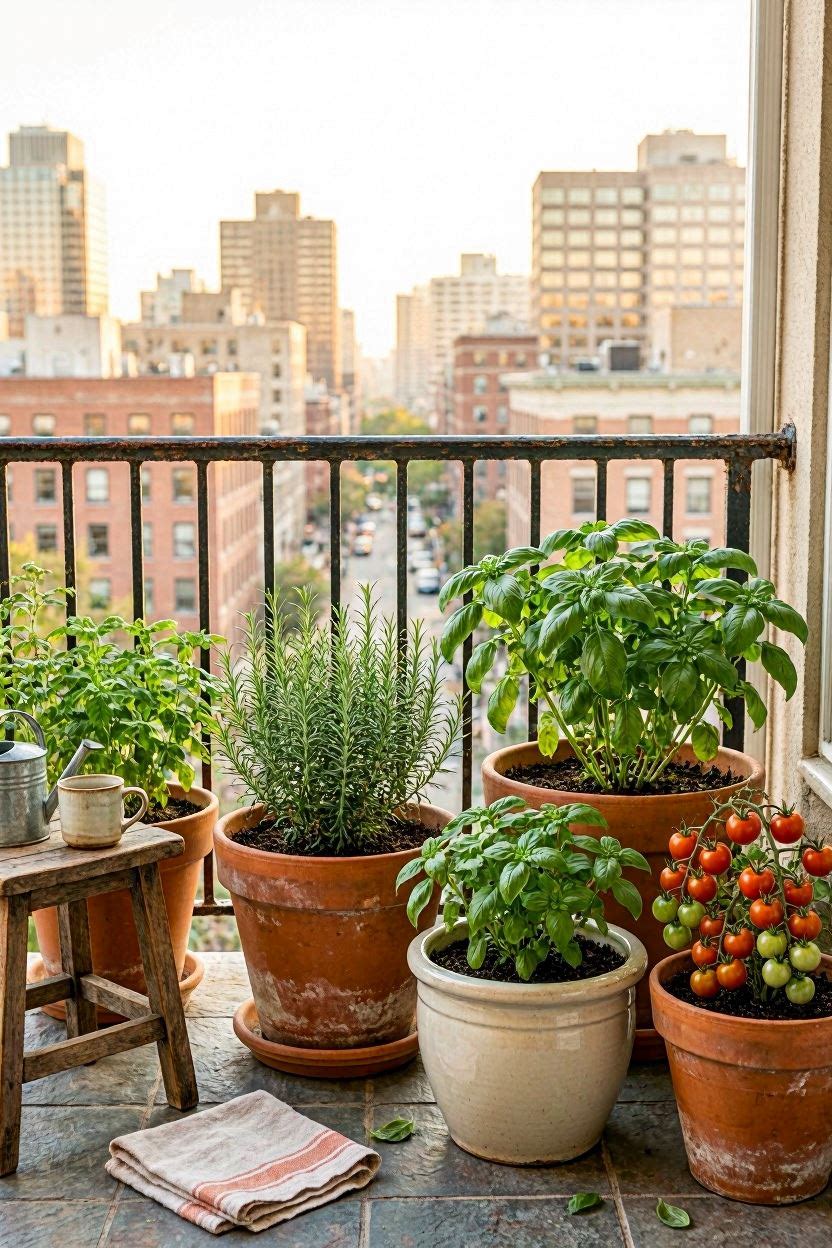
Why Your Balcony Is the Perfect Edible Garden
You don’t need a yard. You don’t need a lot of money. A small balcony — even 4 feet wide — is enough to grow fresh herbs and vegetables that actually end up on your dinner plate.
This guide gives you 10 practical, design-forward ideas to turn any balcony into a productive green space. Each idea focuses on what to grow, how to arrange it, and what containers work best in a typical American apartment setting.
Section 1: Choose a Layout That Fits Your Balcony Size
Before picking plants, map out your space. Most balconies fall into one of three sizes:
| Balcony Size | Best Layout Style | Ideal Container Count |
|---|---|---|
| Under 30 sq ft | Wall-mounted + 1 rail planter | 4–6 containers |
| 30–60 sq ft | Corner shelving + floor pots | 8–12 containers |
| Over 60 sq ft | Full mixed zone layout | 15+ containers |
Work with the layout first, then choose plants to fill it — not the other way around.
Section 2: The Herb Wall — Maximum Flavor, Minimum Floor Space
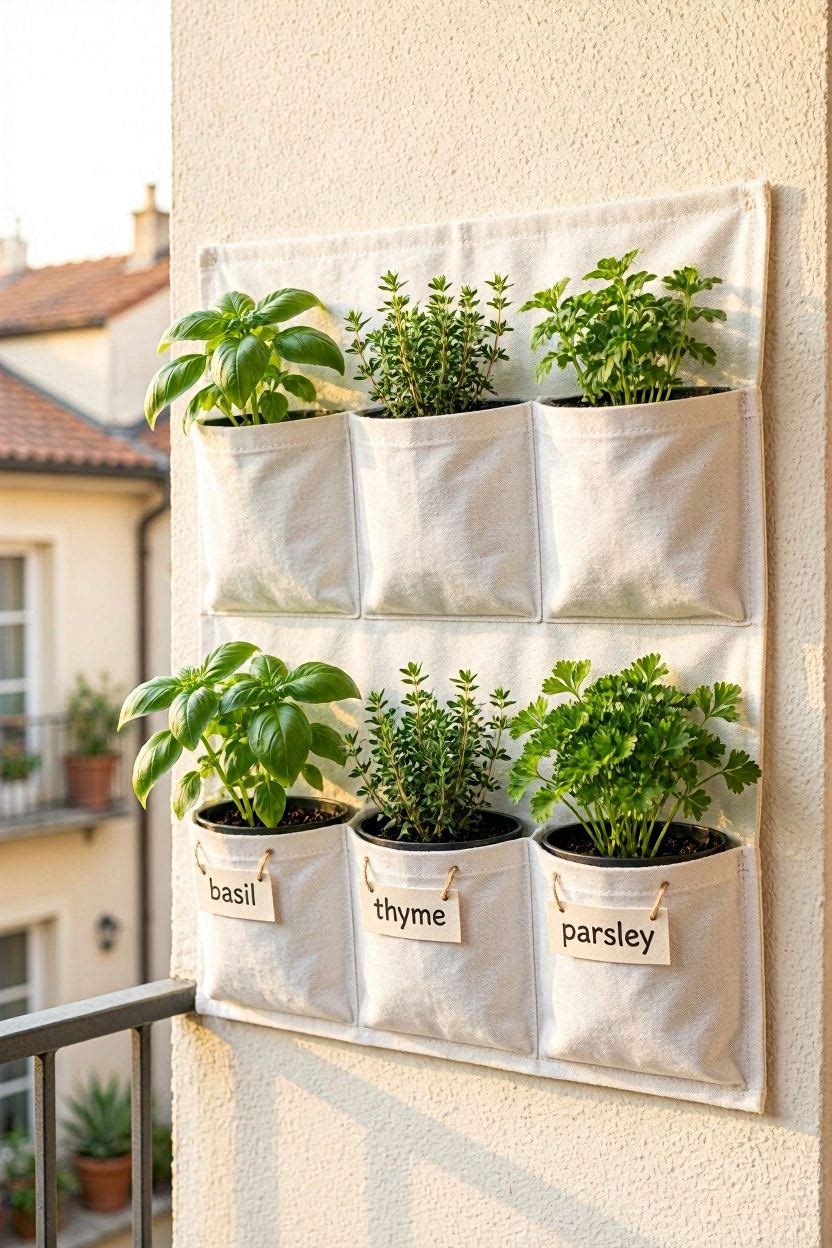
A vertical herb wall uses the one surface most balcony gardeners ignore: the wall itself.
Best herbs for a wall planter:
- Basil
- Thyme
- Oregano
- Flat-leaf parsley
- Chives
What to buy: MKONO Hanging Planter ($18–$25, Amazon) or a fabric wall pocket organizer. Mount with heavy-duty anchor screws into the balcony wall or railing.
Pro tip: Group herbs by water needs — basil and parsley together (moist), thyme and oregano together (dry). This makes watering faster and keeps plants healthier.
Section 3: Railing Planters for Salad Greens
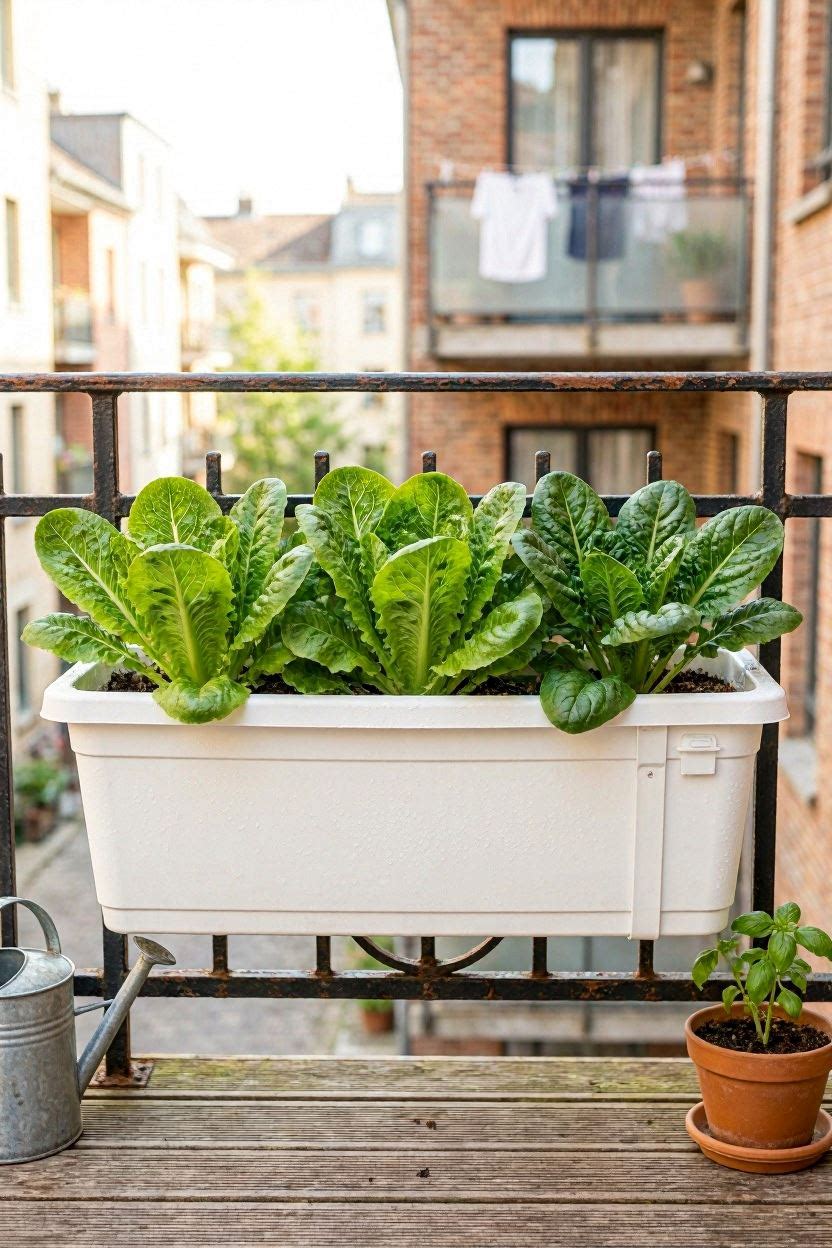
Railing planters attach directly to your balcony rail and hang over the edge — they add greenery without using any floor space.
Best picks for railing planters:
- Leaf lettuce
- Spinach
- Arugula
- Radishes
Container pick: Lechuza BALCONERA Color ($45–$60, Home Depot or Amazon) — self-watering, UV-resistant, fits most 1.5–2 inch round railings.
Sun requirement: 4–6 hours of direct sun is ideal. If your balcony faces north, stick to spinach and arugula — they tolerate shade better than most vegetables.
Section 4: Tomatoes in Deep Buckets — Yes, It Works
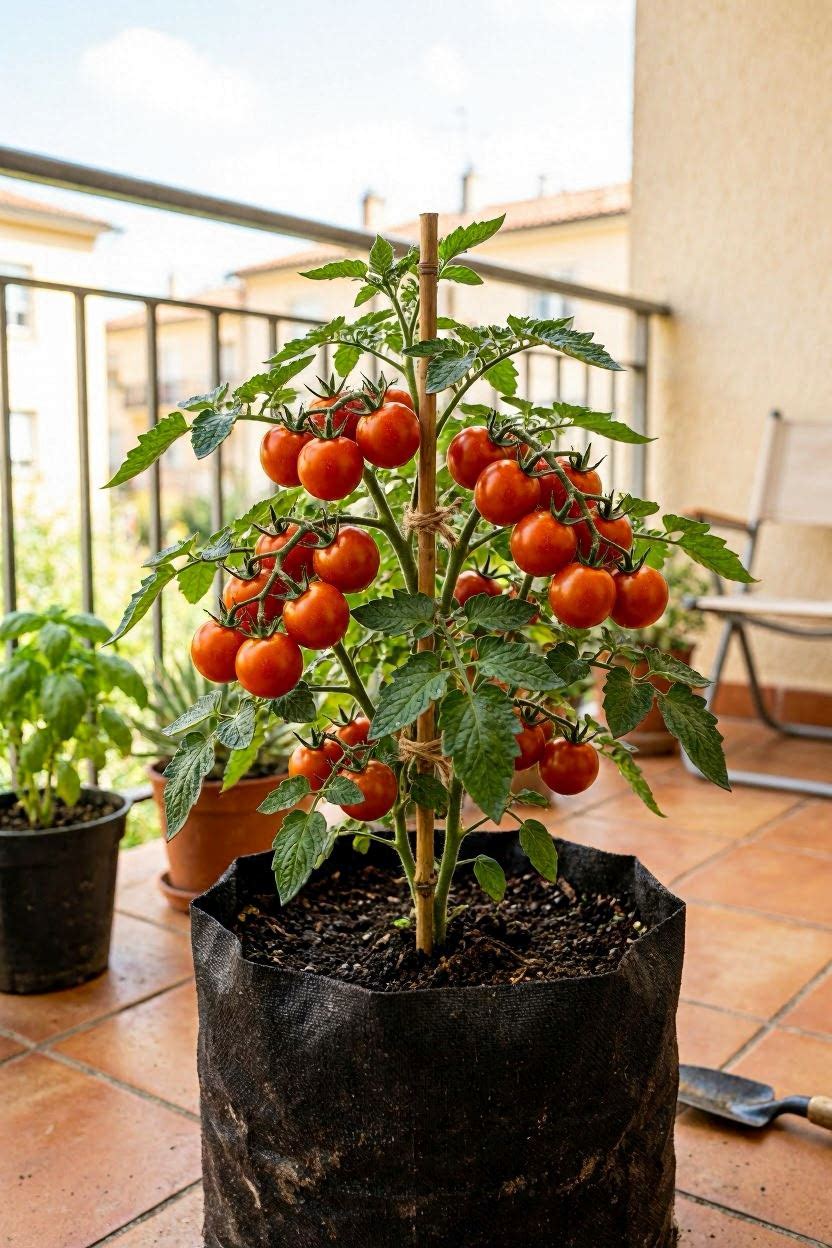
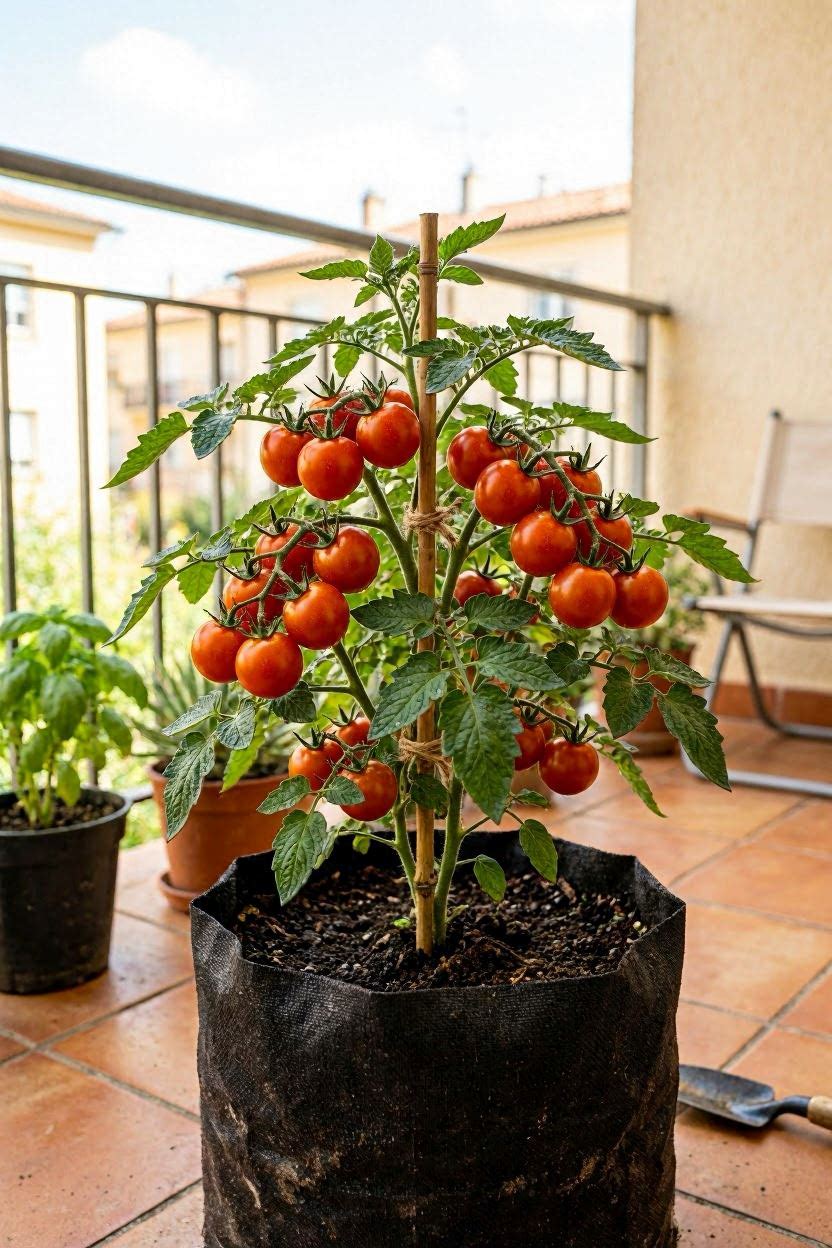
Full-size tomatoes are a stretch on a balcony. Cherry and patio tomatoes, though, thrive in containers when you give them enough depth.
Minimum container depth: 12 inches. Aim for 15–18 inches for best results.
Best balcony tomato varieties:
- Tumbling Tom (compact, trailing — great for railing planters)
- Patio F1 (bushy, 18 inches tall)
- Sun Gold Cherry (prolific, sweet)
Container pick: 5-gallon black grow bags ($12 for a 5-pack, Amazon) — lightweight, breathable, and fold flat in winter.
Support: Use a 24-inch bamboo stake and soft garden tie. Skip the tall tomato cages — they’re top-heavy in wind.
Section 5: A Mini Kitchen Herb Station Near the Door
The best herb garden is one you actually use. Place your most-used herbs as close to your kitchen door as possible.
The classic kitchen 5:
| Herb | Container Size | Cost (Starter Plant) | Where to Buy |
|---|---|---|---|
| Basil | 6-inch pot | $3–$5 | Trader Joe’s, Home Depot |
| Rosemary | 8-inch pot | $4–$6 | Lowe’s, Walmart |
| Mint | 6-inch pot (isolated) | $3–$4 | Grocery stores |
| Thyme | 6-inch pot | $3–$5 | Home Depot |
| Chives | 6-inch pot | $3–$4 | Most garden centers |
Important: Always grow mint in its own pot. It spreads aggressively and will crowd out every other herb if shared.
Section 6: Stack It — Tiered Planters for Small Balconies
A 3-tier planter fits in a 2×2 foot floor space and can hold 9–12 plants at once.
Best arrangement from top to bottom:
- Top tier: Herbs that need the most sun (basil, thyme)
- Middle tier: Partial sun herbs (parsley, chives)
- Bottom tier: Shade-tolerant greens (spinach, lettuce)
Product pick: Greaner 3-Tier Raised Garden Bed ($35–$50, Amazon) — cedar wood, easy assembly, no tools needed.
Section 7: Peppers and Eggplant for a Colorful Balcony
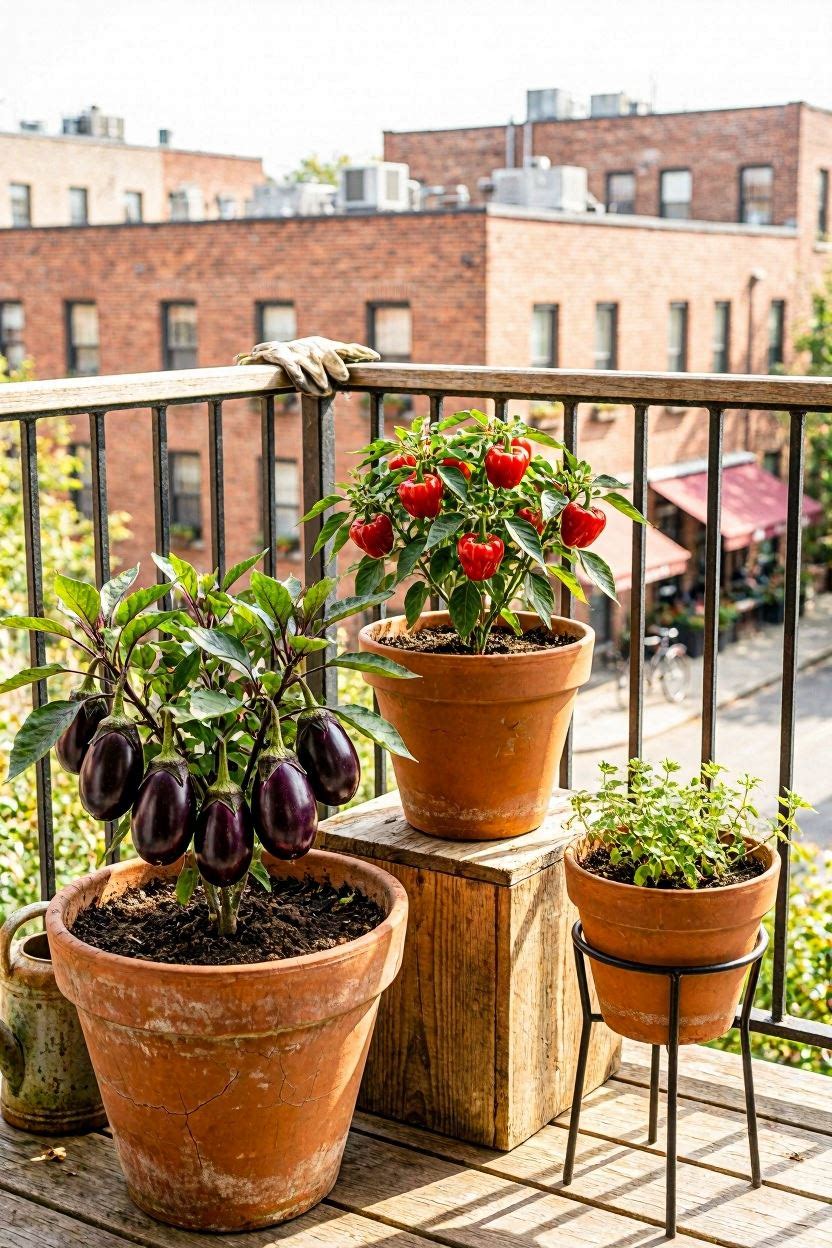
Peppers and small eggplant varieties double as ornamental plants. Their glossy leaves and vivid fruit add color that looks intentional — not accidental.
Balcony-friendly picks:
- Peppers: Lunchbox mini sweet peppers, Shishito, Cayenne
- Eggplant: Patio Baby (compact, 18 inches), Hansel (slender, high-yield)
Container: 3-gallon pot minimum per plant. Terra cotta works but dries fast — a glazed ceramic or plastic pot holds moisture longer.
Visual tip: Cluster 3 pepper pots in different heights using plant risers. The staggered look is deliberate and adds depth to a flat balcony wall.
Section 8: Cucumbers Trained Up a Trellis
Cucumbers are vertical growers. On a balcony, train them up a wall-mounted trellis and they become both a food source and a living green screen.
Best compact varieties:
- Bush Pickle (24–30 inches tall)
- Patio Snacker
- Spacemaster 80
Trellis pick: AMAGABELI 24×16 inch metal trellis ($10–$15, Amazon) — attach to the wall with command hooks or tension rod brackets.
Container: 5-gallon bucket or grow bag, minimum 12 inches deep.
Spacing: One plant per 5-gallon container. Don’t crowd them — airflow prevents powdery mildew.
Section 9: The Herb-and-Flower Combo Pot
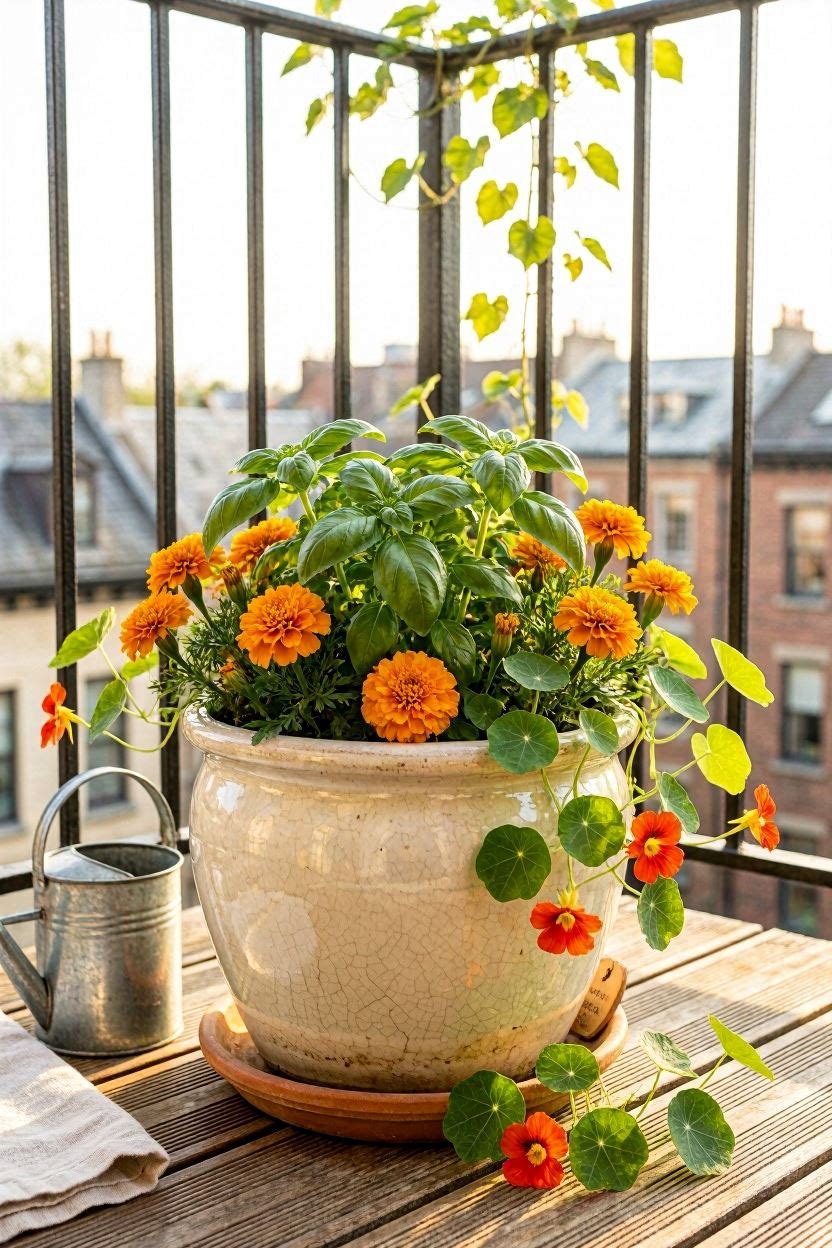
Mixing edible herbs with companion flowers does two things: it looks beautiful, and it helps your plants. Marigolds repel aphids. Nasturtiums are edible and attract pollinators.
Best combos for one large 12-inch pot:
- Basil + Marigold + Parsley
- Thyme + Nasturtium + Chives
- Rosemary + Lavender (drought-tolerant, fragrant)
Container pick: La Jolíe Muse large ceramic pot ($30–$45, Amazon or HomeGoods) — wide mouth, drainage hole included.
Where to place: Front-center of your balcony. This is your showpiece pot — make it the first thing you see when you walk out.
Section 10: A Self-Watering Container System for Busy People
If you travel for work or forget to water, a self-watering container system is the most practical upgrade you can make.
How it works: A water reservoir sits at the bottom of the container. A wick or soil column draws water up as the plant needs it. Most reservoirs last 7–14 days without refilling.
Best self-watering picks on Amazon USA:
| Product | Size | Price | Best For |
|---|---|---|---|
| Lechuza PURO 21 | 8-inch | $35 | Single herbs |
| Gardener’s Supply Self-Watering Planter | 12-inch | $45 | Mixed herb pots |
| Mkono Self-Watering Planter 3-Pack | 6-inch | $28 | Starter herb set |
Best plants for self-watering containers: Basil, lettuce, parsley, spinach. Avoid rosemary and thyme — they prefer drier soil and can rot in consistently moist conditions.
Quick Reference: Best Balcony Plants by Sunlight
| Sun Level | Hours Per Day | What to Grow |
|---|---|---|
| Full Sun | 6+ hours | Tomatoes, peppers, basil, cucumber |
| Partial Sun | 4–6 hours | Herbs (most), eggplant, lettuce |
| Low Light | Under 4 hours | Spinach, arugula, mint, chives |
Final Thoughts
A balcony garden doesn’t need to look like a messy afterthought. With the right containers, a clear layout, and plants chosen for your sun exposure, it can be one of the most functional and visually satisfying spaces in your home.
Start with two or three of these ideas — a railing planter, a wall herb pocket, and one deep bucket for tomatoes or peppers. Once those are working, layer in more. Small changes, done consistently, create the kind of balcony garden that stops people mid-scroll on Pinterest.
FAQ
What vegetables grow best in containers on a balcony? Cherry tomatoes, lettuce, spinach, radishes, peppers, and cucumbers are the most reliable. They don’t need deep roots and adapt well to container life.
How many plants can I fit on a small balcony? On a 30 sq ft balcony, you can comfortably fit 8–12 containers using vertical space. Prioritize wall planters and railing boxes before adding floor pots.
Do I need special soil for balcony containers? Yes — always use potting mix, not garden soil. Garden soil compacts in containers and restricts root growth. A good all-purpose option: Miracle-Gro Potting Mix ($10–$14 for 8 quarts at Home Depot).
How often do I need to water balcony containers? In summer, most containers need water every 1–2 days. Self-watering containers extend this to 7–14 days. Check soil moisture by pressing your finger 1 inch into the soil — water when it feels dry.