13 Balcony Railing Design Ideas That Are Safe, Stylish & Modern (2026 Guide)
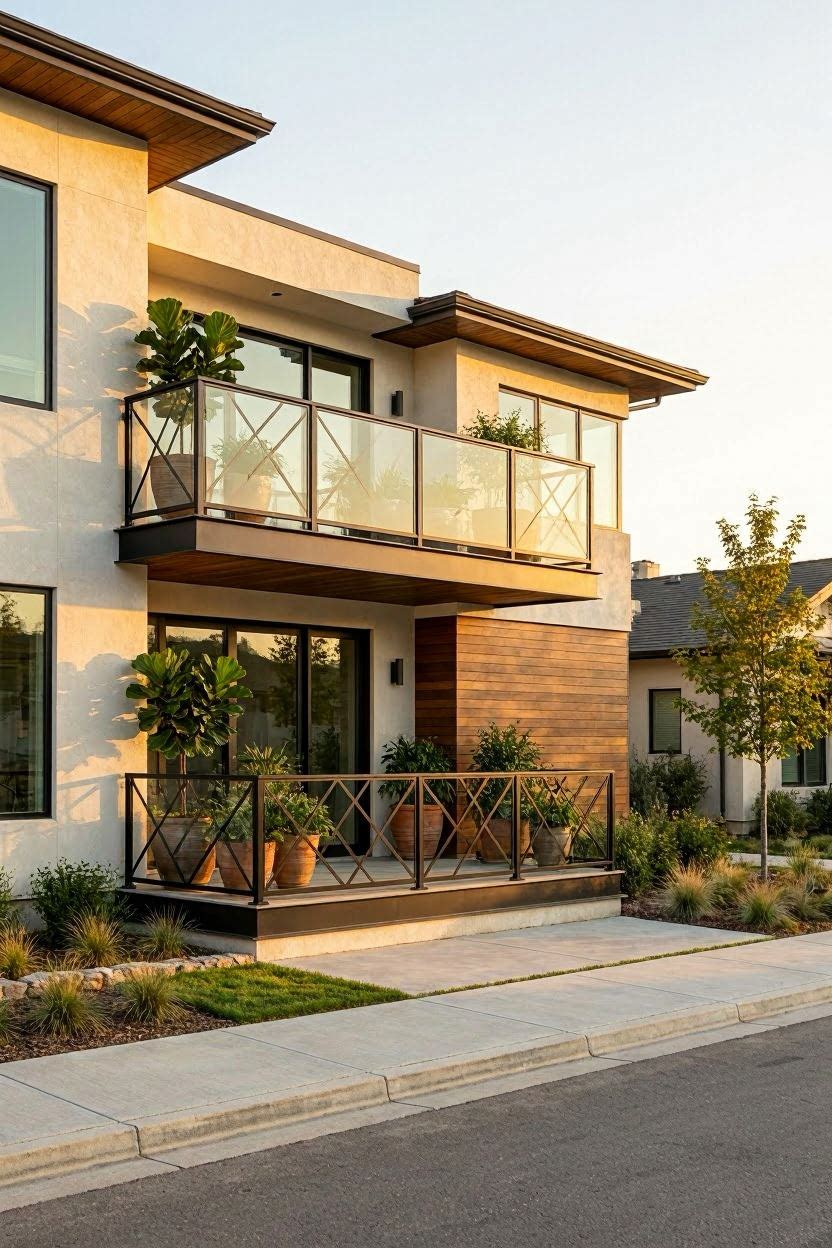
Introduction
Your balcony railing does two things at once: it keeps your family safe and it tells the world what your home looks like. If you have kids running around or elderly parents visiting, the railing you pick matters even more.
This guide covers 13 balcony railing design ideas — from classic wrought iron to sleek glass — that work for real homes in the USA. Every idea below includes safety notes, approximate costs, and where to buy. Whether you are renovating a 1960s ranch or finishing a new build, there is something here for you.
Section 1: Classic & Traditional Railing Designs
These styles never go out of fashion. They suit colonial homes, craftsman bungalows, and any house that leans toward a timeless look.
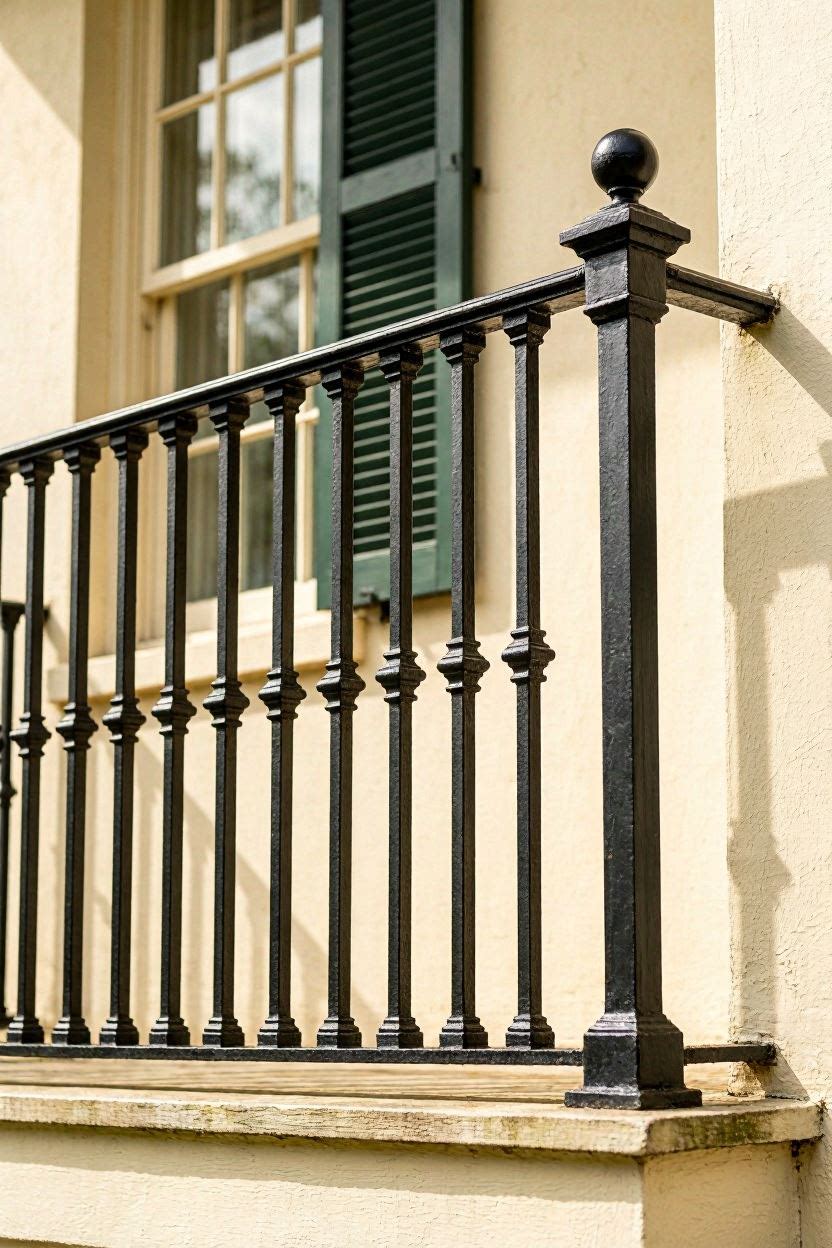
Idea 1: Wrought Iron Balusters with Ball-Top Posts
Wrought iron is the gold standard for traditional balconies. The vertical balusters are spaced no more than 4 inches apart — that is the USA building code standard that prevents children from getting their heads stuck. Ball-top post caps add a decorative finish and give the whole railing a finished, polished look.
Safety note: Wrought iron is extremely strong. There is no flexing, no wiggle, no give. Great for active households.
Cost: $60–$120 per linear foot installed Where to buy: Home Depot, Lowe’s, or a local ironwork fabricator
Idea 2: Chinese Geometric Pattern Steel Railing
This style uses flat steel cut into repeating geometric patterns — squares inside squares, linked frames, or fretwork grids. It is a popular choice for homes that want cultural character or Asian-inspired architecture. The solid panel design means no gaps at all, making it one of the safest options for toddlers.
Safety note: No gaps anywhere. Zero risk of a child squeezing through or getting a limb caught.
Cost: $80–$150 per linear foot (custom fabricated) Where to buy: Local metal fabricators, Alibaba for prefab panels (allow 6–8 weeks shipping)
| Feature | Traditional Iron Balusters | Geometric Panel Steel |
|---|---|---|
| Gap risk for kids | Low (4” max) | None |
| Maintenance | Repaint every 5–7 years | Same |
| Custom design | Limited | High |
| Cost per linear ft | $60–$120 | $80–$150 |
Section 2: Modern & Contemporary Railing Designs
These designs work best on flat-roof modern homes, new builds, townhouses, and apartments with clean architectural lines.
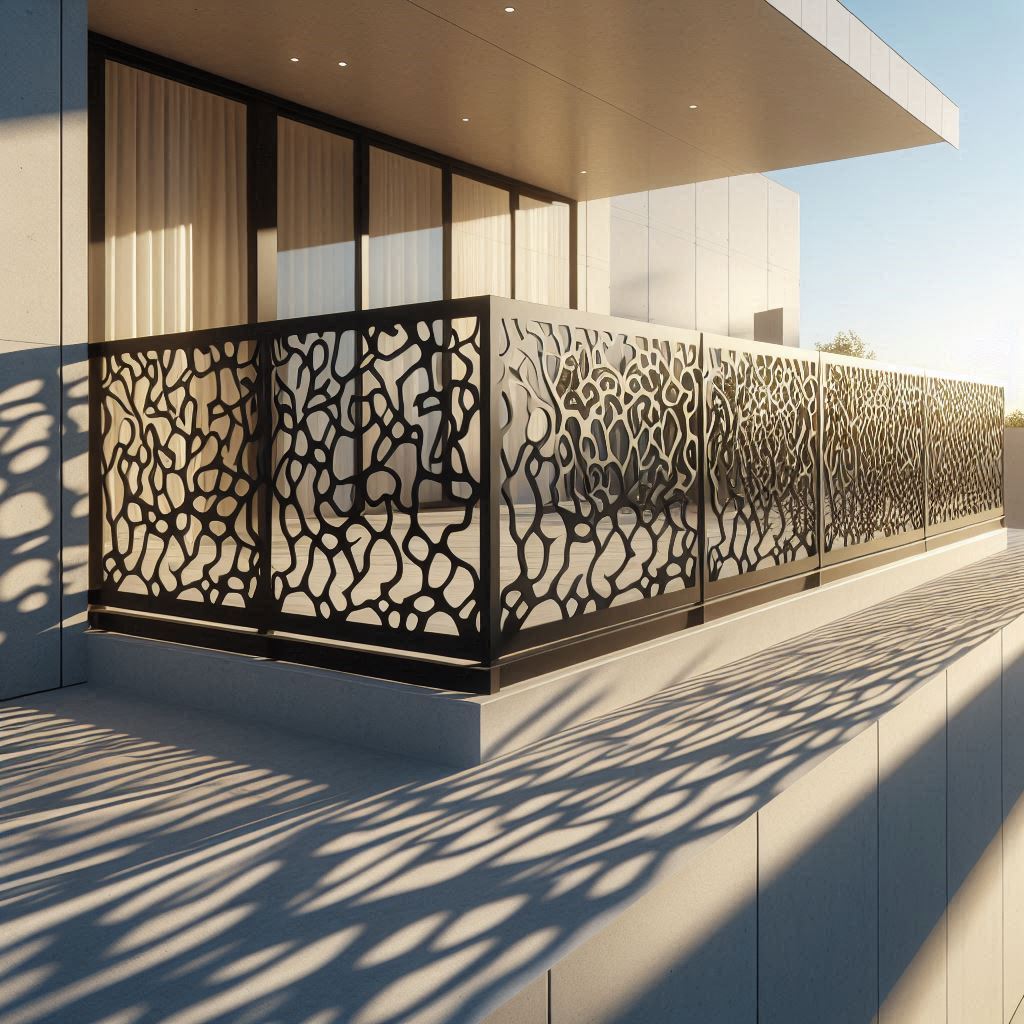
Idea 3: Laser-Cut Organic Pattern Steel Panels
This is the design that stops people in their tracks. Laser-cut steel panels feature flowing, organic cutout patterns — think cells, branches, coral shapes, or abstract leaves. Each panel is one solid piece of steel with decorative cutouts routed by a CNC machine.
The patterns look open and airy from a distance but the steel frame is completely solid. This means the railing is visually light but structurally very strong.
Safety note: No vertical gaps. The irregular cutout shapes are too small and complex for children to climb. Older adults can grip the top rail confidently.
Cost: $100–$200 per linear foot Where to buy: Decorative Metal Works (decorativemetalworks.com), local steel fabricators, Etsy (custom orders)
Idea 4: Perforated Metal Cladding Panels
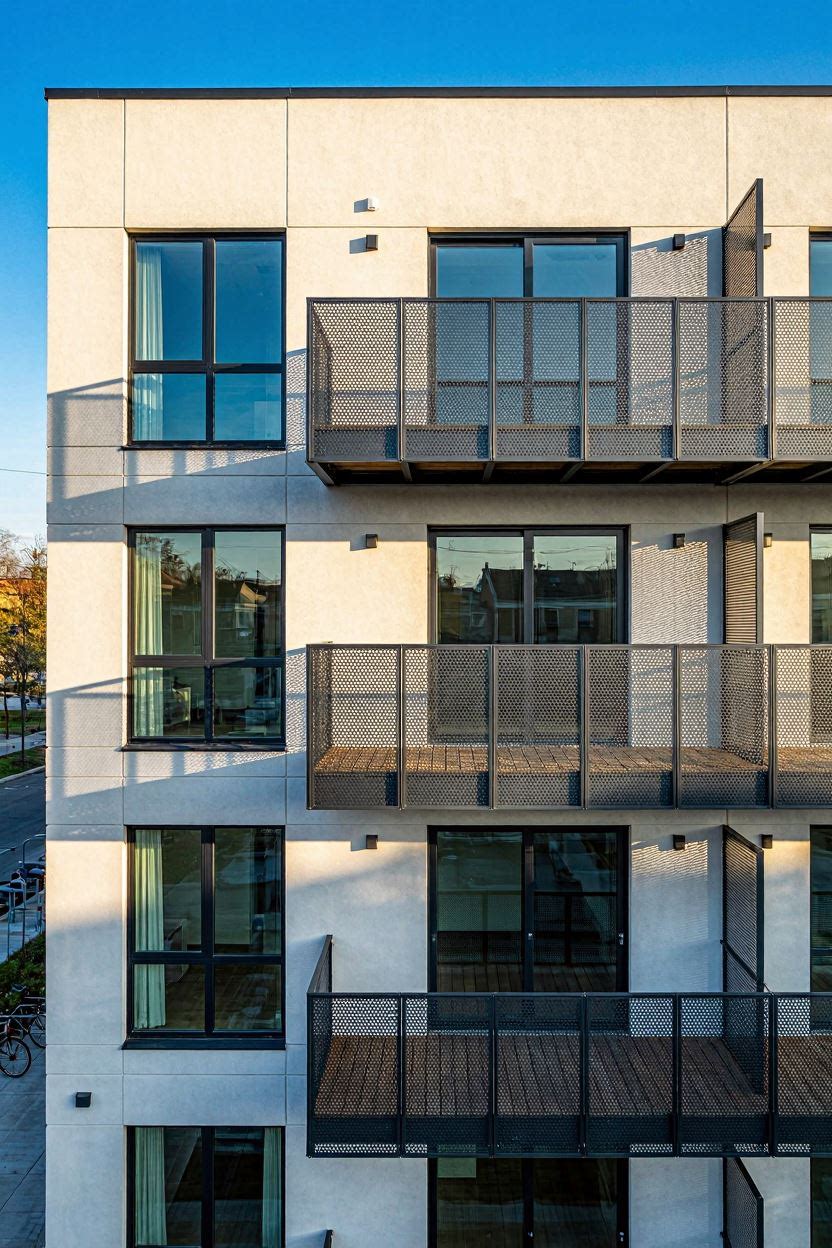
Perforated metal panels use a flat sheet of aluminum or steel punched with hundreds of tiny holes in a repeating pattern — dots, diamonds, or hexagons. These are very popular on European-style apartment buildings and modern USA townhomes. The perforation gives privacy while still letting in light and air.
Safety note: The holes are typically 3–6mm wide, far too small for fingers or limbs. One of the most child-proof designs available.
Cost: $70–$130 per linear foot Where to buy: McNichols.com (perforated metal supplier), metalsdepot.com
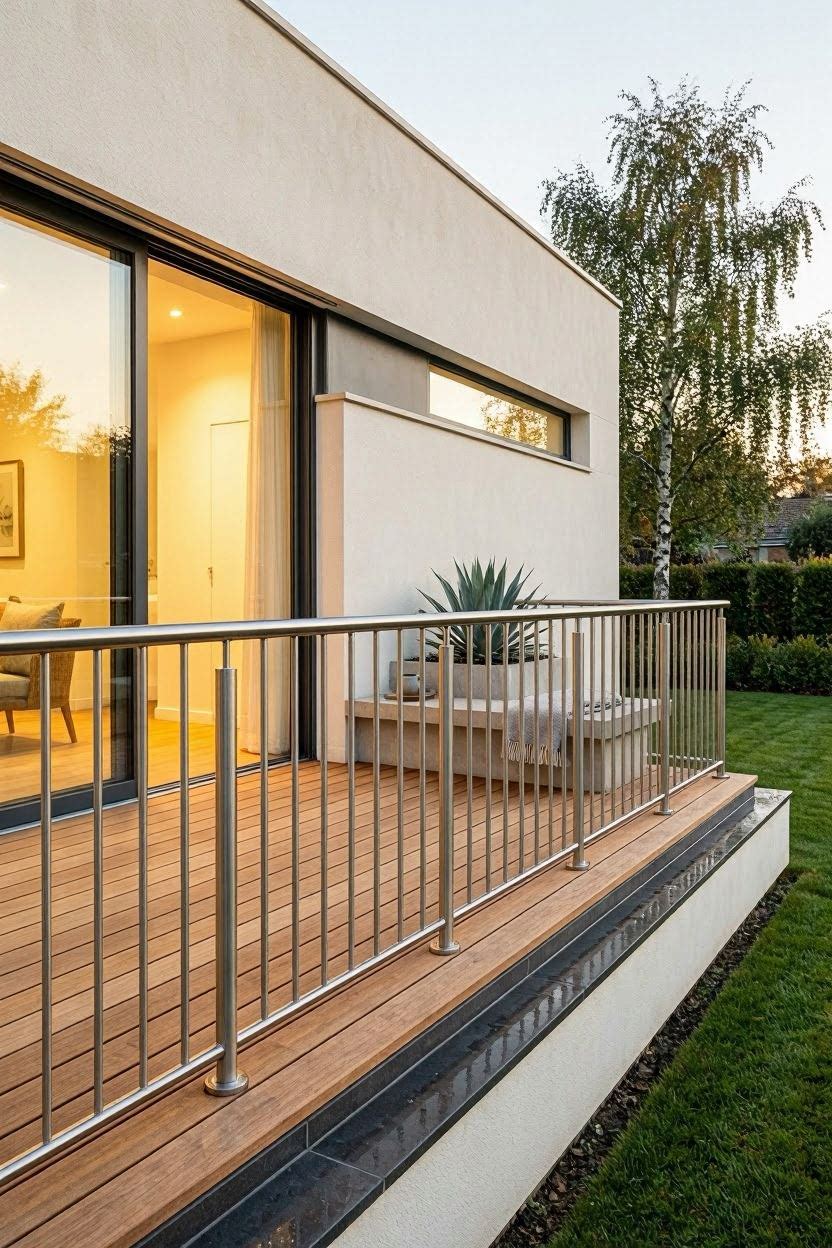
Idea 5: Stainless Steel Vertical Bar Railing
Vertical stainless steel bars with a clean horizontal top rail is the minimalist’s first choice. The bars are round or square in profile, spaced exactly 4 inches apart per code. The steel finish — either brushed or polished — pairs beautifully with glass, concrete, and wood.
Safety note: Code-compliant spacing. Stainless steel does not rust, so no sharp edges develop over time. Easy for older adults to grip.
Cost: $55–$110 per linear foot Where to buy: RailFX (railfx.net), Hoover Fence, Amazon (DIY kits)
| Railing Style | Best For | Maintenance | Kid Safety | Cost/Linear Ft |
|---|---|---|---|---|
| Laser-cut panels | Modern homes | Low | High | $100–$200 |
| Perforated panels | Apartments | Very low | Very high | $70–$130 |
| Stainless bars | Minimalist | Very low | Medium | $55–$110 |
| Geometric steel | Traditional modern | Medium | Very high | $80–$150 |
Section 3: Glass Railing Designs
Glass railings give your balcony an open, airy feel and preserve your view completely. They work especially well on homes with scenic surroundings.
Idea 6: Full Glass Panel with Minimal Frame
Tempered glass panels set into a slim stainless steel bottom channel and capped with a continuous top handrail. The glass panels are typically 12mm (about 1/2 inch) thick — thick enough to resist considerable force. Building codes in most US states require tempered or laminated safety glass for railings.
Safety note: Tempered glass is 4x stronger than regular glass. If it does break, it shatters into small rounded pebbles instead of dangerous shards. Top rail gives a solid handhold for the elderly.
Cost: $150–$300 per linear foot installed Where to buy: Trex Transcend Railing, Westbury Aluminum Railing, local glaziers
Idea 7: Frameless Glass with Spigot Mounts
Spigot-mounted frameless glass is the most premium glass railing option. Individual glass panels are held at their base by polished steel spigots drilled directly into the balcony floor. There is no top frame — just clean glass from base to top. The result is nearly invisible from a distance.
Safety note: This design requires professional installation and structural anchor bolts. Not recommended as DIY. Ensure your balcony slab is strong enough for the anchor loads.
Cost: $200–$400 per linear foot Where to buy: Inline Design, Q-Railing (q-railing.com)
Section 4: Wood and Cable Railing Options
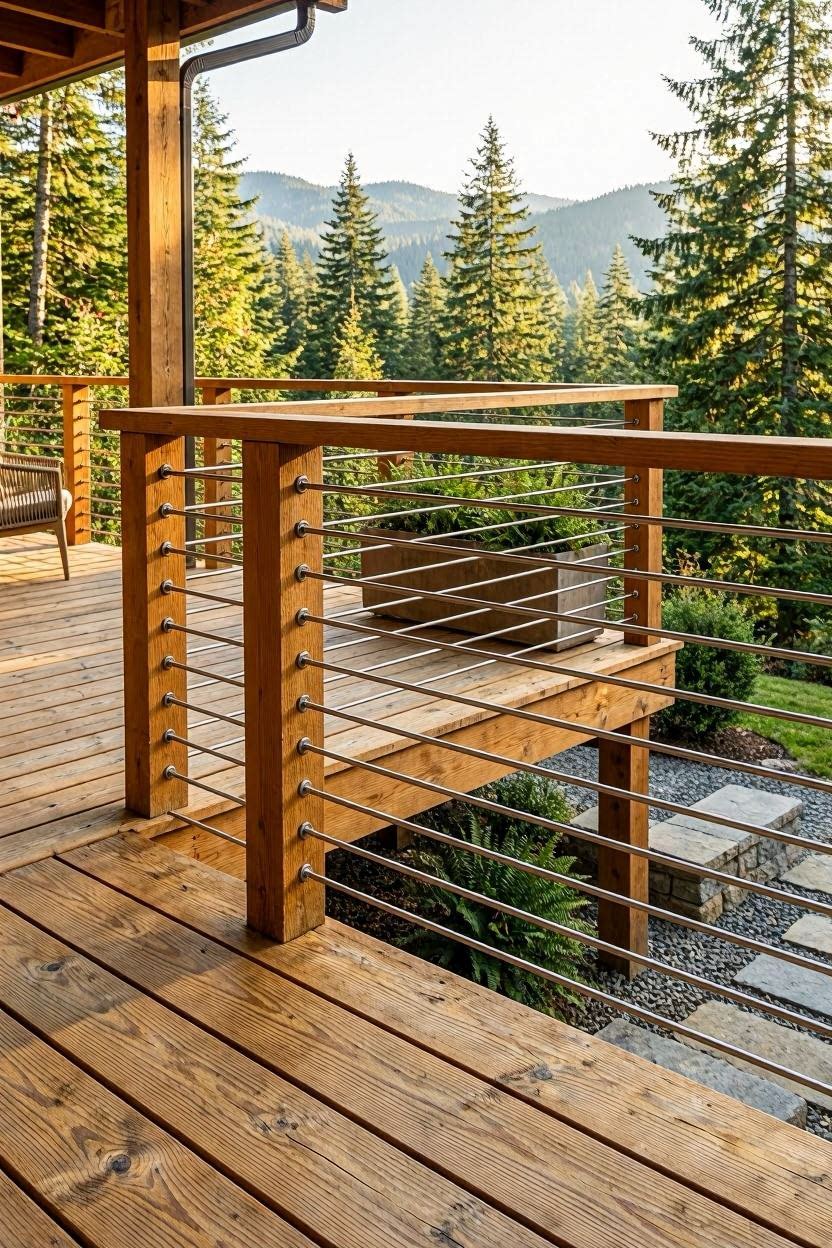
Idea 8: Horizontal Cable Railing with Wood Posts
Stainless steel cables are threaded through solid wood posts — usually cedar, ipe, or pressure-treated pine. The cables run horizontally and are tensioned to be completely taut. This design is very popular for deck and balcony remodels in the Pacific Northwest and mountain regions.
Safety note: This is the one design where you need to think carefully about children. Horizontal cables can act like a ladder — kids can step on them and climb. If you have young children, add intermediate vertical posts to reduce the span, or choose a different style.
Cost: $80–$150 per linear foot Where to buy: Feeney CableRail (feeneyinc.com), RailEasy (raileasy.com)
Idea 9: Wood Picket Railing (Craftsman Style)
Simple square wood pickets set between a bottom and top rail. This is the classic look for craftsman bungalows, farmhouse style homes, and cottage-style properties. Cedar and redwood resist rot naturally. Pine is cheaper but needs a good paint or stain system.
Safety note: Pickets must be spaced 4 inches or less apart. Check for splinters annually and sand down as needed — important if children use the balcony barefoot.
Cost: $20–$60 per linear foot (DIY-friendly) Where to buy: Home Depot, Lowe’s lumber yard, AZEK (composite option)
Section 5: Safety-First Designs for Families
These ideas are chosen specifically because they prioritize the safety of young children and older adults above all else.
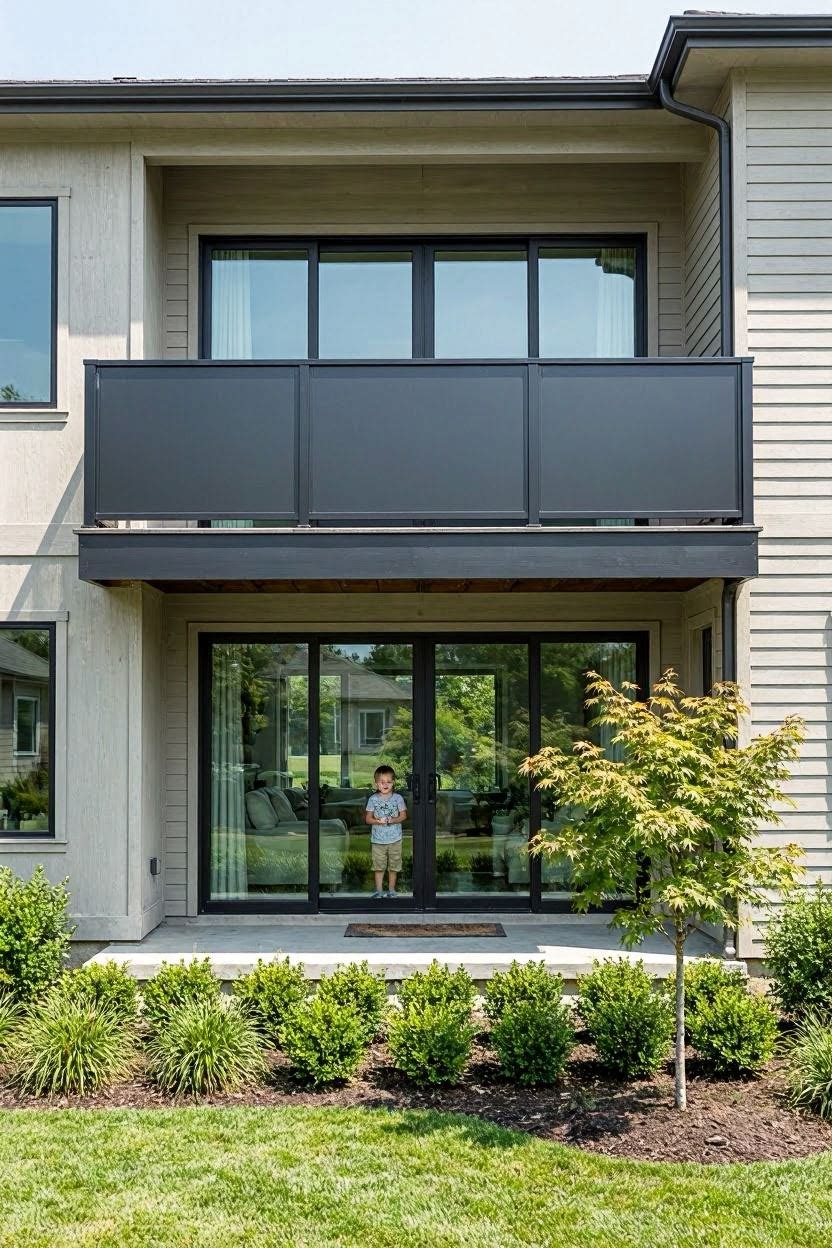
Idea 10: Solid Aluminum Panel Railing
Solid aluminum panels with no cutouts and no gaps. These are powder-coated for a matte or glossy finish in any color. Aluminum is lightweight, never rusts, and is very low maintenance. The solid panel leaves absolutely no way for a child to climb or squeeze through.
Safety note: Best choice for families with toddlers under 3 years old. The top rail is wide and flat — easy for elderly adults to grip and lean on safely.
Cost: $90–$160 per linear foot Where to buy: Fortress Building Products, Boral TrimBoard, local aluminum fabricators
Idea 11: Tall Composite Railing (42”+ Height)
The standard building code in the USA requires 36 inches of railing height for balconies less than 30 inches off the ground, and 42 inches for balconies higher than 30 inches. Going even taller — 48 inches — gives extra peace of mind for families with active kids. Composite (PVC/wood blend) railings hold their height well and never sag.
Safety note: Height matters as much as design. Taller railings dramatically reduce fall risk. If you are going custom, ask for 48 inches.
Cost: $50–$100 per linear foot Where to buy: AZEK, TimberTech, Trex
| Height | Code Requirement | Best For |
|---|---|---|
| 36” | Low balconies (<30” off ground) | Ground floor patios |
| 42” | Standard (>30” off ground) | Most balconies |
| 48” | Exceeds code — extra safe | Families with young children |
| 54”+ | Premium safety spec | High-rise or special needs |
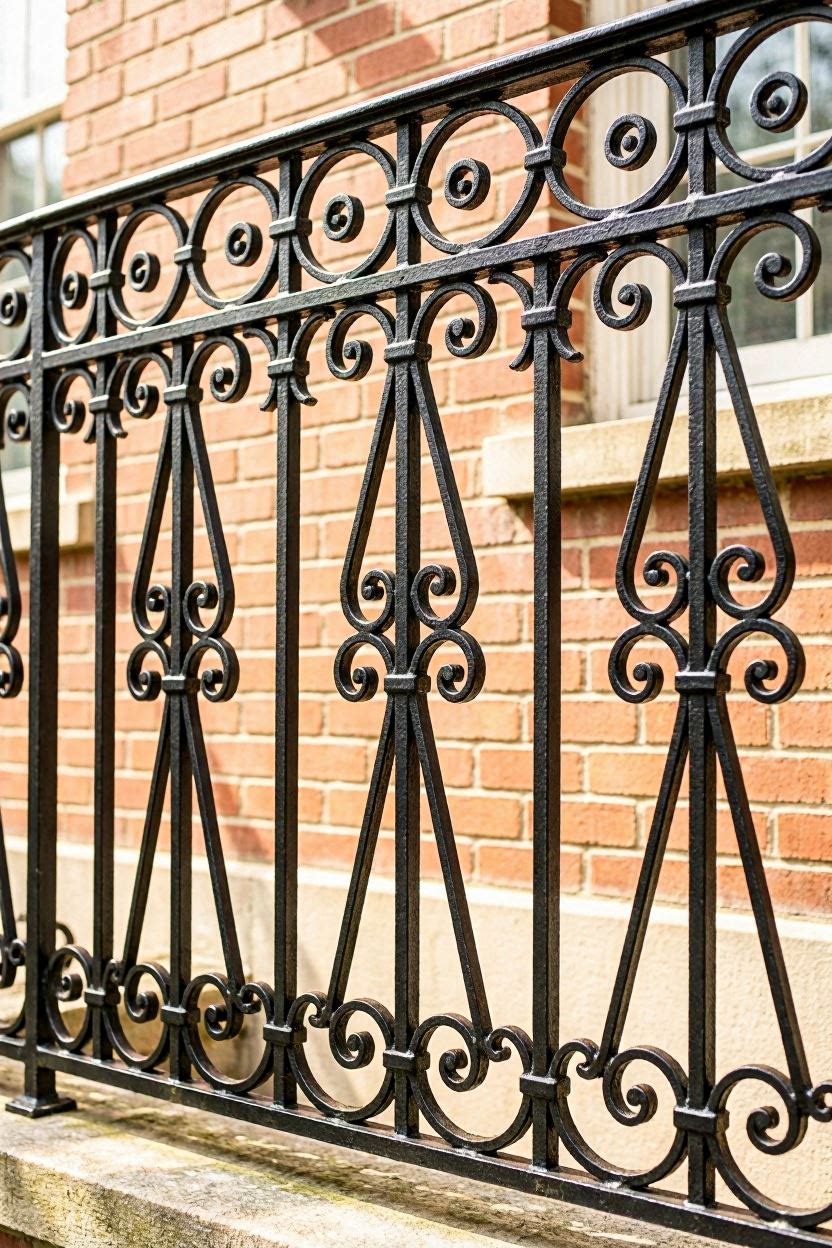
Idea 12: Decorative Wrought Iron with Close-Set Balusters
Take the classic wrought iron look but specify balusters spaced just 2–3 inches apart instead of the maximum 4 inches. This creates a denser, more intricate pattern that is even harder for a small child to fit through. The decorative scrollwork adds beauty on top of the extra safety.
Safety note: The closer the spacing, the safer for young children. Ask your fabricator specifically for 3-inch or 2.5-inch spacing.
Cost: $75–$140 per linear foot (custom spacing adds small premium) Where to buy: Local ironwork studios, Houzz marketplace, metalsmith Etsy shops
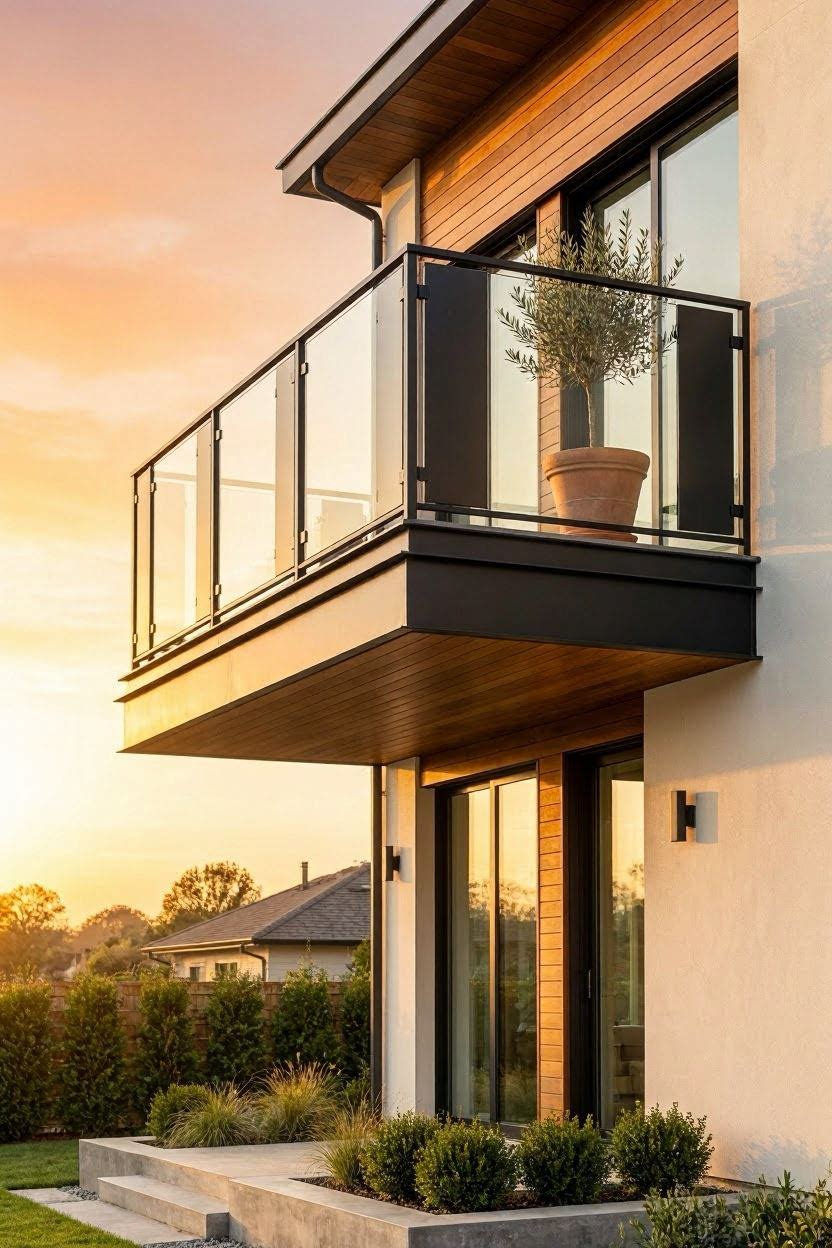
Idea 13: Mixed Glass + Steel Panel Railing
Alternate tempered glass panels with solid steel panels for a design that is both beautiful and extremely safe. The glass sections bring in light and views; the steel sections provide privacy and visual weight. The combination feels premium and architectural — a step above either material used alone.
Safety note: Both materials are code-compliant with no gaps. The mix of rigid materials makes this one of the structurally strongest options available.
Cost: $160–$320 per linear foot Where to buy: Local custom metal and glass fabricators, Houzz for design inspiration + installer referrals
Quick Comparison: All 13 Designs at a Glance
| # | Design | Best Style | Kid Safe | Elder Safe | DIY Possible | Avg Cost/Ft |
|---|---|---|---|---|---|---|
| 1 | Wrought iron balusters | Traditional | ✅ | ✅ | No | $60–$120 |
| 2 | Geometric steel panel | Asian/modern | ✅✅ | ✅ | No | $80–$150 |
| 3 | Laser-cut organic steel | Modern | ✅✅ | ✅ | No | $100–$200 |
| 4 | Perforated metal panels | Contemporary | ✅✅ | ✅ | No | $70–$130 |
| 5 | Stainless vertical bars | Minimalist | ✅ | ✅✅ | Partial | $55–$110 |
| 6 | Full glass panel | Modern/luxury | ✅ | ✅✅ | No | $150–$300 |
| 7 | Frameless glass spigot | Ultra-modern | ✅ | ✅ | No | $200–$400 |
| 8 | Cable + wood posts | Rustic/coastal | ⚠️ | ✅ | Partial | $80–$150 |
| 9 | Wood picket craftsman | Traditional | ✅ | ✅ | Yes | $20–$60 |
| 10 | Solid aluminum panel | Modern/family | ✅✅ | ✅✅ | No | $90–$160 |
| 11 | Tall composite (42”+) | Any style | ✅✅ | ✅✅ | Partial | $50–$100 |
| 12 | Close-set wrought iron | Traditional+ | ✅✅ | ✅ | No | $75–$140 |
| 13 | Mixed glass + steel | Luxury modern | ✅✅ | ✅✅ | No | $160–$320 |
✅✅ = Excellent ✅ = Good ⚠️ = Use with caution
Frequently Asked Questions
What is the minimum railing height required in the USA? For residential balconies more than 30 inches above the ground, the IRC (International Residential Code) requires a minimum 42-inch railing height. Always check your local municipality as some cities have stricter requirements.
What gap size is safe for children? The IRC requires that balusters be spaced no more than 4 inches apart — a 4-inch diameter sphere should not be able to pass through. For extra child safety, request 3-inch spacing.
Is glass railing safe for kids? Yes — when installed correctly with tempered or laminated safety glass and proper hardware. The glass itself is very strong. The main risk is impact from running children; laminated glass holds together even when cracked.
What is the most maintenance-free balcony railing? Powder-coated aluminum and stainless steel require the least maintenance. No rust, no rot. Wipe down annually and check bolts. Composite (PVC) railing is also virtually maintenance-free.
Can I install balcony railing myself? Wood picket railings and some composite kits are genuinely DIY-friendly. Metal and glass systems almost always require a licensed contractor and may need a permit. Always check local codes before starting.
Final Thoughts
Choosing a balcony railing is one of those decisions that you live with every single day. It is the first thing people see from the street and the last line of defense between your family and a fall.
The best railing for your home balances three things: the architectural style of your house, the safety needs of the people who use it, and the budget you are working with. If you have young children or elderly family members at home, prioritize designs with no gaps and solid panels — ideas 2, 3, 4, and 10 are excellent starting points.
If budget is the biggest factor, a tall composite railing (Idea 11) or wood picket system (Idea 9) give you safe, code-compliant results without breaking the bank.
And if you want something truly showstopping — the kind of railing that makes neighbors slow down when they drive past — the laser-cut organic steel panels (Idea 3) or mixed glass and steel (Idea 13) are worth every penny.
Start with your home’s style, set your safety requirements, then find the design that checks both boxes. Your balcony will thank you.