How to Train Tomatoes and Cucumbers on a Balcony Trellis (Step-by-Step)
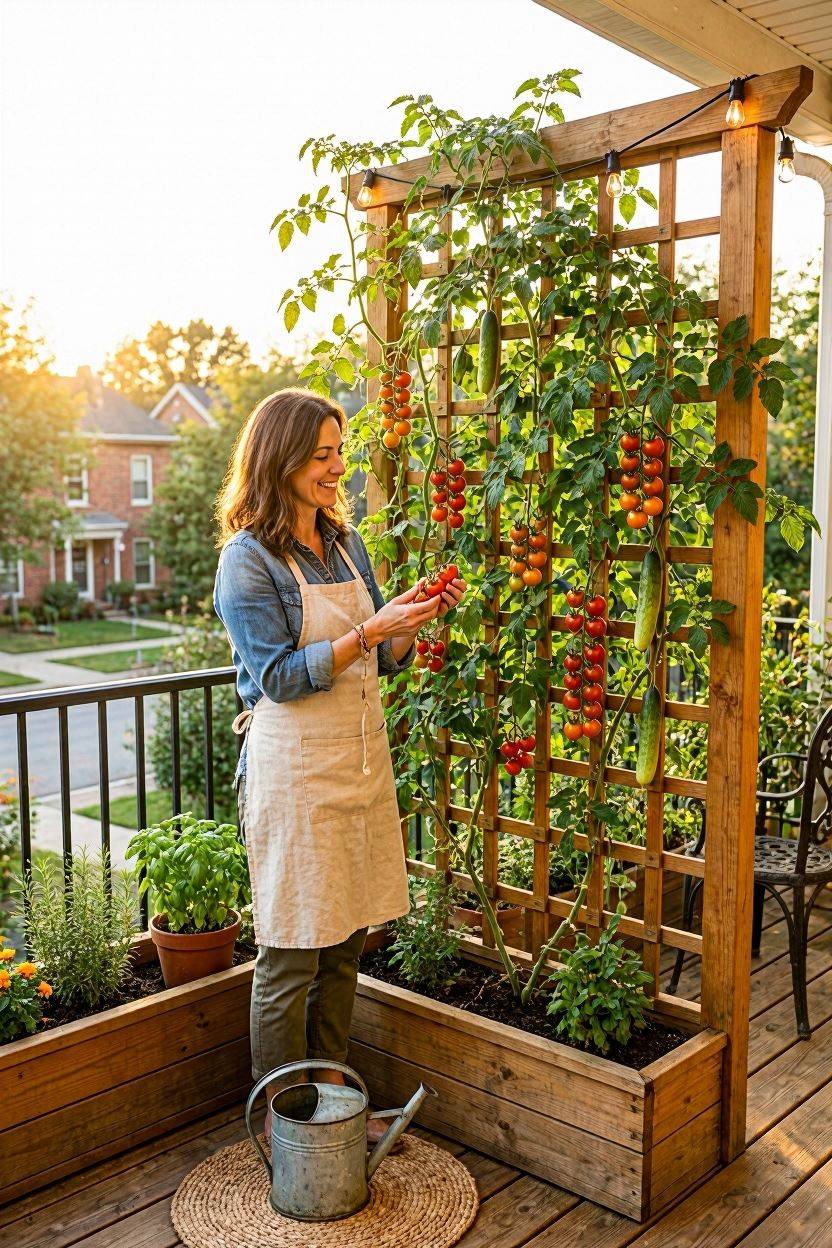
If your balcony floor is running out of space but your gardening dreams are not, a trellis is the answer. Training tomatoes and cucumbers to grow upward instead of outward turns even a tiny balcony into a productive, good-looking garden corner. This guide walks you through picking the right trellis, setting it up, and training your vines the easy way.
Why Vertical Trellis Growing Works So Well on Balconies
Growing up instead of out means more sunlight reaches every leaf, better air flow (which cuts down on mold and disease), and a lot more floor space left for a chair or two. It also just looks better — a trellis full of green vines and red tomatoes turns a plain balcony into a cozy outdoor spot.
1. What You’ll Need
| Item | Purpose | Approx. Cost (USA) |
|---|---|---|
| Trellis (obelisk, ladder, or net) | Support structure for vines | $15–$45 |
| Large pot or grow bag (10–20 gallon) | Root space for healthy plants | $10–$30 |
| Potting mix (well-draining) | Growing medium | $8–$15 per bag |
| Soft plant ties or velcro tape | Attaching vines without damage | $5–$10 |
| Balcony railing brackets (optional) | Mounting trellis to railing | $12–$25 |
| Slow-release fertilizer | Feeding through the season | $8–$12 |
You can find all of these at Home Depot, Lowe’s, or on Amazon under “balcony trellis” and “vegetable grow bags.”
2. Choosing the Right Trellis Type for Your Balcony
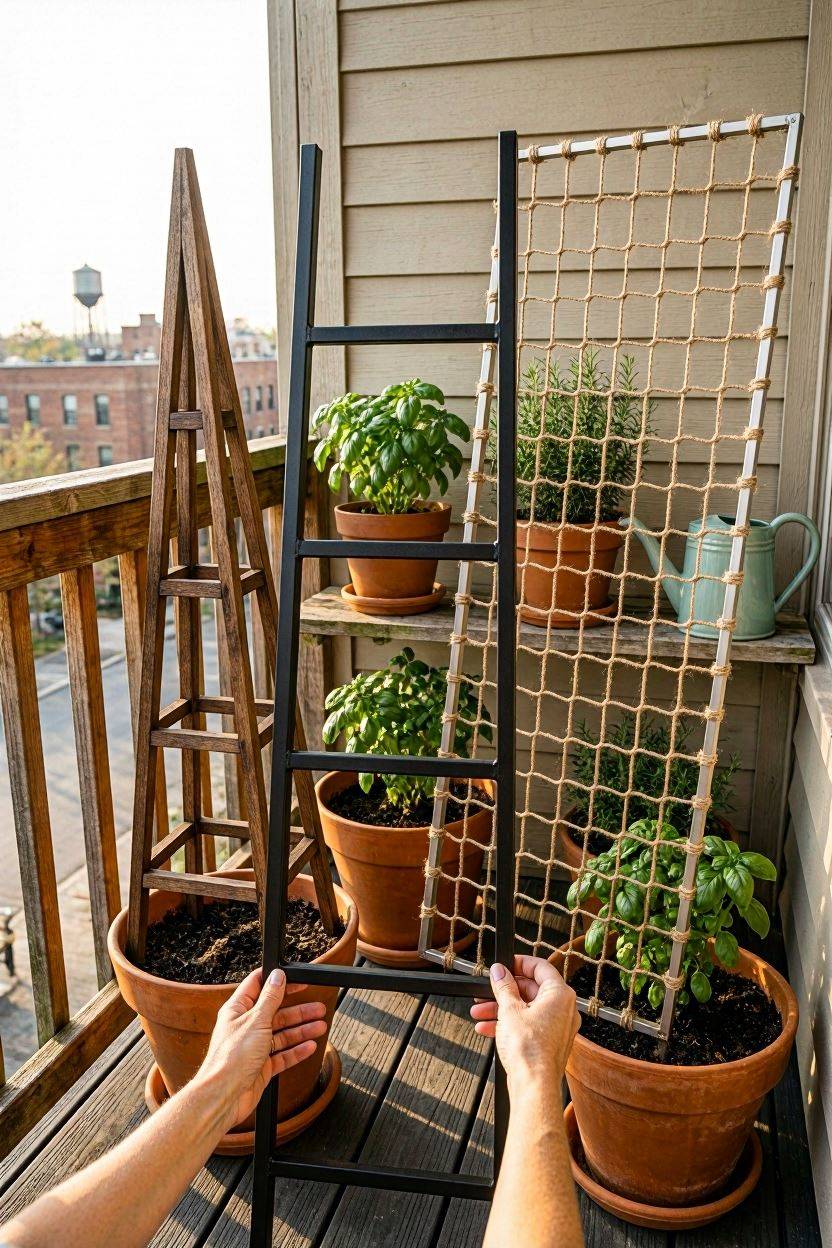
Not every trellis fits every balcony. Match the type to your space and railing setup.
| Trellis Type | Best For | Height | Notes |
|---|---|---|---|
| Obelisk (freestanding cone) | Small pots, cucumbers | 4–6 ft | No wall or railing needed |
| Flat ladder trellis | Tomatoes against a wall | 5–7 ft | Great for narrow balconies |
| Netting trellis | Cucumbers, light vines | 6–8 ft | Cheapest, easy to store |
| Railing-mounted panel | Tight balconies | 4–5 ft | Frees up all floor space |
Step 1: Pick a Style That Matches Your Space
If your balcony has a solid railing, a railing-mounted panel saves the most floor space. If you have an open corner, a freestanding obelisk works beautifully for cucumbers and looks like a decor piece even before the vines fill in.
3. Setting Up Pots and Soil for Trellis Growing
Step 2: Choose a Deep, Wide Pot
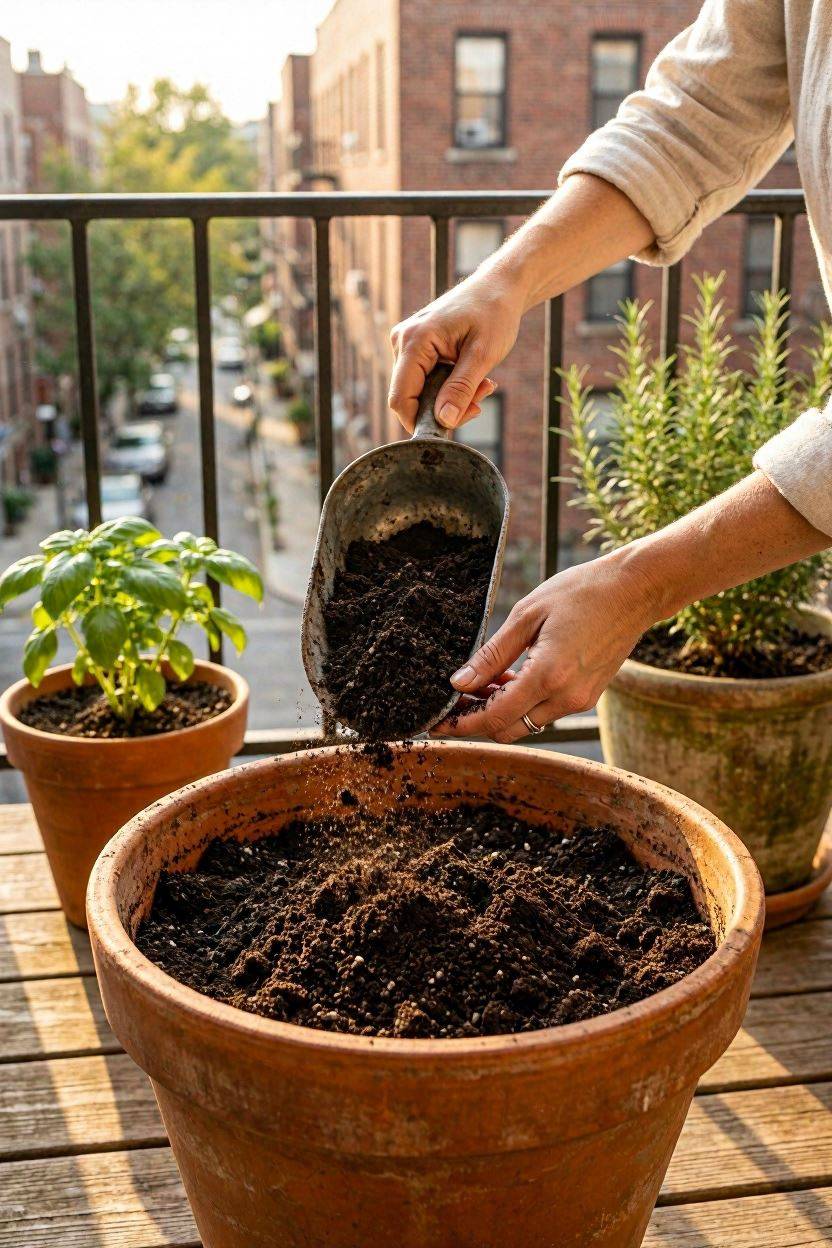
Tomatoes and cucumbers both need room for roots. A 15–20 gallon pot or grow bag is ideal. Fill it with a well-draining potting mix blended with compost — this gives roots the nutrients they need without staying soggy.
4. Installing the Trellis Securely
Step 3: Anchor It Before You Plant
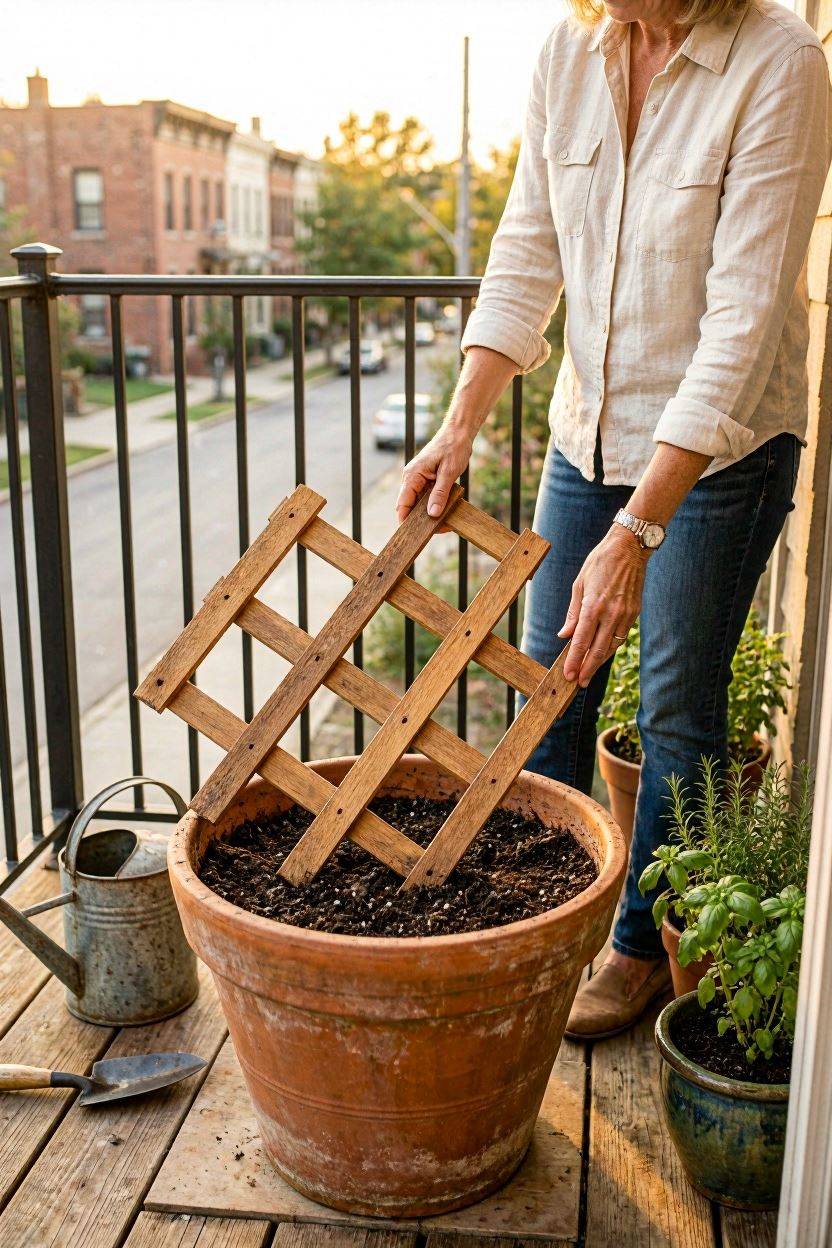
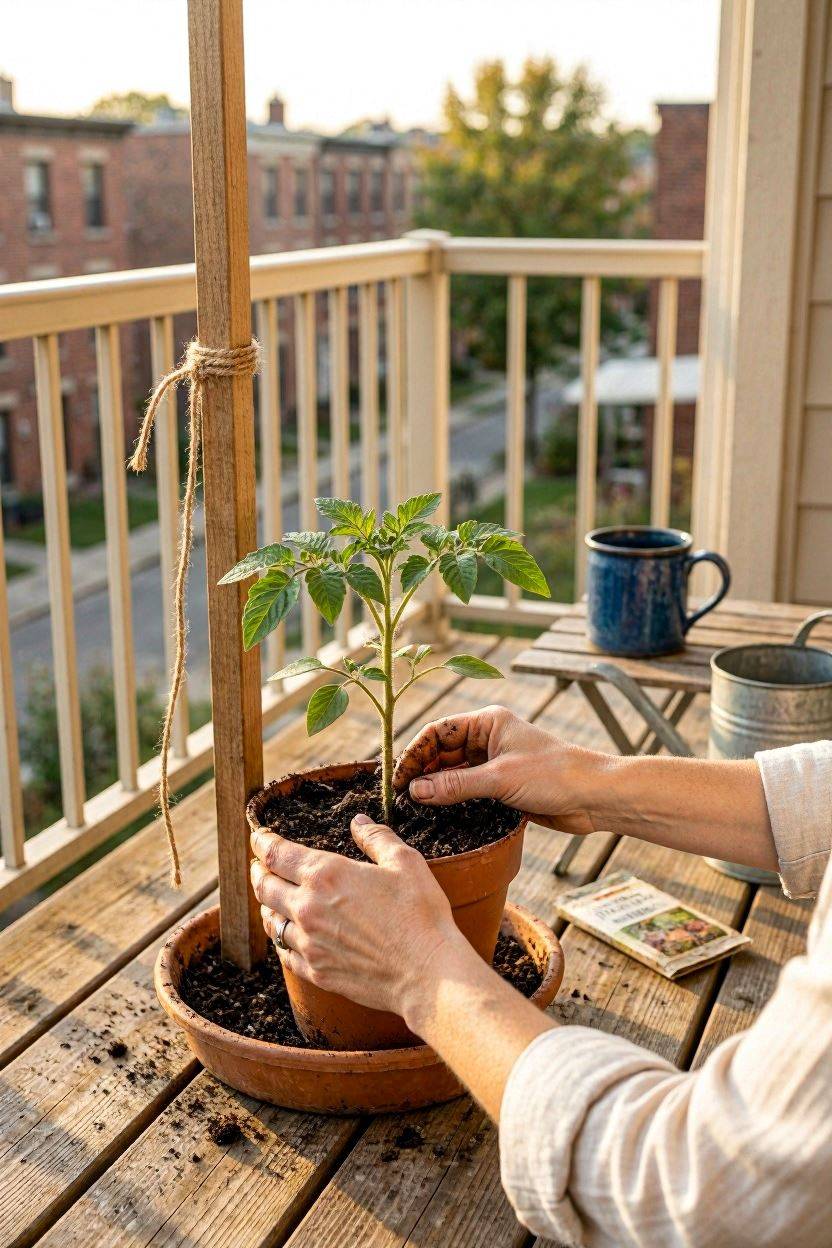
Push the trellis legs deep into the soil, or bolt railing brackets before adding your plant. Doing this before planting avoids disturbing young roots later. For windy balconies, weigh the pot base with a few bricks or a heavy stone.
5. Planting and Spacing
Step 4: Give Each Plant Room to Climb
Plant one tomato or two cucumber seedlings per large pot, spaced at least 12–18 inches apart. Crowding them slows growth and blocks airflow, which invites disease.
6. Training the Vines
Step 5: Tie Loosely, Not Tightly
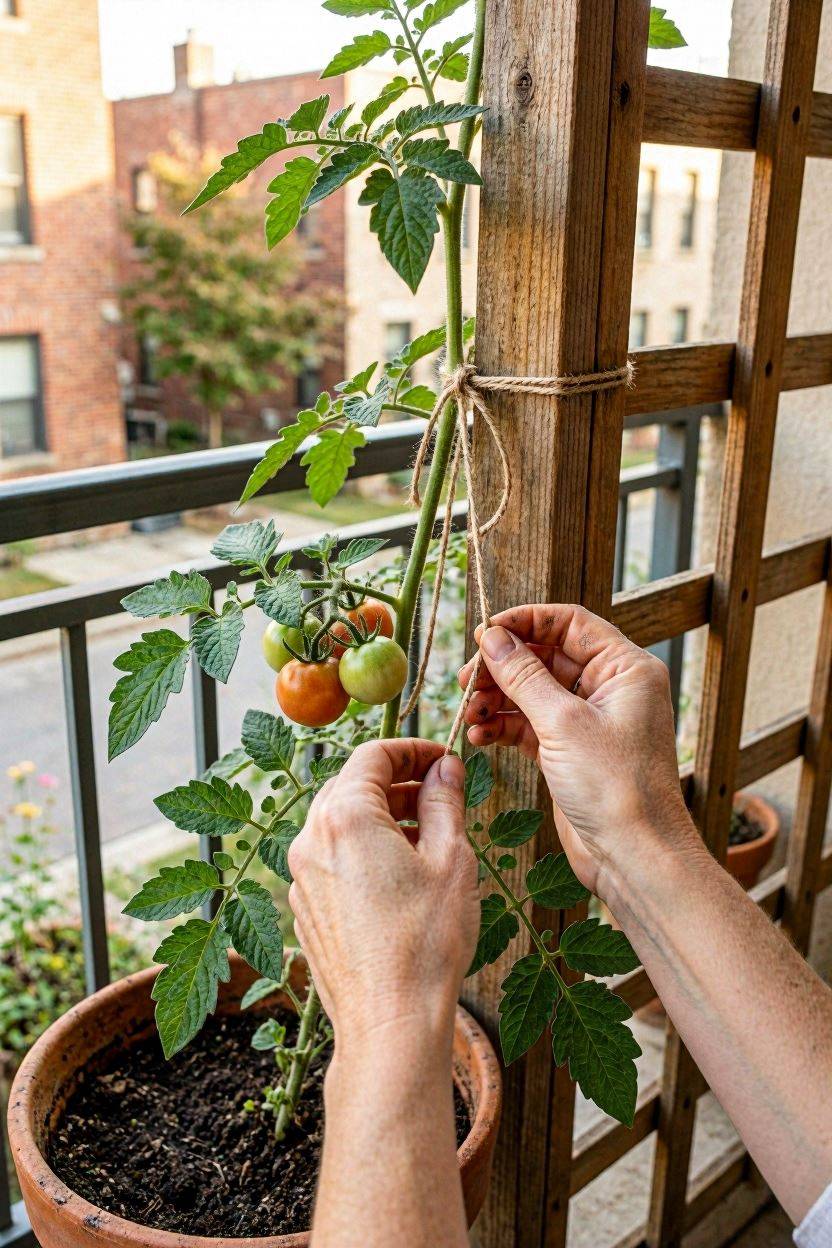
As the main stem grows, gently guide it toward the trellis and secure it with a soft tie every 8–10 inches. Use a loose figure-eight loop — one side around the stem, one side around the trellis — so the stem has room to thicken without getting choked.
Step 6: Prune and Guide Weekly
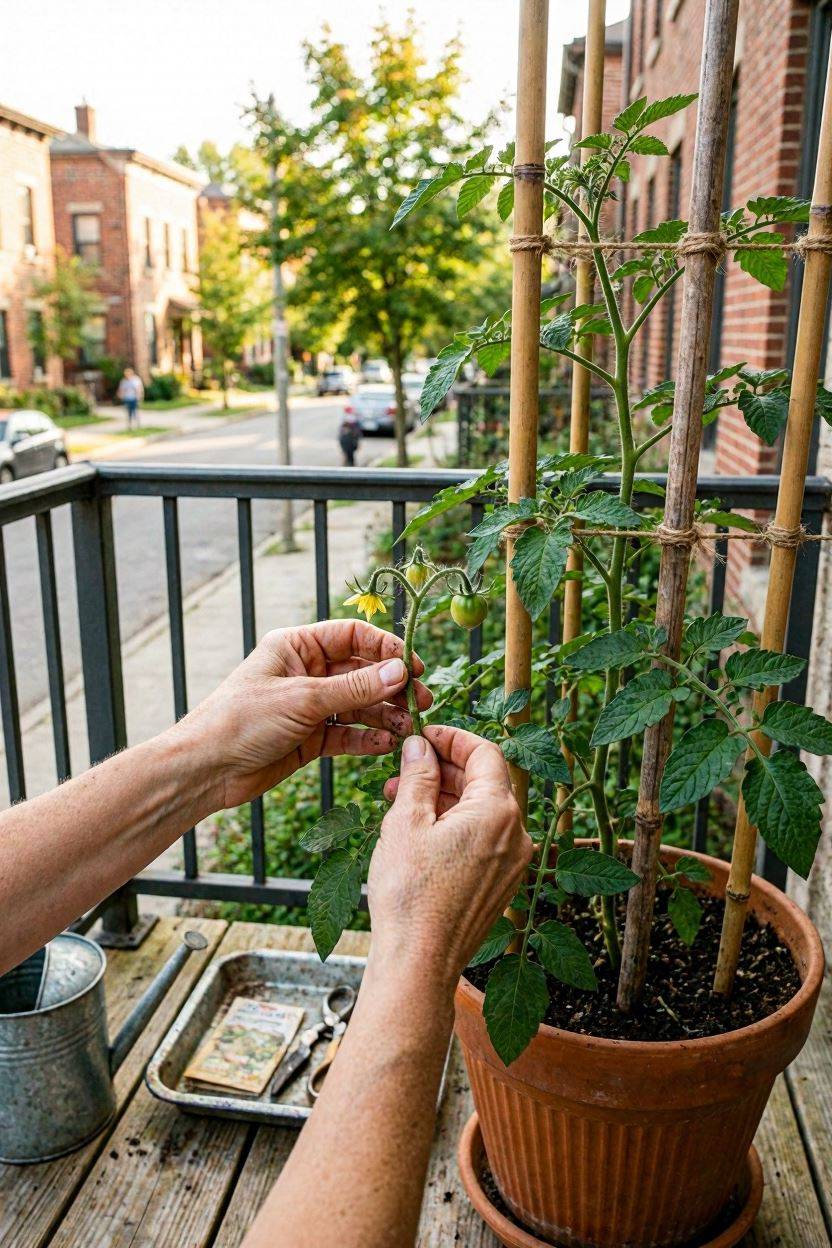
Check your plants once a week. Pinch off small side shoots (called suckers) on tomatoes so the plant focuses energy on the main climbing stem. For cucumbers, gently wind the tendrils around the trellis instead of tying every single one.
7. Supporting Heavy Fruit
Step 7: Add Extra Support as Fruit Grows
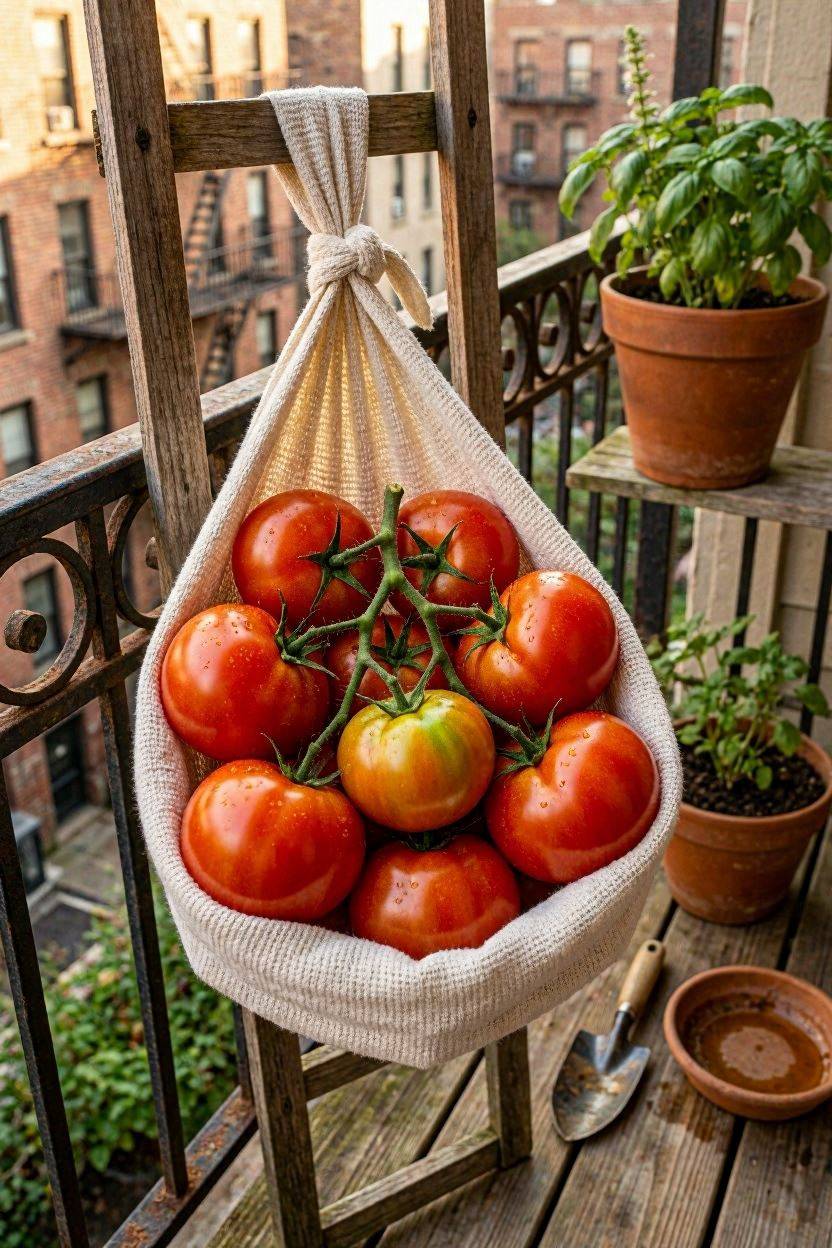
Once tomatoes or cucumbers start forming in clusters, the stem near them can bend or snap under the weight. Add a soft sling or extra tie just below a heavy cluster to share the load with the trellis.
8. Seasonal Care and Watering
Step 8: Water Deeply, Not Often
Balcony pots dry out faster than garden soil, especially in summer heat. Water deeply until it drains from the bottom, rather than a light daily sprinkle. Feed with a slow-release fertilizer every 4–6 weeks through the growing season.
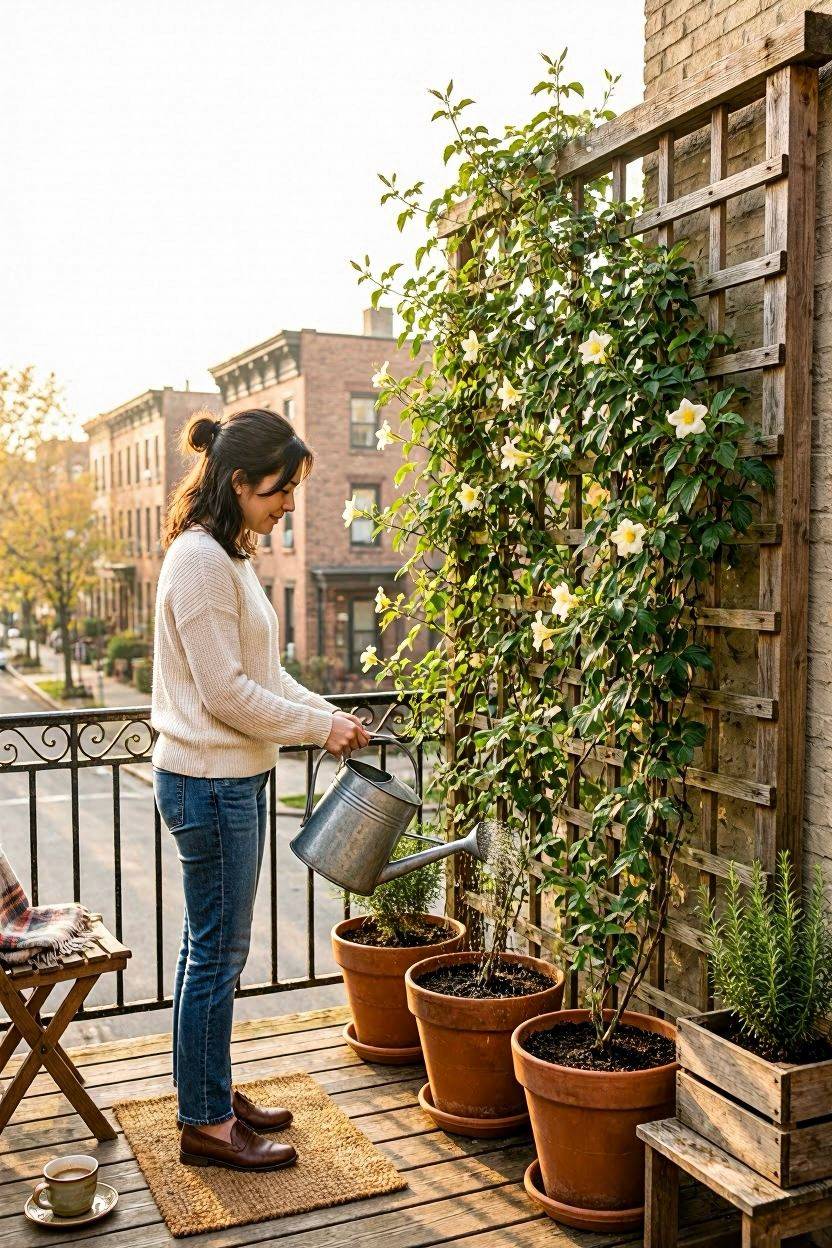
9. Vertical Space-Saving Ideas for Small Balconies
If floor space is really tight, mix in hanging pots, stacked planters, or a second small trellis panel along a side wall. Vertical layering like this can double your growing space without adding a single extra square foot.
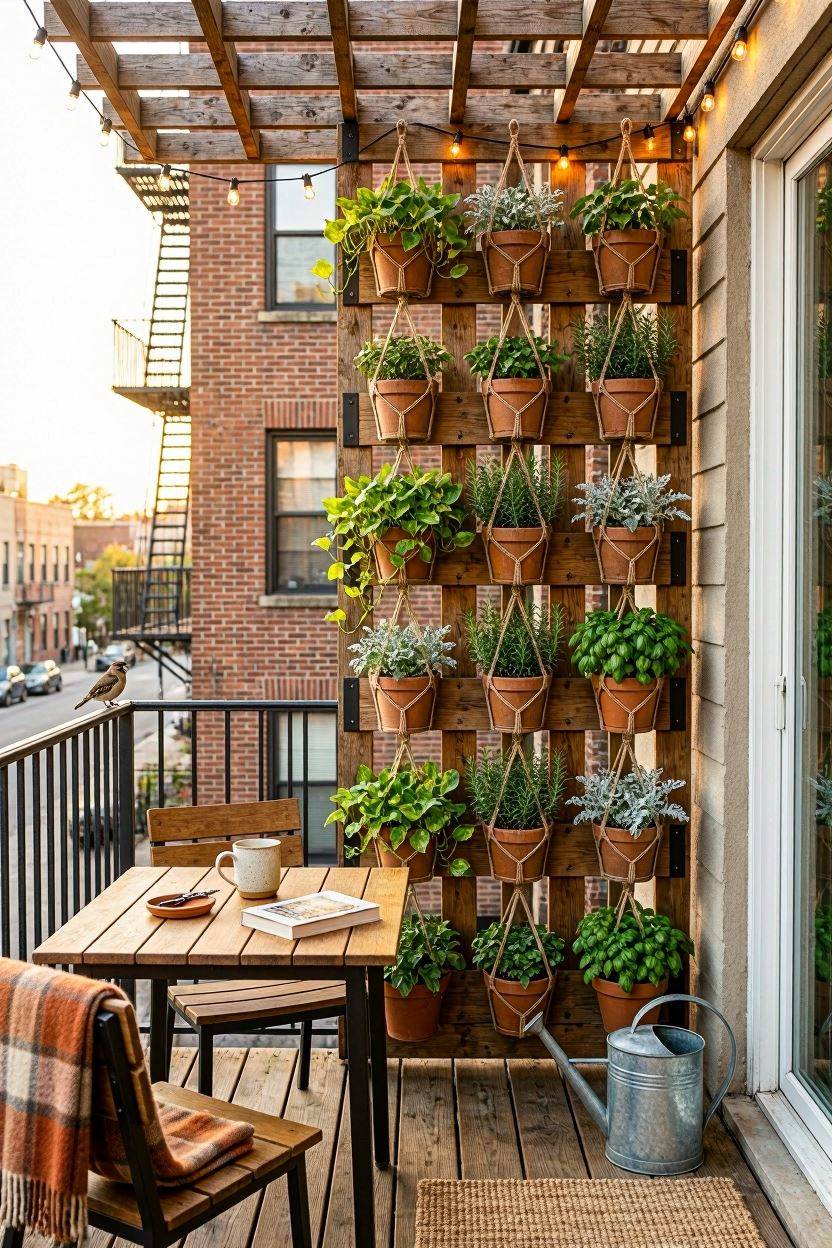
10. A Quick Note on DIY Trellis Options
If you enjoy building things yourself, a simple DIY trellis can be made from bamboo stakes tied into an A-frame, wooden lattice panels cut to size, or even repurposed garden fencing bent into a cylinder shape. These options cost less than store-bought trellises and can be customized to fit an odd-shaped balcony corner. Just make sure any DIY structure is anchored well, since a loaded tomato or cucumber vine gets heavier than people expect by mid-season.
Frequently Asked Questions
Do cucumbers or tomatoes climb a trellis on their own? Cucumbers climb mostly on their own using tendrils. Tomatoes do not climb naturally — you need to tie the main stem to the trellis as it grows.
How tall should a balcony trellis be? Most balcony trellises work well between 5 and 7 feet. Taller cucumber varieties may need up to 8 feet.
Can I use the same trellis for both tomatoes and cucumbers? Yes, as long as the trellis is sturdy enough. Keep the two plants in separate pots so their roots don’t compete.
Will a trellis work on a windy, high-floor balcony? Yes, but anchor the pot with extra weight at the base and choose a lower-profile trellis like a netting panel instead of a tall obelisk.
Final Thoughts
A balcony trellis turns limited space into a real, productive garden. Once you get the tying and pruning rhythm down — just a few minutes each week — the payoff is a wall of green vines, fresh tomatoes and cucumbers, and a balcony that finally feels like an outdoor room instead of a storage ledge.