10 DIY Bean Trellis Ideas to Boost Your Garden Yield Naturally
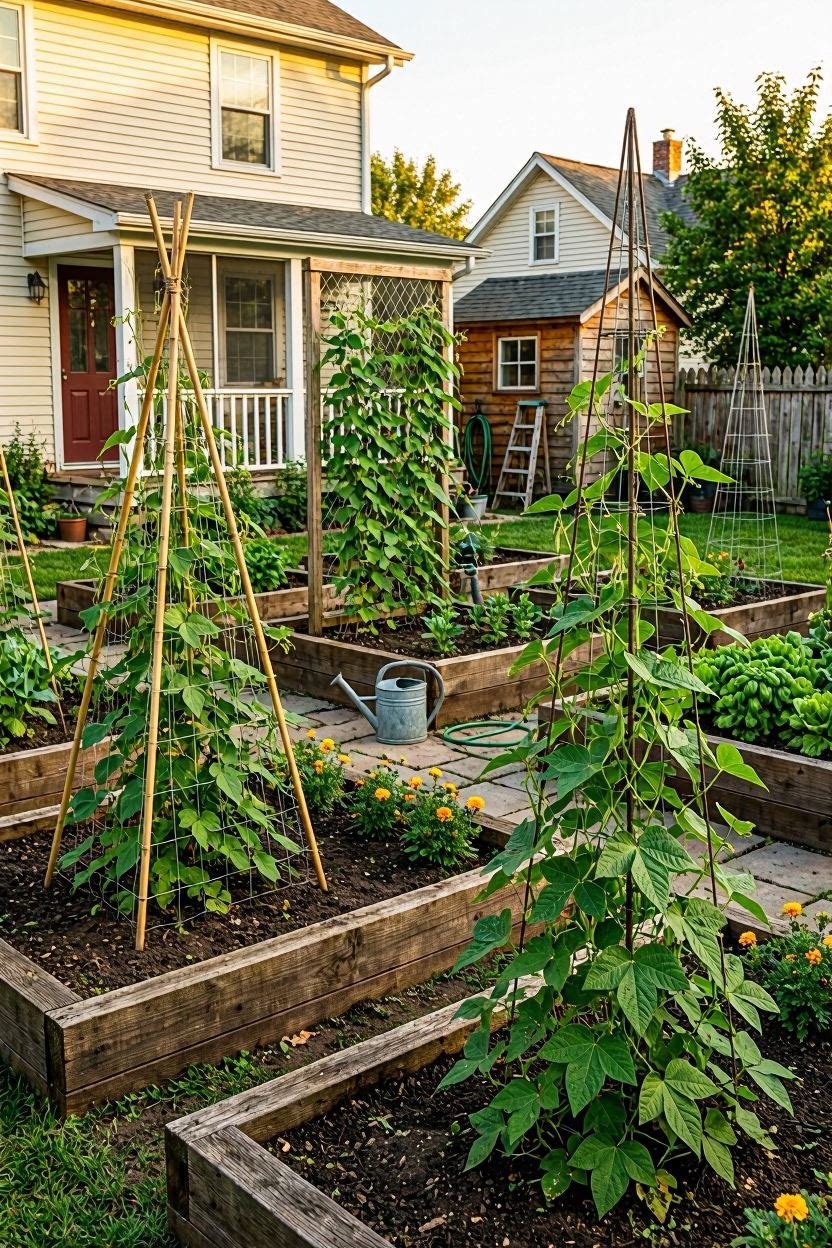
Growing beans is one of the easiest ways to get fresh veggies all summer, but they need the right support to climb. A good trellis saves space, keeps plants healthy, and makes harvesting so much easier. Below are 10 simple bean trellis ideas you can build this weekend, even if you’re new to gardening.
1. Classic A-Frame Trellis
An A-frame trellis is one of the strongest and most stable designs for pole beans. Two wooden frames are joined at the top to form a triangle, giving beans plenty of room to climb on both sides.
Materials needed: 2x2 wood stakes, garden twine or chicken wire, screws Cost estimate: $25–$40 Best for: Heavy bean varieties like scarlet runner beans
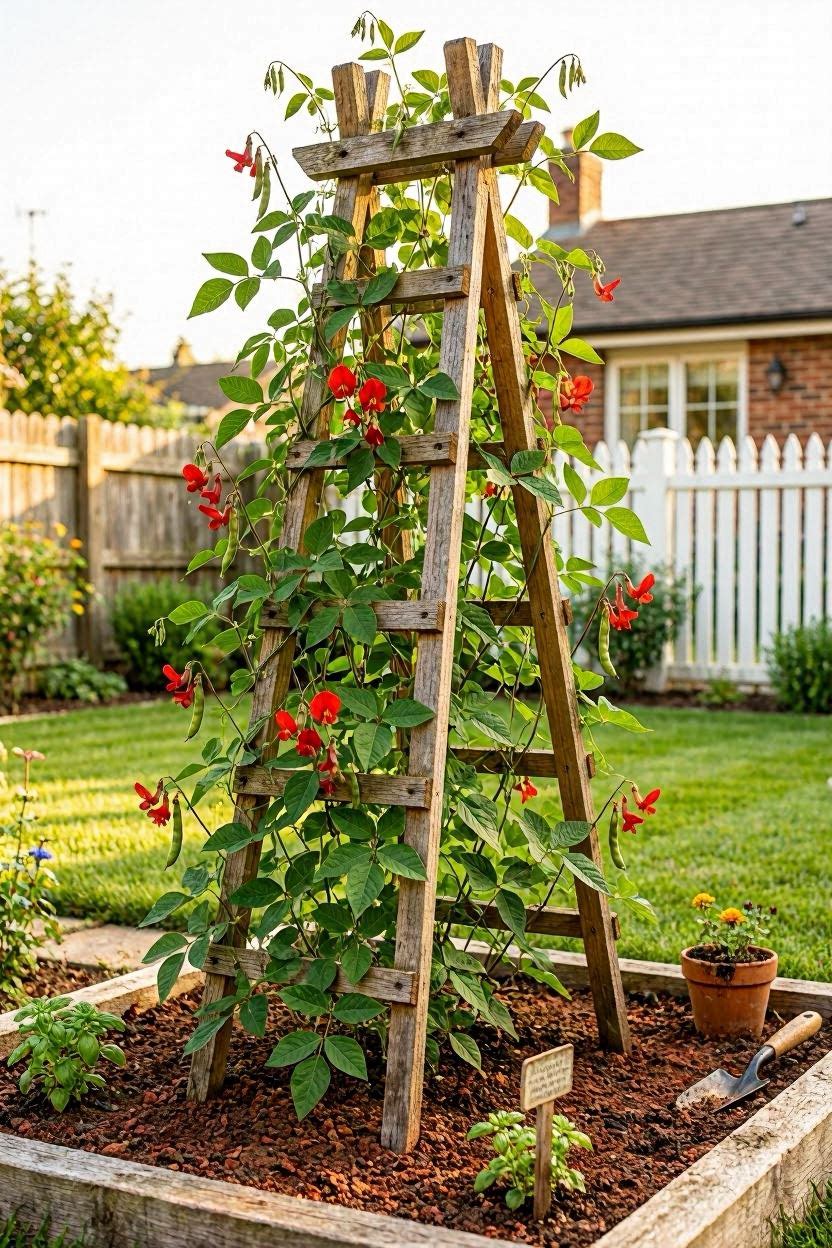
How to build it
Cut four wood stakes to equal length. Join two stakes at the top to form a triangle on each side. Connect the two triangles with a horizontal beam at the top, then add string or wire mesh between the legs for beans to grip.
2. Teepee Trellis with Bamboo Poles
A teepee trellis is one of the cheapest and quickest options. Simply tie 5–6 bamboo poles together at the top and spread the bottoms out in a circle.
Materials needed: Bamboo poles (6–8 feet), garden twine Cost estimate: $10–$20 Best for: Small gardens, container gardening
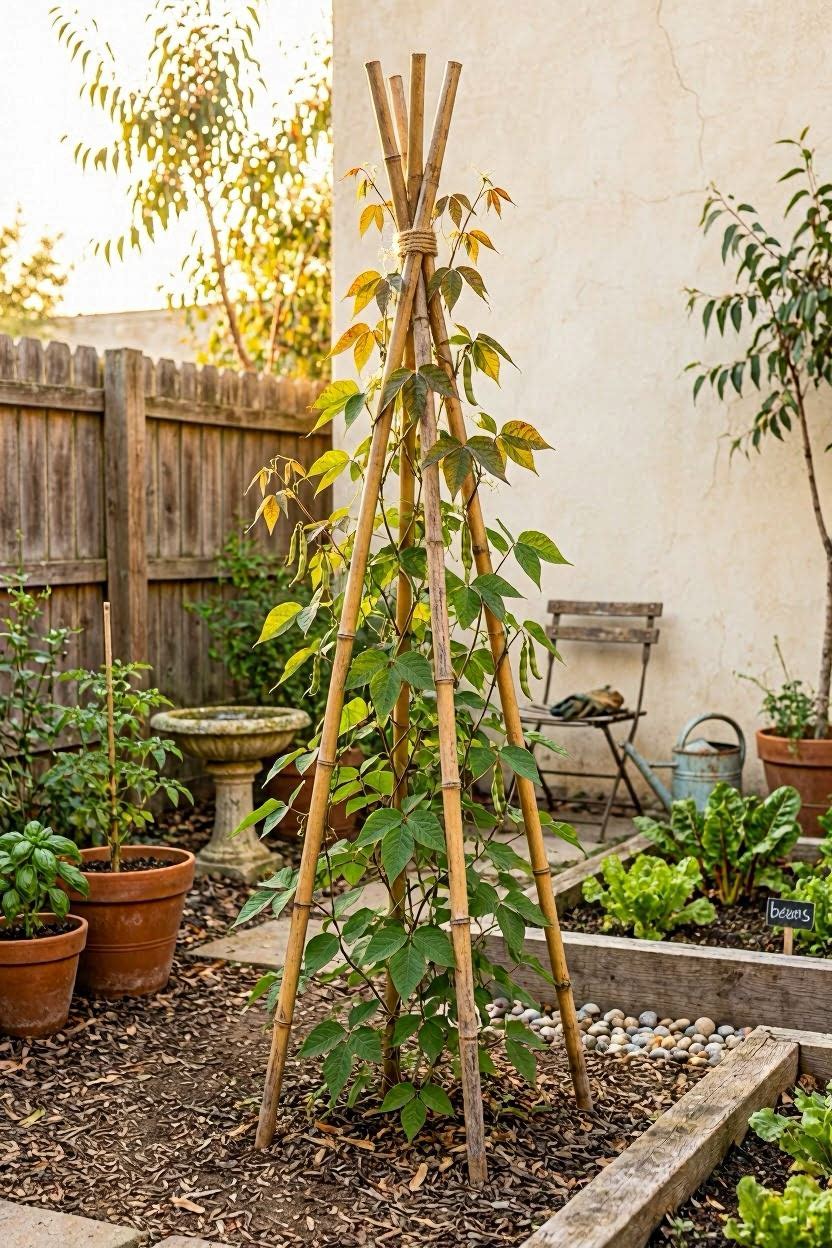
How to build it
Push the bottom ends of the poles into the soil in a circle, about 12 inches apart. Gather the top ends together and tie them firmly with twine. Plant 2–3 bean seeds at the base of each pole.
3. Cattle Panel Arch Trellis
Cattle panels are sturdy metal grids sold at farm stores like Tractor Supply. Bent into an arch, they create a tunnel that beans love to climb, and you can walk underneath to harvest.
Materials needed: 1 cattle panel (16ft x 50in), metal T-posts Cost estimate: $30–$50 Best for: Large gardens, raised beds
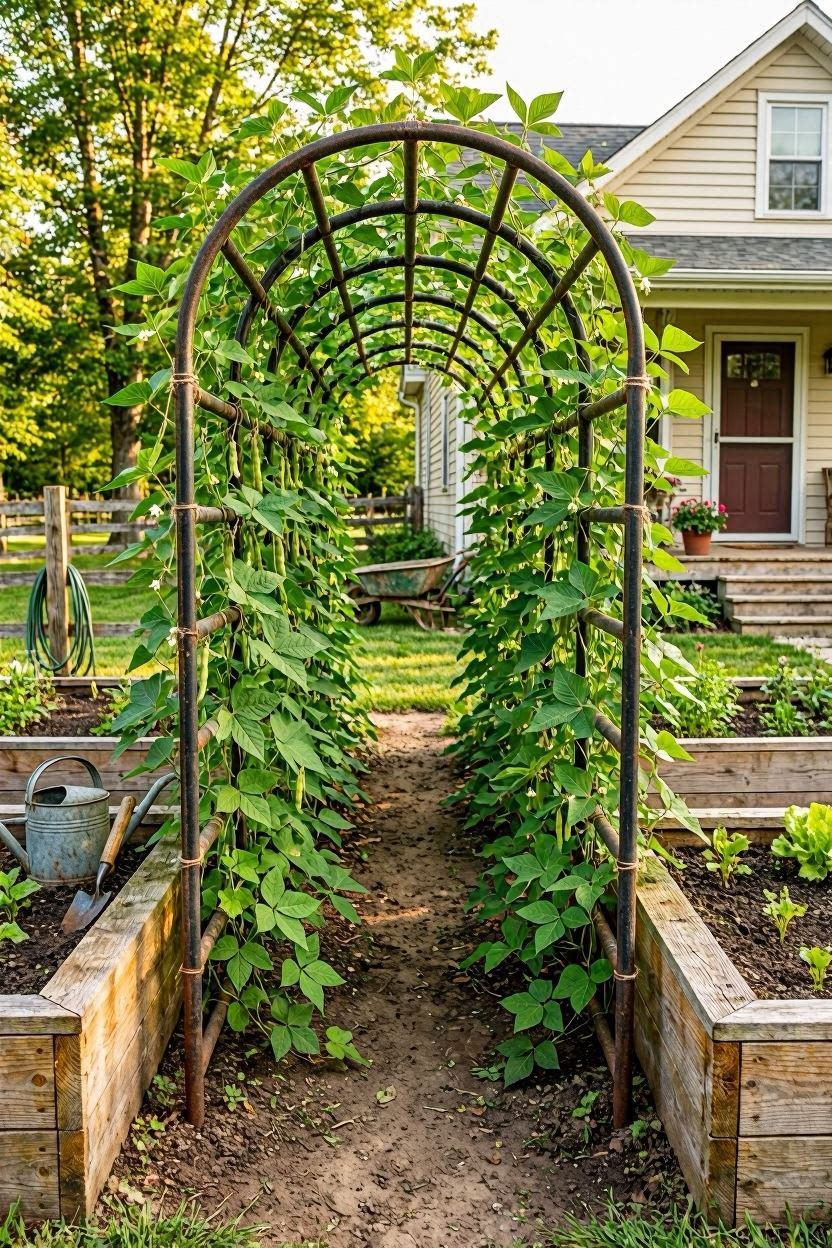
How to build it
Bend the cattle panel into an arch shape over your garden bed. Secure both ends to the ground using T-posts. Plant beans along the base on both sides so they grow up and over the arch.
4. Wall-Mounted String Trellis
If you’re short on space, a string trellis attached to a fence or wall is a smart choice. It’s nearly invisible and works great for small balconies or patios.
Materials needed: Eye hooks, heavy garden twine or jute string Cost estimate: $5–$15 Best for: Balconies, small yards, fences
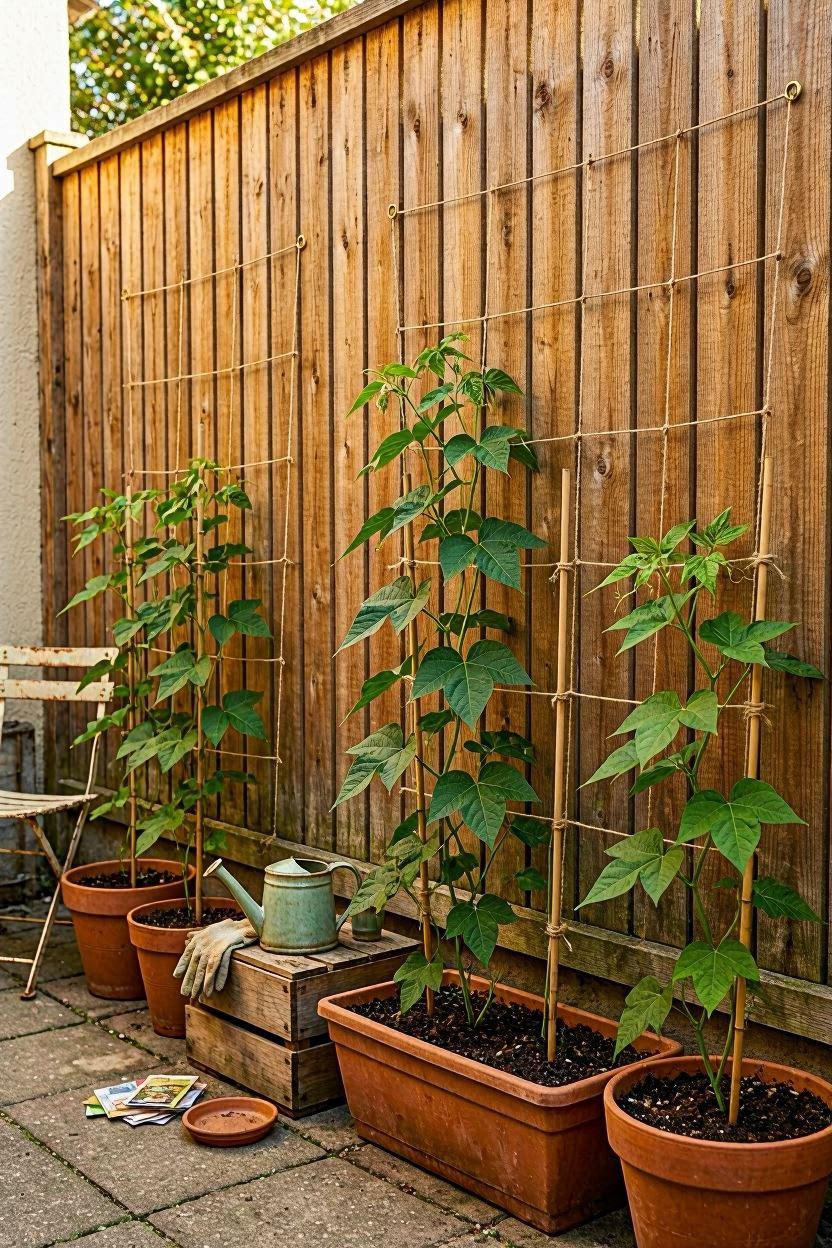
How to build it
Screw eye hooks into the top and bottom of your wall or fence, spaced about 6 inches apart. Run vertical strings from top to bottom hooks. Plant beans below each string line.
5. Repurposed Ladder Trellis
An old wooden ladder makes a charming, rustic trellis with zero extra cost if you already have one lying around.
Materials needed: Old wooden or metal ladder Cost estimate: $0 (if reused) or $20–$40 (used ladder from thrift store) Best for: Cottage-style gardens, decorative spots
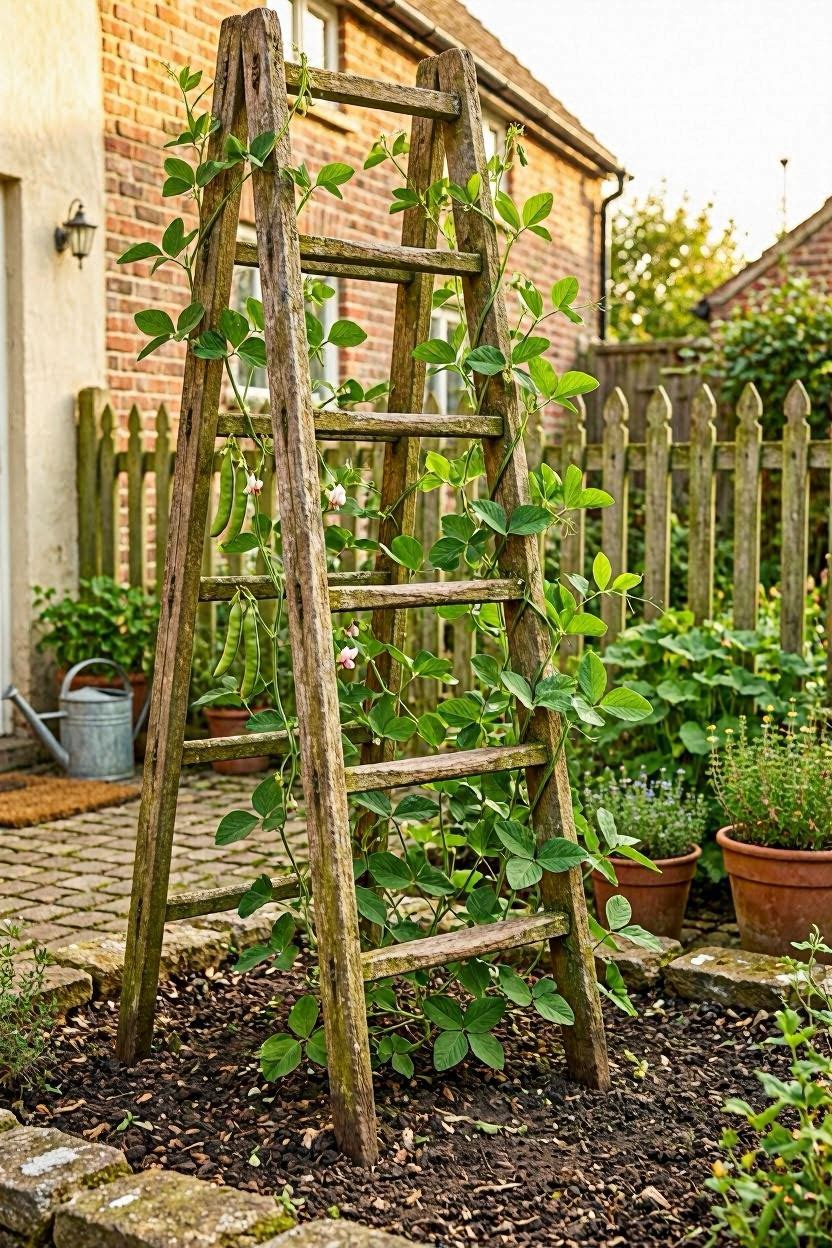
How to build it
Stand the ladder upright or lean it against a wall at an angle. Plant beans at the base of each side rail. The rungs give beans natural horizontal supports to grab onto.
6. PVC Pipe Grid Trellis
PVC pipes are lightweight, weatherproof, and easy to assemble into a grid shape. This is a great budget option that lasts for years.
Materials needed: PVC pipes (1/2 inch), PVC connectors, garden netting Cost estimate: $20–$35
How to build it
Cut PVC pipes to your desired height and width. Use connectors to build a rectangular frame. Stretch garden netting across the frame and secure with zip ties.
7. Tomato Cage Stack
Standard tomato cages can double as compact bean supports, especially for bush bean varieties or container gardens.
Materials needed: 1–2 tomato cages per pot Cost estimate: $5–$10 per cage
How to build it
Place a tomato cage directly into the pot or garden bed around your bean plants. As the beans grow, gently guide the vines toward the cage rings.
8. Wooden Lattice Panel Trellis
A lattice panel gives a clean, decorative look while offering tons of grip points for climbing beans.
Materials needed: Wooden lattice panel, 2x4 wood frame Cost estimate: $25–$45 Best for: Patios, garden borders, decorative areas
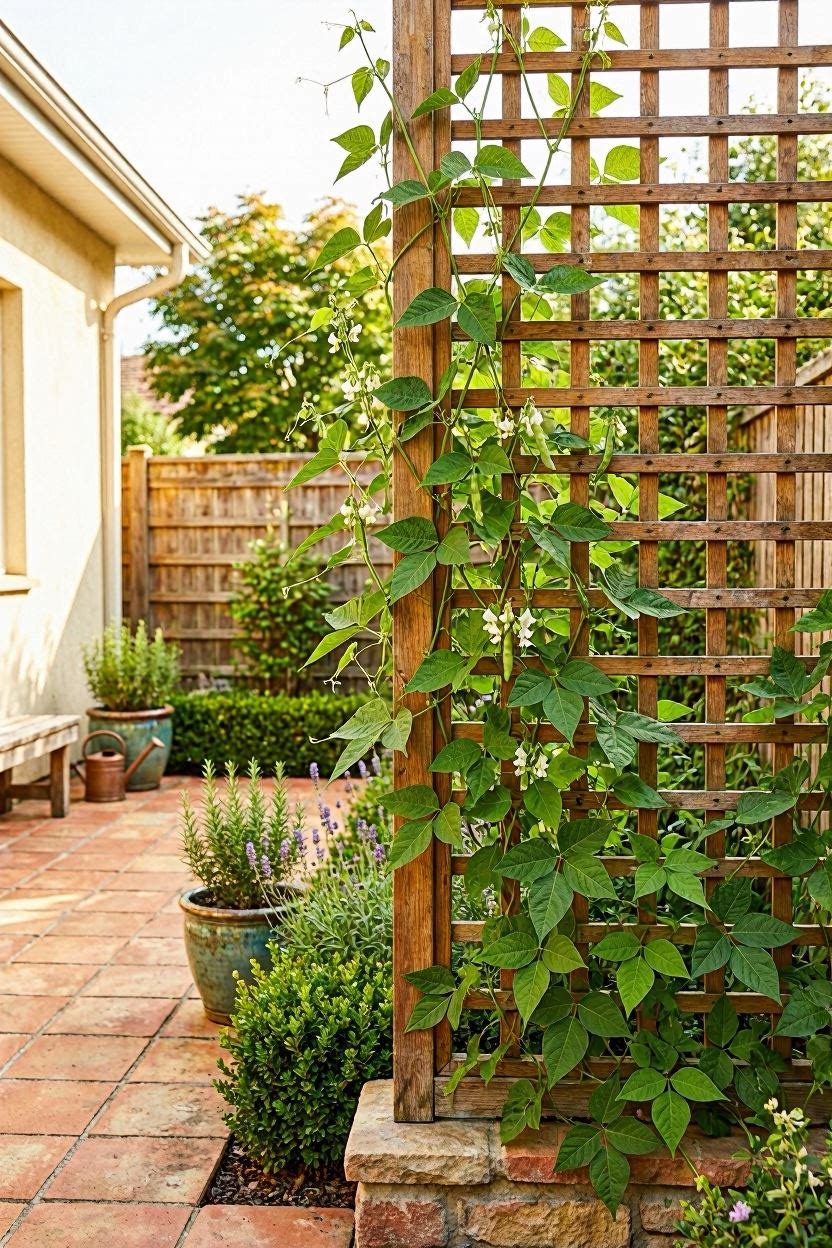
How to build it
Attach the lattice panel to a 2x4 frame for support. Stand it upright in your garden bed, securing the base with stakes. Plant beans along the bottom edge.
9. Fan Trellis with Branches
This rustic option uses natural tree branches arranged in a fan shape, perfect for a wild or cottage garden look.
Materials needed: Long straight branches, garden twine Cost estimate: $0 (free if collected from yard)
How to build it
Push 4–5 branches into the soil in a fan or arc shape behind your bean row. Weave thinner twigs horizontally between them for extra grip. Tie joints with twine for stability.
10. Vertical Pallet Trellis
A wooden pallet stood on its end creates instant vertical growing space and gives a trendy, upcycled garden look.
Materials needed: 1 wooden pallet, garden netting (optional) Cost estimate: $0–$15
How to build it
Stand the pallet upright and secure it firmly with stakes on both sides. Beans can climb directly on the slats, or attach netting for extra support.
Quick Comparison Table
| Trellis Type | Cost | Best For | Difficulty |
|---|---|---|---|
| A-Frame | $25–$40 | Heavy beans | Medium |
| Bamboo Teepee | $10–$20 | Small gardens | Easy |
| Cattle Panel Arch | $30–$50 | Large gardens | Medium |
| Wall String | $5–$15 | Balconies | Easy |
| Ladder | $0–$40 | Cottage style | Easy |
| PVC Grid | $20–$35 | Budget gardens | Medium |
| Tomato Cage | $5–$10 | Containers | Easy |
| Lattice Panel | $25–$45 | Patios | Medium |
| Branch Fan | $0 | Rustic gardens | Easy |
| Pallet | $0–$15 | Upcycled look | Easy |
FAQ
How tall should a bean trellis be? Most pole beans need a trellis at least 6 to 8 feet tall to support their full growth.
Can I use a bean trellis for other plants? Yes, most of these designs also work well for peas, cucumbers, and small melons.
Where can I buy cattle panels in the USA? Tractor Supply, Rural King, and local farm supply stores usually carry cattle panels for $30–$50 each.
Do I need to water beans differently when using a trellis? No, but vertical growing can dry out soil faster, so check moisture levels a bit more often.
Final Thoughts
A good trellis makes growing beans easier, neater, and far more productive. Whether you want a budget-friendly bamboo teepee or a sturdy cattle panel arch, there’s an option here for every garden size and style. Pick the one that fits your space and materials on hand, and your beans will reward you with a great harvest all season long.