10 Home Office Inspiration Ideas for a Stylish, Productive Space
Working from home only feels good when your space actually works for you. A cramped corner with bad lighting and no storage will drain your energy fast, but a well-planned home office can make your whole day better.
Below are 10 home office inspiration ideas that mix good design with real function. Each one is something you can actually plan for your own space, whether you have a full spare room or just a small nook.
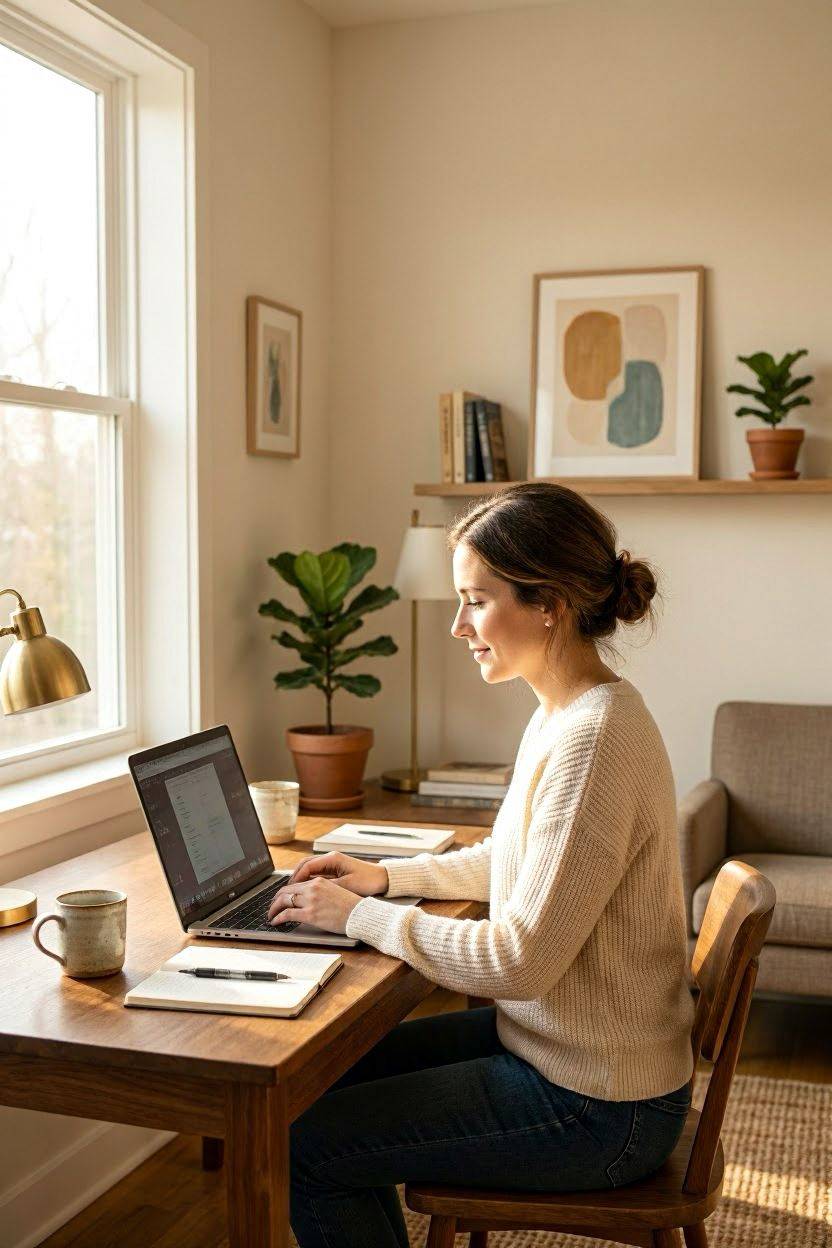
1. Position Your Desk Near Natural Light
Daylight does more for your focus than any productivity app. Placing your desk near a window, but not directly facing it, cuts down on screen glare while still keeping the room bright.
Why it works: Natural light reduces eye strain and helps regulate your body’s energy levels through the day.
What to do: Set your desk perpendicular to the window instead of facing it head-on. This avoids glare on your monitor while still bathing the space in light.
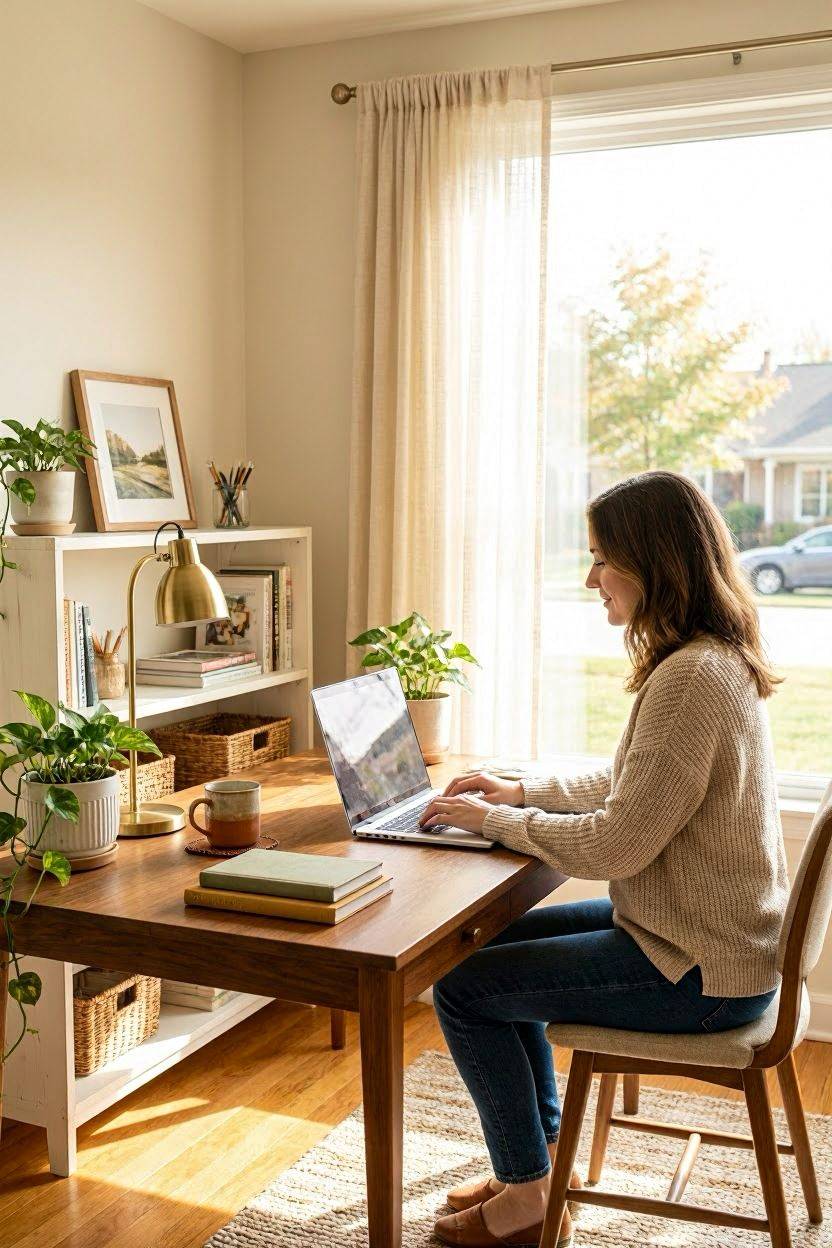
| Light Source | Cost (USD) | Where to Buy |
|---|---|---|
| Sheer linen curtains | $25–$45 | Target, IKEA |
| Daylight LED bulb (5000K) | $8–$15 | Amazon, Home Depot |
| Adjustable blinds | $30–$60 | Lowe’s, Wayfair |
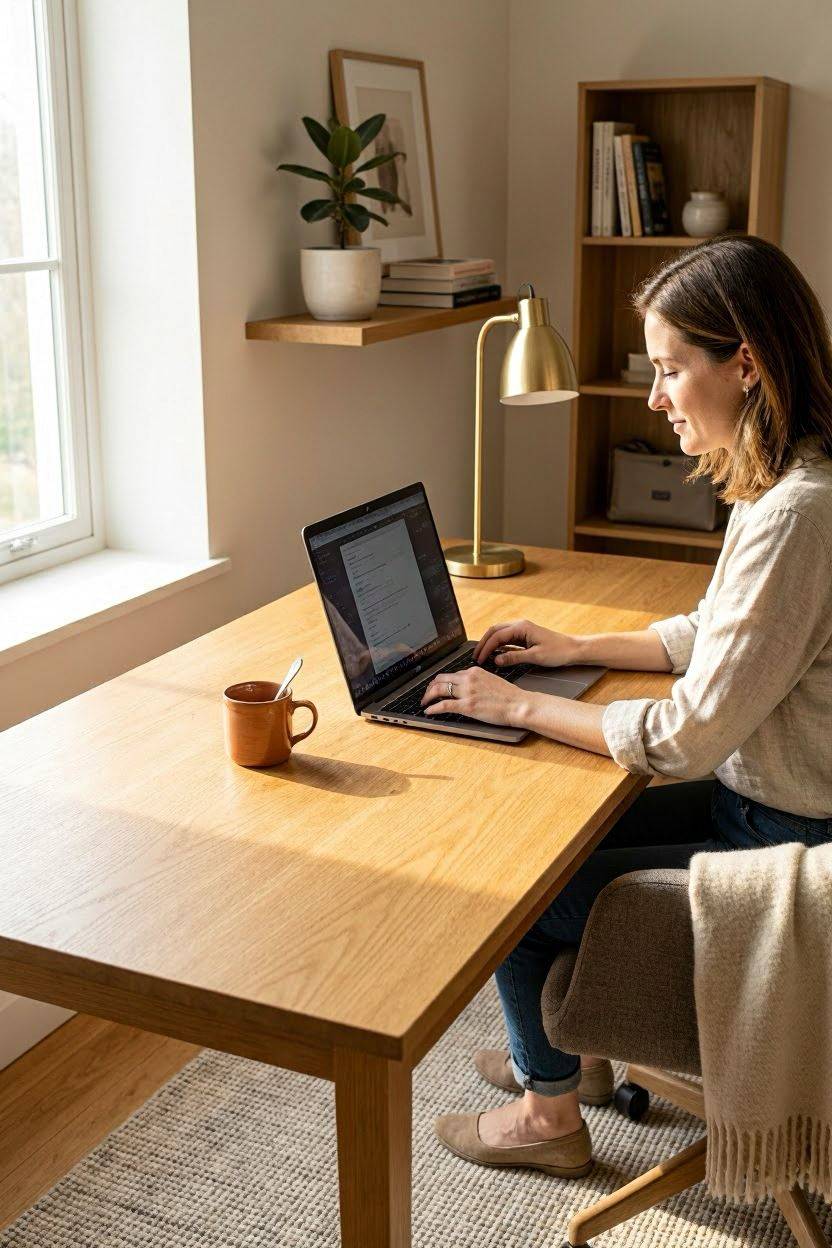
2. Choose a Statement Desk
Your desk is the anchor piece of the whole room, so it’s worth picking one that looks good and fits how you actually work.
Popular styles for 2026:
- Minimalist wood desks — clean lines, warm tone, works with almost any decor
- Standing desks — great if you sit most of the day already
- Vintage writing desks — adds character to a home office in an older house
A few solid options: the IKEA MICKE desk (around $99) for budget-friendly minimalism, or the Fully Jarvis standing desk (around $499) if you want a sit-stand option.
3. Style an Ergonomic Chair That Still Looks Good
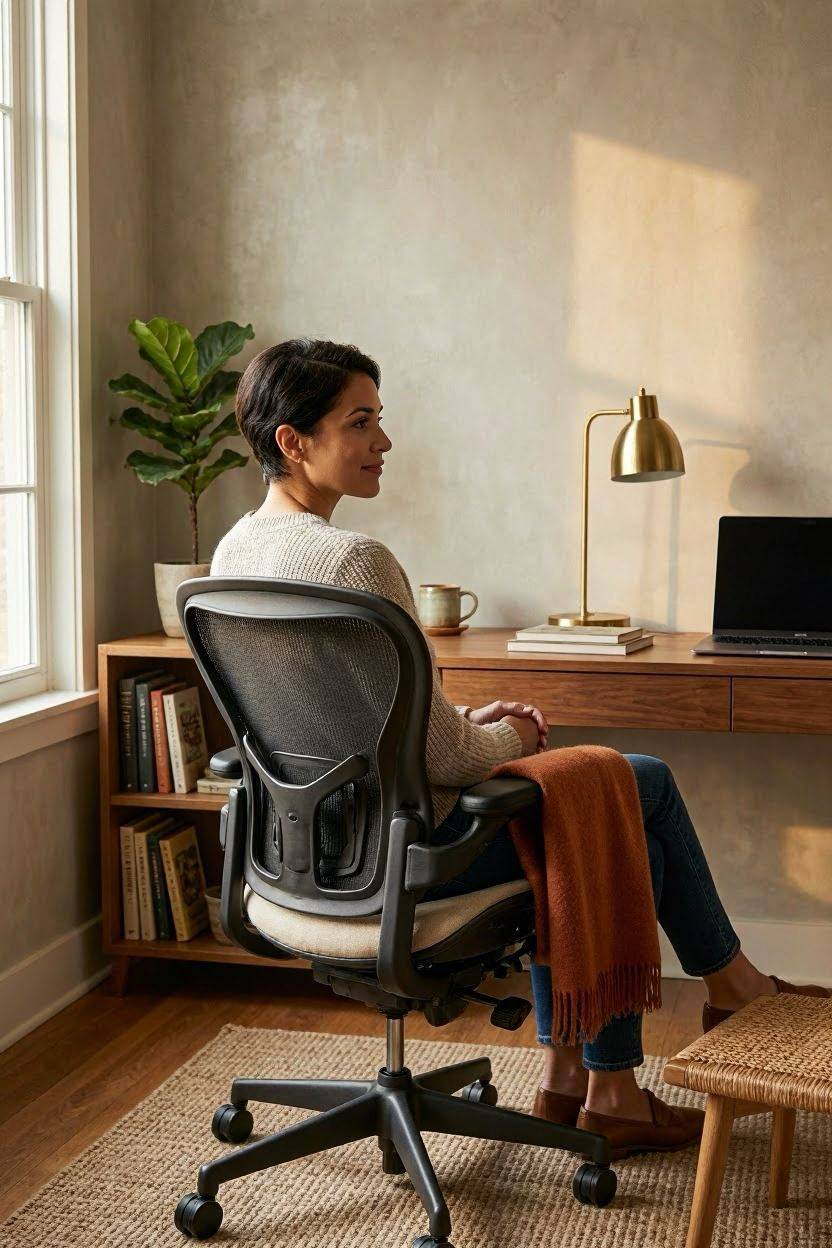
A chair that hurts your back after an hour is a problem no matter how nice the room looks. The good news is ergonomic doesn’t have to mean ugly anymore.
What to look for:
- Adjustable seat height and lumbar support
- Breathable fabric or mesh back
- A color or material that fits your room, not just a generic office look
| Chair | Price (USD) | Best For |
|---|---|---|
| Steelcase Series 1 | $400–$500 | Everyday comfort |
| Herman Miller Aeron | $1,200–$1,600 | Long work hours |
| Branch Ergonomic Chair | $300–$350 | Budget ergonomics |
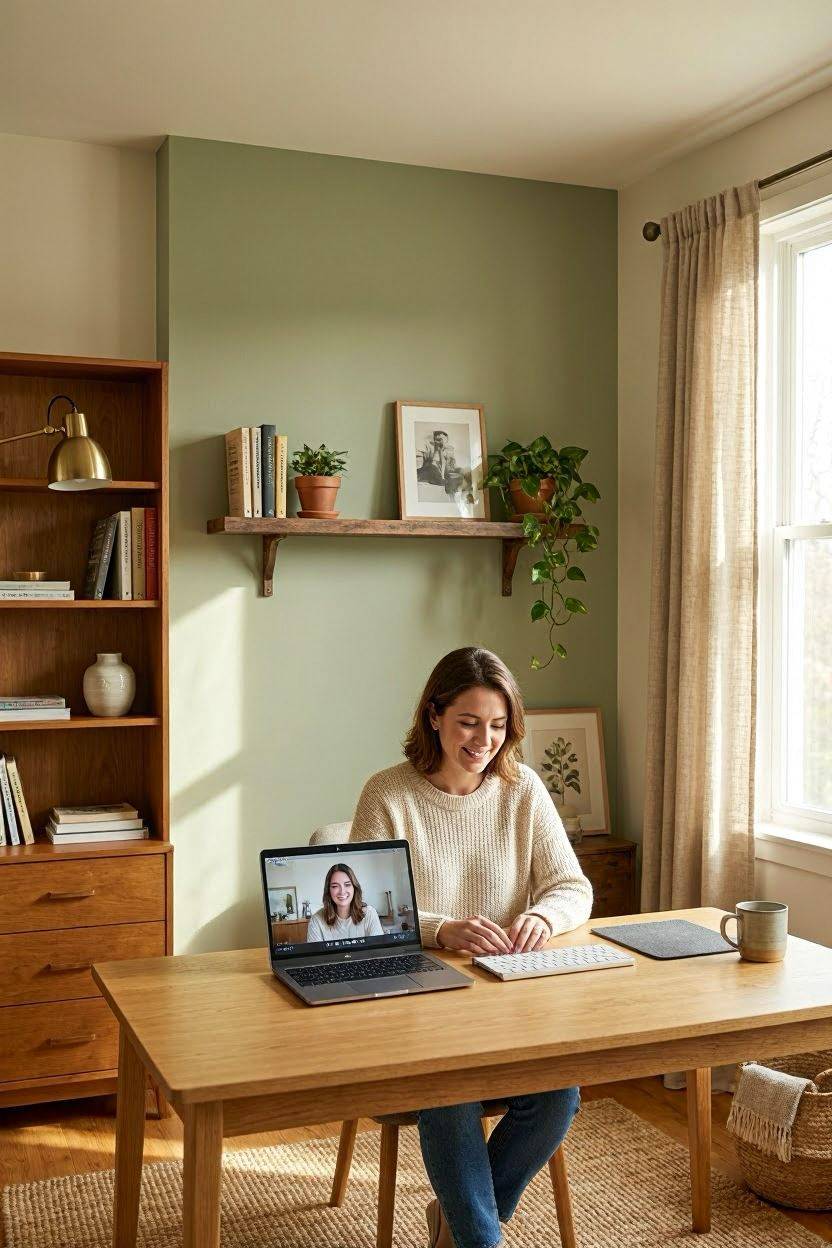
4. Add an Accent Wall Behind the Desk
An accent wall gives your home office personality without redoing the whole room. It also looks great as a backdrop for video calls.
Popular paint colors for home offices:
- Sage green — calming, easy on the eyes
- Deep navy — feels focused and grounded
- Warm terracotta — cozy and inviting
Sherwin-Williams “Naval” or Behr “Cracked Pepper” are both popular picks, and a gallon typically runs $45–$55.
5. Use Open Shelving for Storage and Style
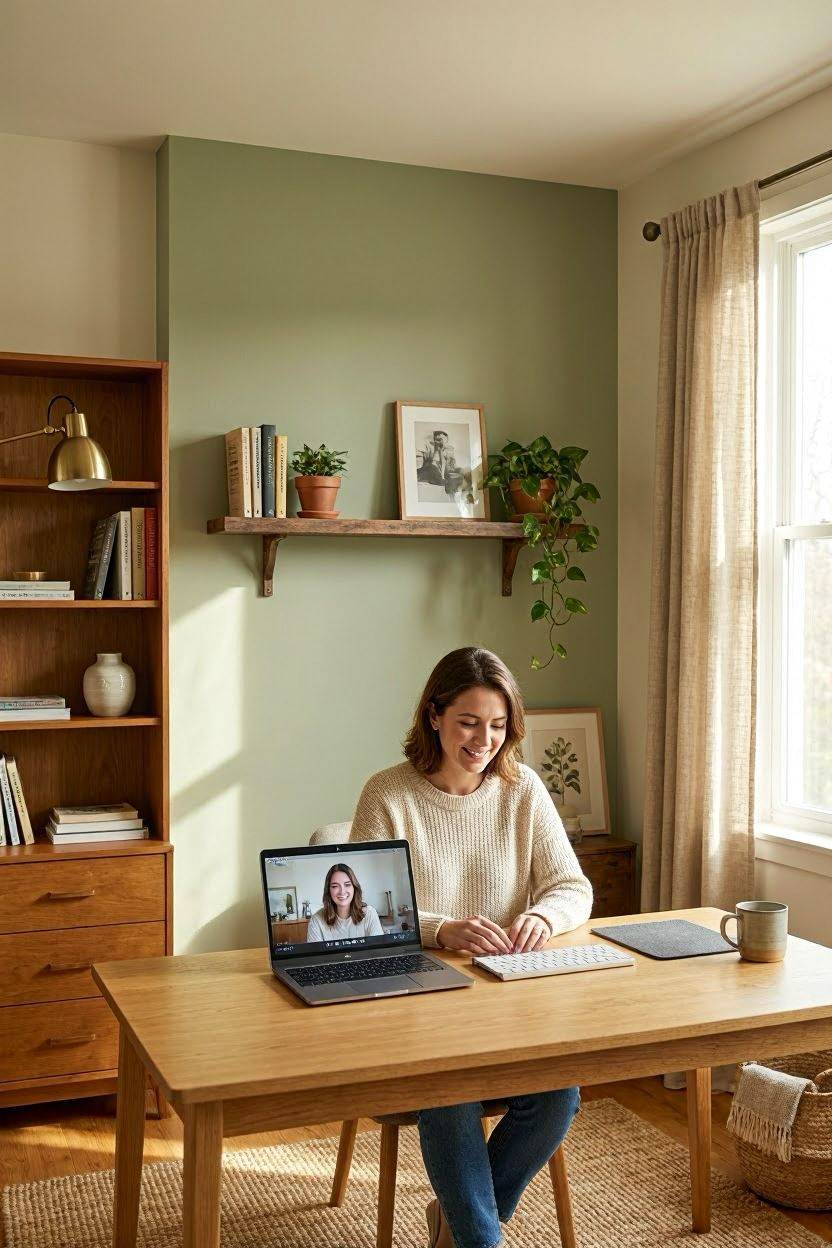
Closed cabinets hide clutter, but open shelving forces you to keep things intentional, and it doubles as a spot to display books, plants, and small decor pieces.
How to style open shelves:
- Group items in odd numbers (3 or 5) for a natural look
- Mix heights: tall books, short frames, a small plant
- Leave some empty space so it doesn’t feel crowded
A simple floating shelf set from IKEA (LACK, around $15 each) is an easy starting point.
6. Layer in a Rug and Soft Textiles
A rug under your desk area softens the whole room and adds warmth, especially if you have hardwood or tile floors. Soft textiles like a cushion or a throw on your chair also make the space feel less “corporate.”
Quick tip: A rug in a low-pile, easy-clean material works best under a rolling chair, since thick shag rugs wear down fast with wheels.
| Rug Type | Price Range (USD) | Best For |
|---|---|---|
| Low-pile wool rug | $80–$150 | Under rolling chairs |
| Jute rug | $50–$100 | Natural, casual look |
| Washable area rug | $60–$120 | High-traffic offices |
7. Build a Gallery Wall for Personality
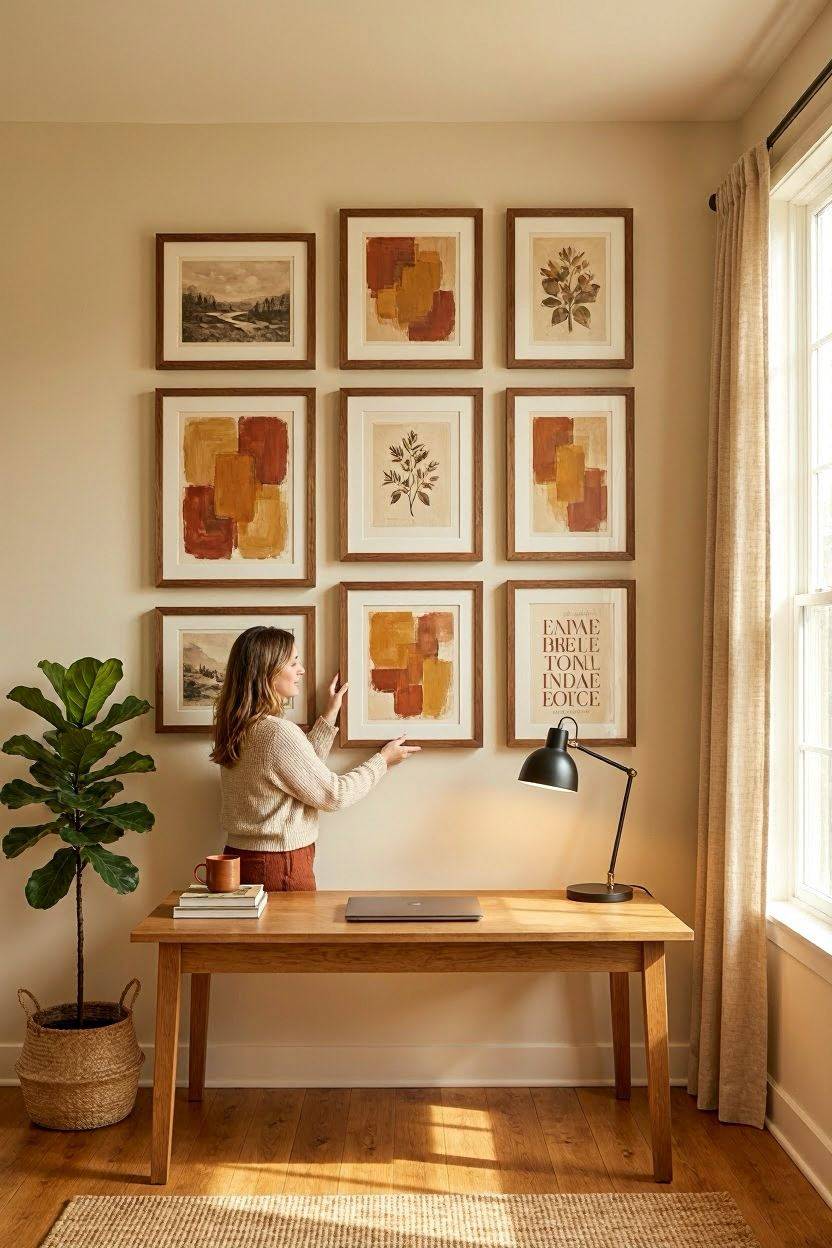
A gallery wall turns a blank space above your desk into something worth looking at during long work sessions. It’s also one of the cheapest ways to make a home office feel finished.
How to plan it:
- Pick one theme: family photos, art prints, or motivational quotes, not all three
- Use matching or coordinating frames for a cleaner look
- Start with a paper template on the wall before hammering any nails
8. Bring in Plants for a Calmer Space
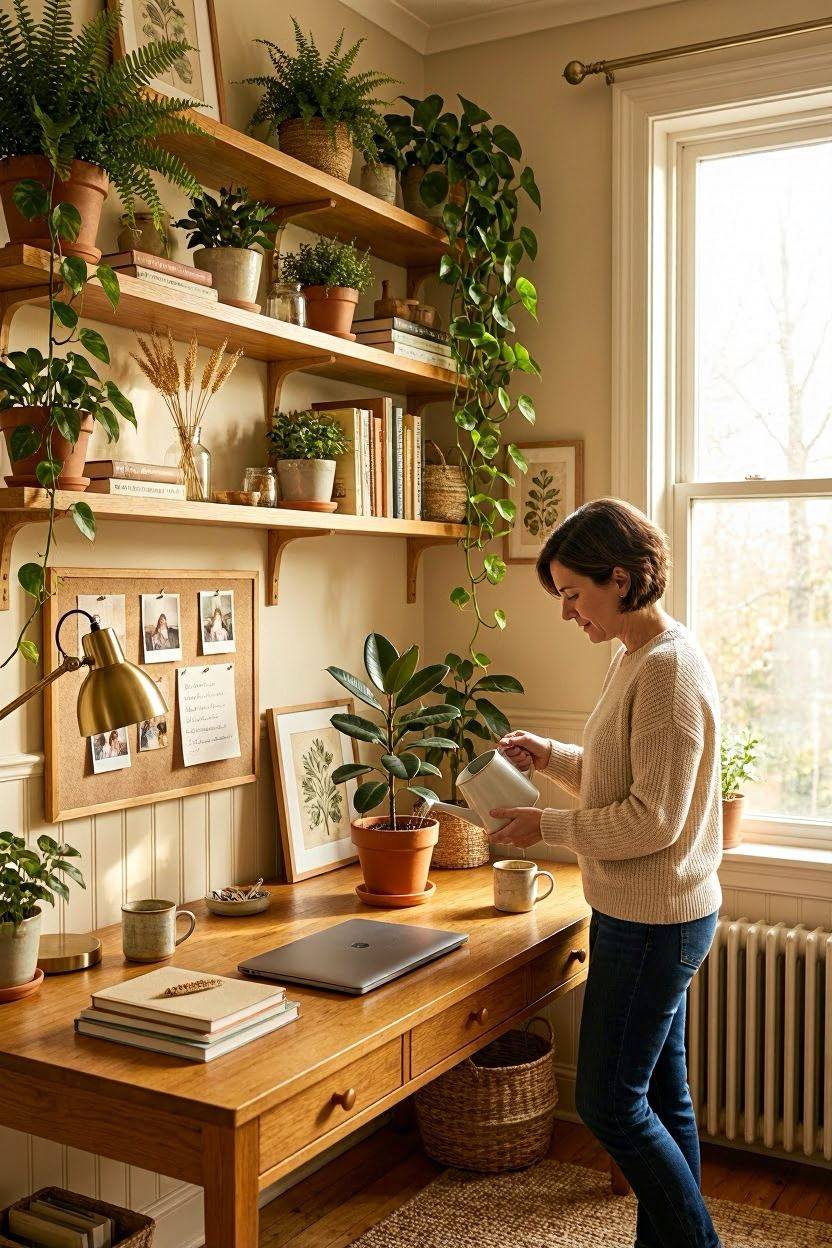
Plants add color, texture, and a bit of life to a room that can otherwise feel flat and functional. They also genuinely help with air quality and stress levels during long work days.
Easy plants for a home office:
- Snake plant — needs almost no attention
- Pothos — great on a shelf where it can trail down
- ZZ plant — thrives even in lower light
Most of these run $15–$35 at a local nursery or Home Depot’s garden section.
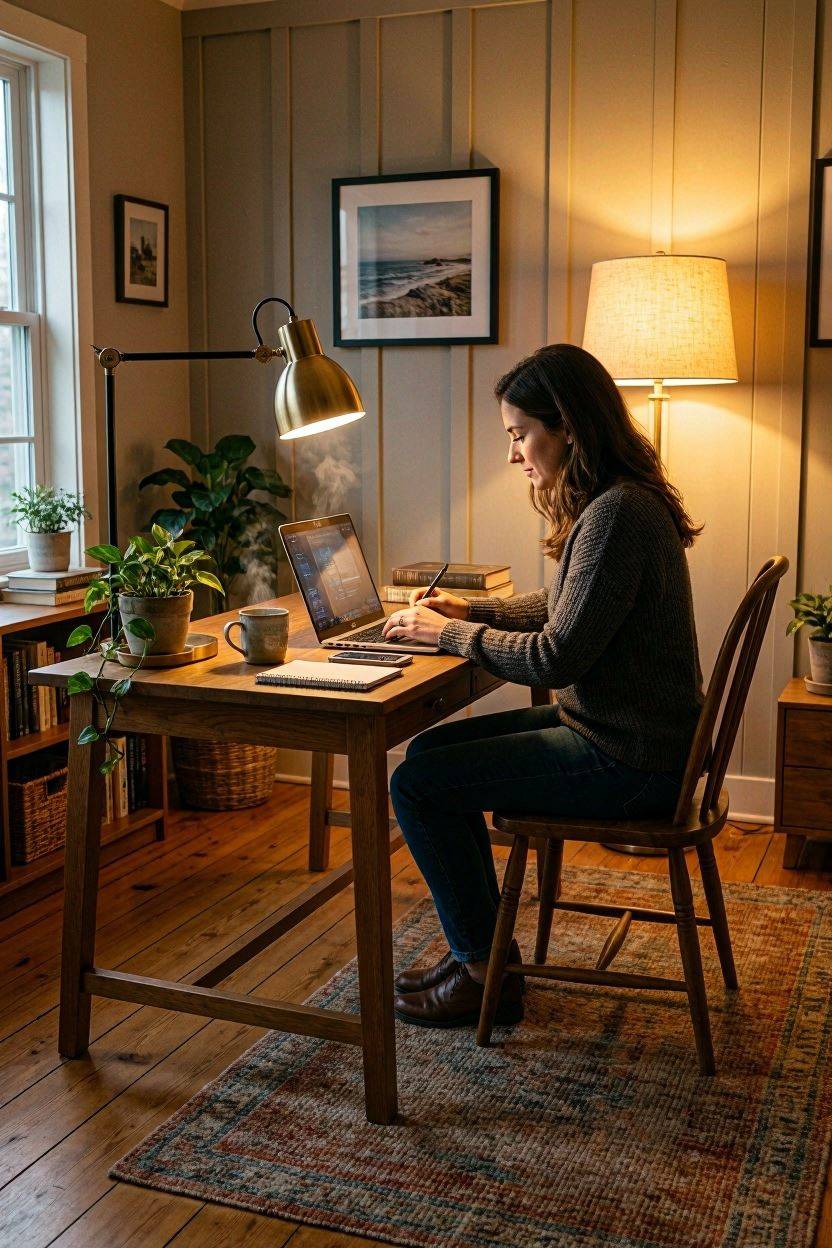
9. Layer Task and Ambient Lighting
Relying on one overhead light is one of the most common home office mistakes. Layering different light sources makes the room feel warmer and reduces eye strain during evening work.
Three layers to include:
- Task lighting — a desk lamp aimed directly at your work surface
- Ambient lighting — a floor lamp or ceiling fixture for overall room light
- Accent lighting — string lights or a small lamp on a shelf for warmth
A BenQ e-Reading desk lamp (around $110) is a popular pick for task lighting since it’s designed to reduce glare.
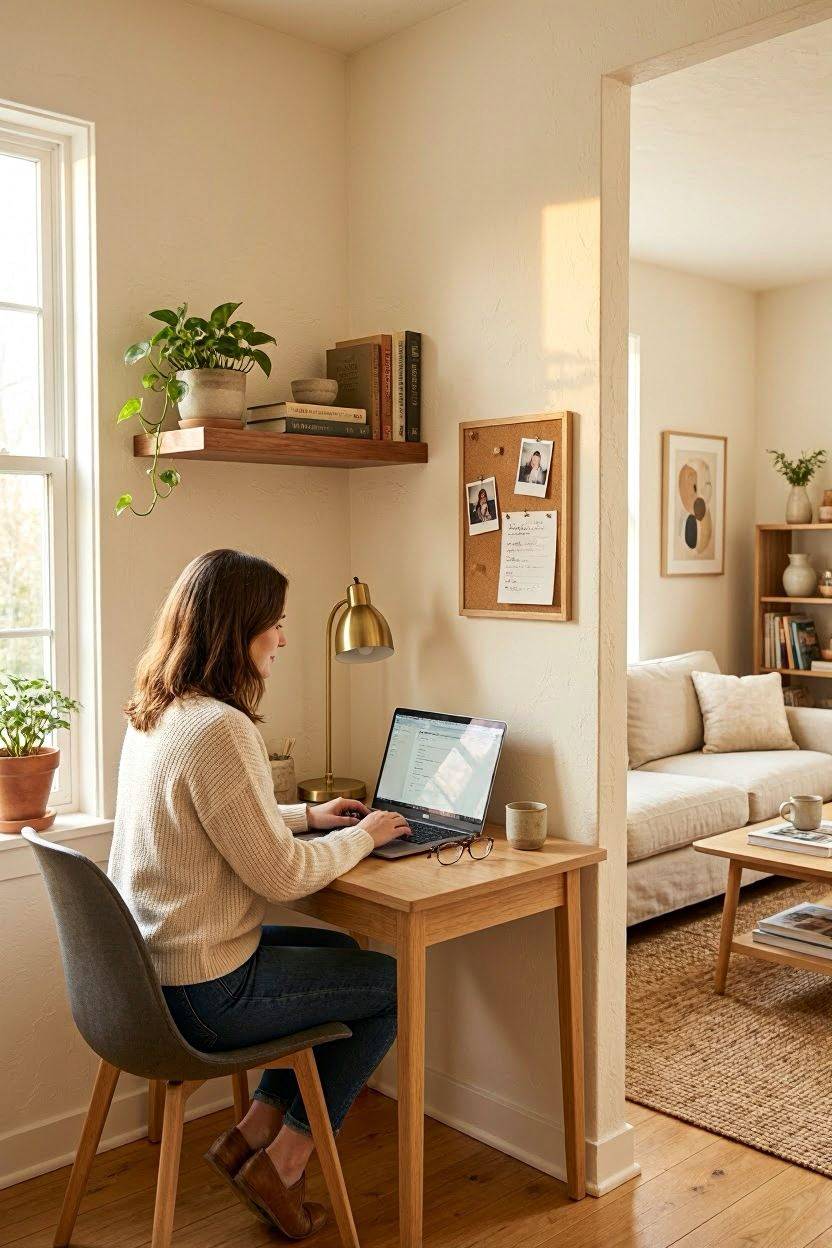
10. Design a Multi-Functional Corner Nook
Not everyone has a spare room, and that’s fine. A well-planned corner nook can work just as well as a full office if you set it up with intention.
What makes a nook work:
- A slim desk (24–30 inches wide) that fits the space without crowding it
- Vertical storage, like a wall-mounted shelf, instead of floor cabinets
- A room divider or curtain if the nook is in a shared living space
Frequently Asked Questions
Do I need a separate room for a home office? No. A well-designed corner or nook can work just as well, especially with good lighting and smart storage.
What’s the most budget-friendly way to upgrade a home office? Paint and lighting give the biggest visual change for the lowest cost. An accent wall and a good desk lamp can transform a space for under $100.
Can I do any of this myself without hiring anyone? Yes. Painting an accent wall, assembling flat-pack furniture, hanging shelves, and building a gallery wall are all common DIY projects. Just make sure to use a stud finder for anything heavier than a picture frame.
How much should I budget for a full home office refresh? A modest refresh (paint, lighting, decor, small furniture) can run $200–$500. A full setup with an ergonomic chair and standing desk can go from $1,000–$2,000.
Final Thoughts
A great home office isn’t about spending a lot of money, it’s about making a few intentional choices: good light, a comfortable chair, smart storage, and a little personality on the walls. Pick two or three ideas from this list to start, and build from there as your budget and space allow.