15 Modern Pergola Trellis Ideas That Turn Any Backyard Into a Retreat
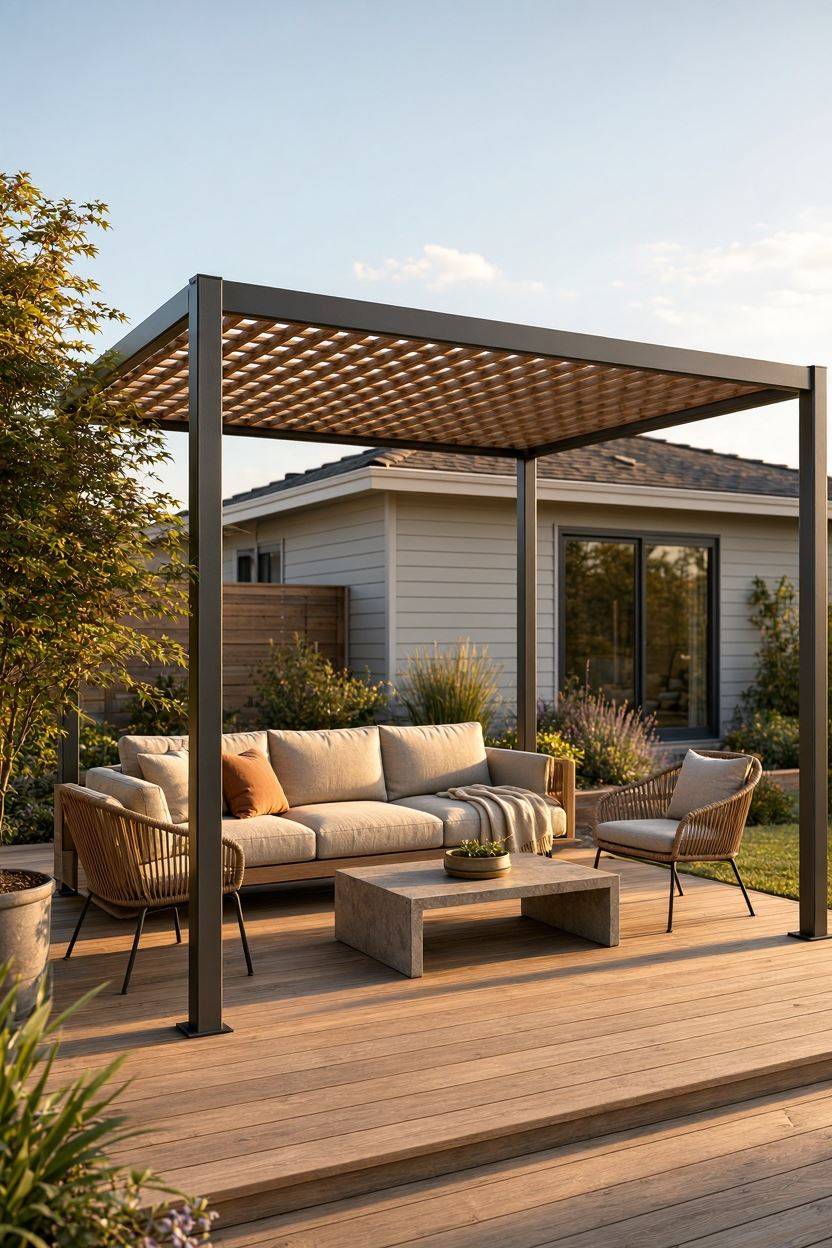
A pergola is one of those upgrades that changes how you actually use your backyard. It gives you shade, structure, and a reason to sit outside longer. Add a trellis to the mix, and you get privacy, greenery, and a softer, more finished look without building a full roof over your head.
If you’ve been scrolling photos and wondering how to pick a style that fits your house, your budget, and your climate, this guide walks through it step by step. We’ll cover materials, layout ideas, lighting, furniture, and real cost ranges so you can plan with confidence, not just inspiration.
Why a Pergola Trellis Works So Well in Modern Yards
A trellis panel does double duty. It filters sunlight the way a lattice does, but it also gives climbing plants something to hold onto, so the structure fills in and softens over a season or two. Paired with a pergola frame, it turns a plain patio into a defined outdoor room, which is exactly what most homeowners are chasing right now.
Here’s a quick look at how the main pergola styles compare before we go deeper into each one.
| Style | Best For | Avg. Cost (Materials Only) | Maintenance |
|---|---|---|---|
| Classic wood open-lattice | Traditional or cottage homes | $800–$2,500 | Medium (staining every 2–3 yrs) |
| Metal + wood hybrid | Modern, minimalist homes | $1,500–$4,000 | Low |
| Louvered roof pergola | Homes needing sun/rain control | $3,000–$9,000 | Low |
| Vinyl or composite | Low-maintenance seekers | $2,000–$5,000 | Very low |
| Freestanding trellis screen | Small yards, privacy needs | $300–$1,200 | Medium |
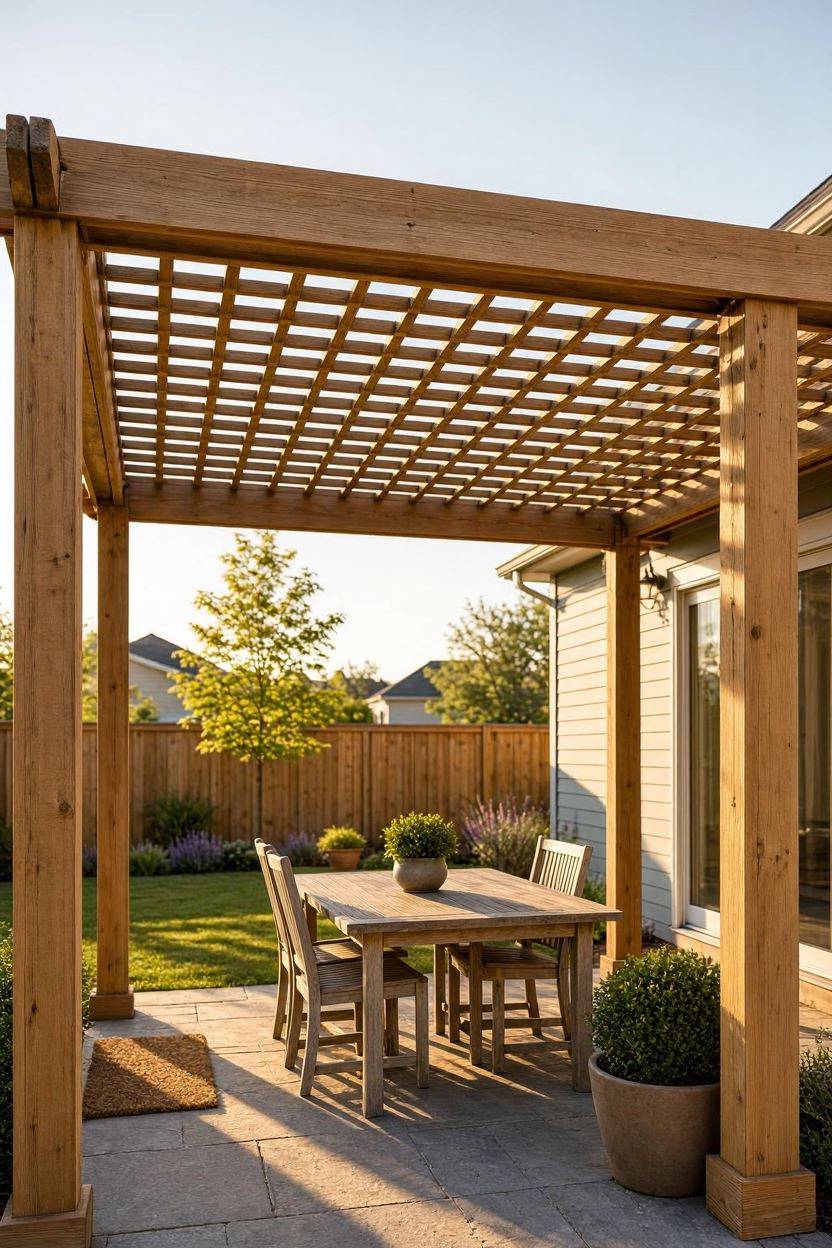
1. Start With a Classic Wood Pergola and Open Trellis Roof
Wood is still the most popular choice because it warms up a backyard instantly. Cedar and redwood resist rot naturally, so they hold up outdoors without constant sealing. An open-lattice roof lets in dappled light, which feels a lot more comfortable than full shade on cooler days.
If your home has a traditional or farmhouse look, this is usually the easiest style to match. Home Depot and Lowe’s both carry ready-to-assemble cedar pergola kits in the $900–$2,000 range, which is a good starting point if you’re not building from scratch.
2. Mix Metal and Wood for a Modern, Clean Look
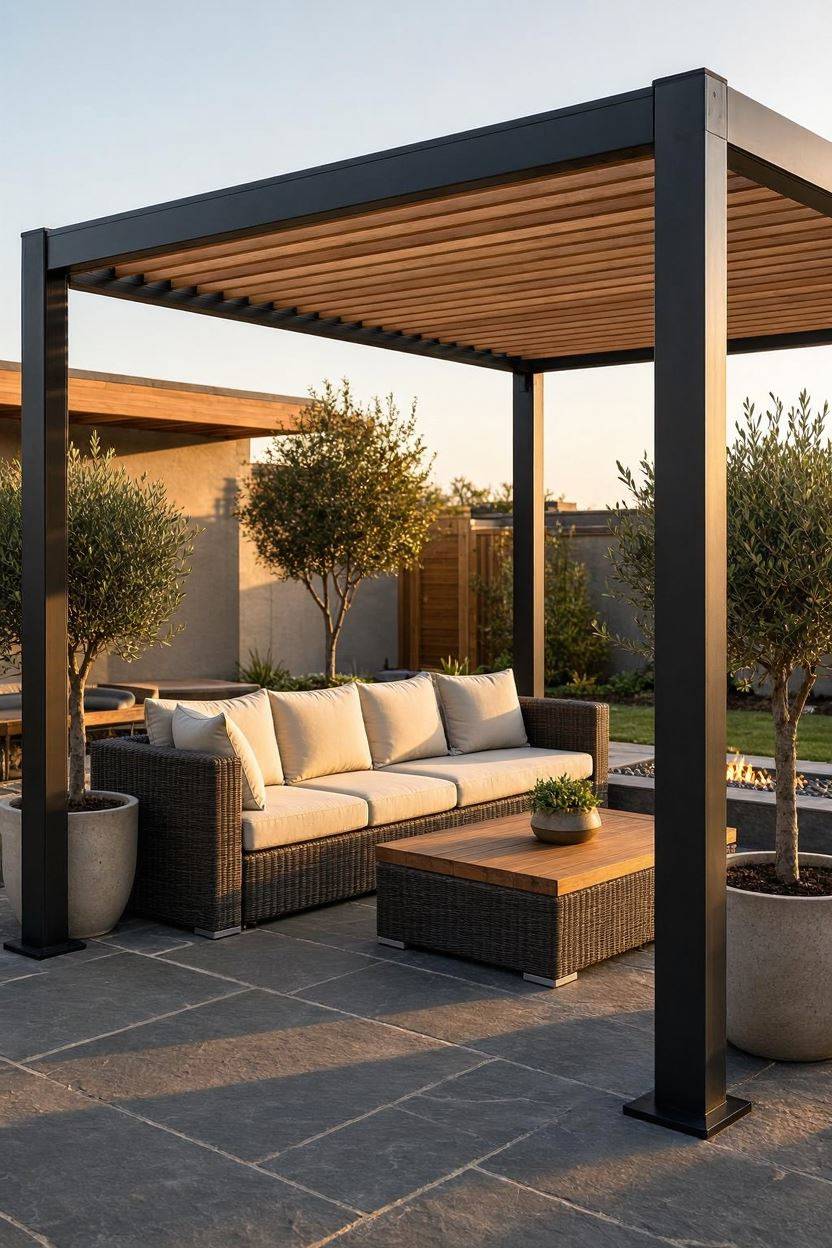
If your house leans modern or transitional, a metal-and-wood combo pergola reads as more current than an all-wood build. Black powder-coated steel posts paired with wood slats give you strong vertical lines with a warm texture on top. It also needs less upkeep than solid wood, since the structural weight sits on metal, not timber that can warp.
This pairing works especially well with dark window frames, black porch lights, or a black metal fence, since it ties the whole exterior palette together.
3. Choose a Louvered Roof Pergola for Real Sun and Rain Control
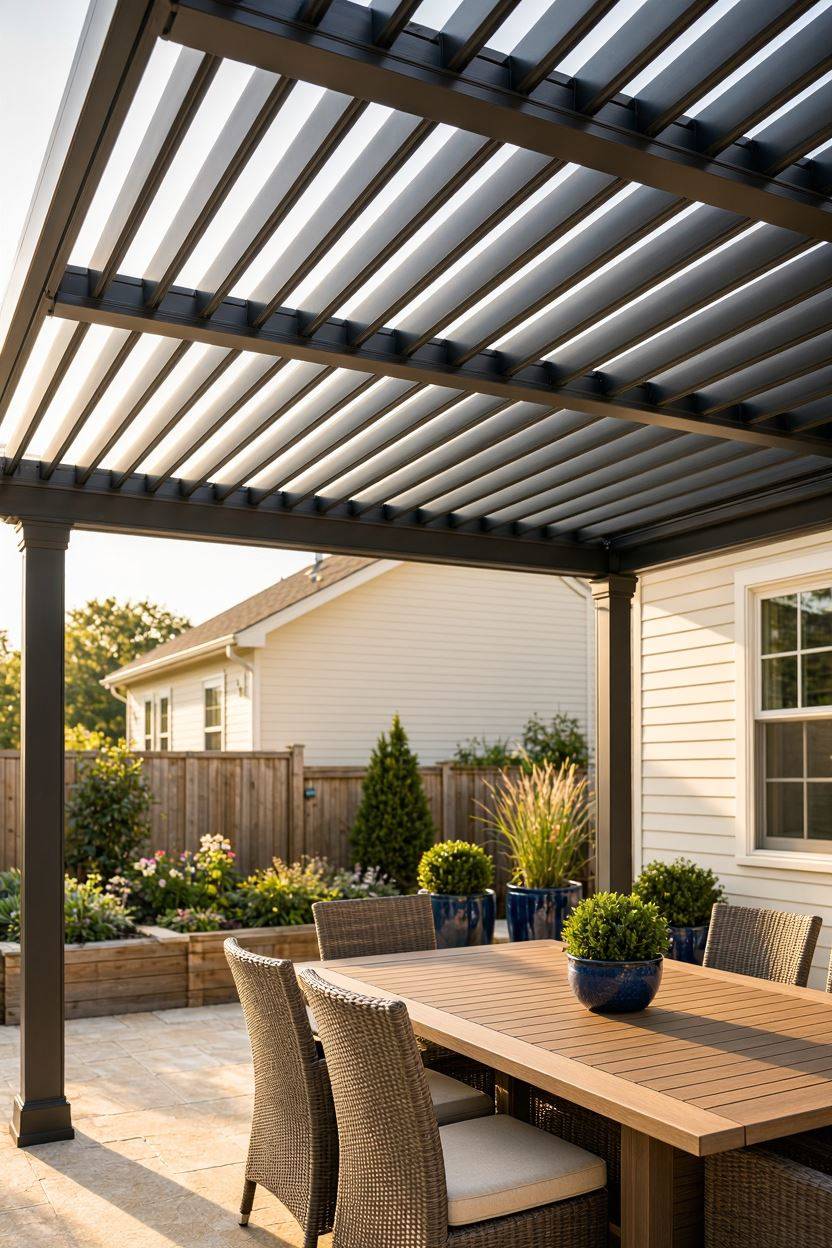
A louvered pergola has adjustable slats you can angle open or closed, usually with a hand crank or a remote. This matters if your patio gets strong afternoon sun or the occasional summer downpour, since you can close the louvers and keep sitting outside instead of running for cover.
Brands like Renson and Struxure sell these systems, and while they cost more upfront, homeowners who use their patio daily tend to say it’s worth it because the space works in more weather conditions.
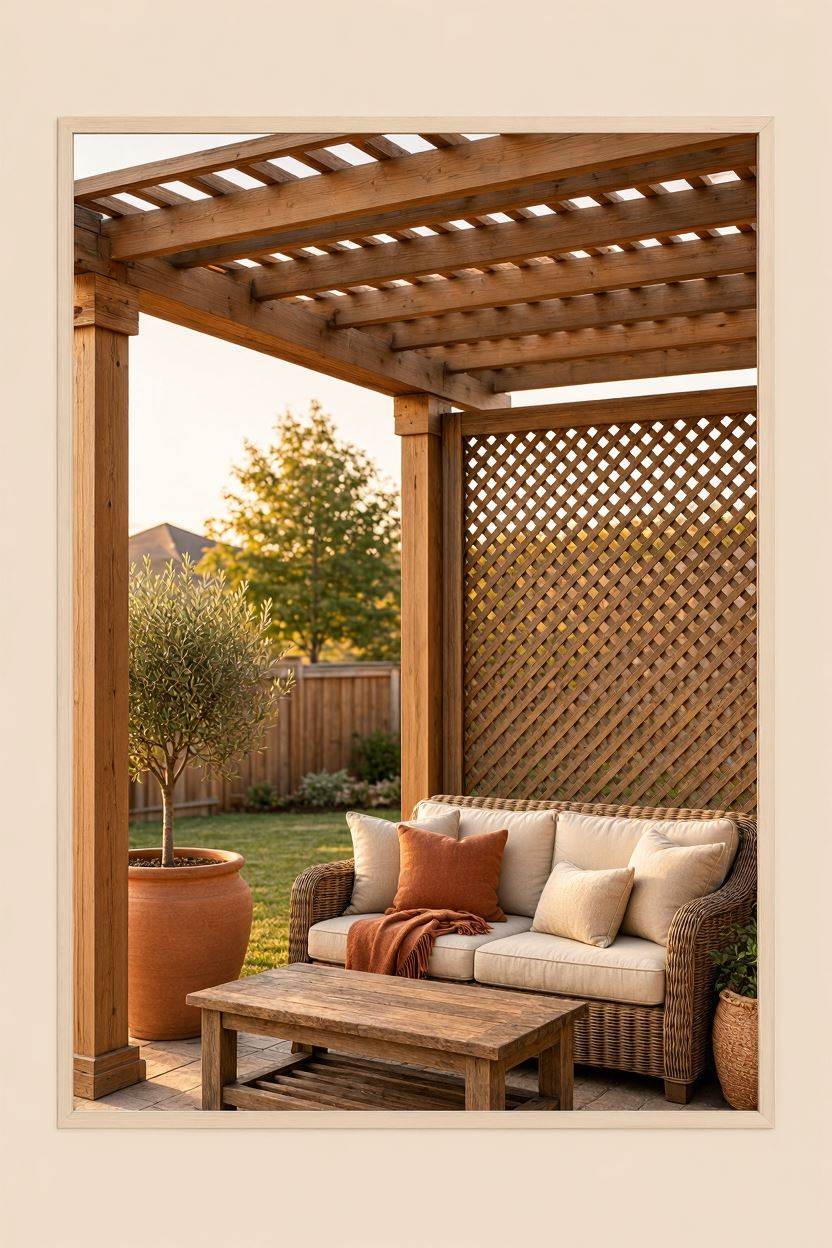
4. Add a Lattice Privacy Wall on One Side
Not every yard needs a fully open pergola. If you’re close to a neighbor’s fence or a busy street, adding a lattice trellis wall on one or two sides gives you privacy without feeling boxed in. Light and air still pass through the gaps, so the space stays bright.
This is also one of the more budget-friendly upgrades, since a single lattice panel is far cheaper than adding a full wall or fence extension.
5. Let Climbing Vines Take Over the Trellis
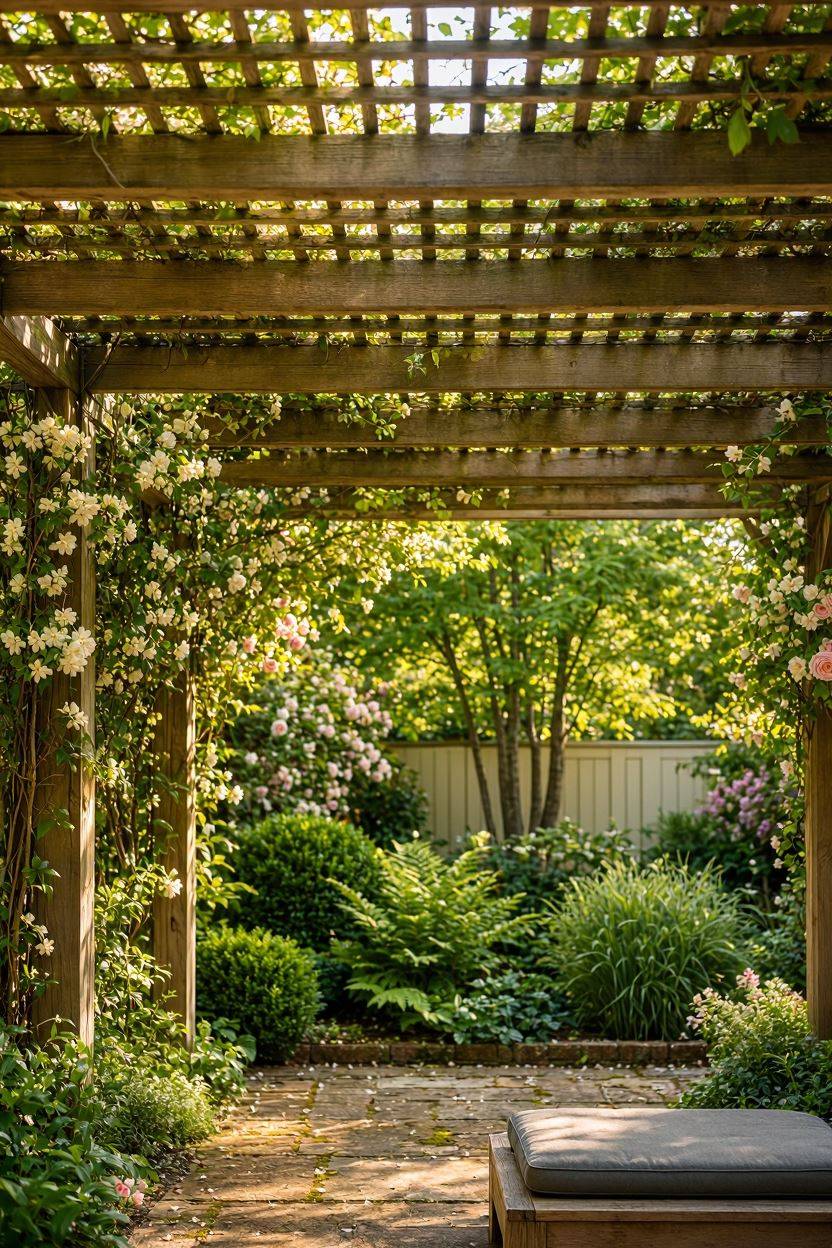
This is where the “trellis” part of a pergola really earns its keep. Wisteria, climbing roses, clematis, and jasmine all do well on an open lattice roof, and within a season or two they’ll fill in enough to create natural, moving shade. It’s a slower process than buying a shade sail, but the payoff is a living structure that changes with the seasons and smells incredible in bloom.
Keep in mind that heavier vines like wisteria need a sturdy wood or metal frame, not a thin vinyl kit, so plan your structure with the plant’s mature weight in mind.
6. Build In Lighting for Evening Use
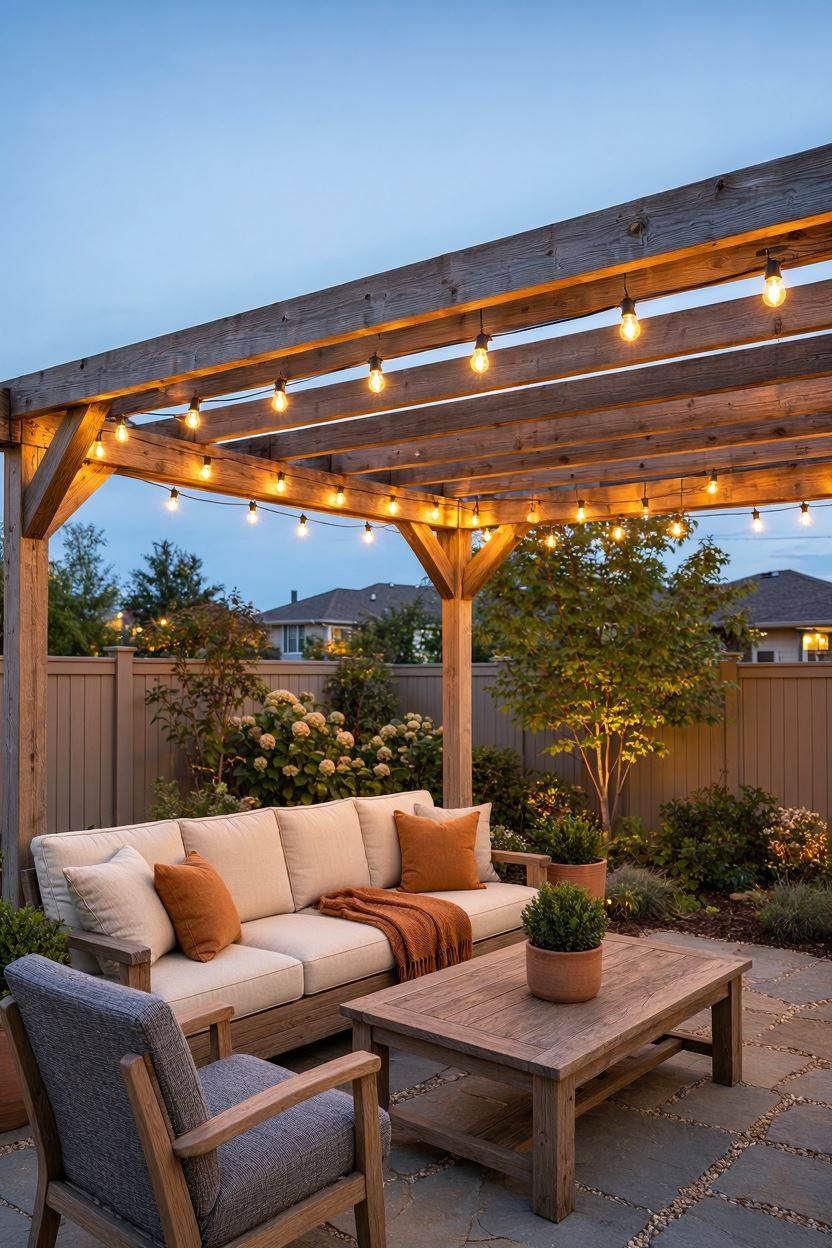
A pergola without lighting basically shuts down at sunset. Warm string lights woven through the beams are the easiest option and cost very little to add. For a more finished look, some homeowners run low-voltage landscape wiring through the posts for built-in downlights or a small chandelier at the center.
Either way, stick to warm white (2700K) bulbs rather than cool white, since warm tones feel more like an extension of your living room than a parking lot.
7. Furnish It Like an Actual Room, Not an Afterthought
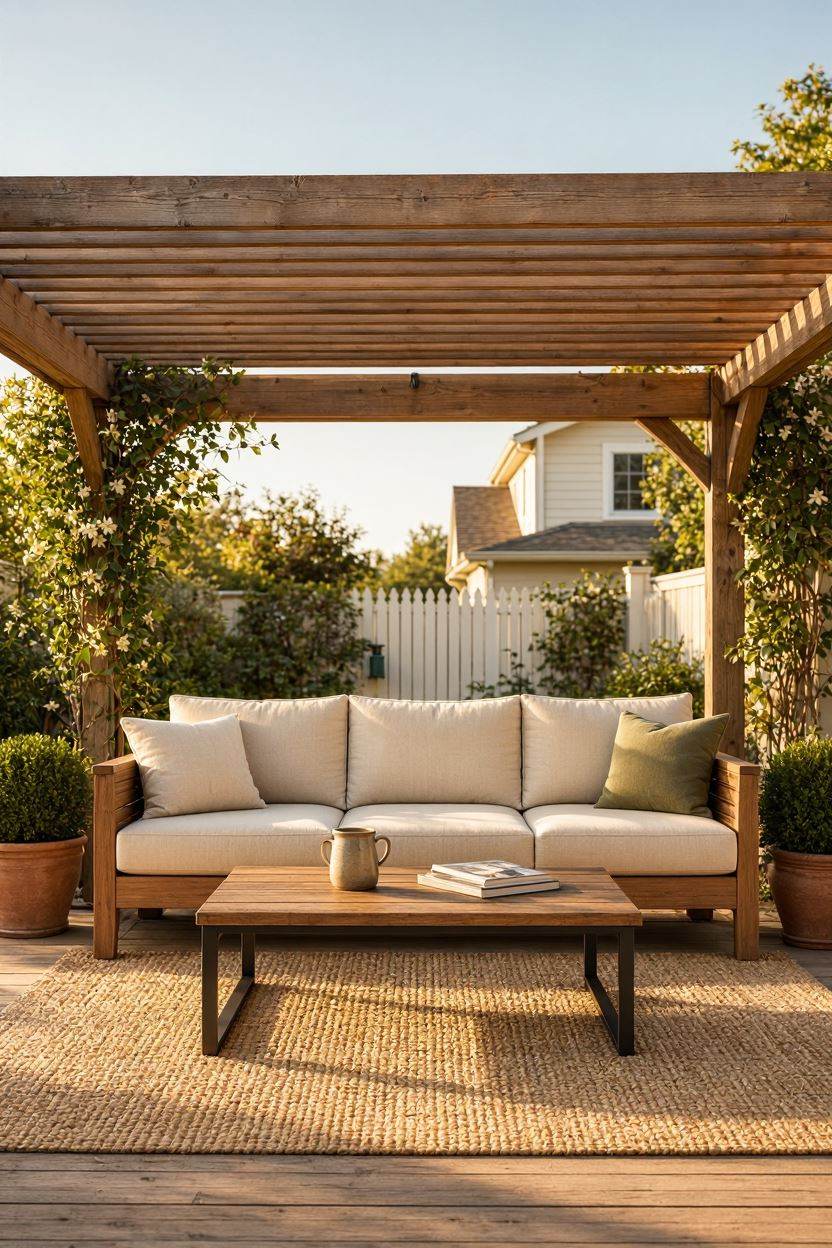
The layout underneath your pergola matters as much as the structure itself. A deep sectional, a low coffee table, and an outdoor rug instantly make the space feel intentional instead of like leftover patio furniture pushed together. If your pergola is large enough, splitting it into a lounge zone and a small dining zone gives you two reasons to be out there.
Weather-resistant wicker or aluminum-frame furniture from brands like World Market or Article holds up well under partial shade and won’t fade as fast as darker fabrics.
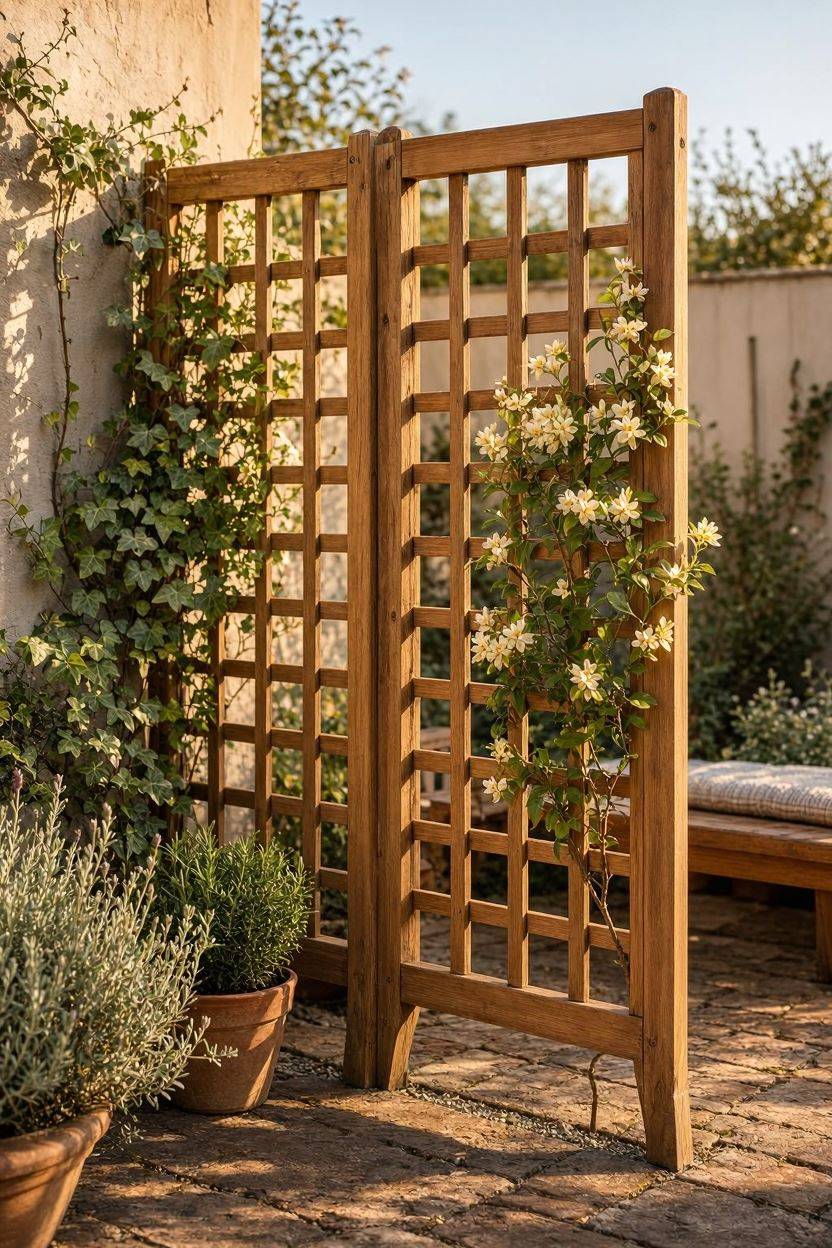
8. Use a Freestanding Trellis Screen When You Don’t Need a Full Roof
If a full pergola feels like too much structure, a freestanding trellis screen is a lighter option. It works well as a garden divider, a backdrop for a small seating nook, or a way to hide a utility area like trash cans or an AC unit. Because it has no roof span to support, it’s also one of the more affordable ways to get the same visual style.
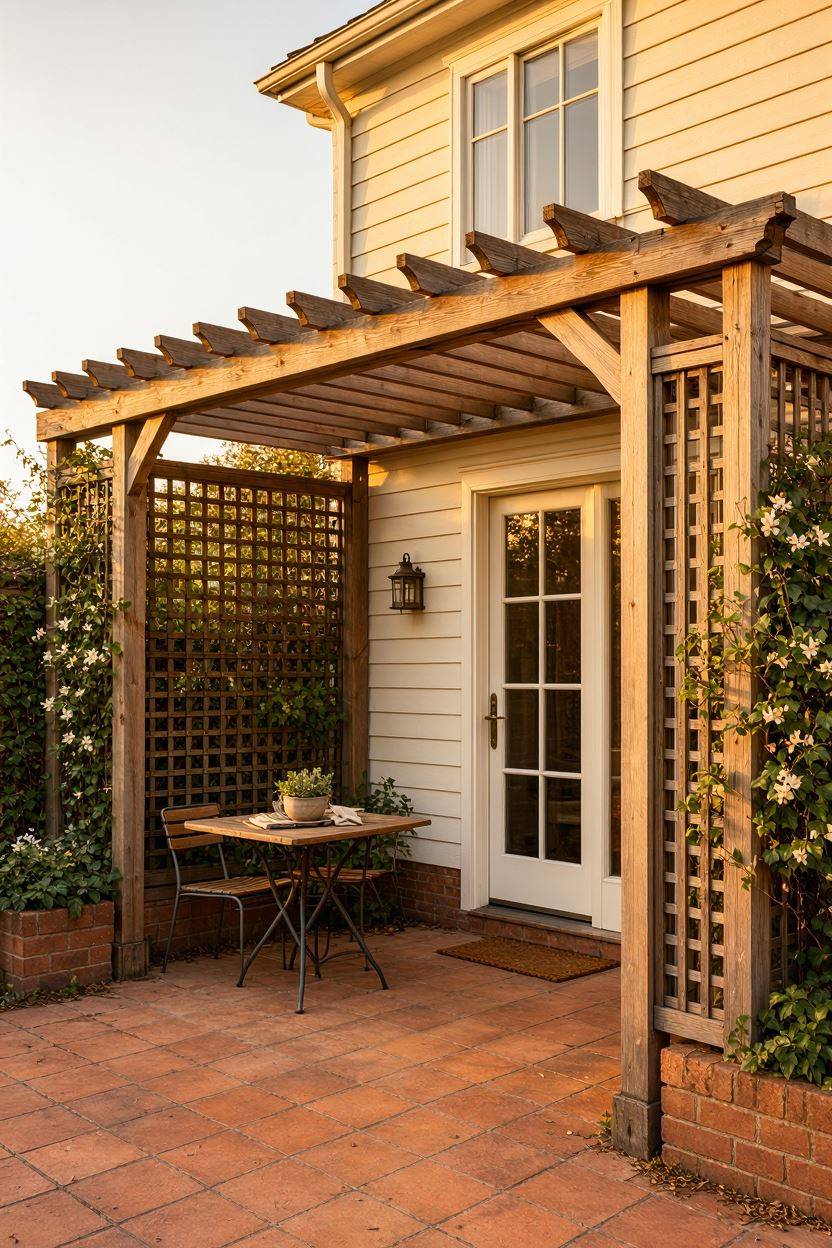
9. Attach the Pergola to Your House With Trellis Side Panels
Attaching a pergola directly to your home’s exterior wall is a popular choice because it extends your living space right off a back door or kitchen slider. Adding trellis panels on the open sides keeps the structure from feeling like a plain box while still giving you a defined, shaded room right outside your door.
This layout also tends to be the easiest for adding lighting and even a ceiling fan, since you can run wiring through the house wall instead of underground.
10. Compare Materials and Costs Before You Commit
Material choice affects both your upfront cost and how much upkeep you’ll be doing every year. Here’s a side-by-side look to help you budget realistically.
| Material | Cost Range (10x12 ft) | Lifespan | Upkeep Needed |
|---|---|---|---|
| Cedar/Redwood | $1,200–$3,000 | 15–20 yrs | Restain every 2–3 yrs |
| Pressure-treated pine | $800–$1,800 | 10–15 yrs | Seal yearly |
| Aluminum | $2,500–$6,000 | 25+ yrs | Almost none |
| Vinyl/composite | $2,000–$5,000 | 20+ yrs | Occasional cleaning |
| Steel (powder-coated) | $3,000–$7,000 | 25+ yrs | Rust check yearly |
11. Decide Between DIY and Hiring a Professional
A basic wood pergola kit is realistic as a weekend DIY project if you’re comfortable with a drill, a level, and a second pair of hands for the beams. Most kits from Home Depot, Wayfair, or Yardistry come with pre-cut posts and clear instructions, and they’re a good entry point if you’re working with a smaller budget.
Louvered roof systems, anything requiring concrete footings, or structures over 12x12 feet are usually worth hiring a contractor for. Mistakes at the footing stage are expensive to fix later, and a local pro will also know your area’s wind and snow load codes, which matters more than most people expect until permit time comes around.
As a rough guide, DIY saves you 40–60% on labor costs but adds real time, usually a full weekend or two for a mid-size pergola. Hiring a pro typically means a finished structure in 1–3 days, with a warranty on the work.
Frequently Asked Questions
Do I need a permit for a pergola? Many cities require a permit if the structure is attached to your house or taller than a certain height, often 8–10 feet. Rules vary a lot by county, so it’s worth a quick call to your local building department before you order materials.
Will a trellis roof block enough sun? An open lattice blocks roughly 40–60% of direct sun, which is enough to cool the space down without making it fully dark. If you need more coverage, a louvered roof or a mounted shade sail on top of the trellis solves that.
How long do climbing vines take to fill in a trellis? Fast growers like clematis or morning glory can cover a trellis in one season. Slower, woodier plants like wisteria usually take two to three years to fully mature, but they last for decades once established.
Can I add a pergola to a small backyard? Yes. A compact 8x8 or 10x10 footprint still works well, especially with a freestanding trellis screen or an attached pergola along one wall, since neither eats up the full yard.
Final Thoughts
A modern pergola trellis is one of the few backyard upgrades that pays off in both looks and daily use. Whether you go with a simple wood lattice, a metal-and-wood hybrid, or a louvered roof that adjusts with the weather, the key is matching the style to your home’s exterior and your climate’s real conditions, not just what looks good in a photo.
Start with the structure that fits your budget, add a trellis panel where you want privacy or greenery, and layer in lighting and furniture once the frame is up. That order keeps the project manageable and gives you a backyard space you’ll actually want to spend time in.