10 Rose Garden Ideas That Make Your Yard Look Like a Dream (Even on a Budget)
Introduction
A rose garden sounds like a lot of work. But it doesn’t have to be. Whether you have a small backyard, a front yard strip, or just a few pots on a patio, roses can transform any space into something genuinely beautiful.
This guide walks you through 10 real, doable rose garden ideas — with plant names, costs, and where to buy them in the US. No fluff, no overwhelm. Just clear steps and honest advice.
1. Create a Classic Cottage Rose Border
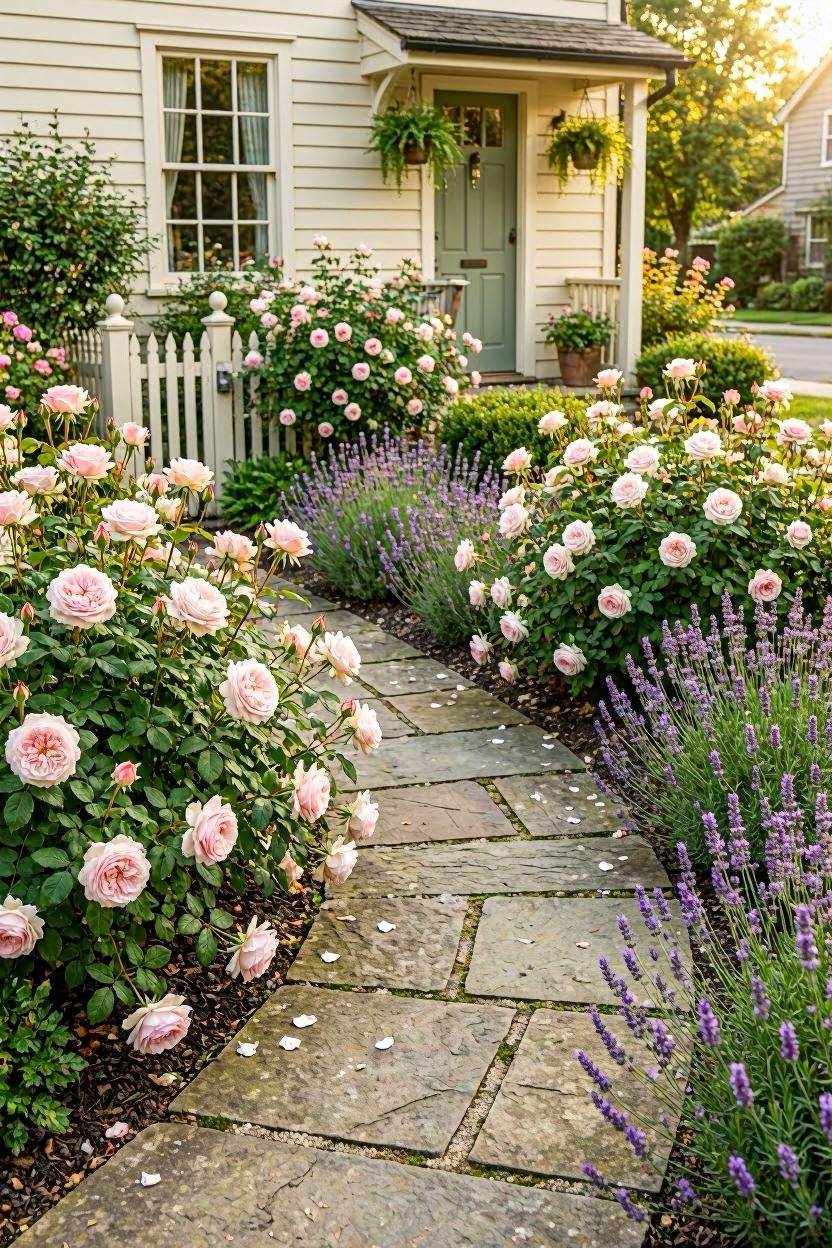
A cottage rose border is the most timeless rose garden look. You line the edge of your yard, fence, or garden path with a mix of shrub roses, lavender, and low perennials.
How to do it:
- Choose repeat-blooming shrub roses like ‘David Austin Olivia Rose’ or ‘Knock Out Pink’ (both available at Home Depot, $20–$35/plant)
- Plant lavender or catmint between roses to fill gaps and deter pests naturally
- Use landscape edging to keep the border clean ($15–$30 for a 20-ft roll at Lowe’s)
Best for: Front yards, fence lines, garden paths
| Plant | Cost | Where to Buy |
|---|---|---|
| Knock Out Rose | $20–$28 | Home Depot, Lowe’s |
| David Austin Olivia Rose | $30–$40 | Austin Roses, Wayside Gardens |
| Lavender ‘Hidcote’ | $8–$15 | Nurseries, online |
| Catmint ‘Walker’s Low’ | $6–$12 | Local nurseries |
2. Build a Simple Raised Rose Bed
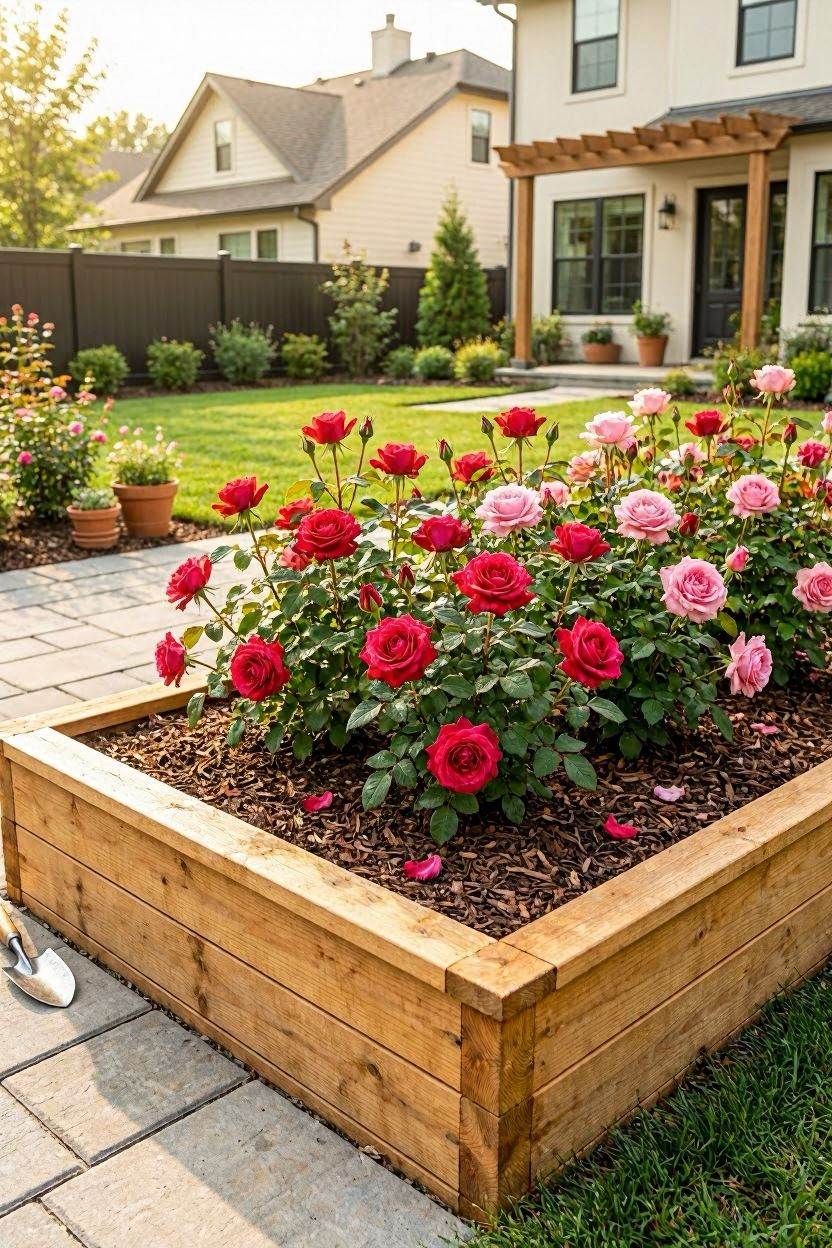
If your soil is poor or you want a more structured, polished look, a raised bed is the answer. It gives roses better drainage, reduces weeds, and makes the whole garden feel intentional.
How to do it:
- Build or buy a cedar raised bed (cedar resists rot — 4×8 ft kits cost $60–$120 at Home Depot)
- Fill with a mix of topsoil, compost, and perlite for good drainage
- Plant 3–5 roses spaced 2–3 ft apart depending on variety
- Mulch with 2–3 inches of wood chips to keep moisture in
DIY tip: You can build a basic raised bed with 2×6 cedar boards and corner brackets for under $50.
Best roses for raised beds: Miniature roses, patio roses, or compact shrub roses like ‘Sunrosa Red’
3. Train Climbing Roses Up a Trellis or Arch
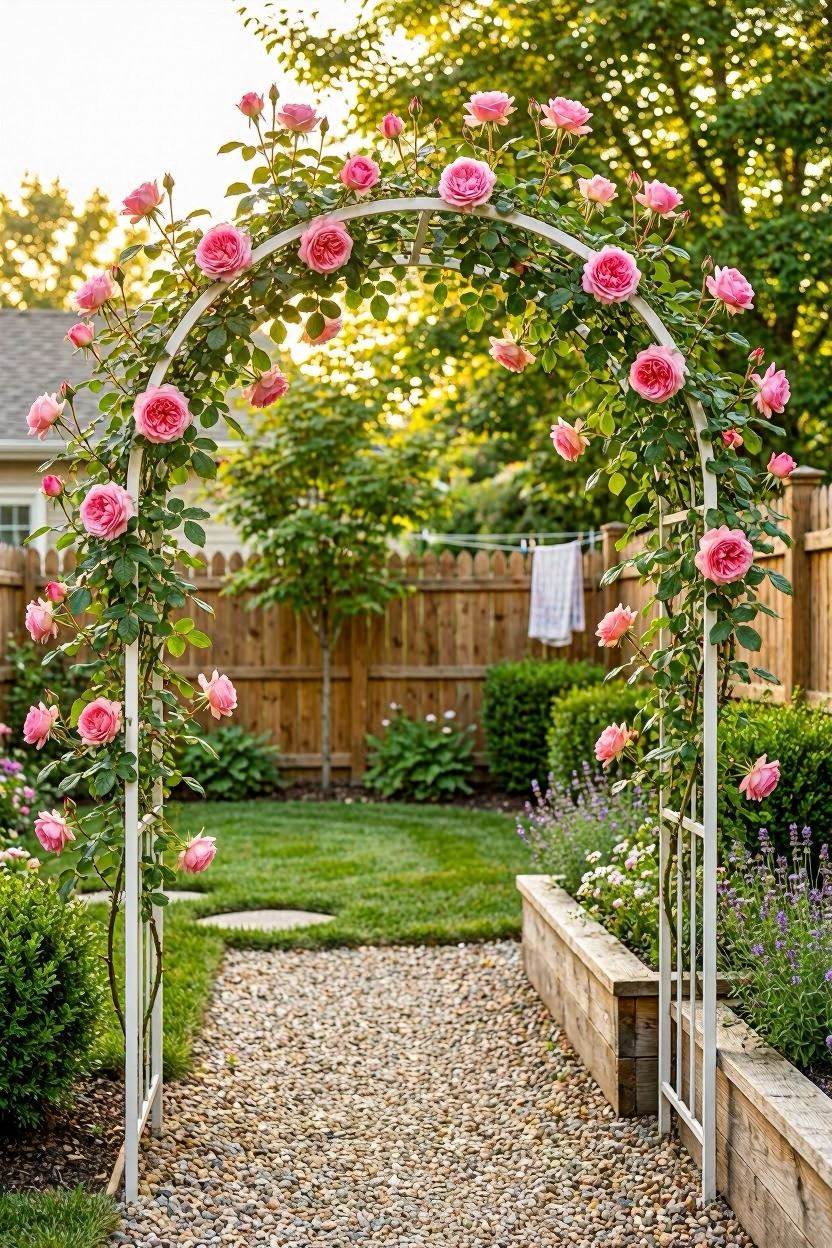
Climbing roses are one of the most dramatic, high-impact things you can add to a garden. A single climbing rose on a trellis or arch can completely change how your yard feels.
How to do it:
- Pick a climbing variety: ‘New Dawn’ (pale pink, very hardy), ‘Fourth of July’ (red-striped, disease resistant), or ‘Don Juan’ (deep red, fragrant)
- Install a metal or wood arch or trellis ($40–$150 at garden centers or Amazon)
- Tie canes loosely to the structure with garden twine — don’t use wire directly on stems
- Prune lightly in late winter and fertilize in early spring
Growth timeline: Most climbers take 2–3 seasons to fully cover a structure.
| Climbing Rose | Color | Hardiness Zone | Avg. Cost |
|---|---|---|---|
| New Dawn | Pale pink | 4–9 | $25–$40 |
| Fourth of July | Red/white | 5–9 | $30–$45 |
| Don Juan | Deep red | 5–10 | $25–$35 |
| Westerland | Apricot-orange | 5–9 | $30–$40 |
4. Design a Symmetrical Formal Rose Garden
This style takes inspiration from French and English estate gardens. It uses geometric shapes — squares, circles, or rectangular beds — with roses planted in patterns and paths in between.
How to do it:
- Map out your layout on paper first — even a simple 4-quadrant design looks stunning
- Use boxwood hedges ($8–$15/plant) as low borders to define the geometry
- Plant one rose variety per bed section for a clean, uniform look
- Add a sundial, birdbath, or urn as a focal point in the center ($40–$200 at garden centers)
Best rose picks: Hybrid tea roses like ‘Mr. Lincoln’ (red) or ‘Peace’ (yellow-pink) work beautifully in formal beds — their upright habit suits structured spaces.
5. Mix Roses With Perennials for a Natural Look
Roses don’t have to stand alone. Pairing them with perennials creates a layered, naturalistic garden that looks lush and colorful all season — not just when the roses bloom.
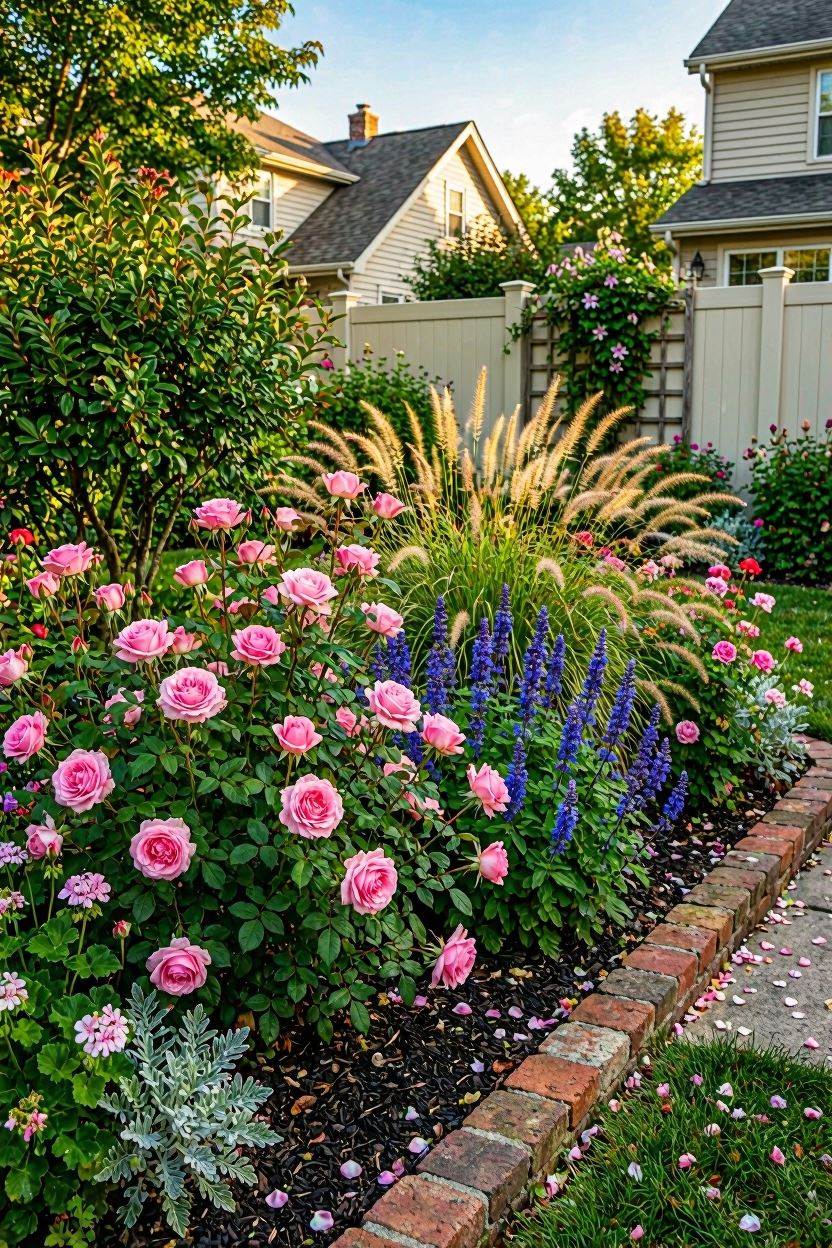
Great companion plants:
- Salvia — blue spikes contrast beautifully with pink or red roses
- Alliums — their round purple heads look architectural next to roses
- Russian Sage — soft, silvery texture; drought tolerant
- Coneflowers (Echinacea) — easy, pollinator-friendly, blooms after roses
Why it works: Perennials fill the “off” seasons when roses aren’t at their peak, and many deter common pests naturally.
6. Create a Container Rose Garden for Patios and Small Spaces
No yard? No problem. Roses grow very well in large pots, and a container rose garden on a patio, balcony, or front porch can be just as beautiful as a full bed.
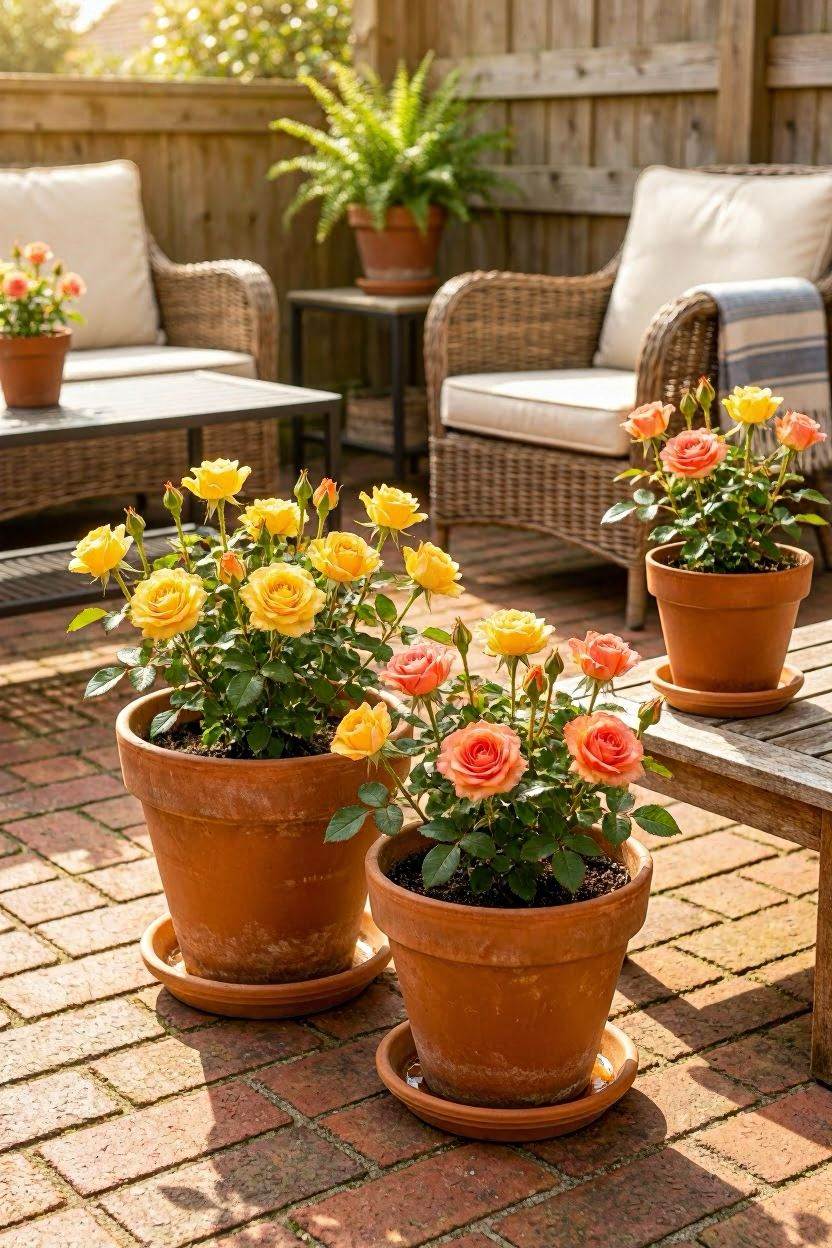
How to do it:
- Choose a pot at least 15–18 inches wide and deep (drainage holes are essential)
- Use a high-quality potting mix — not garden soil, which compacts in containers
- Pick patio or miniature roses: ‘Cupcake’, ‘The Fairy’, or ‘Sunblaze Orange’
- Water more frequently than in-ground roses (pots dry out fast in summer heat)
- Fertilize every 2–3 weeks with a liquid rose fertilizer like Jack’s Classic Rose Food ($12–$18 at Amazon)
Pro tip: Group 3–5 containers of different heights for a real design moment.
7. Plant a Fragrant Rose Walk or Pathway
A rose-lined path does double duty — it guides people through the garden and fills the air with scent. This works especially well in side yards or between a gate and front door.
How to do it:
- Choose highly fragrant varieties: ‘Mr. Lincoln’, ‘Fragrant Cloud’, ‘Cinco de Mayo’
- Plant roses alternating on both sides of a path, spaced 4–5 ft apart
- Use stepping stones or gravel between plants ($1–$3/stone at Lowe’s)
- Keep fragrant roses at nose height — prune to 3–4 ft if needed
Path materials to consider:
| Material | Cost per sq ft | Look |
|---|---|---|
| Pea gravel | $0.50–$1.50 | Casual, cottage |
| Flagstone | $2–$5 | Formal, classic |
| Brick | $3–$6 | Traditional, warm |
| Decomposed granite | $0.75–$2 | Dry garden, modern |
8. Use Groundcover Roses for Low-Maintenance Slopes and Banks
Slopes are hard to plant and hard to mow. Groundcover roses solve both problems — they spread low, bloom heavily, and require very little upkeep once established.
Best groundcover roses:
- Flower Carpet series (pink, red, white, yellow) — extremely disease resistant, spreads 3–4 ft wide, $15–$25 at most nurseries
- Drift Roses — compact, 18 inches tall, perfect for slopes; available at Home Depot and Lowe’s for $18–$28
- Meidiland roses — tough, winter hardy to Zone 4
How to plant on a slope:
- Dig into the slope to create a flat pocket for each plant
- Mulch heavily to prevent erosion
- Water deeply but infrequently to encourage deep roots
9. Build a Rose Hedge for Privacy
Roses make surprisingly good privacy hedges — especially thorny varieties that also deter animals and intruders. A rose hedge looks softer and more beautiful than a wooden fence.
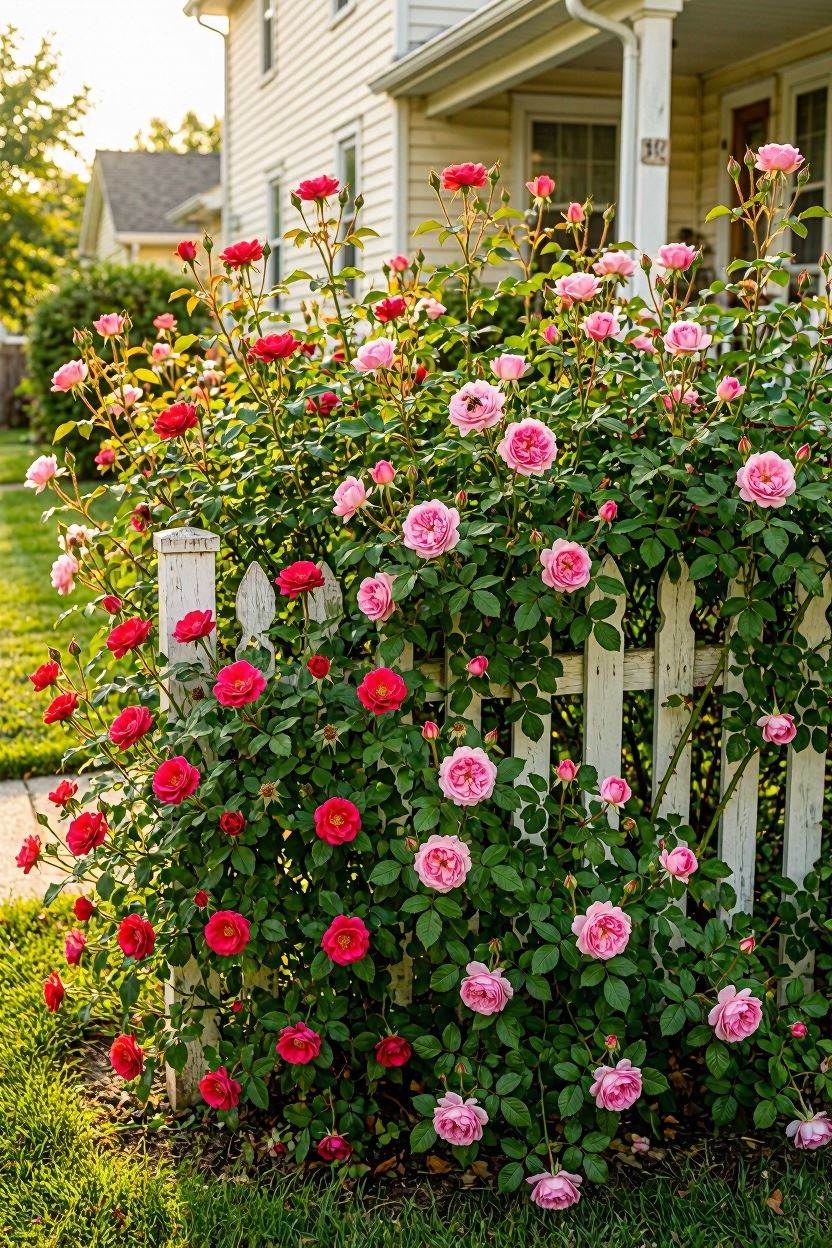
Best roses for hedging:
- Rugosa roses — very thorny, extremely hardy (Zone 2–9), fragrant; grows 4–6 ft tall
- Carefree Beauty — tall shrub rose, coral-pink, disease resistant
- Simplicity Rose — sold specifically as a “living fence” rose, very upright
Planting tips:
- Space hedge roses 3–4 ft apart for a solid screen
- Plant in a double row staggered for denser coverage
- A 10-ft hedge costs approximately $150–$300 in plants
10. Create a Moon Garden With White Roses
A moon garden uses white and pale-colored plants that glow at dusk and in moonlight. It’s one of the most magical, underused ideas in home gardening — and white roses are the centerpiece.
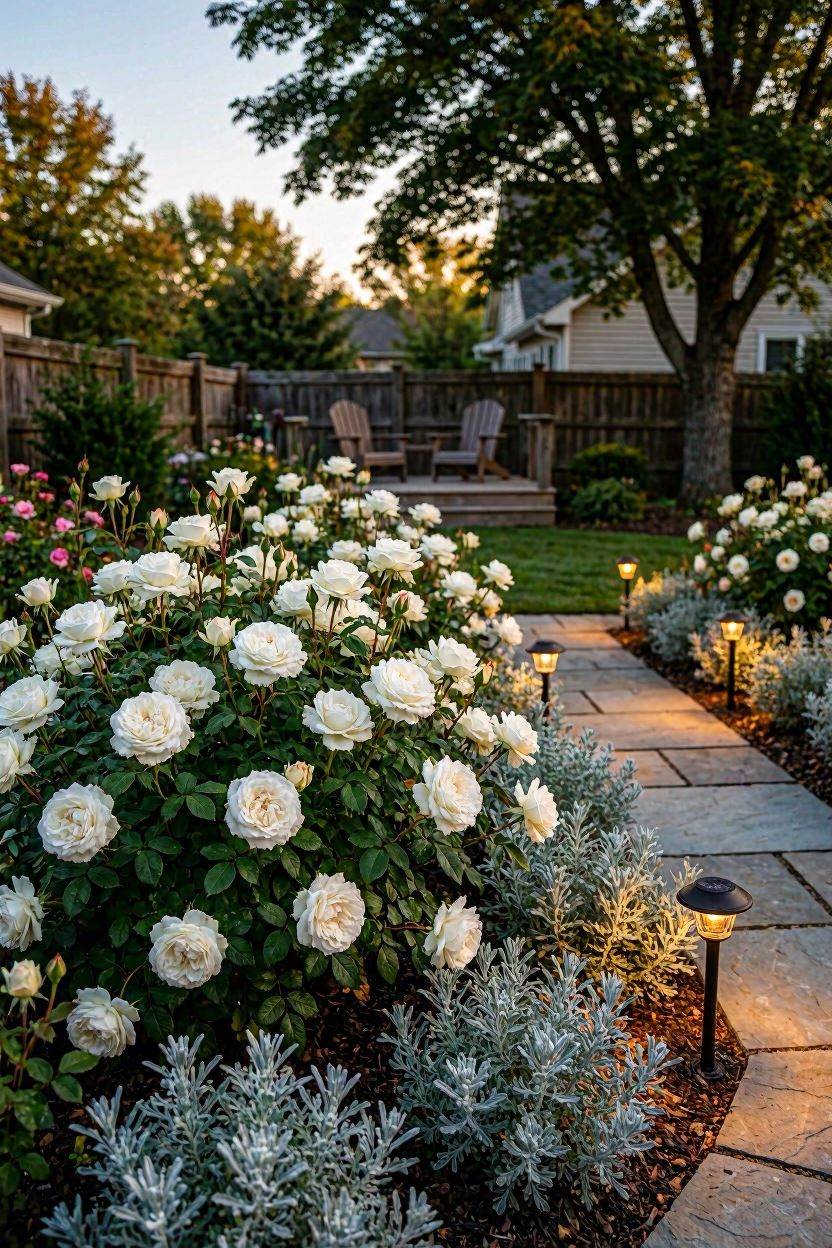
White roses to consider:
- ‘Iceberg’ — floribunda, prolific bloomer, disease resistant
- ‘Moonstone’ — hybrid tea, creamy white with pink edges
- ‘White Knock Out’ — low maintenance, repeat bloomer
Companion plants for a moon garden:
- White moonflower vine (fragrant at night)
- Silver artemisia or dusty miller for textural contrast
- White coneflowers and white salvia to extend the season
Lighting tip: Add a few solar path lights ($20–$40 for a set of 8 at Target) to highlight the roses after dark — the effect is genuinely stunning.
Quick Comparison: All 10 Rose Garden Ideas
| Idea | Skill Level | Estimated Cost | Best For |
|---|---|---|---|
| Cottage Border | Beginner | $100–$300 | Front yards, paths |
| Raised Bed | Beginner | $80–$200 | Poor soil, small spaces |
| Climbing Trellis/Arch | Intermediate | $80–$250 | Vertical interest, entries |
| Formal Symmetrical | Intermediate | $200–$500 | Larger yards, estate look |
| Mixed Perennials | Beginner | $150–$350 | Natural, relaxed gardens |
| Container Patio | Beginner | $60–$200 | Patios, balconies |
| Fragrant Pathway | Beginner | $100–$300 | Side yards, entries |
| Groundcover Slopes | Beginner | $80–$200 | Banks, low-maintenance |
| Rose Hedge | Intermediate | $150–$400 | Privacy, property lines |
| Moon Garden | Intermediate | $150–$350 | Evening spaces, romance |
Final Thoughts
You don’t need a big yard or a green thumb to have a beautiful rose garden. Start with one idea — maybe a couple of Knock Out roses in a raised bed, or a single climbing rose on your fence — and build from there.
The best rose gardens grow over time. Plant something this season, see what works in your space, and add to it next year. That’s exactly how the most beautiful home gardens happen: not all at once, but one good decision at a time.
Frequently Asked Questions
Q: What are the easiest roses to grow for beginners? A: Knock Out Roses and Drift Roses are the most beginner-friendly. They’re disease resistant, repeat blooming, and require very little pruning or spraying.
Q: How much sun do roses need? A: Most roses need at least 6 hours of direct sun daily. Some varieties like ‘Zephirine Drouhin’ tolerate partial shade, but full sun gives you the most blooms.
Q: When should I plant roses in the US? A: In most US regions, spring (after last frost) or fall (6 weeks before first frost) are ideal. Container roses can be planted almost any time the ground isn’t frozen.
Q: Do roses need a lot of water? A: Established roses are more drought-tolerant than people think. Water deeply once or twice a week rather than a little every day. Always water at the base, not the leaves.
Q: Can I grow roses without pesticides? A: Yes — choose disease-resistant varieties and use neem oil or insecticidal soap for pest control. Good air circulation (proper spacing) prevents most fungal problems.