21 Studio Apartment Decor Ideas That Make Small Spaces Feel Huge
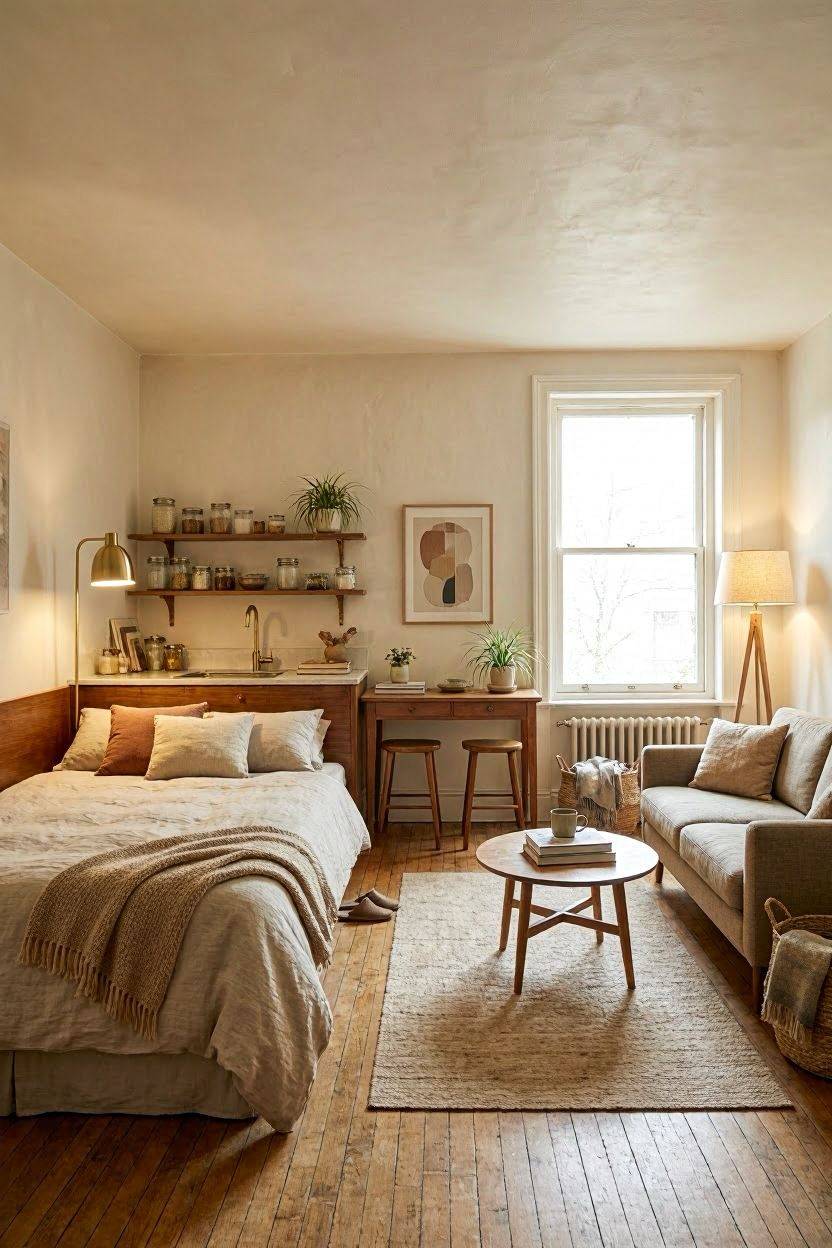
Living in a studio apartment means every square foot has to work hard. The good news? A small space doesn’t have to feel cramped, messy, or boring. With the right layout tricks, color choices, and a few smart buys, your studio can feel just as stylish and functional as a full-size apartment.
Below are 21 studio apartment decor ideas that real renters and homeowners use to zone their space, add storage, and make a single room feel like a complete home.
1. Zone Your Space With a Rug, Not a Wall
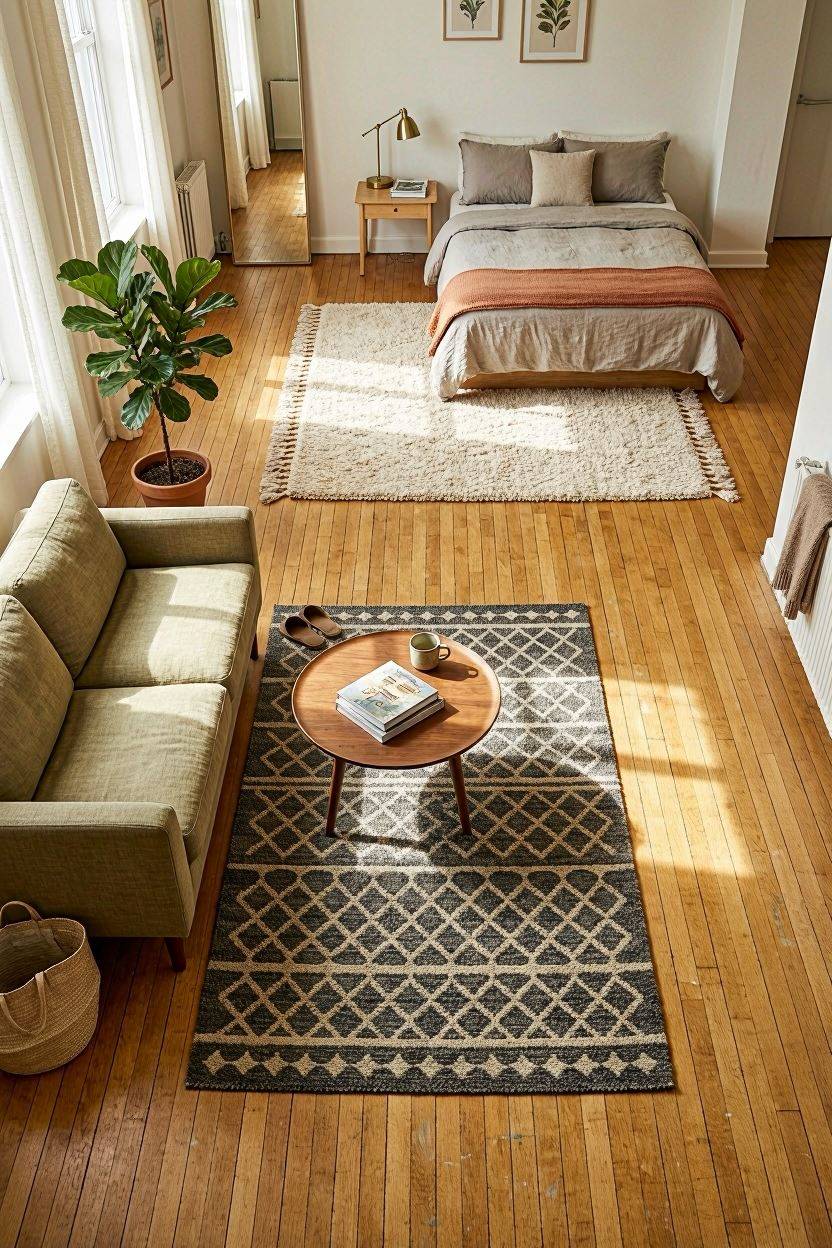
The easiest way to make a studio feel like separate rooms is to break it up visually. You don’t need a wall — a rug under your bed or sofa instantly signals “this is the bedroom” or “this is the living room.”
Use two different rug styles or colors for two zones. A 5x7 ft rug ($60–$150 at Target or Rugs USA) works well under a sofa, while a smaller 3x5 ft rug ($40–$90) defines a reading nook or bed area.
2. Use a Bookshelf as a Room Divider
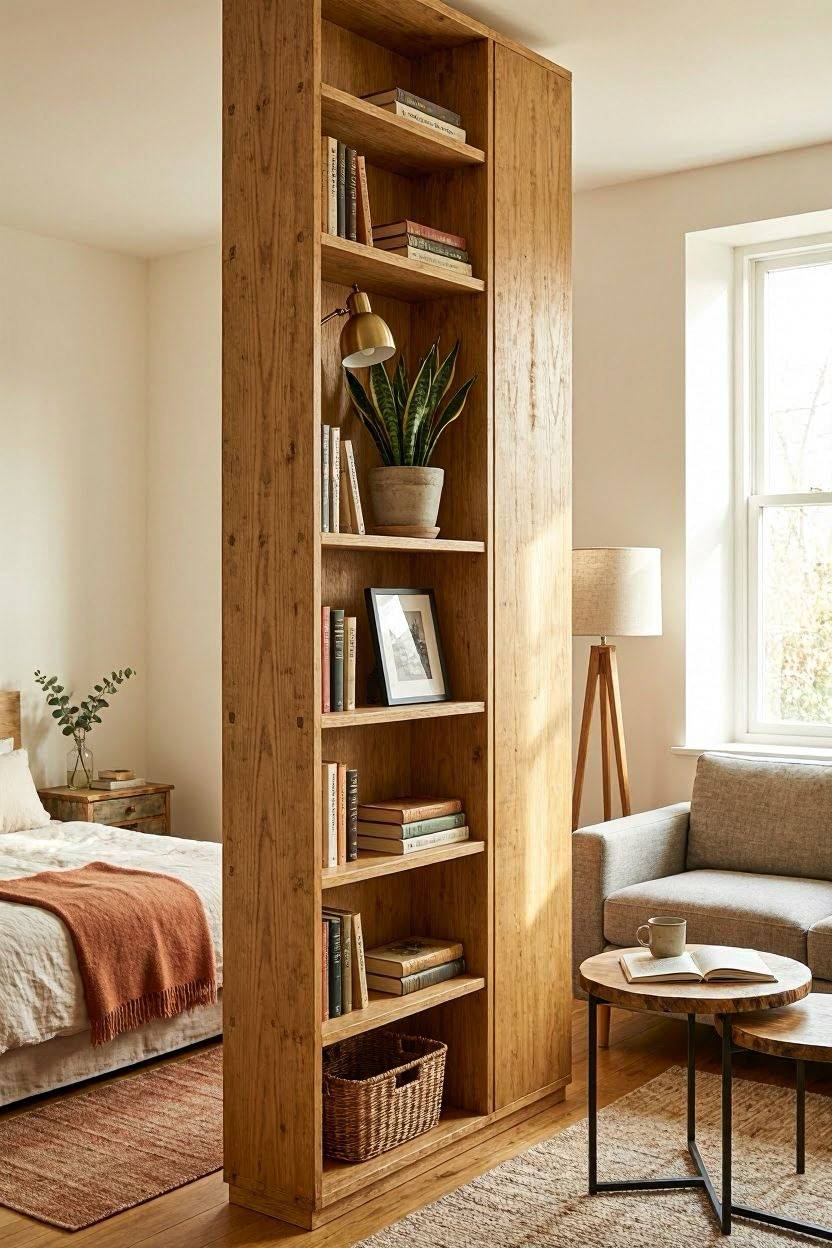
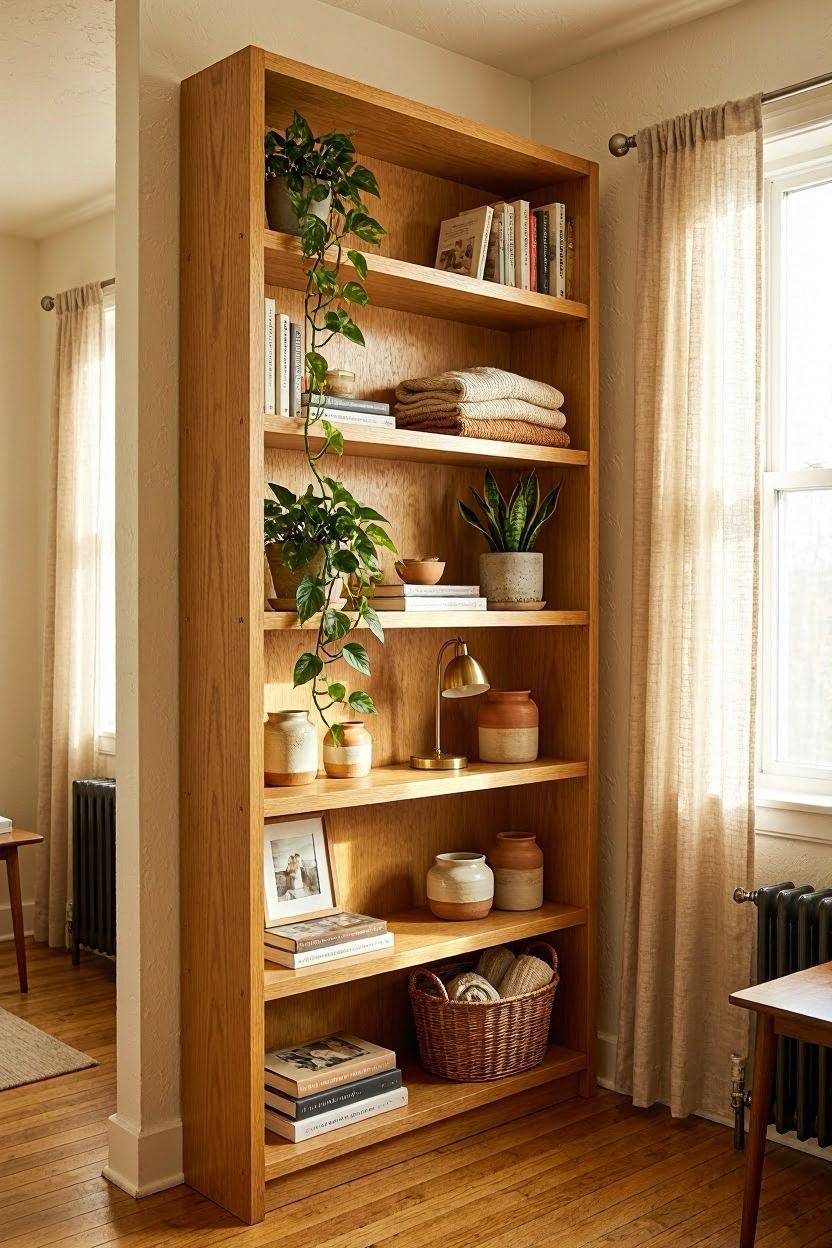
A tall open bookshelf does two jobs at once: storage and separation. Place it perpendicular to a wall to split your sleeping area from your living area, without blocking light the way a solid wall would.
The IKEA Kallax shelf ($60–$180 depending on size) is a popular pick because it’s open on both sides, so it doesn’t feel like a barrier.
3. Pick a Light, Neutral Color Palette
Dark colors can make a small room feel smaller. Stick to soft whites, warm beiges, light greige, or pale sage on your walls and bigger furniture pieces. Save bold colors for small accents like pillows, art, or a vase.
| Paint Color | Brand | Approx. Price (1 gal) | Best For |
|---|---|---|---|
| Alabaster | Sherwin-Williams | $65 | Walls, overall brightness |
| Swiss Coffee | Behr | $45 | Warm white, beginner-friendly |
| Agreeable Gray | Sherwin-Williams | $65 | Neutral base with warmth |
| Sea Salt | Sherwin-Williams | $65 | Soft green-gray accent wall |
4. Hang Curtains High and Wide
Mounting curtain rods close to the ceiling (not right above the window frame) tricks the eye into thinking your ceilings are taller. Letting curtains extend a few inches past the window frame on each side also makes windows look bigger.
Look for affordable linen-look curtains from H&M Home ($25–$40 per panel) or Target’s Threshold line.
5. Choose Multi-Functional Furniture
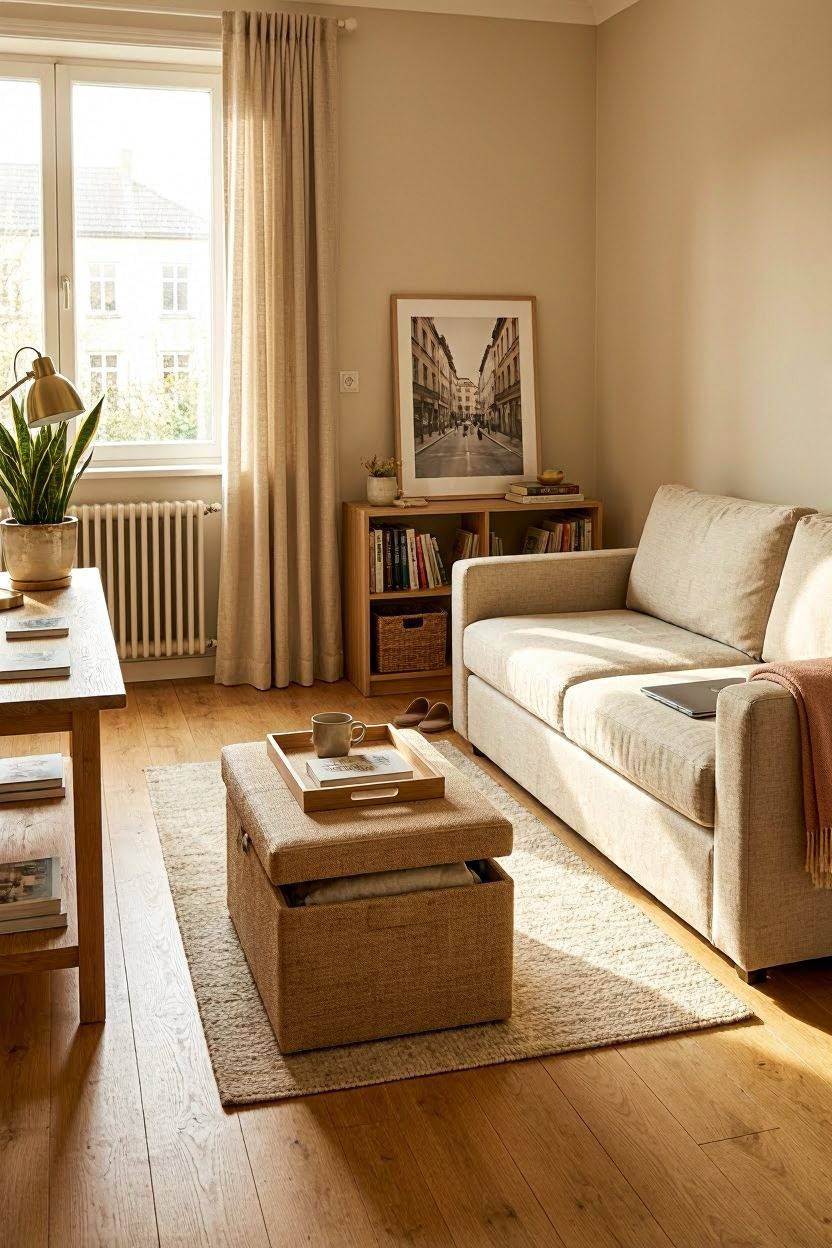
In a studio, every piece of furniture should earn its spot. A storage ottoman, a sofa bed, or a nesting coffee table all save space while doing double duty.
Quick Comparison: Multi-Functional Furniture Picks
| Item | Approx. Price | Where to Buy | Best Use |
|---|---|---|---|
| Storage Ottoman | $80–$150 | Wayfair, Target | Coffee table + blanket storage |
| Sofa Bed (Queen) | $400–$900 | Burrow, IKEA | Guest sleeping + daily seating |
| Nesting Side Tables | $60–$120 | West Elm, IKEA | Extra surface, tucks away |
| Murphy Bed Frame | $700–$1,500 | Wayfair, Amazon | Frees floor space in daytime |
6. Float Your Furniture Away From Walls
It feels counterintuitive, but pulling your sofa or bed a few inches off the wall and angling it slightly can make a studio feel more like a designed room instead of a storage unit. Leave at least 18–24 inches of walking space around major pieces.
7. Add Vertical Storage Instead of Wide Storage
Floor space is precious in a studio, so build up instead of out. Tall, narrow shelving units, wall-mounted cabinets, and over-the-door organizers free up the floor while still giving you storage.
8. Use a Statement Mirror to Bounce Light
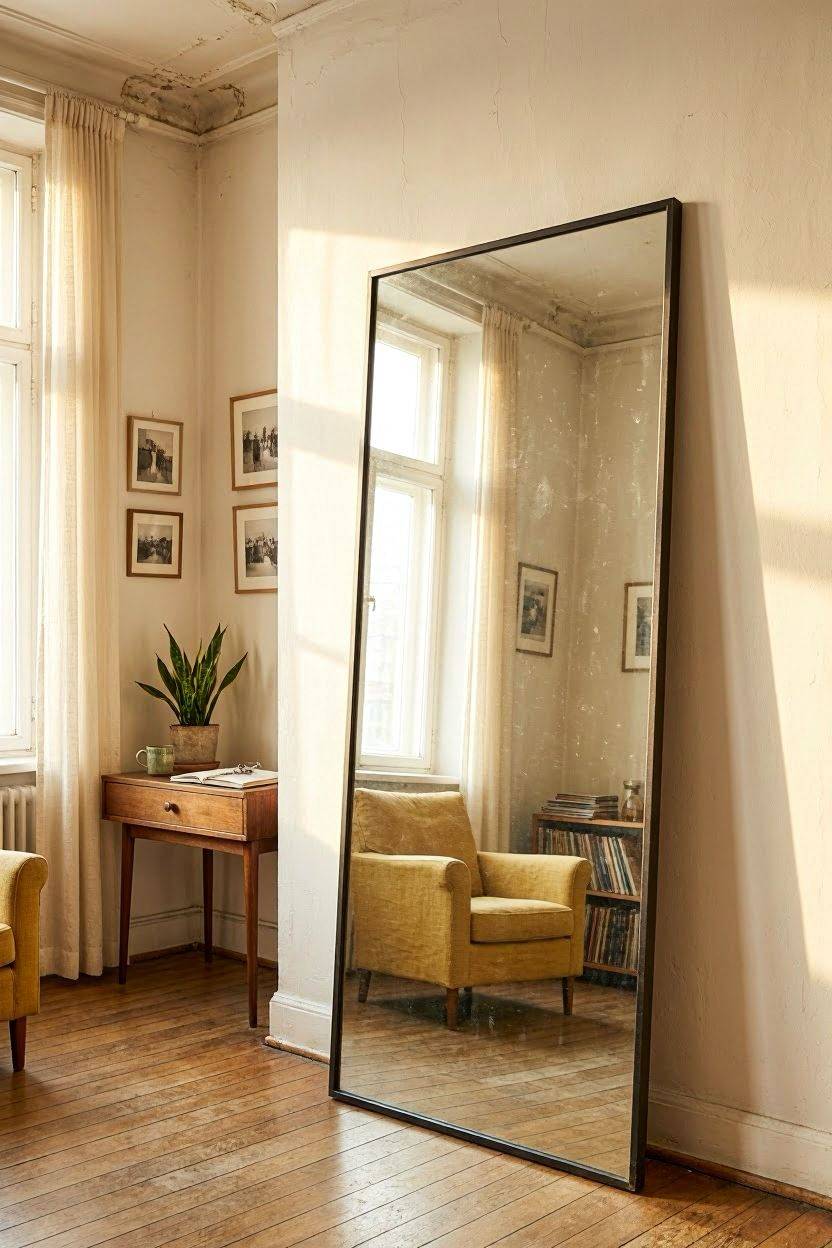
A large leaning mirror placed across from a window reflects natural light around the room and visually doubles the space. A 65-inch leaning floor mirror runs $100–$250 at stores like Target, CB2, or Wayfair.
9. Keep Your Bed Styling Simple and Layered
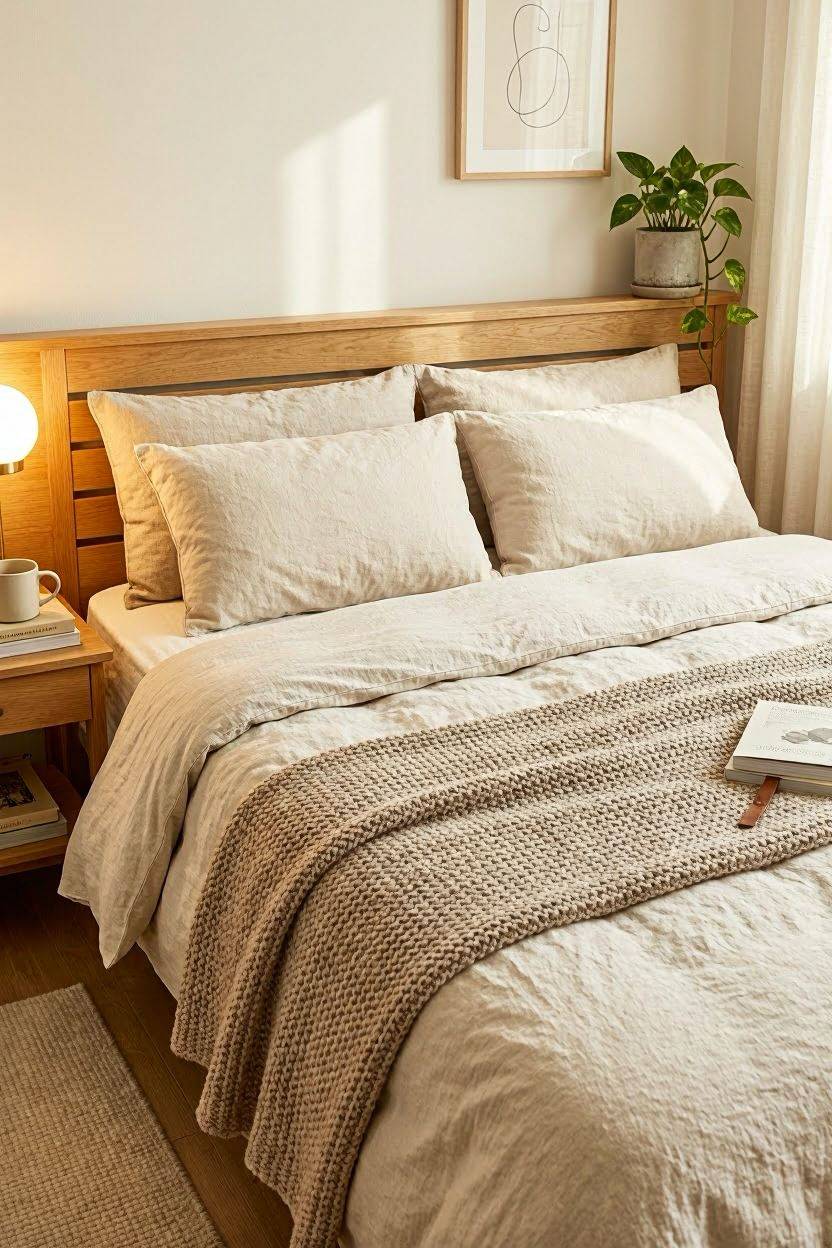
Since your bed is often visible from the living area in a studio, treat it like part of the decor, not just furniture. A neutral duvet, two to three pillows, and a textured throw blanket keep it looking like a feature, not clutter.
10. Layer Lighting Instead of Using One Overhead Light
One ceiling light makes a studio feel flat and office-like. Mix in a floor lamp, a table lamp, and maybe string lights to create warm pools of light in different zones. This also reinforces the “different rooms” effect.
| Lighting Type | Approx. Price | Where to Buy | Placement Tip |
|---|---|---|---|
| Arc Floor Lamp | $70–$160 | Target, Wayfair | Behind sofa or reading chair |
| Table Lamp | $30–$80 | Amazon, HomeGoods | Nightstand or console table |
| Plug-in Wall Sconce | $35–$70 | Lamps Plus | Above bed, no wiring needed |
| Warm LED String Lights | $15–$25 | Amazon, Urban Outfitters | Along shelves or headboard |
11. Use a Curtain or Sliding Panel to Hide the Bed
If you want a more defined separation than a rug or shelf, a ceiling-mounted curtain track lets you fully close off your sleeping area at night and open it up during the day. This is one of the few “DIY-adjacent” upgrades worth doing — a tension rod and curtain panel can be installed in under an hour without tools or drilling, which makes it landlord-friendly too.
12. Choose a Single Accent Color and Repeat It
Picking one accent color — like terracotta, mustard, or deep green — and repeating it in 3 to 4 spots (a pillow, a vase, a piece of art, a throw) ties a studio together and makes it look intentional rather than thrown together.
13. Go Light on Window Treatments
Heavy drapes block natural light, which a studio needs. Sheer or light linen curtains let light in while still giving privacy. If you need more privacy at night, layer a blackout liner behind a sheer panel instead of using one heavy curtain.
14. Add Greenery at Different Heights
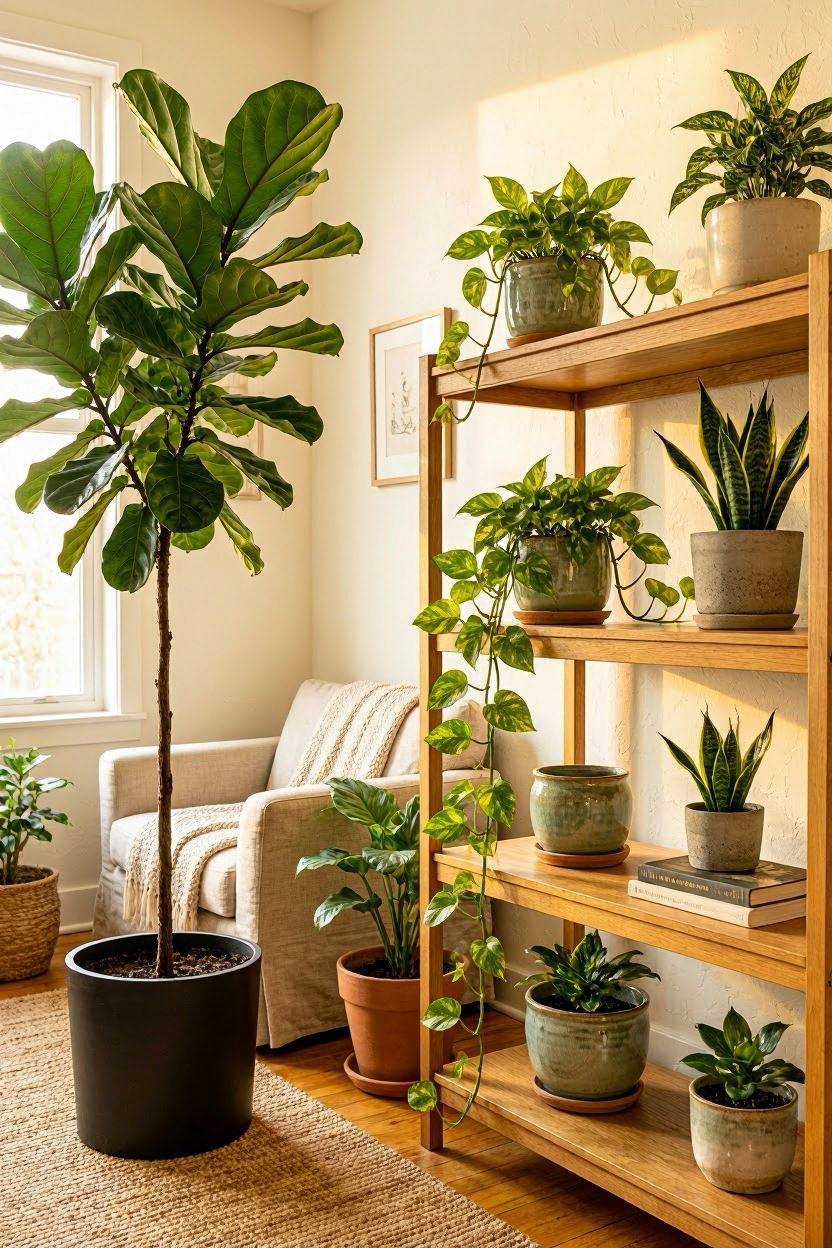
A few plants placed at different heights — a tall fiddle leaf fig in a corner, a trailing pothos on a shelf, a small succulent on a table — add life and softness without taking up much floor space.
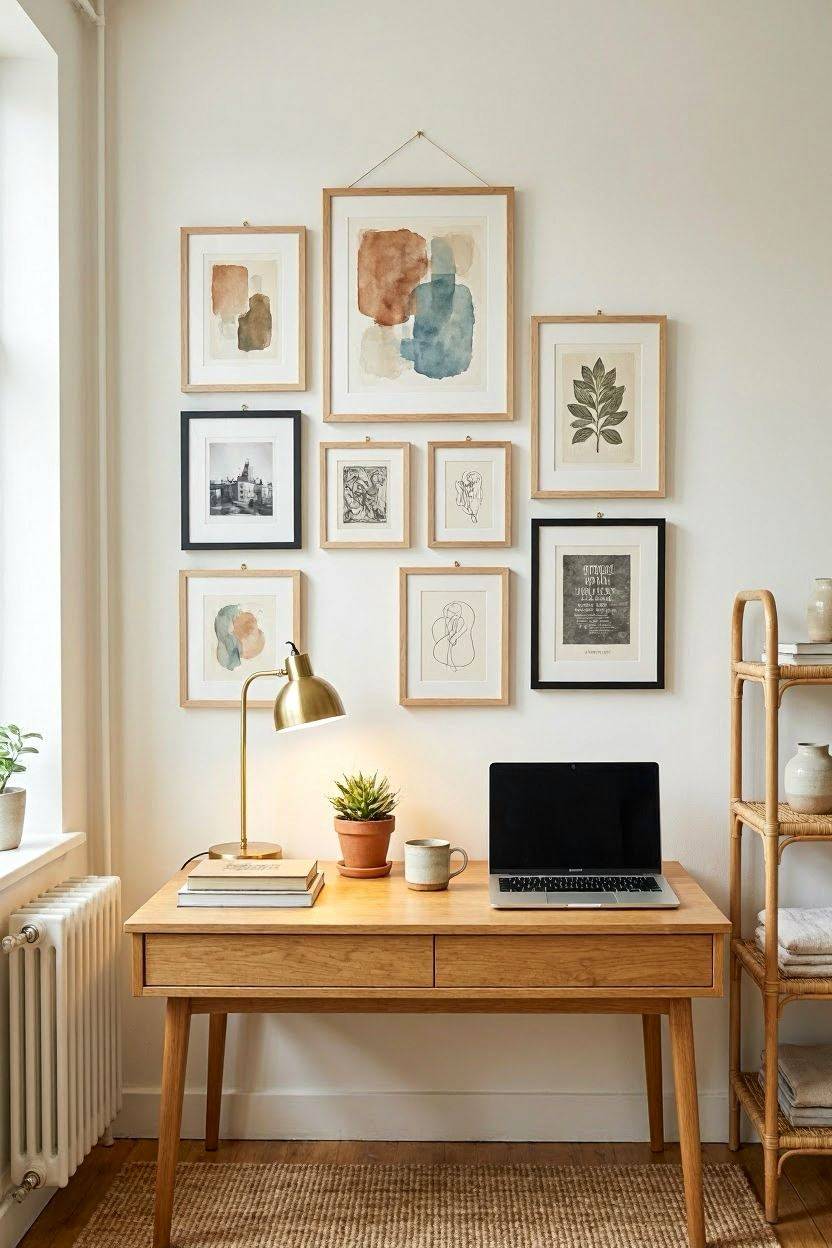
15. Use Wall Space for Art, Not Just Storage
It’s tempting to fill every wall with shelves in a small space, but leave at least one wall mostly for art or a gallery wall. A studio with only storage on the walls can start to feel like a warehouse instead of a home.
16. Pick a Kitchen Cart for Extra Counter Space
If your studio kitchen is tight, a rolling kitchen cart adds counter space and storage that you can move out of the way when not cooking. The IKEA Raskog cart ($40–$50) is a popular budget pick.
17. Use Under-Bed Storage Bins
The space under your bed is often wasted. Clear or fabric bins ($15–$30 for a set at Container Store or Amazon) keep off-season clothes, extra linens, or shoes out of sight but easy to grab.
18. Keep a Clear Path From Door to Window
Whatever furniture layout you choose, keep one clear walking path from your entry door to your main window. This single rule does more for “the room feels bigger” than almost any other tip on this list, because it keeps your eye moving through the whole space.
19. Use Textured Throws and Pillows Instead of More Furniture
Once your major furniture is in place, resist adding more pieces. Instead, add texture through a chunky knit throw, linen pillow covers, or a woven pouf. Texture adds warmth and visual interest without using up floor space.
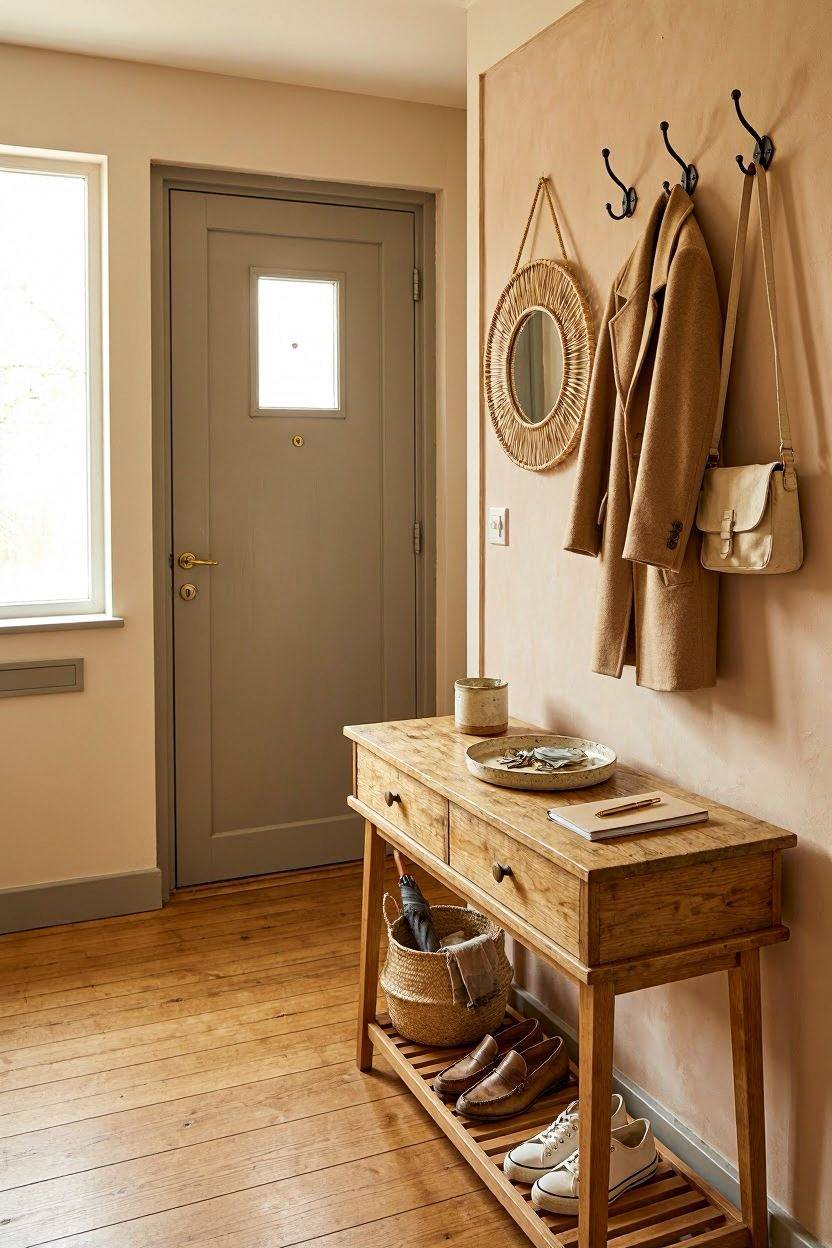
20. Define a Mini Entryway
Even a narrow strip by your front door can act as a mini entryway. A slim console table, a wall hook for keys, and a small tray for shoes creates a “drop zone” so clutter doesn’t spread into your main living area.
21. Stick to 2–3 Materials Throughout
Mixing too many wood tones, metals, and fabric types can make a small space look busy. Pick one wood tone (like light oak), one metal finish (like matte black or brass), and repeat them across your furniture and decor for a cohesive look.
Studio Apartment Decor: Quick Reference Cost Guide
| Category | Budget Option | Mid-Range Option | Where to Shop |
|---|---|---|---|
| Rug (5x7) | $60 | $150 | Target, Rugs USA |
| Floor Lamp | $70 | $160 | Wayfair, Target |
| Leaning Mirror | $100 | $250 | CB2, Wayfair |
| Storage Ottoman | $80 | $150 | Wayfair, Target |
| Bookshelf Divider | $60 | $180 | IKEA, Wayfair |
| Curtain Panels (pair) | $50 | $100 | H&M Home, Target |
Frequently Asked Questions
How do I make my studio apartment look bigger without renovating? Use light wall colors, a large leaning mirror to bounce light, and keep furniture off the floor where possible (think shelves and floating nightstands). Clearing a single walking path through the room also helps a lot.
What is the best way to separate my bed from my living area in a studio? A bookshelf, an open shelving unit, or a ceiling-mounted curtain track are the most popular non-permanent options. A rug under the bed is the simplest and cheapest starting point.
Do I need a headboard in a studio apartment? Not necessarily, but a slim headboard or a wall-mounted panel behind your bed helps it read as a “bedroom zone” instead of a mattress in the corner of your living room.
What colors make a small studio feel bigger? Soft whites, warm beiges, light gray, and pale sage all work well. Save darker, bolder colors for small accents like pillows or a single piece of art.
Is it worth buying a sofa bed for a studio apartment? If you regularly host overnight guests, yes — a quality sofa bed from a brand like Burrow or IKEA earns its space. If guests are rare, a daybed or a regular sofa with a folding guest mattress stored under the bed may be more comfortable for everyday use.
Final Thoughts
A studio apartment doesn’t need a big budget or a full renovation to feel like a real home. Most of these ideas come down to three things: using light and color to open up the space, choosing furniture that does more than one job, and keeping a clear visual flow from one zone to the next.
Start with one or two changes — a rug to zone your space, or a mirror to bounce light — and build from there. Small, intentional updates add up fast in a studio, and you’ll be surprised how much bigger and more put-together your space feels within a weekend.