Balcony Closing Ideas: 9 Practical Ways to Enclose Your Balcony (Cost + Where to Buy)
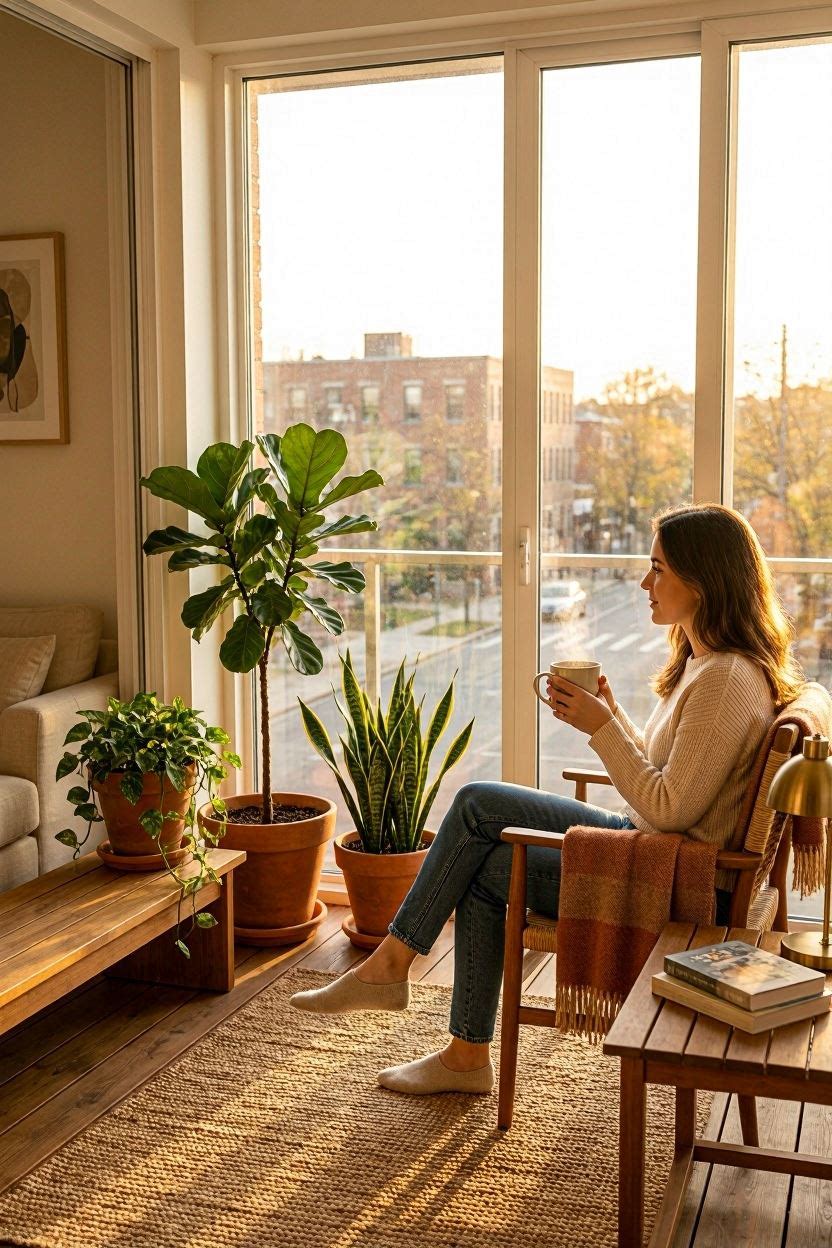
If your balcony feels too windy, too exposed, or just unusable for half the year, closing it in is one of the best upgrades you can make. You don’t need a full renovation either. Some of these options cost under $100 and take a weekend, while others are permanent, code-approved enclosures that add real value to your home.
I put together 9 tested balcony closing ideas below, each one with the actual cost range, the materials you need, and where to buy them in the USA. Pick the one that matches your budget, your climate, and how much privacy you actually want.
Quick Comparison: Which Balcony Closing Idea Fits You?
| Idea | Cost Range (USD) | Privacy Level | Weatherproof | Best For |
|---|---|---|---|---|
| Frameless glass enclosure | $3,000–$12,000 | Low (clear view) | Yes, fully | Permanent upgrade, high-rise balconies |
| Sliding glass door system | $1,500–$6,000 | Low to medium | Yes, fully | Year-round usable balcony |
| Vinyl/PVC panels | $300–$1,200 | Medium | Yes, with zips closed | Rentals, seasonal closing |
| Outdoor curtains | $40–$200 | Medium to high | No, light rain only | Renters, quick style fix |
| Bamboo/reed screens | $30–$150 | High | Partial | Budget privacy |
| Retractable mesh screens | $150–$600 | Low (see-through) | Partial, blocks wind/bugs | Bug-free outdoor sitting |
| Acrylic/polycarbonate panels | $200–$900 | Low (clear) | Yes, fully | Windbreak without losing light |
| Wood lattice panels | $80–$400 | High | Partial | Garden-style privacy |
| Aluminum sunroom enclosure | $5,000–$20,000 | Low to medium | Yes, fully | Full balcony-to-room conversion |
1. Frameless Glass Balcony Enclosures
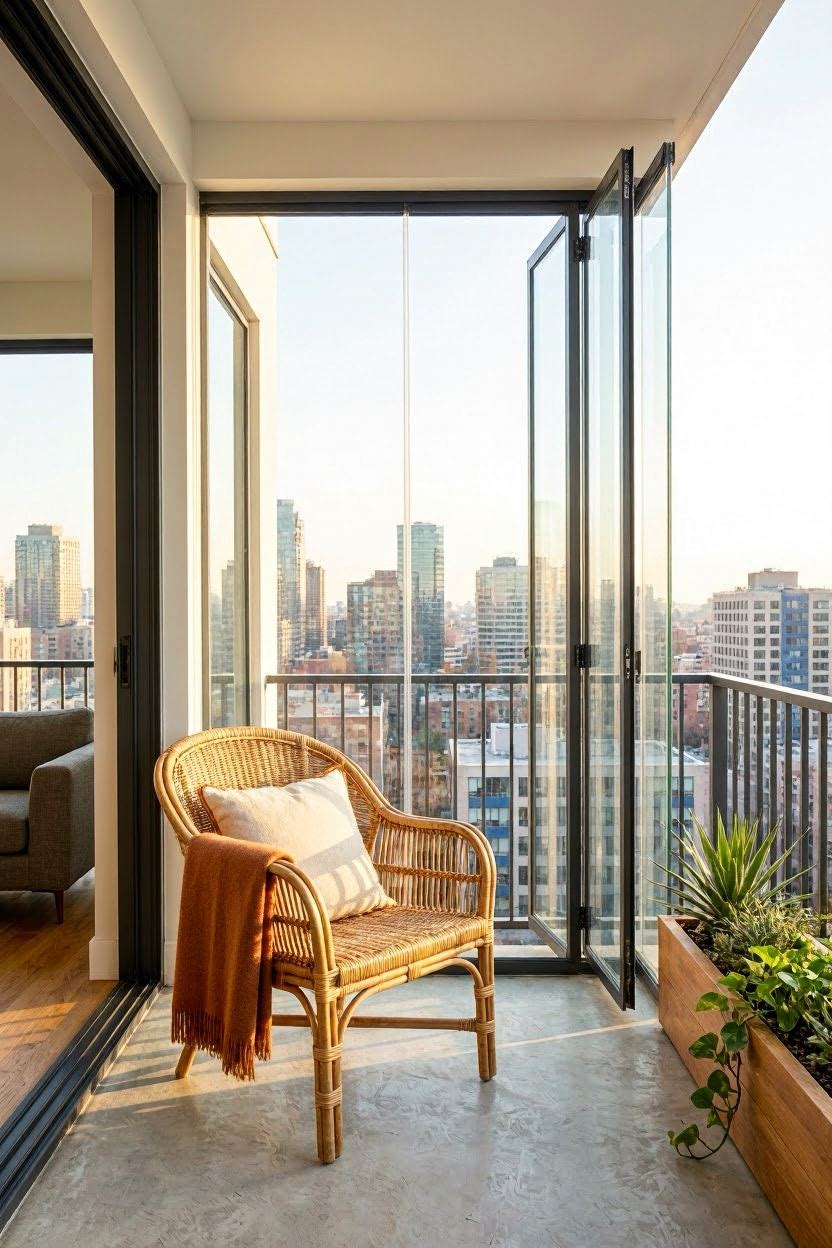
This is the option you see on luxury apartment balconies. Toughened glass panels slide or fold along a track, so you can close the whole balcony in seconds and still keep the view completely open.
How to get this done:
- Measure your balcony width and check with your building or HOA — most cities require a permit for permanent glass enclosures.
- Get quotes from local glazing companies; ask specifically for “frameless balcony glazing” or “balcony glass curtain” systems.
- Choose tempered glass, minimum 8mm thick, for safety and wind resistance.
- Budget for professional installation — this is not a DIY job since the glass panels are heavy and need precise tracks.
Where to buy/hire in the USA: Look up local installers through View Cusion, EzeBreeze, or Sunspace Sunrooms. National brands like Lumon also install frameless balcony glazing in major US cities.
2. Sliding Glass Door Systems
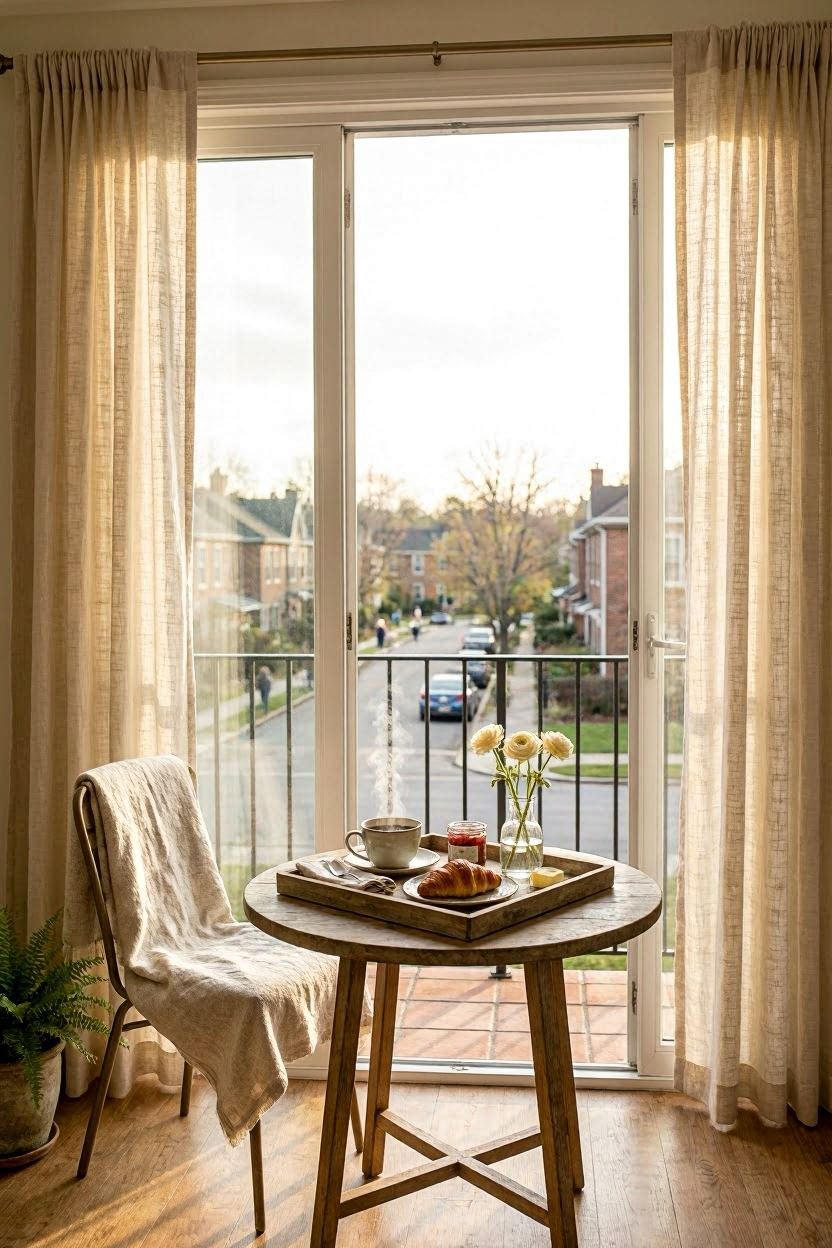
If you want your balcony to feel like an extension of your living room, a sliding patio door system closes the gap completely and still lets in full daylight.
How to get this done:
- Pick a 2-panel or 3-panel sliding door kit sized to your balcony opening.
- Choose double-glazed glass if you’re in a cold climate — it keeps the balcony usable in winter.
- Hire a licensed contractor for the frame installation; this affects your building’s structure and insulation.
- Add a low-profile track threshold so the door sits flush with your floor.
Where to buy: Pella, Andersen, and Milgard all sell sliding patio door systems sized for balconies, available through Home Depot and Lowe’s special order desks.
3. Vinyl or PVC Enclosure Panels
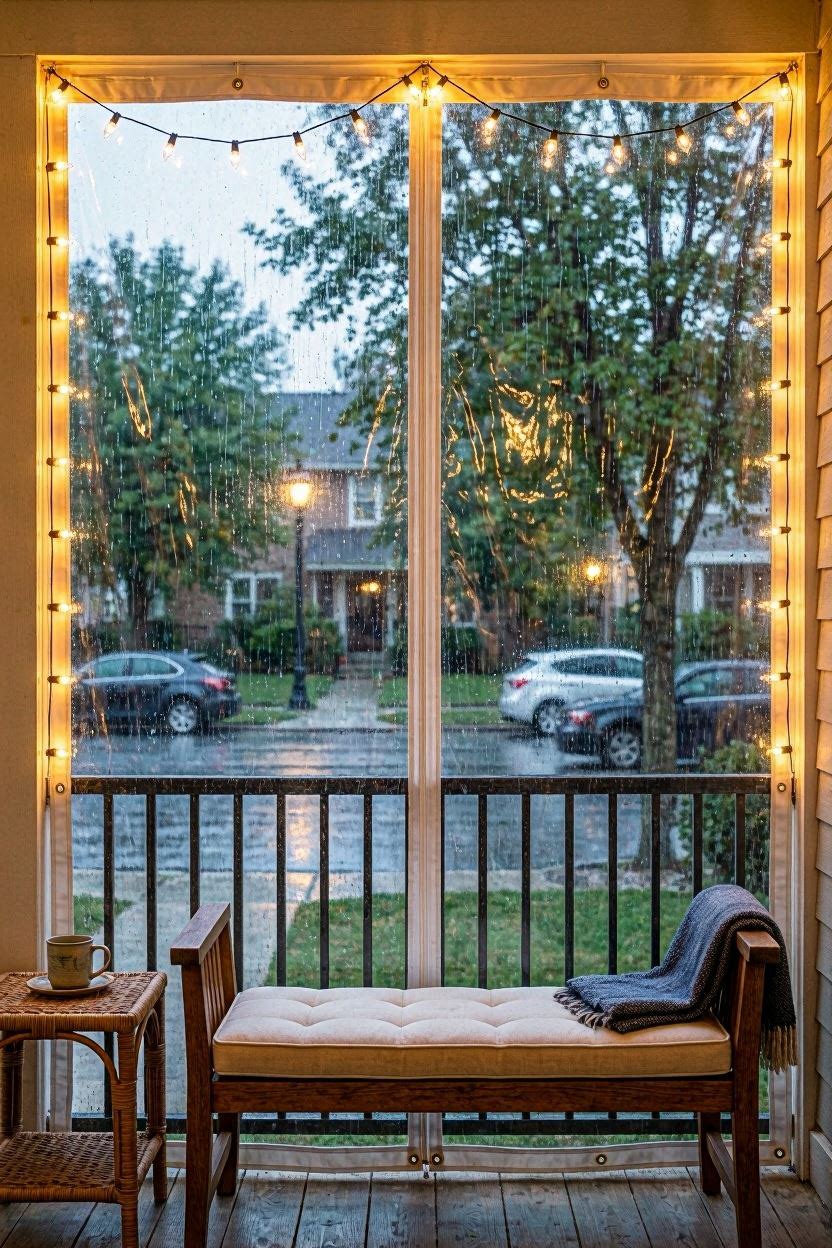
This is the most popular seasonal option for porches and balconies. Clear vinyl panels zip onto a track around your balcony railing, blocking wind and rain while keeping the view.
How to get this done:
- Measure each open side of your balcony separately, since panels are usually custom-cut per side.
- Order clear or tinted marine-grade vinyl, 20-gauge thickness or higher for durability.
- Install heavy-duty zippers and grommets, then mount the track using screws into your railing or ceiling.
- Roll up or unzip panels in summer; zip them shut for fall and winter.
Where to buy: Outdoor Curtain Company, SunBlox, and Patio Enclosures sell pre-cut and custom vinyl panel kits. Amazon also carries DIY clear vinyl panel kits under $200.
4. Outdoor Curtains and Drapes
This is the fastest and cheapest way to close a balcony visually. Heavy outdoor fabric curtains add privacy, block harsh sun, and instantly make a balcony feel like a room.
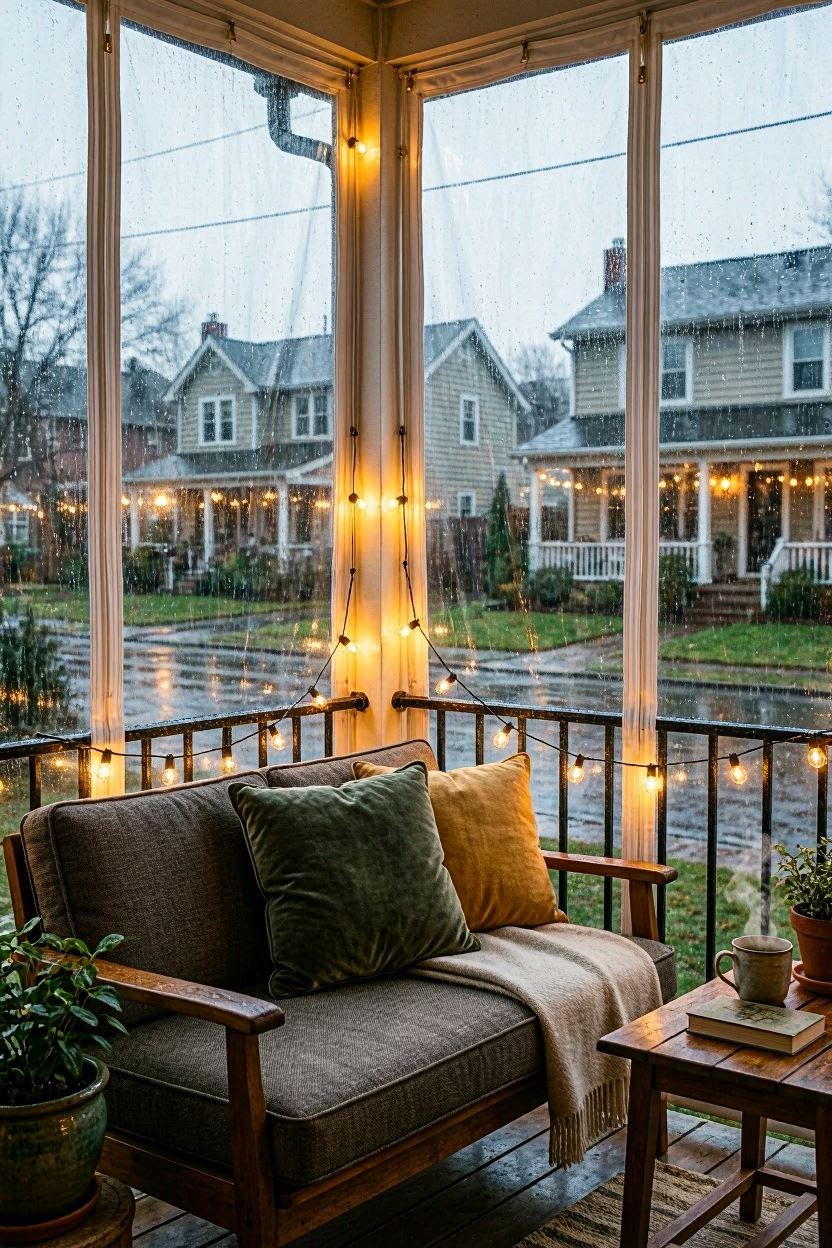
How to get this done:
- Install a tension rod or curtain track along the top of your balcony opening, between the ceiling and the railing posts.
- Choose solution-dyed acrylic outdoor fabric (like Sunbrella) so the color doesn’t fade in direct sun.
- Hang curtains with grommets or curtain rings so they slide easily and don’t blow around in wind.
- Use curtain weights at the bottom hem to keep panels from flapping on windy days.
Where to buy: Sunbrella fabric panels are sold through The Outdoor Curtain Company and Wayfair. IKEA’s DYTÅG and Target’s outdoor curtain lines are budget-friendly alternatives under $50 per panel.
5. Bamboo and Reed Privacy Screens
If you like a natural, garden-style look, bamboo or reed rolls are an easy way to close off your balcony from neighbors without blocking airflow completely.
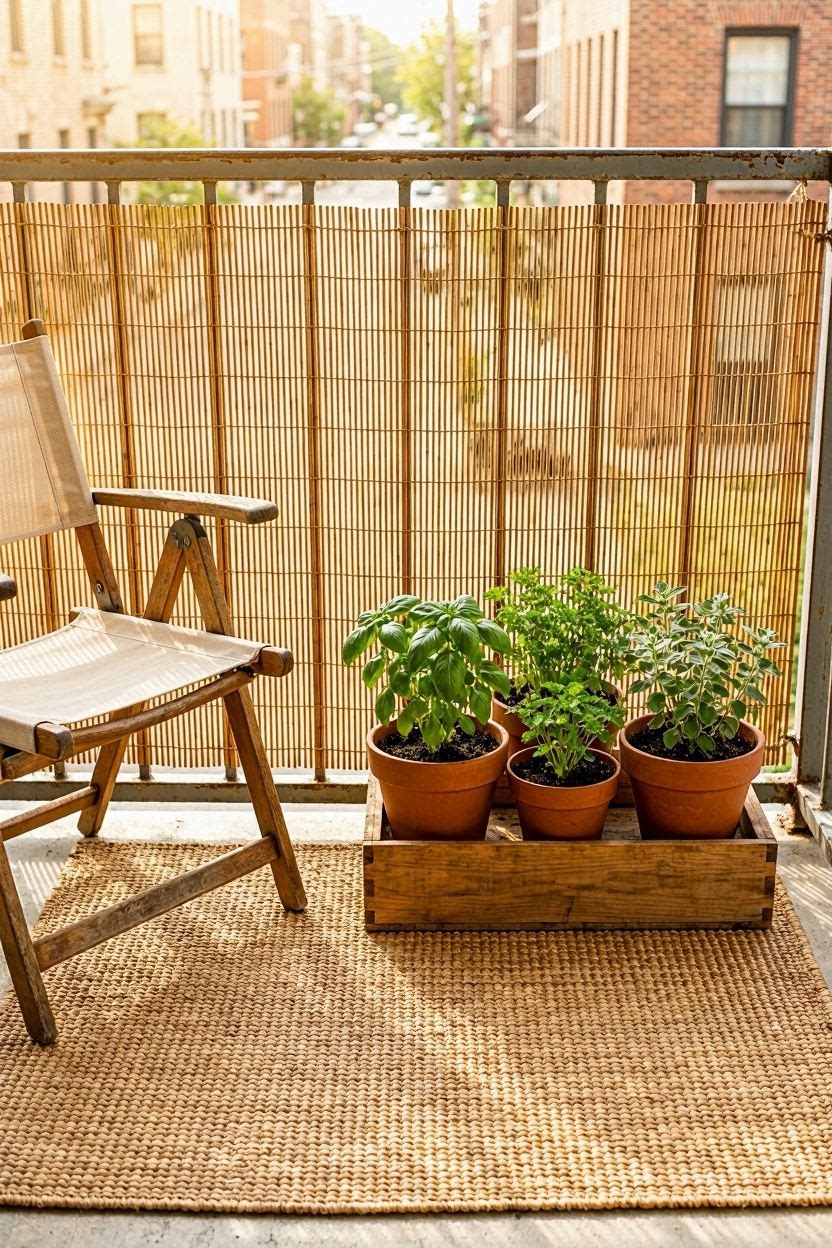
How to get this done:
- Measure the railing height and total length of the sides you want to cover.
- Buy a bamboo or reed fencing roll in matching length, then unroll it along the railing.
- Attach it using zip ties or U-nails every 12–18 inches so it stays flat against the railing.
- Trim the bottom with garden shears if the roll hangs past your railing.
Where to buy: Backyard X-Scapes and Home Depot both stock bamboo and reed rolls in 4 ft and 6 ft heights, usually $30–$60 per roll.
6. Retractable Mesh Screens
This option is built for keeping bugs and wind out while keeping the view fully open. Retractable screens pull across your balcony opening on a track and tuck away when not needed.
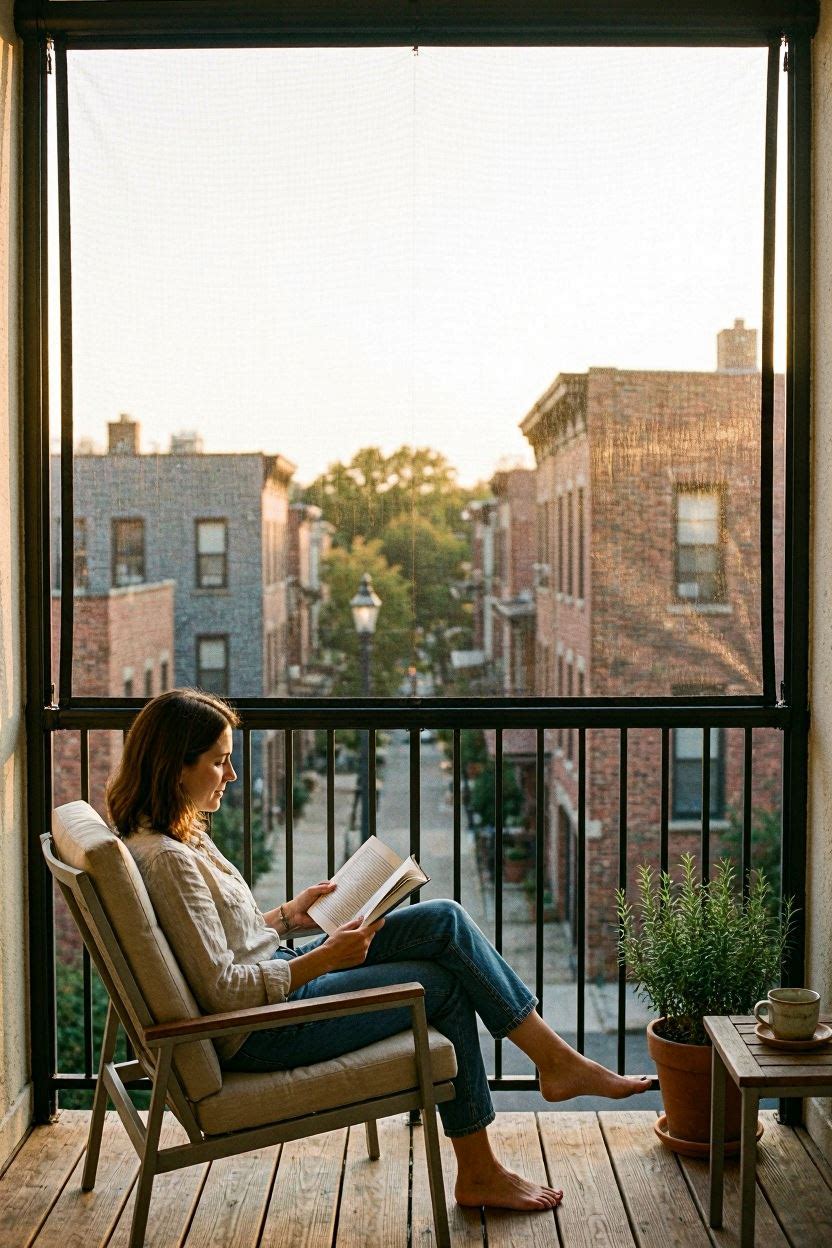
How to get this done:
- Measure the exact width and height of your balcony opening — retractable screens are sold by size.
- Choose a top-mounted or side-mounted retractable screen kit, depending on whether your opening is wider or taller.
- Mount the housing unit using the included brackets; most kits are designed for DIY installation in under an hour.
- Test the pull-across motion before final tightening, so the mesh stays taut.
Where to buy: Phantom Screens and Mosquito Curtains sell retractable balcony screen kits. Lowe’s also carries smaller DIY retractable screen doors that work for narrow balcony openings.
7. Acrylic or Polycarbonate Panels
These rigid, clear panels work like a budget version of glass. They block wind and rain completely while letting in full light, and they’re light enough to install yourself.
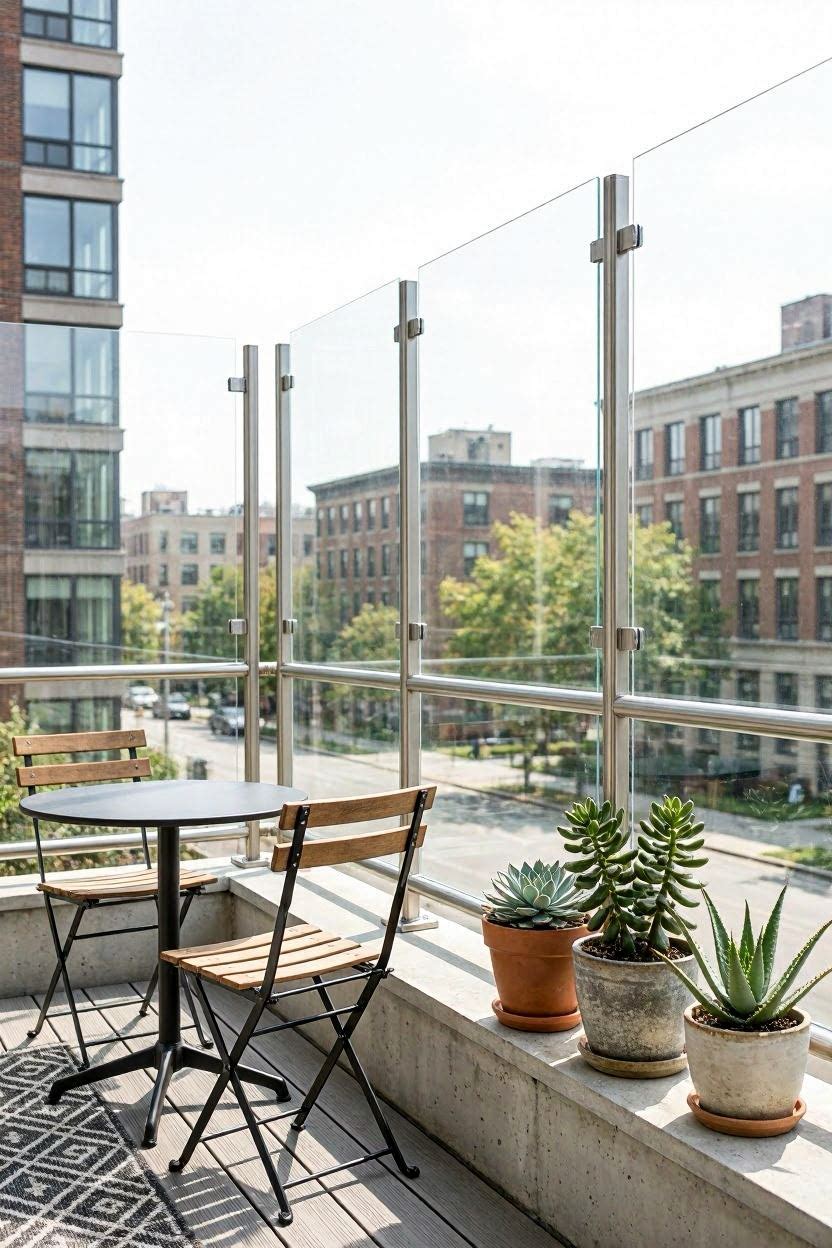
How to get this done:
- Measure each open section and order cut-to-size acrylic or polycarbonate sheets (3mm–6mm thickness works well for balconies).
- Pre-drill mounting holes slightly larger than your screws to allow for material expansion in heat.
- Mount panels to the inside of your railing using rubber-lined brackets so the panel doesn’t crack at the screw points.
- Seal the bottom edge with weatherstripping to stop wind from whistling underneath.
Where to buy: TAP Plastics and Home Depot sell cut-to-size acrylic and polycarbonate sheets. Online, Acrylite and Palram (makers of the Suntuf brand) ship panels nationwide.
8. Wood Lattice Privacy Panels
Lattice panels give your balcony a finished, garden-fence look. They work especially well if you want partial privacy but still want airflow and a bit of climbing greenery.
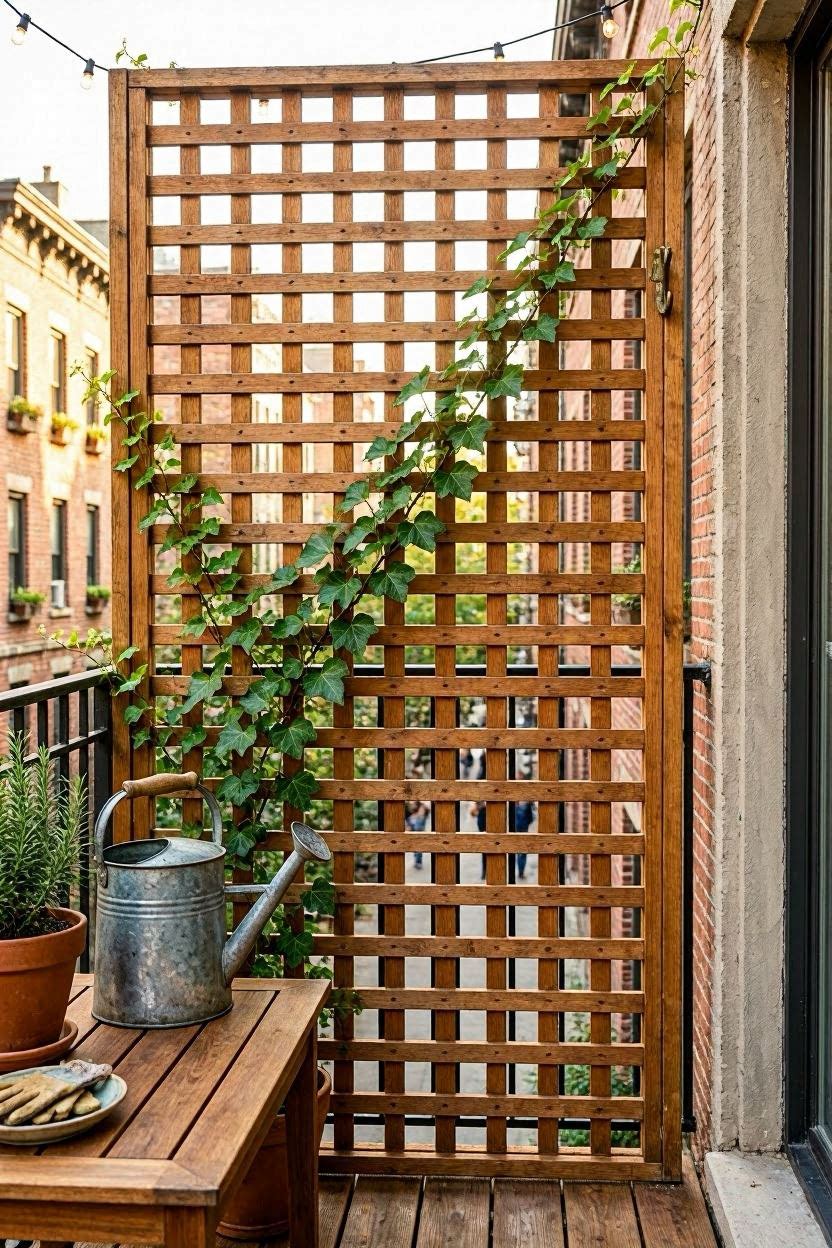
How to get this done:
- Choose pressure-treated or cedar lattice panels so they hold up against rain and sun.
- Cut panels to fit between your railing posts using a circular saw or have the hardware store cut them for you.
- Attach panels to the railing posts with exterior screws and corner brackets.
- Seal the wood with an outdoor sealant once a year to prevent warping.
Where to buy: Home Depot and Lowe’s sell standard 4x8 ft lattice panels starting around $25 each, in both wood and vinyl versions.
9. Aluminum-Framed Sunroom Enclosure
This is the most permanent option on this list. An aluminum-framed enclosure turns your balcony into a true four-season room, with screened or glass panel inserts you can swap by season.
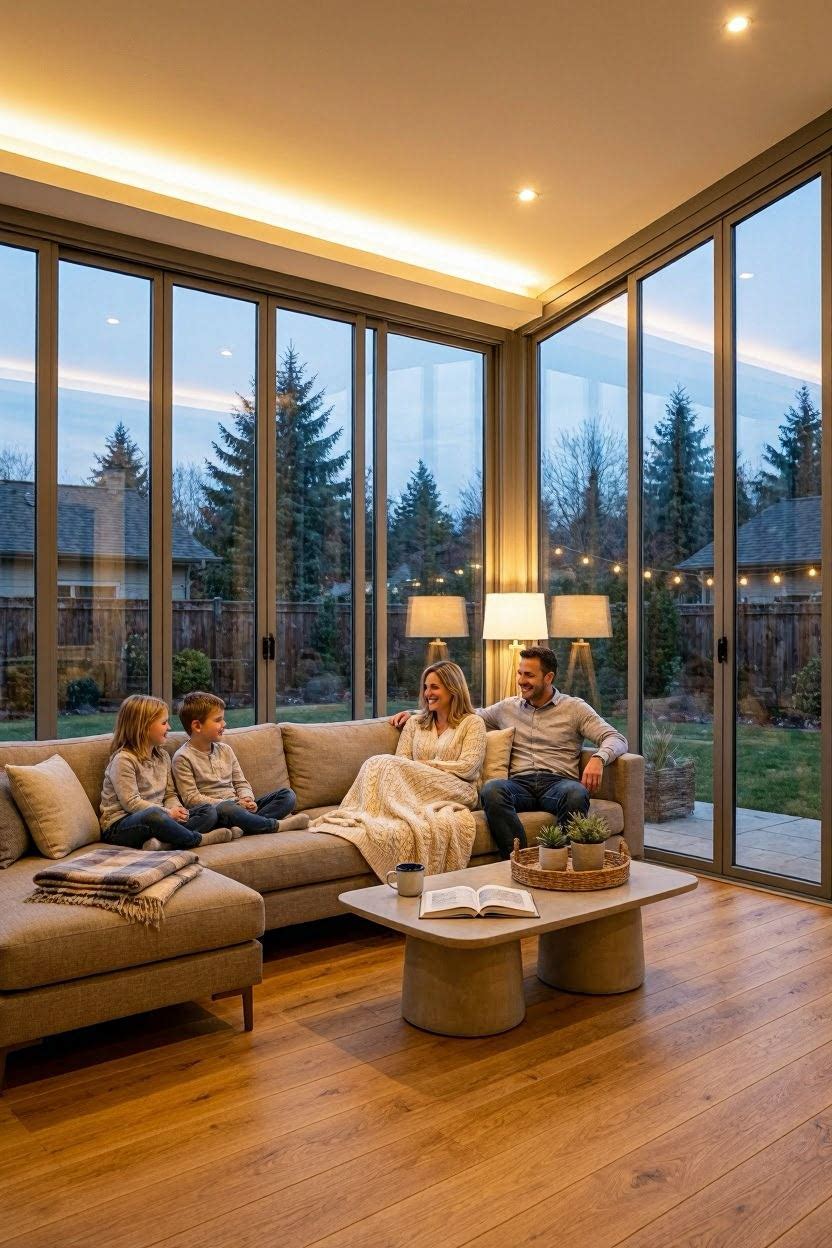
How to get this done:
- Check your local building codes and HOA rules first — this type of enclosure almost always needs a permit.
- Get an on-site quote from a sunroom specialist who can confirm your balcony’s structural load limit.
- Choose between fixed glass, screen-only, or interchangeable glass/screen panel systems based on your climate.
- Plan for a 1–3 week installation timeline once permits are approved.
Where to buy/hire: Patio Enclosures, Champion Windows, and Four Seasons Sunrooms all install aluminum-framed balcony and porch enclosures across the USA.
10. Budget DIY Balcony Closing Ideas
If you’re not ready to invest in any of the options above, there’s still a lot you can do yourself with basic tools and a free weekend.
- Tension rod + shower curtain liner — a clear vinyl shower curtain liner on a tension rod blocks wind for under $20.
- Old bedsheets as temporary screens — clip light-colored sheets to your railing with curtain clips for an instant, free privacy fix.
- Cardboard or foam board windbreak — works as a short-term solution while you save up for a permanent option; not weatherproof, so bring it in during rain.
- Repurposed pallet wood screen — build a simple lattice frame from free pallet wood and attach it to your railing with zip ties or brackets.
- Command hook curtain rod — for rental balconies where you can’t drill, use heavy-duty Command hooks to hang a curtain rod without damaging the railing.
These DIY fixes won’t last as long as the materials above, but they’re a smart way to test what level of privacy and coverage you actually want before committing to a bigger project.
Material Cost & Durability Quick Reference
| Material | Avg. Lifespan | Maintenance | DIY Friendly? |
|---|---|---|---|
| Tempered glass | 20+ years | Low | No, professional install |
| Vinyl/PVC panels | 3–5 years | Low | Yes |
| Outdoor fabric curtains | 2–4 years | Medium | Yes |
| Bamboo/reed | 2–3 years | Medium | Yes |
| Acrylic/polycarbonate | 8–10 years | Low | Yes |
| Pressure-treated wood lattice | 5–8 years | Medium-High | Yes |
| Aluminum frame | 25+ years | Low | No, professional install |
Frequently Asked Questions
Do I need a permit to close in my balcony? In most US cities, yes — especially for permanent options like glass enclosures or aluminum-framed sunrooms. Temporary options like curtains, vinyl panels, or screens usually don’t need a permit, but it’s worth checking with your HOA or building management first.
What’s the cheapest way to close a balcony? Outdoor curtains, bamboo screens, or a simple vinyl shower curtain liner on a tension rod are the most affordable options, often under $100 total.
Will closing my balcony reduce natural light? Clear materials like glass, acrylic, and vinyl panels keep your balcony bright, while fabric curtains and lattice will reduce light more, depending on thickness and color.
Can renters close in a balcony without damaging it? Yes. Tension rods, Command hooks, retractable screens, and clip-on vinyl panels are all renter-friendly options that don’t require drilling into the railing or structure.
How long does a glass balcony enclosure take to install? Professional installation typically takes 1–3 days once your permit is approved, depending on the size of your balcony and the enclosure system you choose.
Final Thoughts
Closing in your balcony does not have to mean a full renovation. Start with what your budget and your lease actually allow — a vinyl panel kit or a set of outdoor curtains can completely change how often you use the space, for under $200. If you’re staying long-term, glass or aluminum enclosures pay for themselves by turning a wasted balcony into a usable room all year. Whatever you pick, measure your space carefully, check your building rules first, and choose materials rated for outdoor use so the upgrade actually lasts.