13 Balcony Glass Railing Design Ideas That Transform Any Outdoor Space (2026)
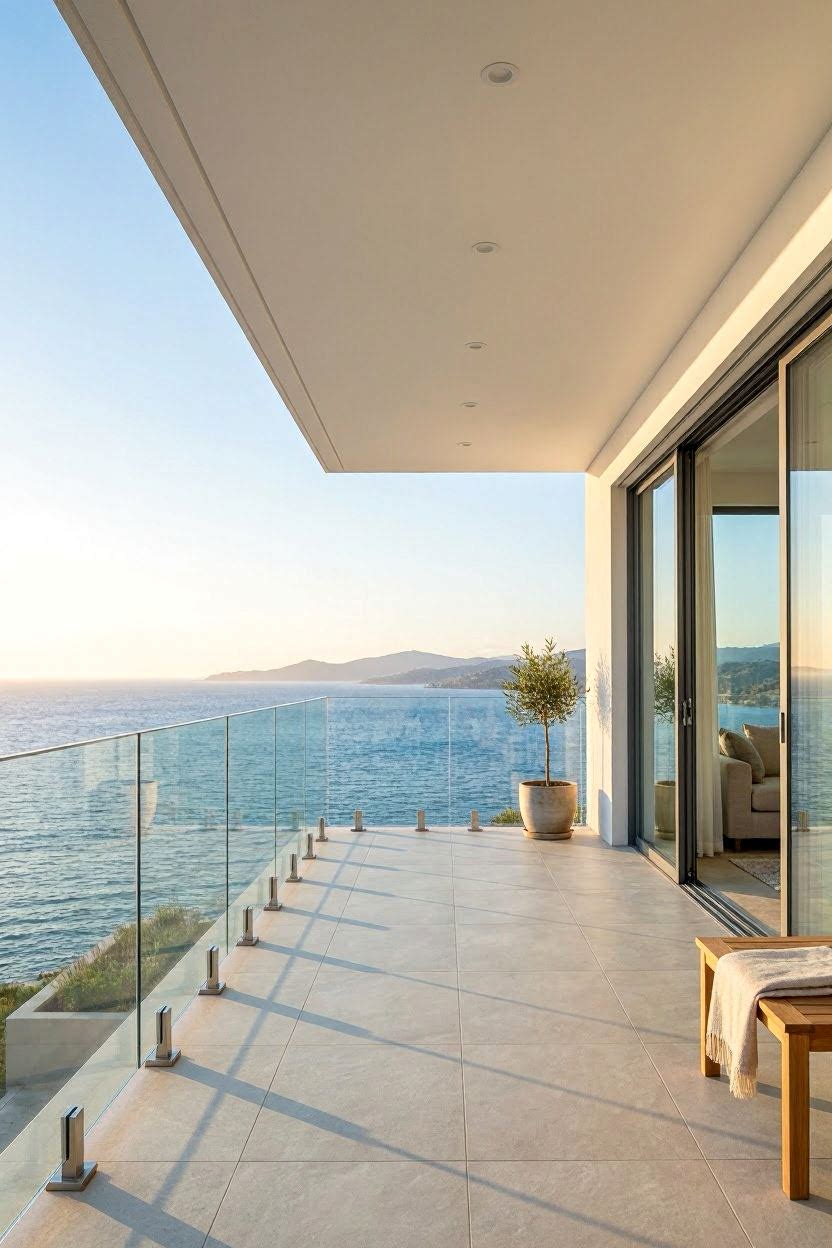
Why Glass Railings Are Taking Over Balconies in 2026
If you’ve been scrolling Pinterest lately, you’ve probably noticed one thing: glass railings are everywhere.
And for good reason.
A glass railing doesn’t just look beautiful — it completely changes how your balcony feels. It makes a small balcony feel bigger. It lets natural light pour in. It shows off your view instead of blocking it.
Whether you have a high-rise apartment in NYC, a suburban deck in Texas, or a hillside home in California, there’s a glass railing style that fits your space perfectly.
In this post, I’ll walk you through 13 balcony glass railing design ideas — from simple frameless panels to colorful tinted glass — with real costs, materials, and where to buy in the USA.
Let’s get into it.
Section 1: Understanding Glass Railing Types (Quick Reference)
Before we jump into the design ideas, here’s a quick overview of the most common glass railing systems you’ll find in the USA:
| Railing Type | Frame Material | Best For | Average Cost (per linear ft) |
|---|---|---|---|
| Frameless Glass | Stainless steel base | Luxury / open views | $150–$300 |
| Semi-frameless | Aluminum or steel posts | Modern homes, decks | $80–$180 |
| Framed Glass | Aluminum, black/white | Budget-friendly, apartments | $50–$120 |
| Cable + Glass Hybrid | Wood + stainless cable | Rustic-modern homes | $60–$140 |
| Tinted / Colored Glass | Any frame type | Artistic, privacy-focused | $200–$400+ |
Tip: Prices above are for supply + installation in the USA. DIY kits can cut costs by 30–40%.
Section 2: The 13 Best Balcony Glass Railing Design Ideas
Idea 1 — Classic Frameless Glass Railing with Stainless Steel Posts
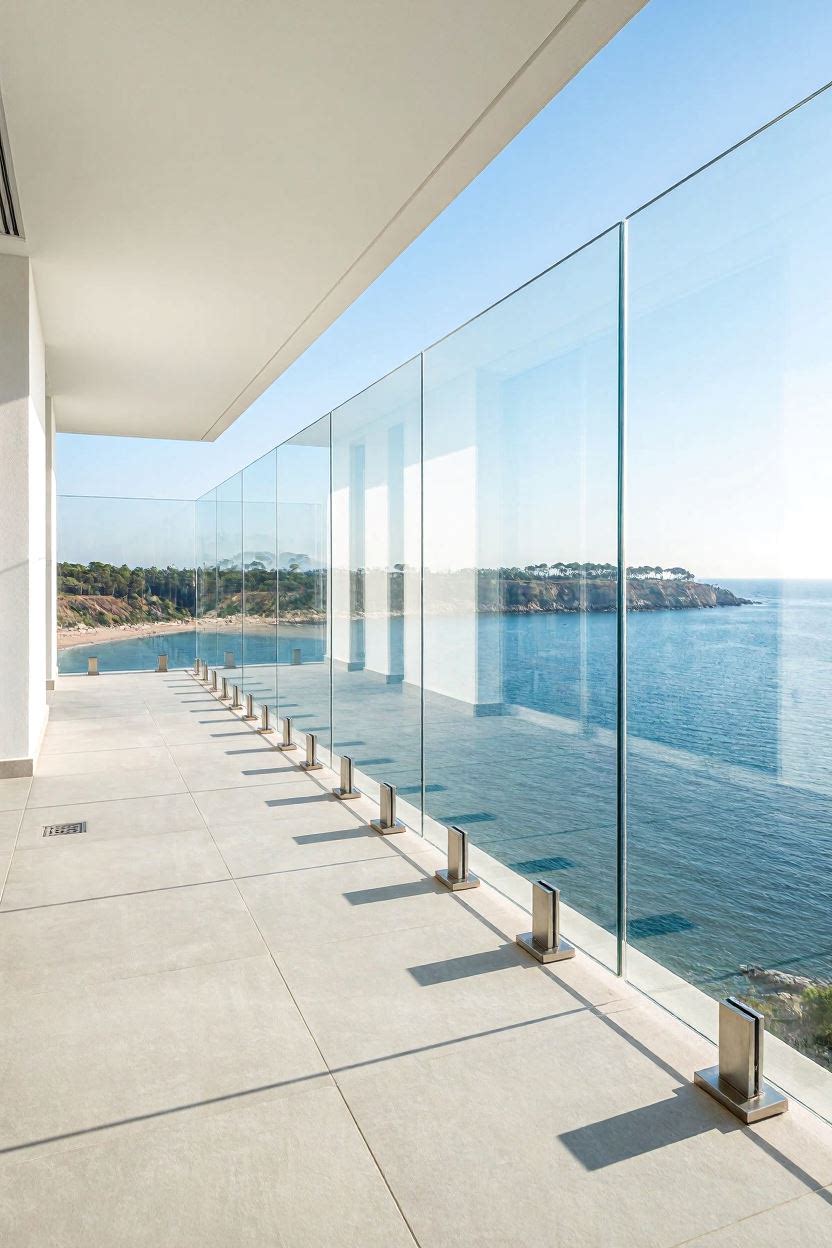
This is the most popular glass railing style in the USA right now — and it’s easy to see why.
How it works: Large tempered glass panels are held in place by stainless steel spigots or posts mounted to the floor. There’s no top rail obstructing your view.
Why people love it:
- Unobstructed panoramic views
- Incredibly clean, modern look
- Low maintenance — wipe with glass cleaner
- Works on high-rise apartments and ground-level decks
Best brands to buy in USA:
- Feeney (DesignRail system) — available at Home Depot
- Libart — for enclosable systems
- Ultra Aluminum — good mid-range option
Cost: $150–$250 per linear foot installed
Glass spec: 12mm or ½-inch tempered safety glass is the USA standard for balconies. Check your local building code before ordering.
Idea 2 — Curved Glass Railing for High-Rise Apartments
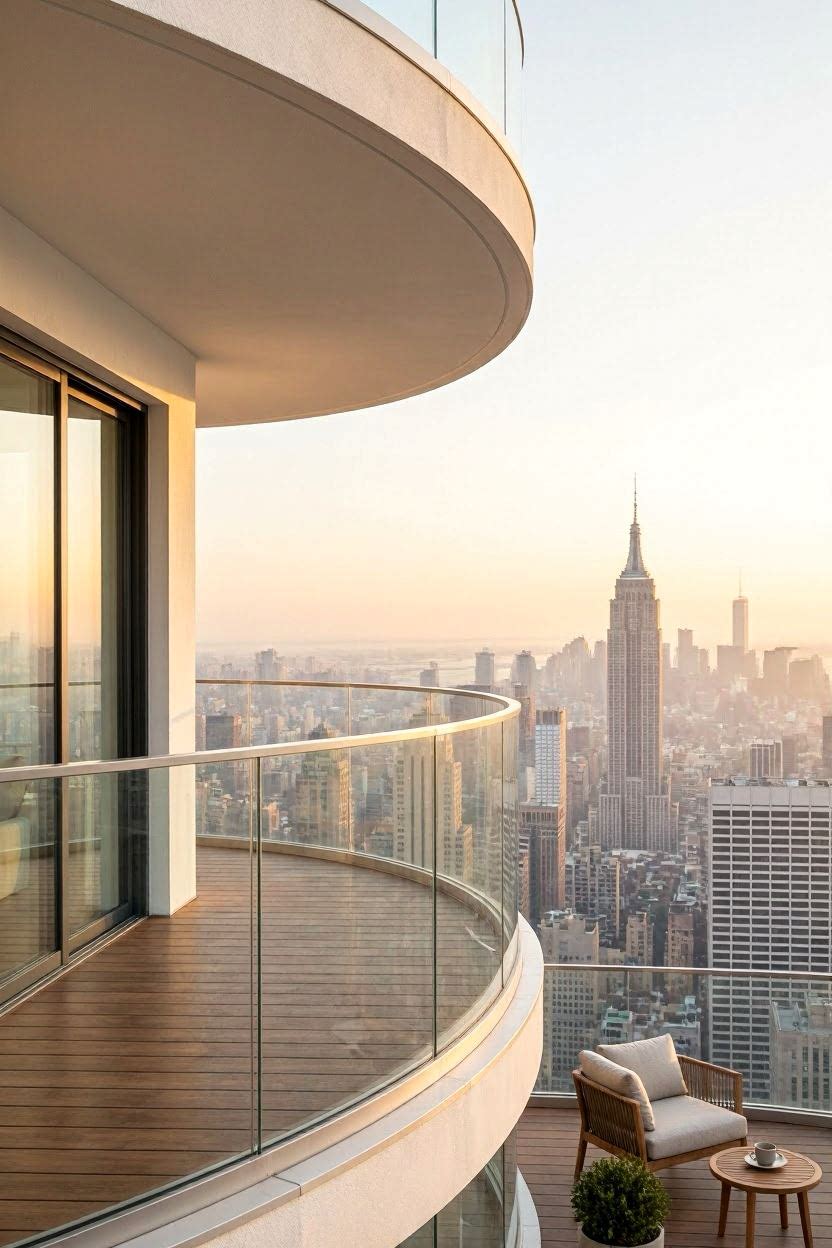
Not all balconies are straight lines. If your building has a curved or rounded balcony — like many newer NYC or Miami high-rises — curved tempered glass panels are the answer.
What makes it special:
- Panels are heat-curved to follow the balcony’s shape
- Looks seamless and architecturally intentional
- Maximizes the view angle from inside the apartment
Important: Curved glass is custom-fabricated. Lead times are typically 6–10 weeks. Budget $300–$500+ per linear foot for curved systems.
Where to source: Companies like CRL (CR Laurence) and Vistawall specialize in curved architectural glass.
Idea 3 — Tinted and Colored Glass Panels (Bold & Artistic)
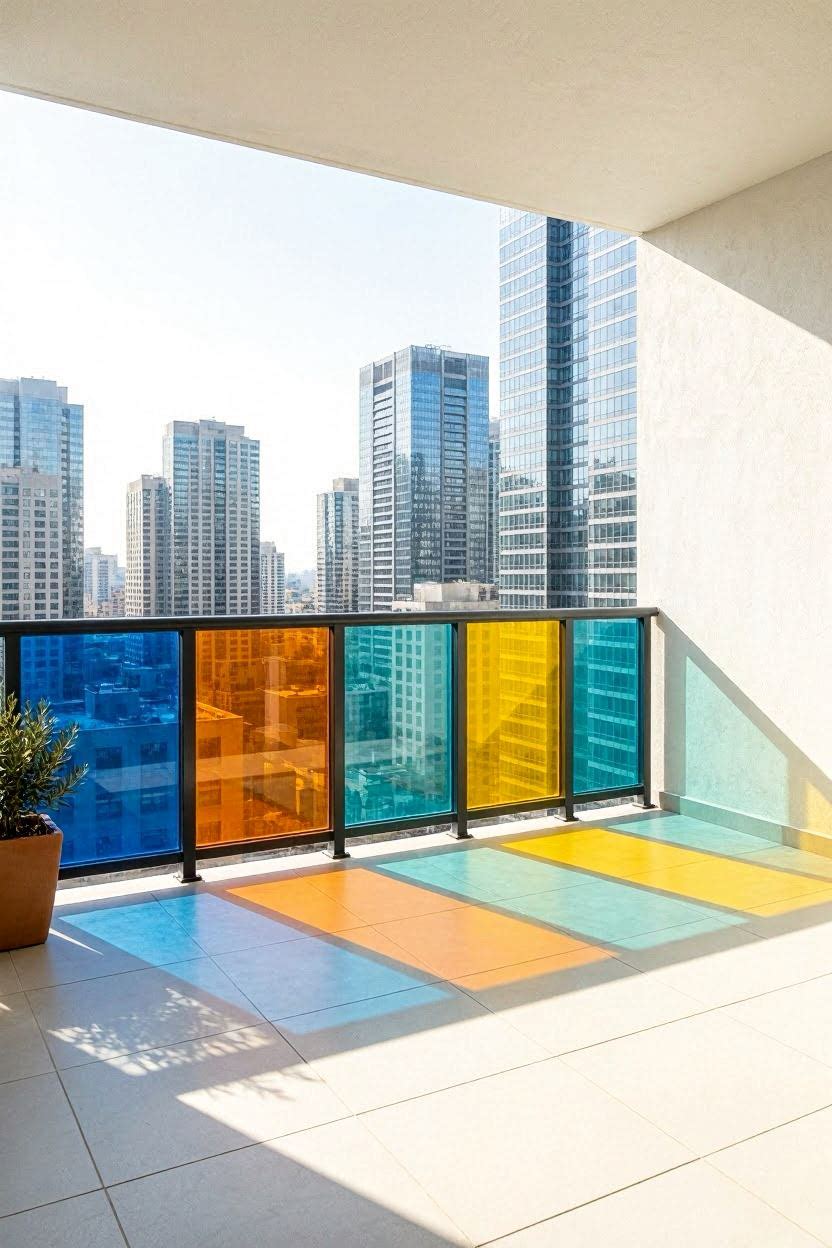
Want your balcony to stand out from every other building on the block? Tinted or colored glass panels are the most eye-catching option on this list.
How it works: Laminated glass panels are manufactured with colored interlayers (PVB film). When sunlight hits them, they cast colored shadows on your balcony floor — which looks incredible in photos.
Popular colors: Cobalt blue, amber/orange, teal, red, emerald green
Best use cases:
- Artistic or design-forward homes
- Boutique hotels and Airbnb properties
- When privacy is more important than a clear view
Cost: $200–$450 per linear foot, depending on color and size
Where to buy: Pulp Studio (Los Angeles, CA) and Bendheim (NJ) are two specialty suppliers in the USA.
Idea 4 — Warm Wood + Glass Railing (Nature-Meets-Modern)
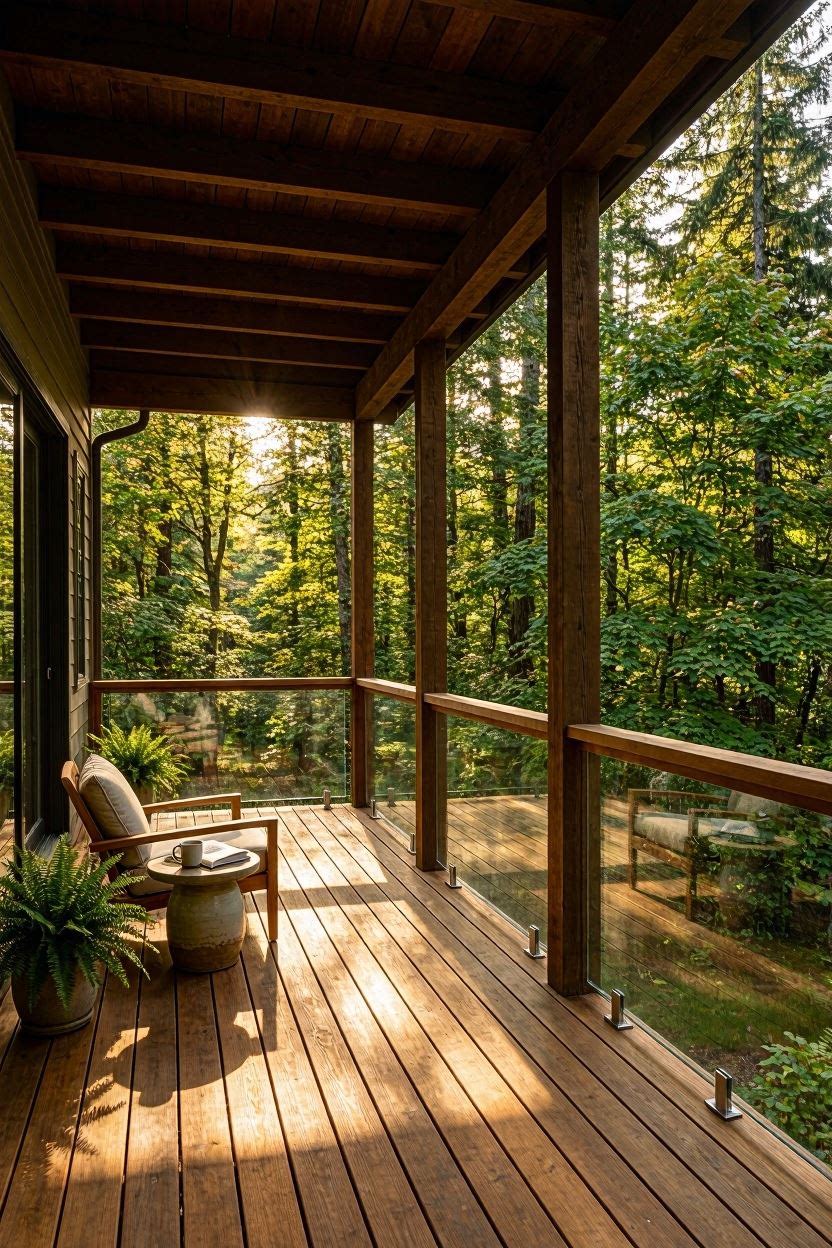
Glass doesn’t have to be cold and clinical. Pairing it with warm wood creates a look that feels inviting, organic, and deeply luxurious.
The combination that works:
- Ipe, teak, or cedar wood posts and deck boards
- Clear frameless glass infill panels between the wood posts
- A wood cap rail on top for grip and warmth
Where this style shines:
- Pacific Northwest homes surrounded by trees
- Mountain cabins and lake houses
- Any home with a natural, earthy interior design
Maintenance note: Wood posts require annual sealing or oiling to prevent warping. Use a teak oil product like Star Brite Teak Oil ($20–$30 at West Marine or Amazon).
Cost: $100–$200 per linear foot for wood + glass hybrid systems
Idea 5 — Sleek Urban Balcony with Metal Tube Railing + Glass
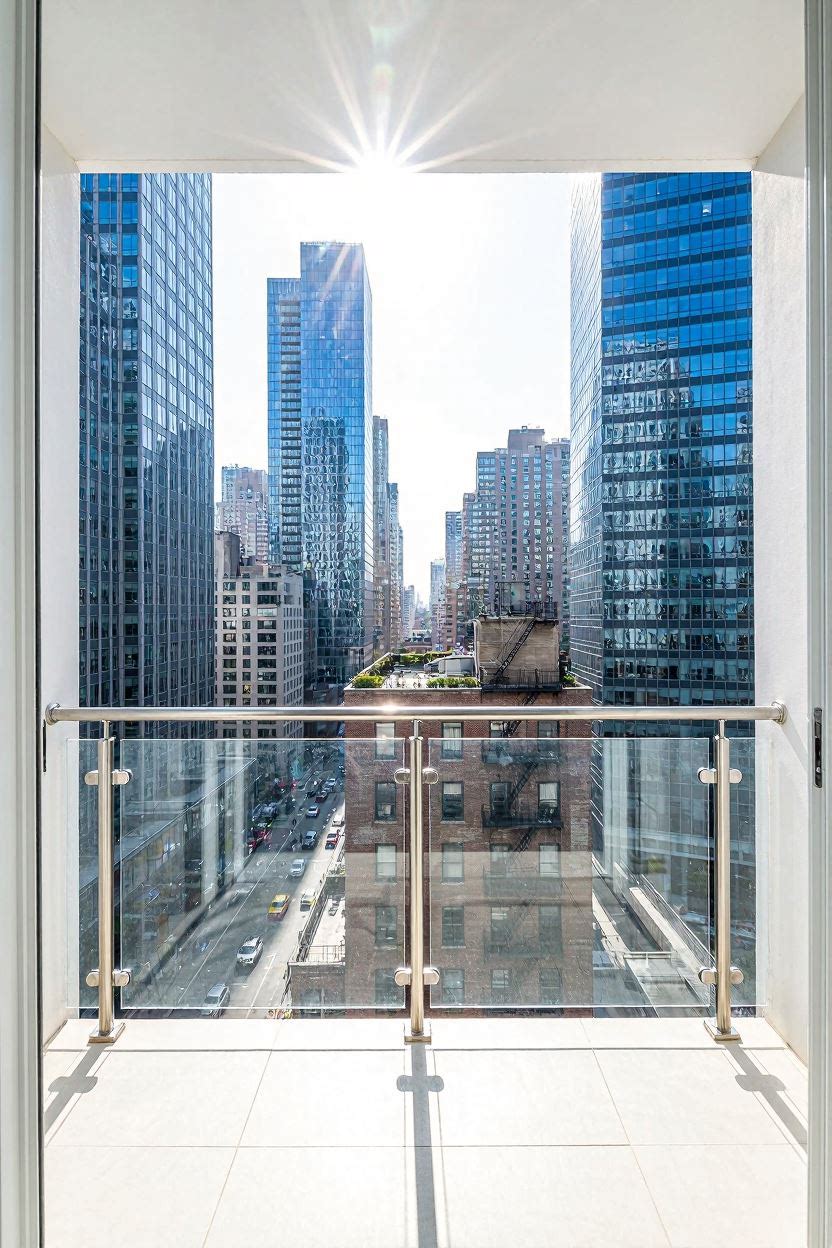
This is the go-to look for modern urban apartments. Think clean stainless steel horizontal top rail, vertical metal posts, and glass infill panels in between.
Why it works in cities:
- Very durable in high-wind environments
- Easy to get permits — this style meets most local codes
- Looks polished in city settings
- Can be retrofitted onto existing balconies
Finish options:
- Brushed stainless (most common)
- Powder-coated matte black (very popular in 2025–2026)
- Brushed bronze/champagne (upscale look)
Top brands: Viewrail and Keuka Studios both make excellent urban-style systems with glass.
Cost: $80–$180 per linear foot installed
Idea 6 — Frameless Glass with Built-In Planter Boxes
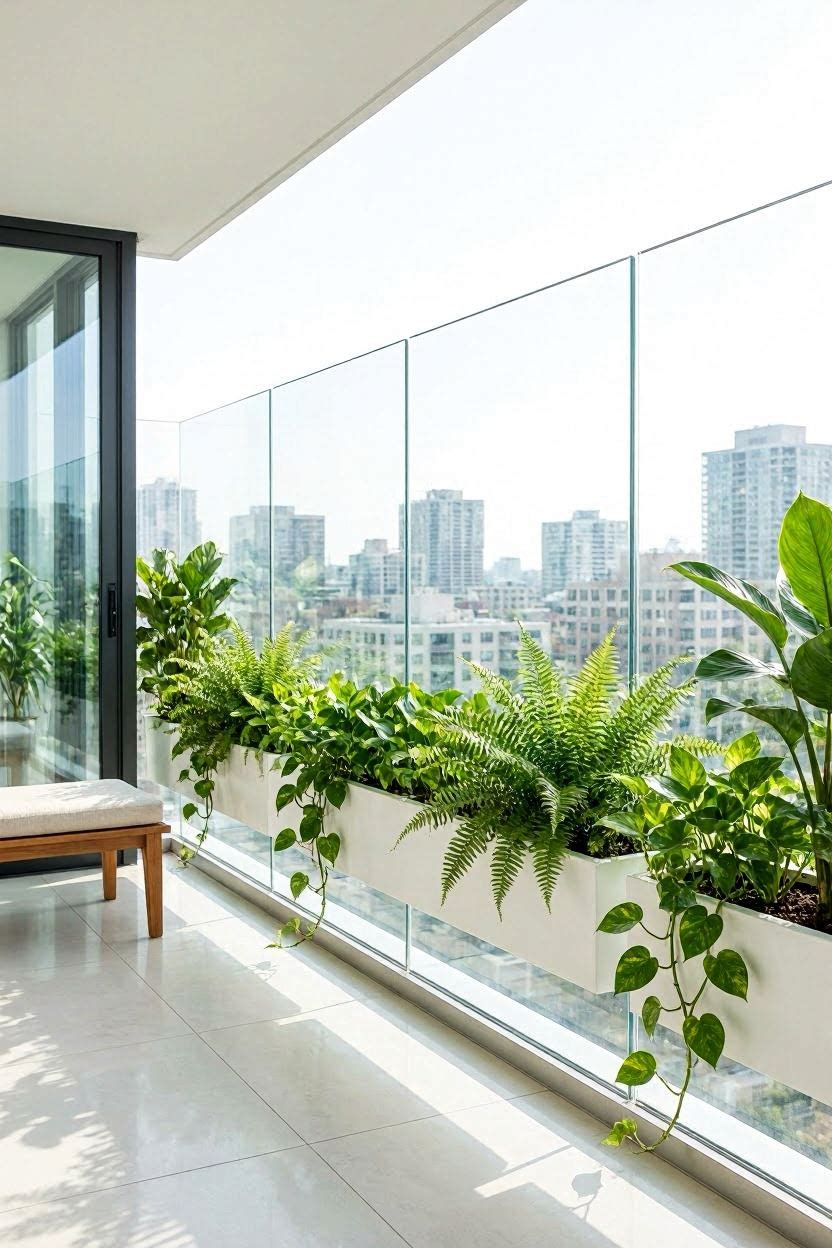
This idea combines safety with greenery — and it looks absolutely stunning in photos.
The concept: Mount frameless glass panels as your railing, then install built-in planter boxes along the interior edge. The plants cascade over the glass, softening the modern look.
Best plants for balcony planters:
- Pothos (trails beautifully over glass)
- Boston ferns (lush and full)
- Geraniums (colorful, low maintenance)
- Lavender (drought-tolerant, fragrant)
Planter options: Look for Lechuza self-watering planters or custom steel planters from Corten Design (both available on Amazon USA).
Pro tip: Use lightweight potting mix to avoid overloading your balcony’s weight limit. Check your building specs — most balconies handle 40–60 lbs per square foot.
Idea 7 — Curved Glass Railing on a Nature-View Villa

Curved architecture and curved glass railings were made for each other. When your home’s balcony sweeps in a gentle arc, a matching curved glass railing makes the whole design feel intentional and architectural.
Key considerations for curved glass balconies:
- Requires custom-curved tempered glass (not off-the-shelf)
- Works best on villas, custom homes, and luxury condos
- The handrail (if used) also needs to be curved — typically bent stainless steel or aluminum
Design tip: Pair with white or light grey polished tile flooring to maximize the reflective, open feeling. This is exactly what you see in high-end European villa design.
Idea 8 — Etched / Decorative Glass Railing with Floral Patterns
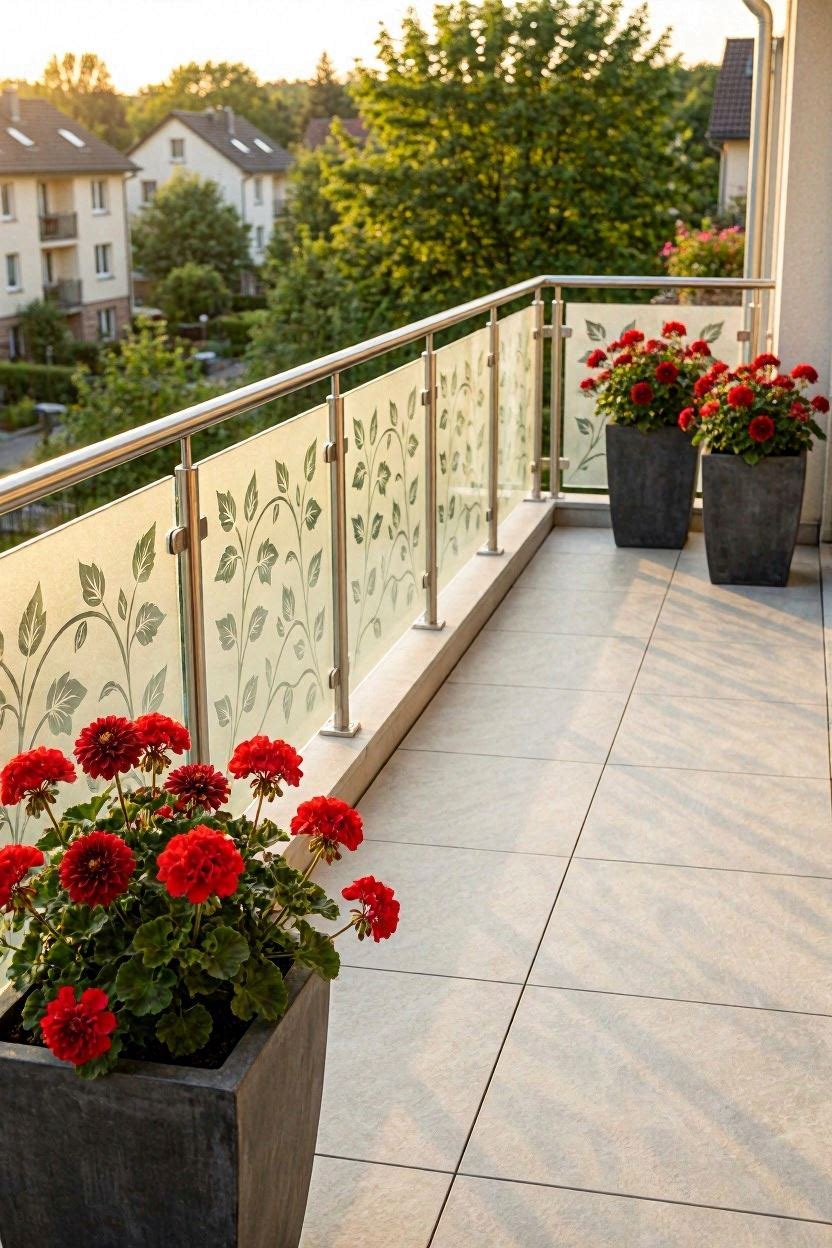
Want a railing that’s both functional and artistic? Etched or printed glass panels add a decorative layer that makes your balcony feel like an extension of your interior design.
Two techniques:
- Sandblasted etching — permanent, frosted pattern directly on the glass
- Ceramic frit printing — full-color patterns baked into the glass surface
Popular patterns: Floral, geometric, Art Deco, abstract botanical
Privacy benefit: Etched or frosted sections add partial privacy without blocking all light — great for ground-floor or street-facing balconies.
Cost: Add $30–$80 per square foot on top of standard glass pricing for etching or frit printing.
Where to order: Oldcastle BuildingEnvelope and AGC Glass offer decorative glass options for residential projects in the USA.
Idea 9 — Floor-to-Ceiling Glass Enclosure (All-Season Balcony)
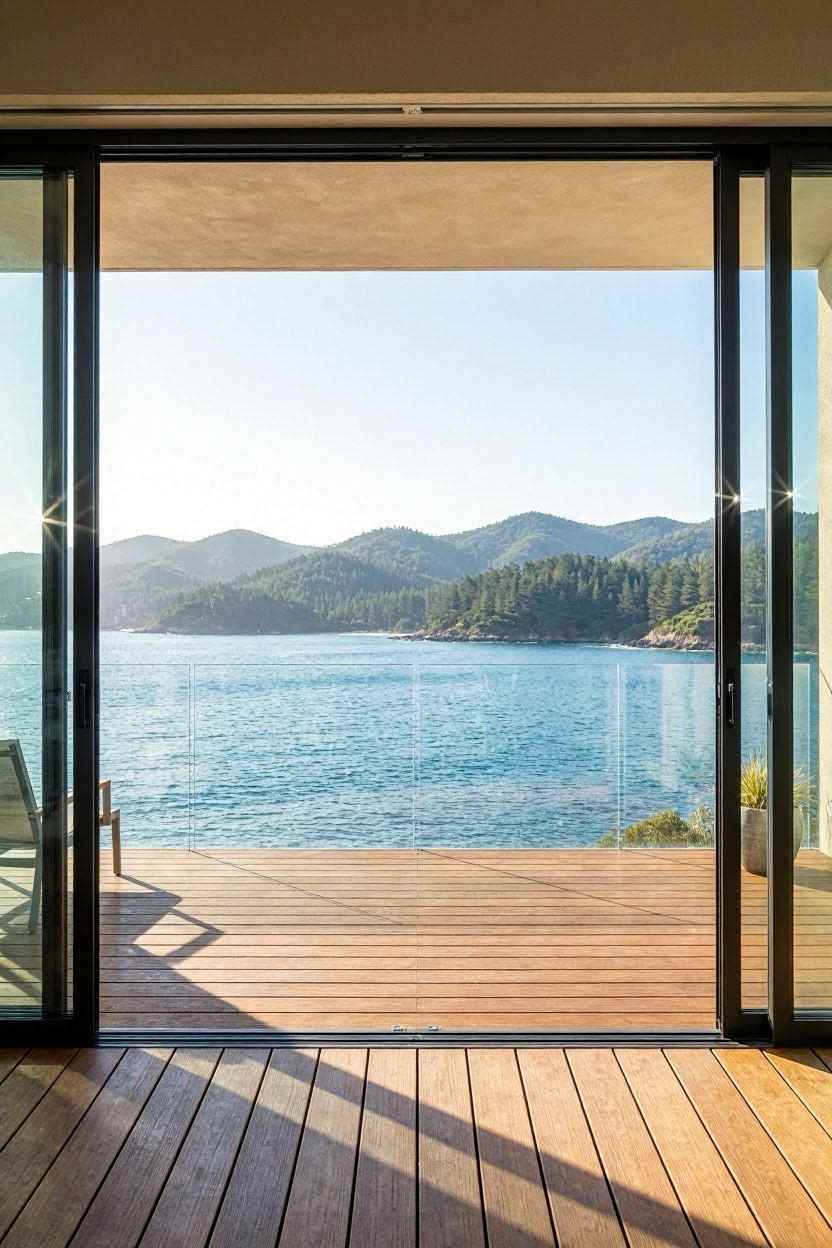
This isn’t just a railing — it’s a full glass enclosure that transforms your balcony into a usable, protected room year-round.
How it works: Sliding or folding glass panels run from floor to ceiling, turning your open balcony into a sunroom or glass porch. In warm weather, the panels slide open completely.
Why it’s worth the investment:
- Usable space in rain, wind, and cold
- Dramatically increases property value
- No condensation or draft issues with double-pane systems
- Works in condos and single-family homes
Popular systems in USA:
- NanaWall — premium folding glass wall systems
- LaCantina Doors — folding patio systems at a mid-range price
- Centor — slim-profile folding glass walls
Cost: $600–$1,200+ per linear foot for full enclosure systems. High investment, but adds significant livable square footage.
Idea 10 — Black Frame + Glass Railing (Industrial Chic)
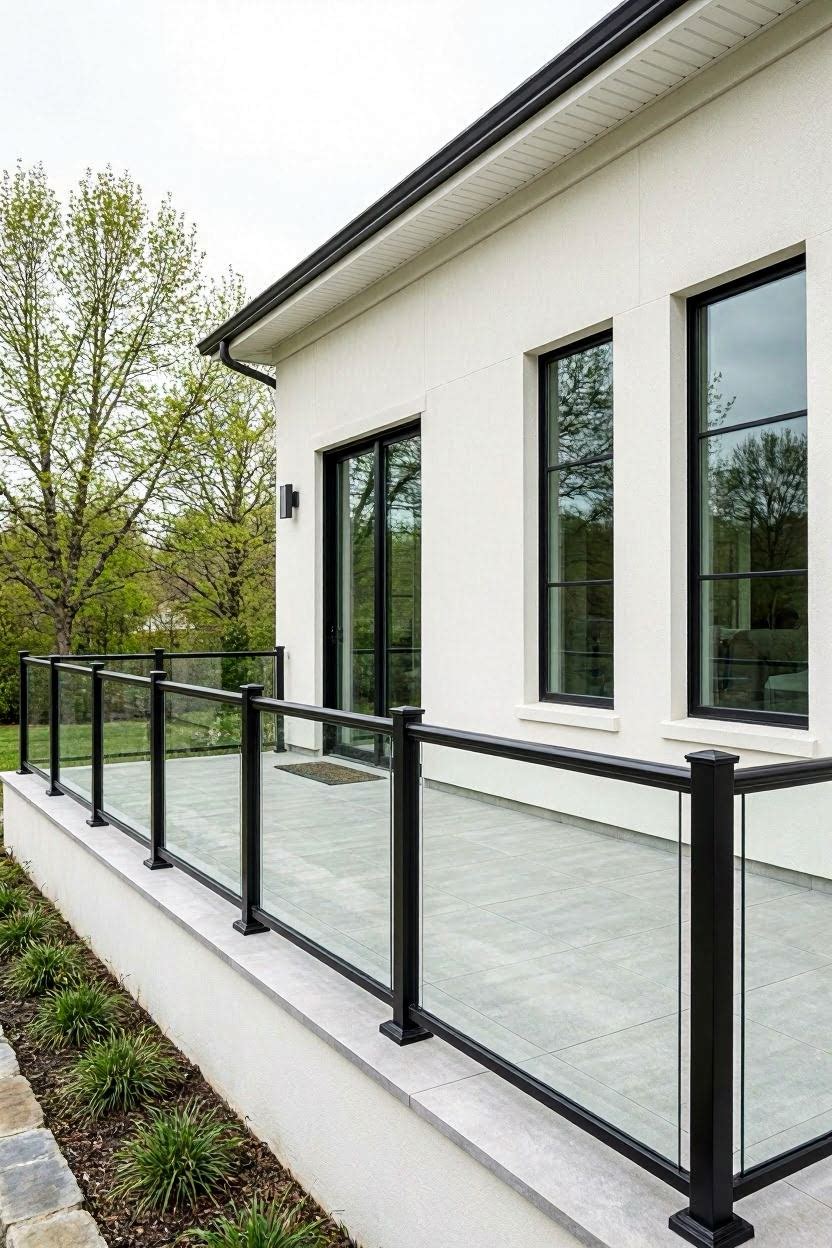
Matte black framing with clear glass panels is one of the most on-trend looks in 2025–2026 home design. It’s bold without being flashy, and it pairs beautifully with white or grey homes.
Frame material options:
- Powder-coated aluminum (most popular — rust-proof, lightweight)
- Steel (stronger but heavier, requires rust protection)
- Composite (low maintenance, available in black)
Where this style works best:
- White stucco or board-and-batten exteriors
- Industrial-modern interiors
- Contemporary farmhouse homes
Top product: Simpson Strong-Tie OZCO offers black powder-coated hardware that works beautifully with glass infill panels. Available at Menards and Home Depot.
Cost: $70–$150 per linear foot for black-frame glass systems
Idea 11 — Wood Post + Cable Railing (Rustic Deck Upgrade)

Technically, this idea uses stainless steel cables instead of glass infill — but it pairs beautifully with wood-decked balconies and large glass windows. It’s a popular style in the American Midwest and Pacific Northwest.
Why cable railings are a smart choice:
- Very open view — cables are 90–95% transparent
- Extremely strong — rated for wind and impact
- Low maintenance compared to wood spindles
- Suits rustic, farmhouse, and craftsman homes
Cable spacing rule: In the USA, cable spacing must be no more than 4 inches apart to meet IRC code (International Residential Code).
Top brands:
- Feeney CableRail — the most widely used cable railing system in the USA
- Muzata — budget-friendly DIY cable railing kits on Amazon
Cost: $60–$130 per linear foot with wood posts + stainless cable
Idea 12 — Hillside Terrace with Frameless Glass and Potted Garden

If you’re lucky enough to have a hillside or elevated terrace, a frameless glass railing is the single best way to show off that view without blocking it.
What makes this design work:
- Frameless glass lets the landscape become your “wall”
- Terracotta or ceramic planters add warmth and color
- Outdoor furniture (rattan or teak works great) completes the look
Seating suggestion: The Portside Outdoor Sectional by Pottery Barn or the Sanibel Rattan Set from Frontgate both work beautifully on tiled hillside terraces.
Lighting tip: Add solar-powered LED stake lights inside the planters for evening ambiance. No wiring needed — just stake them into the soil.
Cost for frameless railing on terraces: $120–$200 per linear foot, depending on height and site access
Idea 13 — Minimalist Glass Railing with Zero Frame (Pure Frameless)
This is the most premium and architecturally dramatic option: no posts, no rails, no frame whatsoever. The glass panels are held by a continuous base channel embedded in the floor.
How it’s possible: Extra-thick tempered or laminated glass (15mm or thicker) is strong enough to stand without posts when set in a floor channel.
Design impact:
- Completely invisible railing — just clear glass
- Creates a stunning “floating” visual effect
- Maximizes every inch of the view
Building code note: True post-free frameless glass must be engineered and certified for your specific location. Always hire a licensed structural engineer for this type of installation.
Cost: $250–$500+ per linear foot. This is a high-end, custom option typically found in luxury homes and high-end condos.
Section 3: Glass Railing Material Comparison Table
| Material | Durability | Maintenance | Cost Level | Best Climate |
|---|---|---|---|---|
| Tempered Glass (12mm) | High | Low | Mid | All climates |
| Laminated Glass | Very High | Low | Mid-High | Coastal/wind zones |
| Curved Tempered Glass | High | Low | Very High | Custom builds |
| Tinted Laminated Glass | High | Low | High | Sunny/hot climates |
| Etched/Frit Glass | High | Low-Medium | High | All climates |
Section 4: How to Choose the Right Glass Railing for Your Home
Use this simple checklist:
- What’s your budget? Start here. Under $100/ft = framed or cable. Over $200/ft = frameless or curved.
- What’s your view? Amazing view → go frameless. No view → etched or tinted glass adds interest.
- What’s your home style? Modern → frameless stainless. Rustic → wood + cable. Industrial → black frame.
- What’s your climate? High wind/coastal → use laminated glass (won’t shatter into shards). Cold → add thermal break in frame systems.
- DIY or professional install? DIY kits exist from Muzata, Feeney, and Simplified Building. For frameless, always hire a professional.
Frequently Asked Questions
Q: Is tempered glass safe for balcony railings? Yes. Tempered glass is 4x stronger than standard glass and shatters into small, dull pieces (not sharp shards) if it breaks. It’s the USA standard for balcony use.
Q: How do I clean glass balcony railings? Use a squeegee + glass cleaner (like Windex or a vinegar/water mix) weekly. For stubborn water spots, white vinegar or a product like Rain-X works well.
Q: Do I need a building permit for glass railings? In most US cities, yes — especially if you’re replacing or installing new. Check with your local building department. Most glass railings need to meet IBC or IRC codes (42-inch height minimum for most residential).
Q: How long do glass balcony railings last? Quality tempered glass panels last 20–30 years. The hardware (posts, channels, clips) may need replacement or maintenance at the 10–15 year mark, especially in coastal salt-air environments.
Q: Can I install a glass railing on a wood deck? Yes. Surface-mount spigots and post bases are designed specifically for wood deck installation. Products from Feeney and Viewrail include wood-compatible base plates.
Final Thoughts
Glass railings are one of the highest-ROI upgrades you can make to a balcony or deck. They open up space, maximize natural light, and instantly modernize your home’s look — whether you’re in a high-rise apartment or a suburban house.
The key is picking the right style for your space:
- Tight budget? Black-frame aluminum + glass or cable railing.
- Best view in the building? Go frameless — don’t block a single inch of it.
- Love plants and color? Tinted glass or etched decorative panels with planter boxes.
- Want all-season use? Invest in a floor-to-ceiling folding glass enclosure.
Whatever style you choose, focus on quality glass (at least 12mm tempered), proper installation, and compliance with your local building code. Done right, a glass balcony railing will still look beautiful — and perform safely — for decades to come.
Ready to plan your balcony upgrade? Save this post to Pinterest and share it with your contractor or designer!