12 Balcony Safety Grill Designs That Look Beautiful AND Keep Your Family Safe
Most homeowners treat balcony grills as a safety checkbox — something functional you just have to install. But after looking at hundreds of apartment balconies, the truth is clear: the right grill design can completely transform how your home looks from the street and how you feel standing on it.
Whether you’re building a new apartment, upgrading an old railing, or just doing research before calling a contractor, this guide breaks down 12 real balcony safety grill designs with practical details on materials, costs, and what each style actually works best for.
Why Your Balcony Grill Choice Matters More Than You Think
A balcony railing does three jobs at once:
- Safety: Prevents falls — especially important for children and pets
- Privacy: Controls how much of your balcony is visible from outside
- Aesthetics: One of the most visible design elements on any apartment building’s façade
The good news? You don’t have to pick just one. Modern grill designs are getting better at doing all three simultaneously.
Quick Comparison: Balcony Grill Types at a Glance
| Design Type | Privacy Level | Maintenance | Avg. Cost (USD/linear ft) | Best For |
|---|---|---|---|---|
| Laser-Cut Metal Panels | High | Low | $80–$150 | Modern / Islamic / Art Deco style |
| Simple Vertical Bar | Low | Very Low | $30–$60 | Budget apartments, minimalist look |
| Horizontal Bar (Steel) | Medium | Low | $35–$65 | Contemporary townhouses |
| Full Glass Railing | Low | Medium | $100–$200 | Luxury high-rises, ocean/city views |
| Wooden Slat / Louvre | High | High | $70–$130 | Natural / Japandi aesthetic |
| Cable / Wire Rope | Low | Very Low | $60–$100 | Modern villas, open views |
| Wavy / Artistic Metal | Low–Medium | Low | $90–$160 | Boutique or curved balconies |
| Grid / Mesh Panel | Very High | Low | $40–$80 | Child safety, urban apartments |
| Frosted Glass + Steel | Very High | Medium | $120–$220 | Privacy-focused luxury apartments |
12 Balcony Safety Grill Designs (With Real-World Examples)
1. Laser-Cut Geometric Panels — The Statement Maker
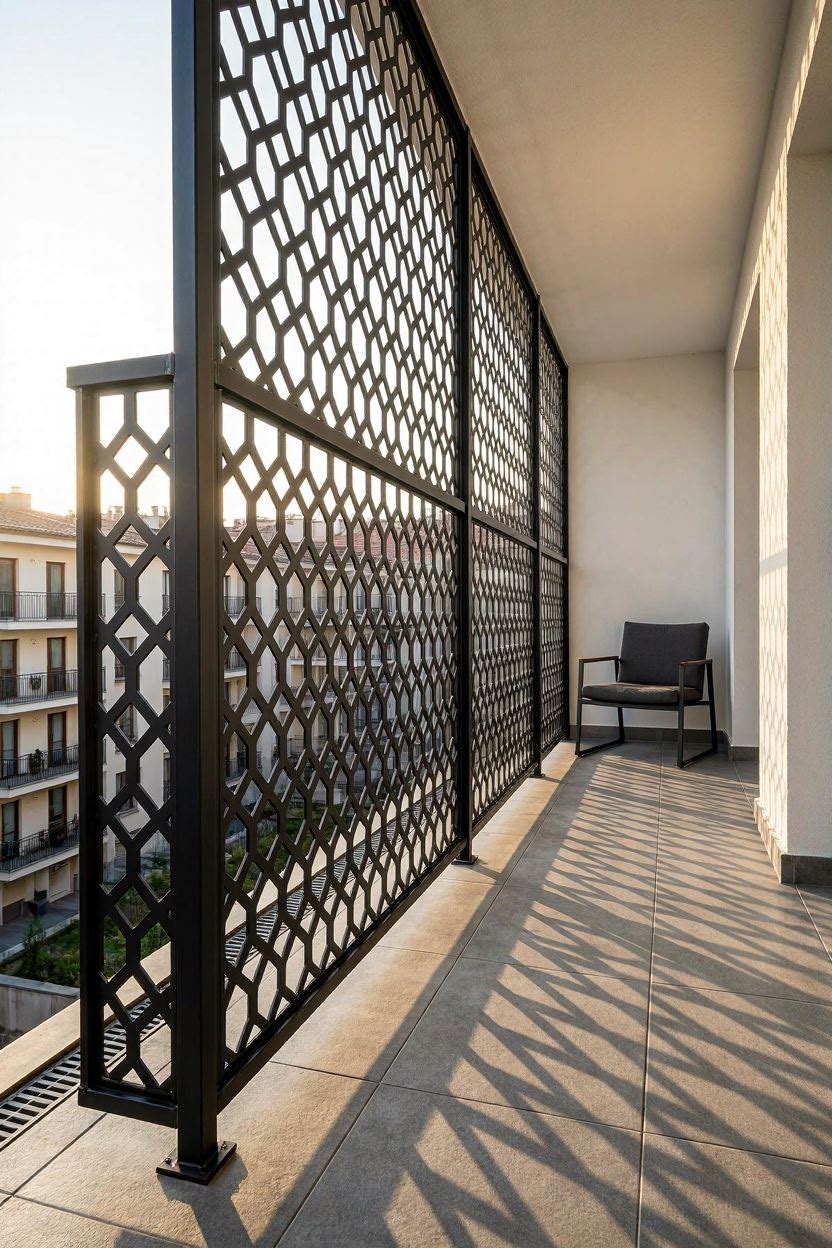
This is what Image 1 shows — and it’s arguably the most visually dramatic option on this list.
Laser-cut panels are CNC-machined steel or aluminum sheets with intricate patterns cut straight through the metal. The pattern in Image 1 is a geometric arabesque / Islamic tile motif — hexagons and stars that create a mashrabiya-like effect. When sunlight passes through, it casts gorgeous shadow patterns on your balcony floor.
What makes it work:
- The dark charcoal/black finish contrasts sharply against white or grey walls
- The pattern provides ~60–70% privacy without feeling enclosed
- No rust risk if powder-coated properly
Material: Mild steel or aluminum, powder-coated
Cost: $80–$150/linear ft installed
Maintenance: Wipe down twice a year. Re-coat every 5–7 years.
Where to buy: Custom fab shops on Houzz, or local metal fabricators. Also check Alibaba for imported panels.
Best for: Apartments in warm climates, homes with Islamic or Moroccan-inspired interiors, anyone who wants their building to stand out on the street.
2. Simple Vertical Bar Railing — Classic and Budget-Friendly
This is the design in Image 2 — plain black vertical steel bars with horizontal top and bottom rails. It’s the most common railing type in apartment complexes across the USA and Africa.
It looks clean, opens up the view completely, and costs significantly less than decorative options.
Specs:
- Bar spacing: Max 4 inches (US code requirement to prevent child entrapment)
- Finish: Powder-coated black, white, or grey
- Height: Min. 42 inches for floors 4+ (check local code)
Cost: $30–$60/linear ft installed
Maintenance: Inspect annually for rust at weld points. Touch up with Rust-Oleum spray paint as needed (~$8/can at Home Depot).
Best for: Budget renovations, rental apartments, minimalist exteriors, or anywhere the VIEW is the main feature and you don’t want the railing competing with it.
3. Horizontal Steel Bar Railing — Modern Ranch Meets Urban
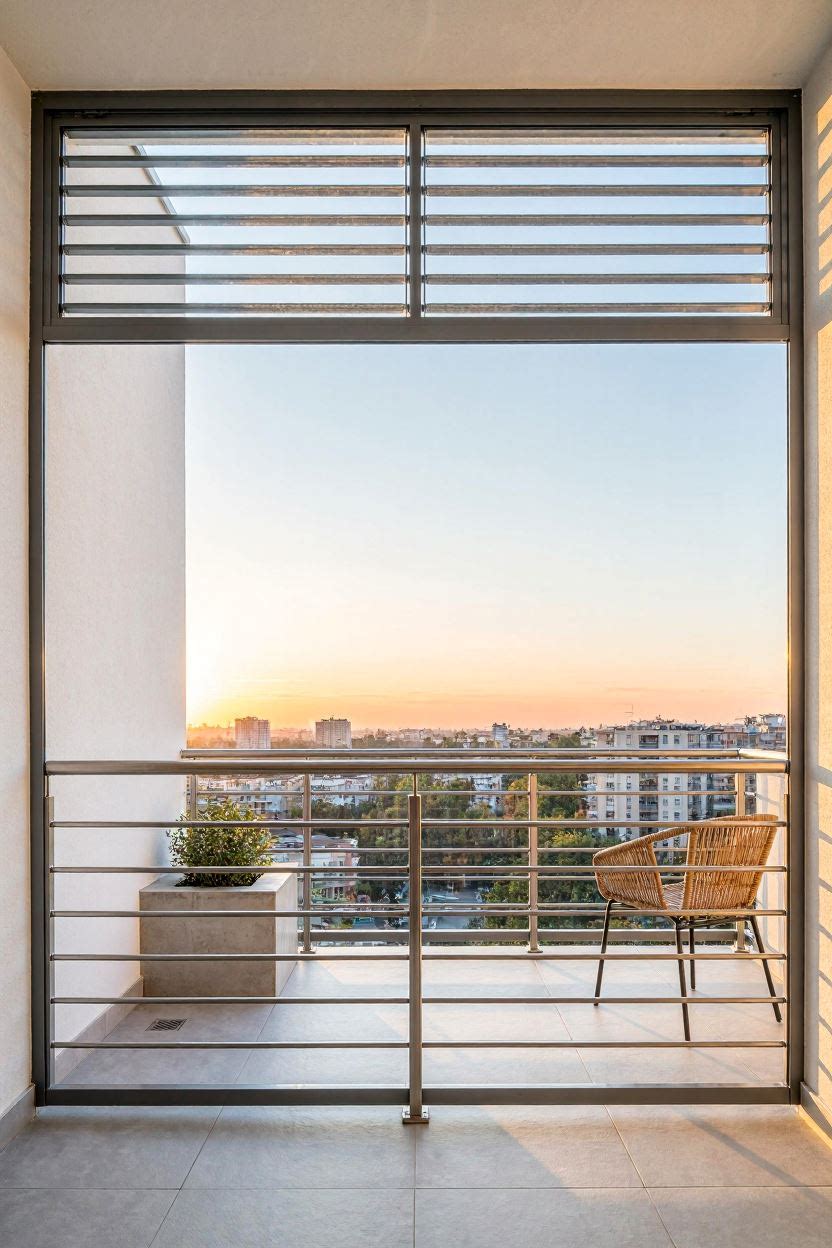
Images 3 and 9 both show horizontal bar railings — but they execute it very differently.
- Image 3 uses silver/grey steel with closely spaced bars AND a separate upper glazed panel for wind protection. It feels more like a terrace than a balcony.
- Image 9 uses matte black steel with wider bar spacing. Very clean, very architectural.
Horizontal railings have become extremely popular in the last decade because they align with the “ranch modern” and “prairie style” design movement.
Important note: Check your local building code. Some jurisdictions restrict horizontal railings because the bars can act as a ladder for children. The bar spacing matters — vertical infills between posts can be required.
Cost: $35–$65/linear ft (steel) | $70–$110/linear ft (aluminum, which won’t rust)
Best for: Modern suburban homes, townhouses with city or landscape views, homes inspired by Frank Lloyd Wright horizontality
4. Full Glass Railing — Invisible Barrier, Maximum View
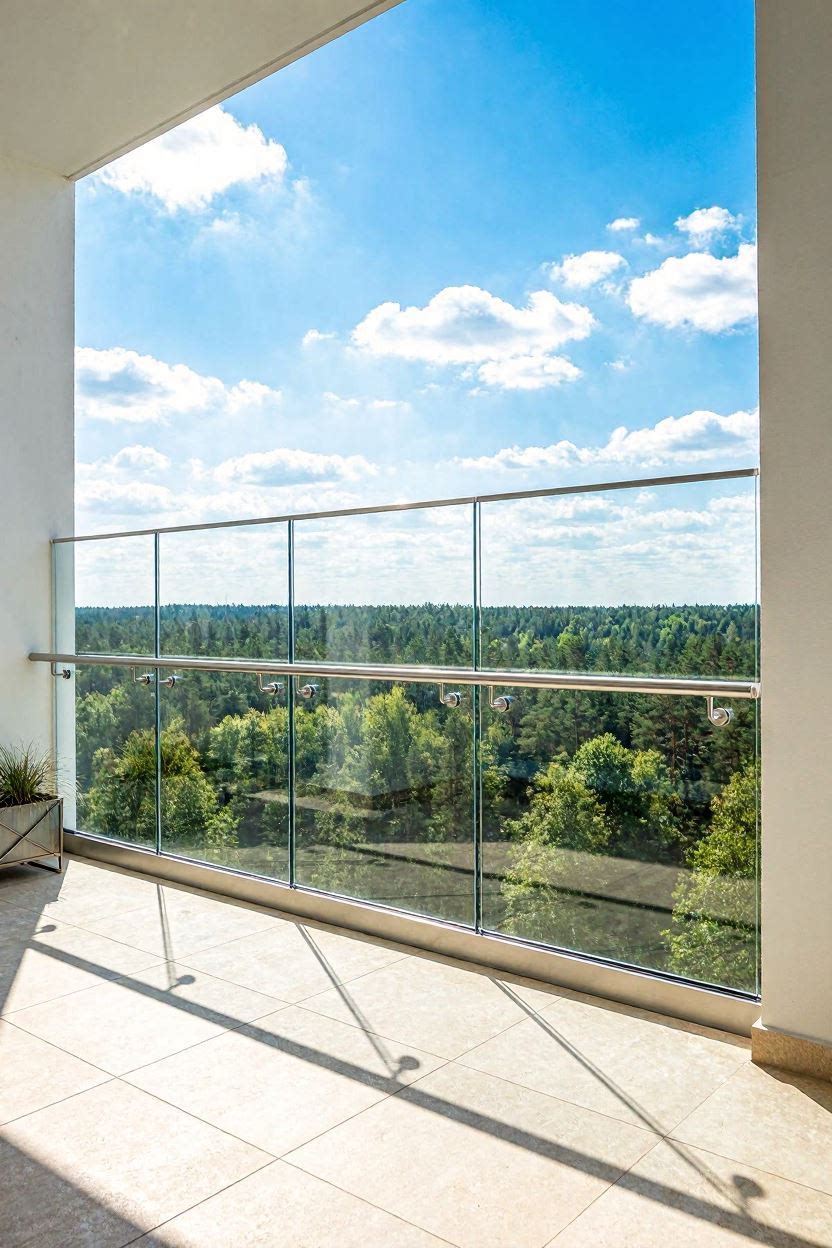
Image 4 is the most aspirational look in this collection. Floor-to-ceiling glass panels with thin stainless steel posts and a slim top handrail. It creates an almost invisible barrier — the view from inside the apartment is unobstructed.
This is standard specification in luxury high-rise apartments, penthouses, and ocean-view condos.
Glass types used: | Type | Thickness | Cost | Notes | |—|—|—|—| | Tempered Glass | 10–12mm | \(| Single pane, must be code-approved | | Laminated Safety Glass | 10+10mm |\)$ | Two layers bonded — safer on impact | | Semi-frameless | — | \(| Posts at intervals, no full frame | | Fully Frameless | — |\)$$ | Standoff fittings only |
Cost: $100–$200/linear ft for semi-frameless | $180–$300+ for fully frameless
Cleaning: Standard glass cleaner works. Hard water streaks are the biggest issue — squeegee after rain.
Best for: High floors with views worth preserving. Not ideal for ground-floor privacy or hot sunny exposures (no shade).
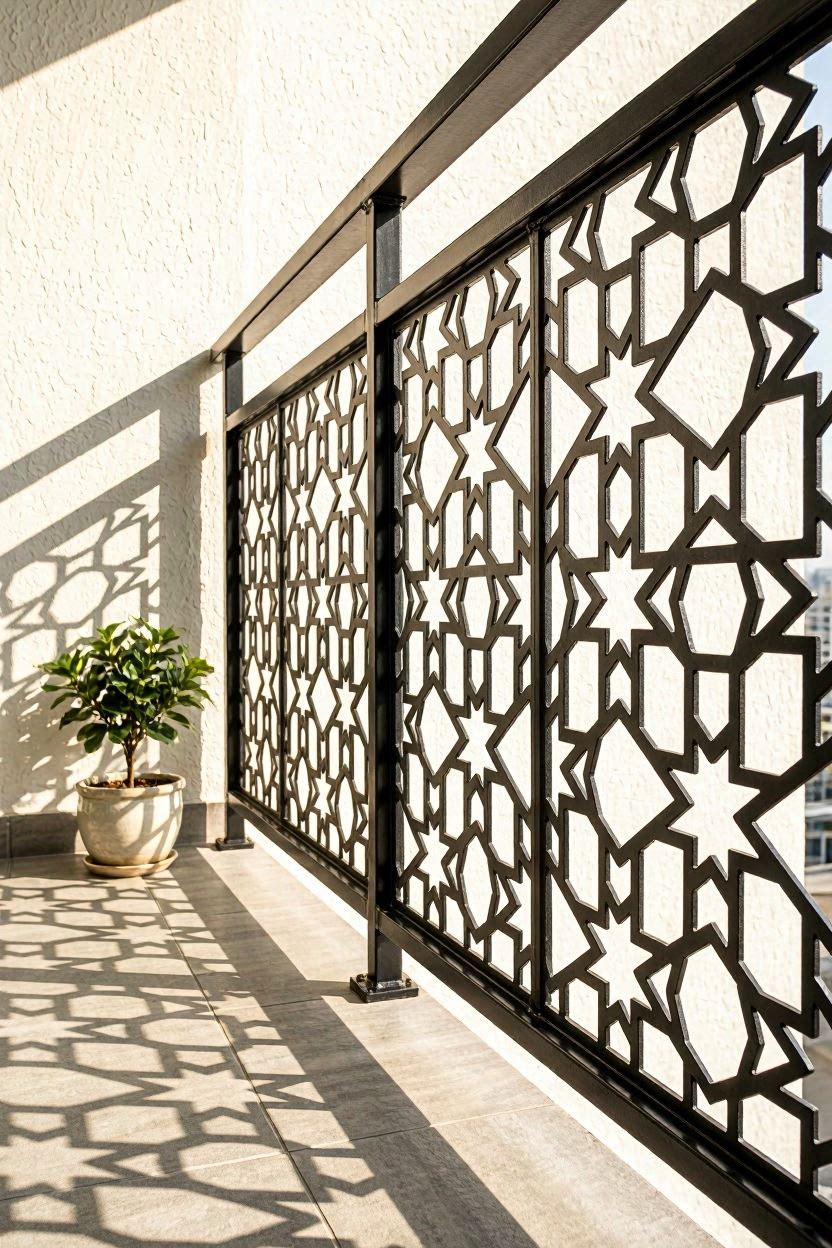
5. Laser-Cut Jali / Arabic Screen Panels — Warm-Tone Version
Image 5 shows the same laser-cut concept as #1, but in a warm sandy/khaki finish rather than black — and installed in a much larger, corridor-style balcony.
The upper sections are full-height decorative panels (for shade and semi-privacy), and the lower railing section uses smaller panels. The effect is rich, layered, and highly cultural in character.
Key difference from #1: The warm tone blends with sandstone or beige wall finishes, while the black version works better against grey/white.
Design tip: If your building has a warm-toned render or cladding, the sandy/bronze laser-cut panel will look much more intentional than a black one.
Cost: Same as #1 — $80–$150/linear ft. Colour is a powder-coat choice, not a material change.
6. Wooden Louvre / Slatted Screen — Warmth and Privacy Together
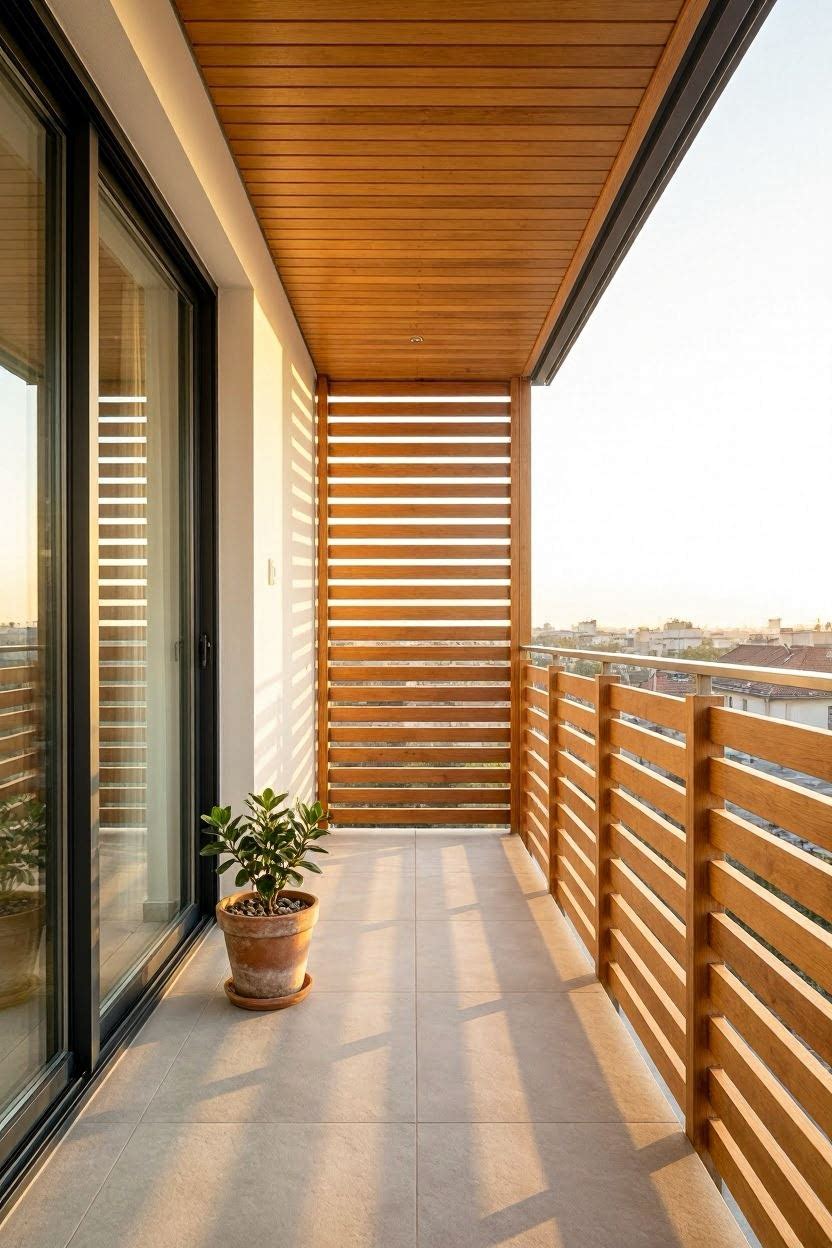
Image 6 is one of the most cohesive designs in this set. The balcony uses horizontal timber slats as both the railing infill AND the ceiling cladding — creating a seamless wood-wrapped corridor effect. The warm honey tones are stunning in afternoon light.
This is the Japandi / biophilic design trend in action — bringing natural materials to the exterior.
Material options:
- Teak: Most durable outdoors. Expensive. $$$
- Cedar: Naturally rot-resistant, aromatic, mid-price. $$
- Composite / WPC: Wood-look plastic hybrid. Low maintenance. \(–\)$
- Accoya: Modified pine, extremely stable. $$$
Maintenance reality check: Real wood railings need oiling or staining every 1–2 years. In wet climates, this is mandatory or the wood cracks and greys out within 3 years.
Cost: $70–$130/linear ft for real wood | $60–$110 for composite
Best for: Homes where you spend a lot of time on the balcony, tropical/resort-style aesthetics, privacy-first designs
7. Stainless Steel Cable Railing — Sleek and Virtually Invisible
Image 7 shows a cable railing system — multiple thin horizontal stainless steel cables stretched between upright posts. The posts sit on a wooden base rail, which adds a warm detail to what would otherwise be a very industrial material.
Cable railings have exploded in popularity for modern homes because:
- They’re near-invisible from a distance
- They’re incredibly durable (marine-grade 316 stainless)
- They never need painting
Key spec: Cable tension must be maintained. Cables should deflect no more than 4 inches when pushed at mid-span (US IRC code). Tighten turnbuckles annually.
Cost: $60–$100/linear ft
Hardware brands: Feeney CableRail (~$80–$100/kit at Home Depot), Atlantis Rail Systems, AGS Stainless
Best for: Hillside homes, modern villas, ocean-view decks where every centimeter of view matters
8. Wavy / Artistic Wrought Iron — For Curved or Grand Balconies
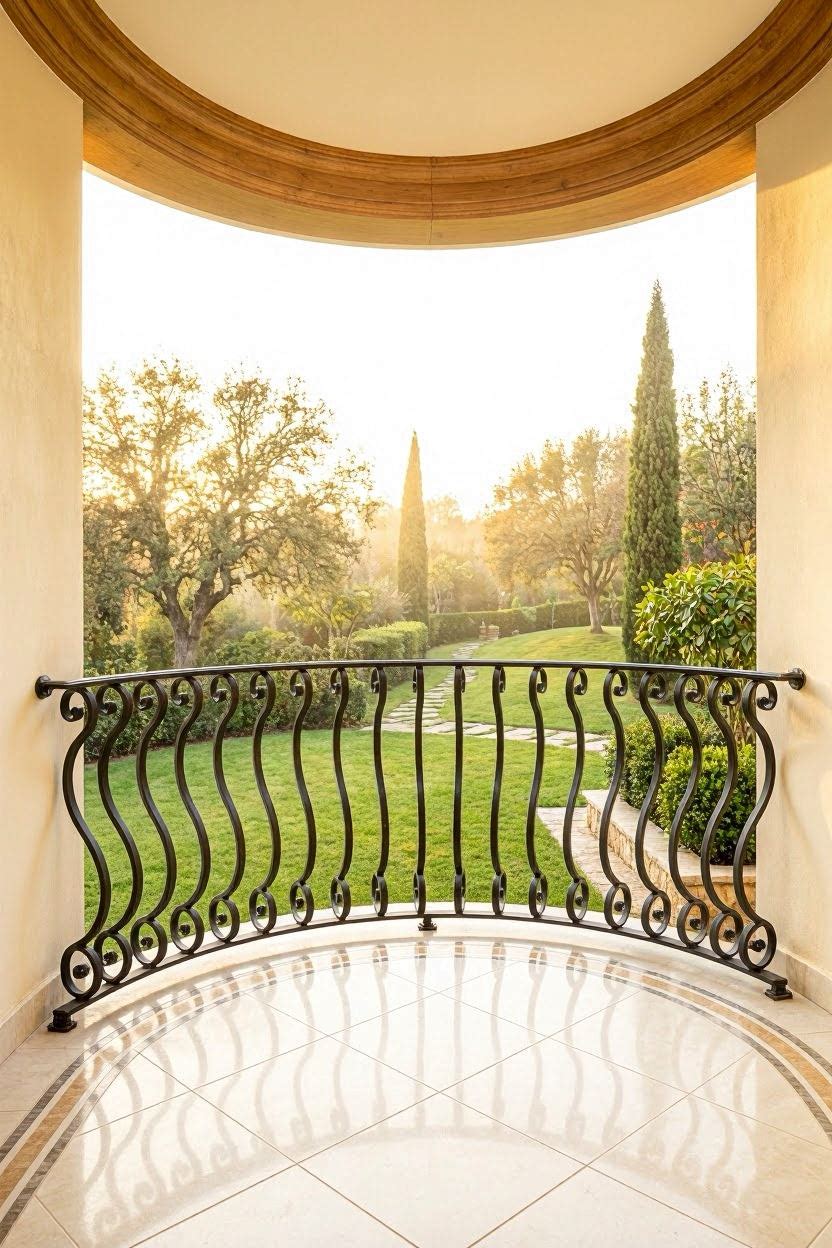
Image 8 is the most dramatic architectural photograph in this collection. A curved, semicircular balcony with a matching curved wrought iron railing — the balusters are sinuous, wave-shaped forms that look like they’re moving.
This is bespoke craftsmanship. You won’t find this at Home Depot.
How to get this look:
- Find a local ornamental ironwork / blacksmith studio
- Show them reference images and ask for a quote
- Expect a 6–12 week lead time for custom curved work
- Budget $150–$300+/linear ft for artistic wrought iron
Finish options: Flat black (classic), bronze powder coat, antique rust effect
Maintenance: Apply paste wax once a year to protect. Touch up chips with Rust-Oleum Hammered Metal paint.
Best for: Heritage buildings, boutique hotels, curved or angular balconies, grand entrance terraces
9. Black Mesh / Wire Grid Panel — The Safety-First Option
Image 10 shows a wire mesh or welded grid panel system in black — the same grid used in full height (floor to ceiling) as both railing and enclosure. This is primarily chosen for child safety and pet containment, not aesthetics.
It’s the most common solution for families with toddlers on mid-floor apartments in dense cities.
Grid sizes:
- 50×50mm grid: Standard (keeps children from climbing through but not from climbing up)
- 25×25mm grid: Child and cat proof
- Fine mesh (10×10mm): Pigeon-proof and cat-proof — common in South Asian apartment buildings
Cost: $40–$80/linear ft installed
Where to buy: Hardware stores carry welded wire mesh panels by the sheet (~$20–$40 each at Home Depot or Lowe’s). Prefab framed units cost more.
Best for: Families with young children, pet owners, pigeon-proofing, dense urban apartment buildings
10. Frosted / Textured Glass Panel — Maximum Privacy, Soft Light

Image 11 shows floor-to-ceiling frosted glass panels with a slim steel frame. The glass allows warm light to pass through while blocking direct sightlines from neighboring buildings or the street below.
This is the premium privacy solution — it gives you the feeling of being in an enclosed, softly lit outdoor room rather than an exposed balcony ledge.
Glass finish options:
- Acid-etched frosted: Smooth, permanently matte surface. Most durable.
- Sandblasted: Slightly more texture. Same result.
- Privacy film on clear glass: Cheaper, but peels in heat and UV over time. Not recommended for permanent installations.
Cost: $120–$220/linear ft installed (glass + frame)
Cleaning: Mild soap and water. Avoid abrasive cloths — they scratch the frosted surface.
Best for: Urban apartments where neighboring buildings face your balcony directly, balconies used as outdoor lounges, master bedroom balconies
11. Multi-Level Grid Railing With Wood Accents — The Contemporary Mix
Image 12 shows two balcony levels on the same building — both using a black metal grid/mesh railing against wood-clad ceilings and a textured timber accent wall. It’s a masterclass in how to mix materials without clashing.
The key principle here: pick one dominant material and use the second as an accent. Here, wood dominates via the ceiling and wall cladding, and the metal grid railing is the functional complement.
Design rule for mixing materials on balconies:
- Max 3 materials visible at once
- Use colour to unify (all metal in black, all wood in the same tone)
- Keep the floor neutral (grey tile, concrete, or light stone)
Cost: Varies. Grid railing at $40–$80/linear ft. Wood ceiling cladding at $15–$30/sq ft.
Best for: Multi-storey homes or apartment buildings where exterior façade consistency matters
12. Laser-Cut Panel Sliding Screen — Privacy That Moves
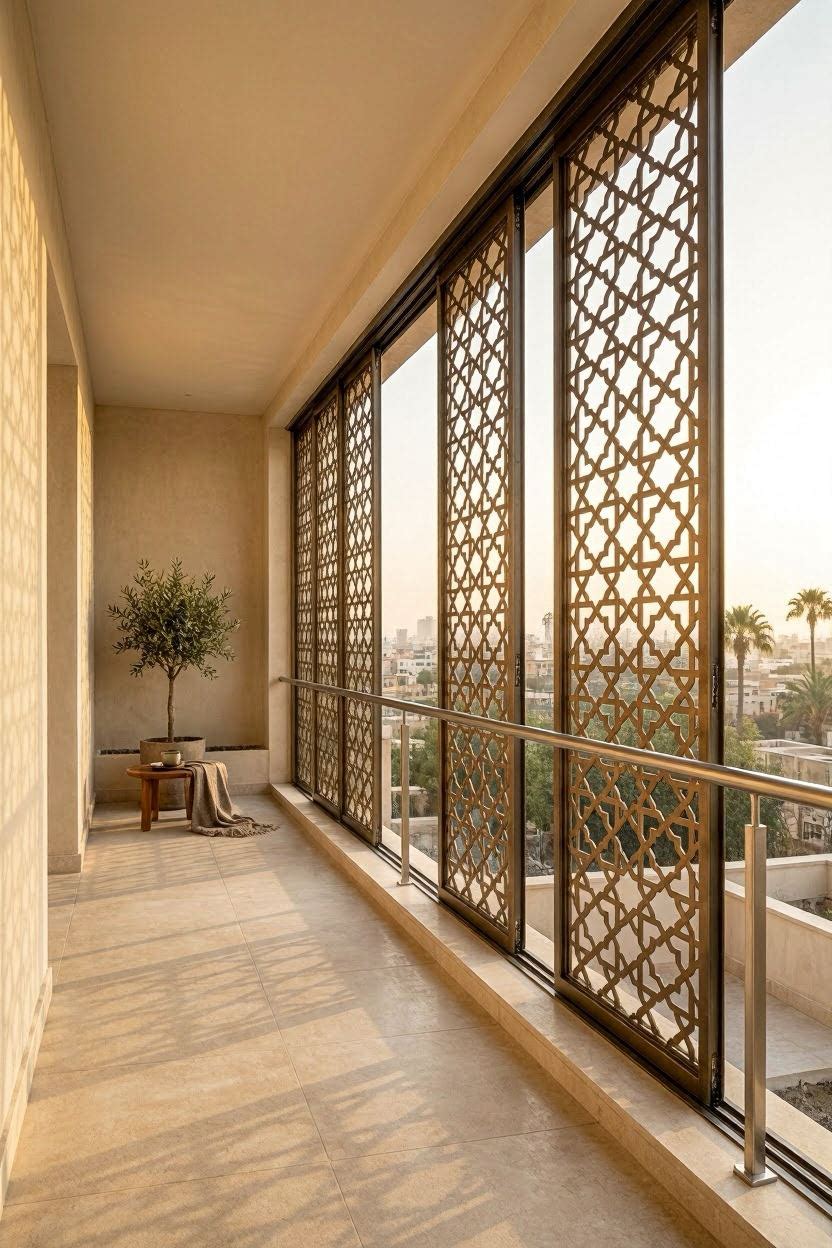
Image 13 shows perhaps the most functional innovation in this list: laser-cut panels mounted on sliding tracks, so you can open them fully for view and breeze, or close them for shade and privacy. The arabesque/geometric pattern is similar to #1 and #5 but here the panels are larger and function as sliding screens rather than fixed railings.
These are common in Middle Eastern and North African apartment designs — practical for hot, sunny climates where you need shade control without sacrificing airflow through the perforations.
How sliding laser-cut panels work:
- Panels mount on a top track (like a sliding door)
- Bottom channel guides panel movement
- Usually 2–3 overlapping panels per bay
- Can be motorised for premium installations
Cost: $150–$250/panel (standard size ~4ft × 7ft) for manual sliding. Add $300–$500 for motorised track.
Material: Aluminum is preferred for sliding panels (lighter than steel, no rust)
Best for: South or west-facing balconies in sunny climates, homes needing flexible privacy control, modern Islamic or Moorish-inspired architecture
How to Choose the Right Balcony Grill for YOUR Home
Use this simple filter:
Step 1 — Define your priority:
- Safety first (children/pets) → Grid mesh (#9) or laser-cut panels (#1, #5)
- View first → Cable (#7), vertical bar (#2), or glass (#4)
- Privacy first → Frosted glass (#10), wooden louvre (#6), or sliding screen (#12)
Step 2 — Match your building’s style:
- Modern/minimalist → Horizontal bar (#3), glass (#4), cable (#7)
- Warm/natural → Wooden louvre (#6), multi-level wood+metal (#11)
- Decorative/cultural → Laser-cut geometric (#1, #5, #12, #13)
- Classic/heritage → Wrought iron wavy (#8)
Step 3 — Set your budget:
- Under $60/linear ft → Vertical bar, horizontal bar, grid mesh
- $60–$120/linear ft → Cable, laser-cut, wooden slat
- $120–$300+/linear ft → Glass, frosted glass, bespoke artistic iron
Step 4 — Check local code:
- Minimum railing height: 36” for floors 1–3, 42” for floors 4+ (IRC)
- Max infill spacing: 4” (to prevent child entrapment)
- Load requirement: Rails must withstand 200 lbs of lateral force
- Always pull a permit before installation
FAQ — Balcony Grill Questions Answered
What is the safest balcony grill design?
For child safety, welded wire mesh or laser-cut solid panels are safest because there are no climbable horizontal bars and no wide gaps. Glass railings are also very safe but require tempered/laminated glass to code.
How long do metal balcony grills last?
Powder-coated steel lasts 10–20 years before needing re-coating. Aluminum doesn’t rust and can last 30+ years with minimal care. Wrought iron needs the most maintenance but can last a lifetime with annual waxing.
Can I install a balcony railing myself?
Simple post-and-rail systems can be DIY if you have basic tools and follow manufacturer instructions. But any railing over 30 inches high typically requires a permit and inspection in the US. Always check with your local building department first.
What’s the most low-maintenance balcony railing?
Aluminum (any style) or cable railings with stainless steel hardware require the least maintenance. Avoid raw steel or real wood if you don’t want to do annual upkeep.
How do I stop a metal balcony railing from rusting?
Powder coating is the best protection. If you see chips or scratches, treat immediately with a rust converter like Rust-Oleum Rust Reformer ($12 at Home Depot), then touch up with matching powder-coat spray.
Final Thoughts
A balcony grill isn’t just a safety feature — it’s one of the most character-defining elements of your home’s exterior. The 12 designs in this post cover everything from the ultra-budget vertical bar railing to bespoke sliding laser-cut screens, but they all share one thing: they were chosen intentionally, not just installed by default.
If you take one thing from this guide, let it be this: match your railing to your building’s material palette first, then filter by your privacy and view needs, then check your budget. That order keeps you from picking something beautiful in isolation that looks wrong on your actual home.
If you found this helpful, save it to your Pinterest home-decor board — it’s a useful reference when you’re sitting with a contractor and need to quickly show them what direction you’re going.
Have a question about a specific balcony grill style? Drop it in the comments below and we’ll help you figure out what works for your space.