10 Cheap Trellis Plant Ideas That Turn Any Wall Into a Green Wonder
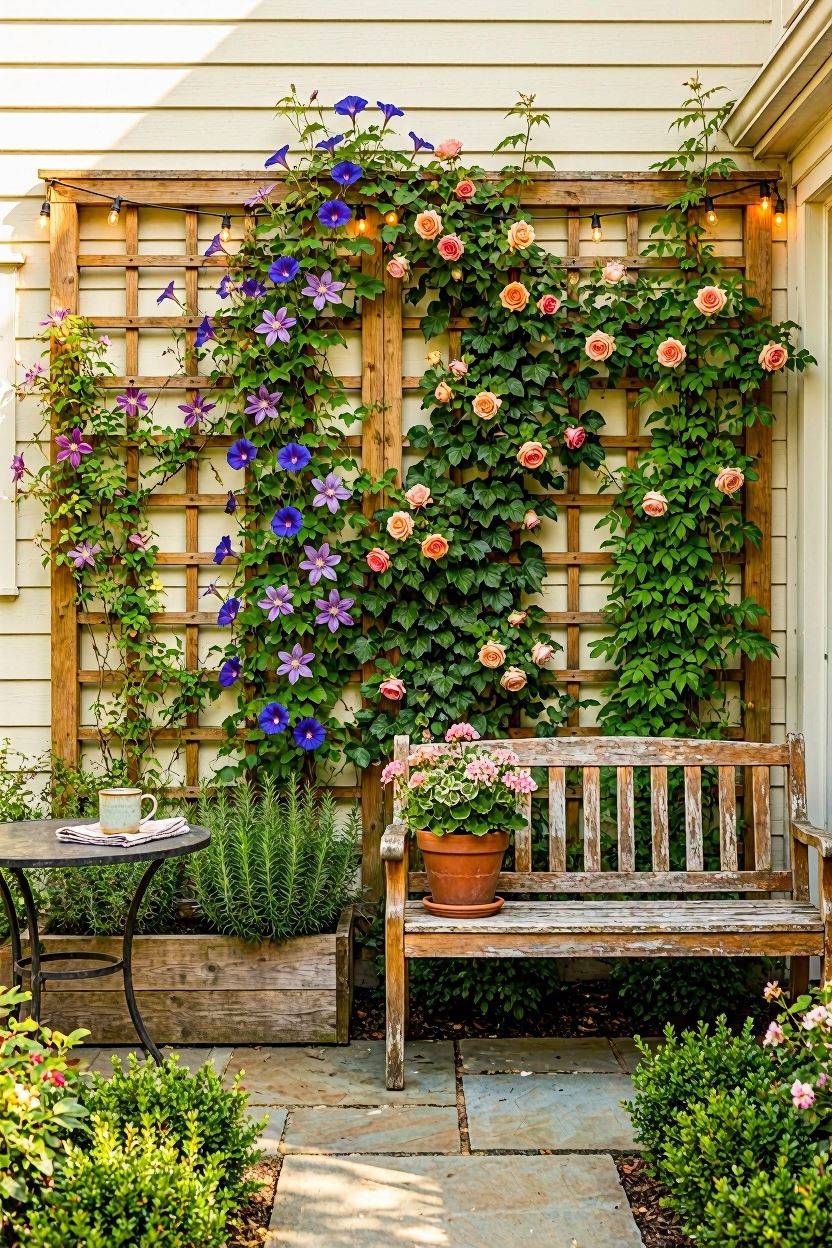
If you’ve got a bare fence, a boring wall, or an empty corner of the patio, a trellis is the cheapest way to fix it. You don’t need a big budget or a green thumb. You just need the right plant, a cheap frame, and a little patience.
Below are 10 trellis plants that cost very little to grow, look gorgeous climbing up a simple frame, and come with an easy cultivation process anyone can follow — even in a small backyard or apartment balcony.
1. Morning Glory
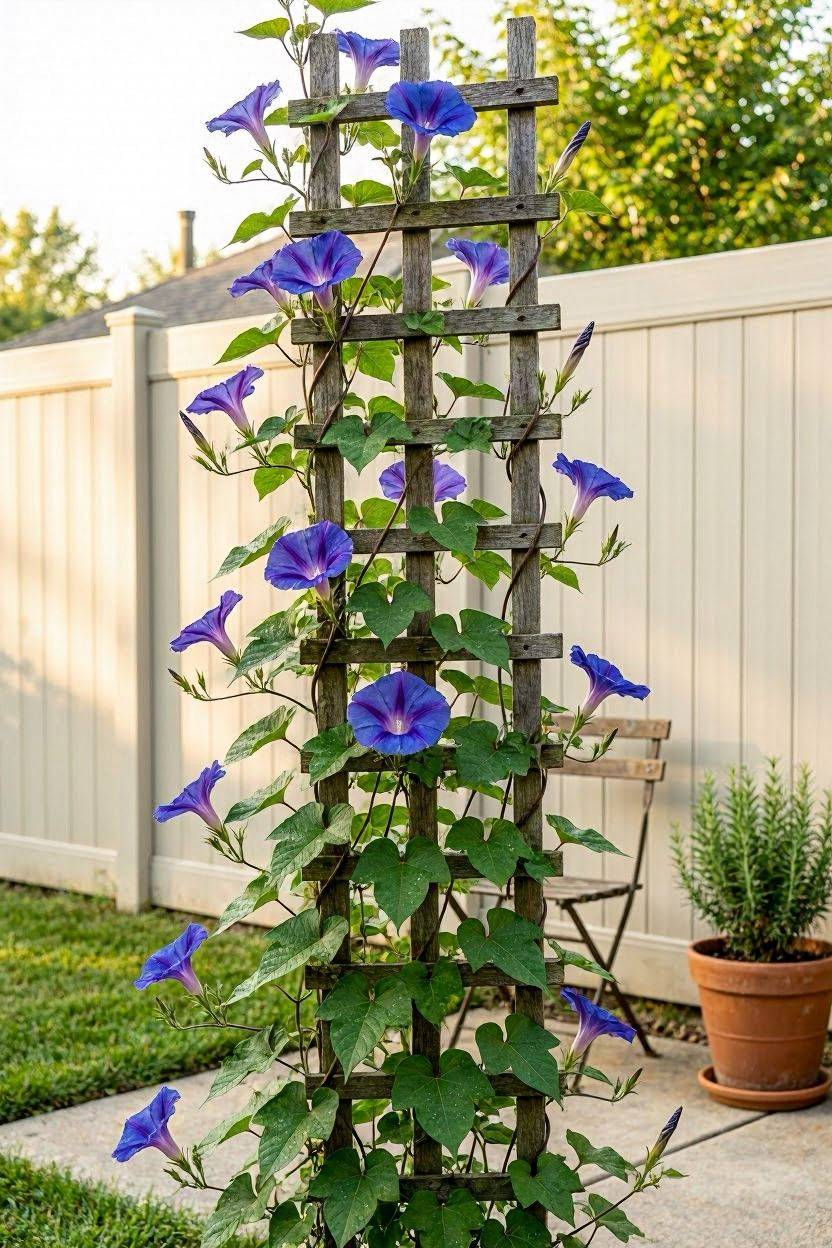
Morning glory is one of the fastest, cheapest vines you can grow. It’s an annual, so you start fresh each year, but the seeds cost almost nothing and it blooms within weeks.
Cultivation process:
- Soak seeds in water for 24 hours before planting to soften the shell.
- Sow directly in soil after the last frost, about 1/4 inch deep.
- Place in full sun and water 2-3 times a week.
- Add a light trellis or twine as soon as vines appear — they climb fast.
- Deadhead spent flowers to keep new blooms coming.
Cost: A seed packet runs $2-$4 at Home Depot or on Amazon.
2. Sweet Pea
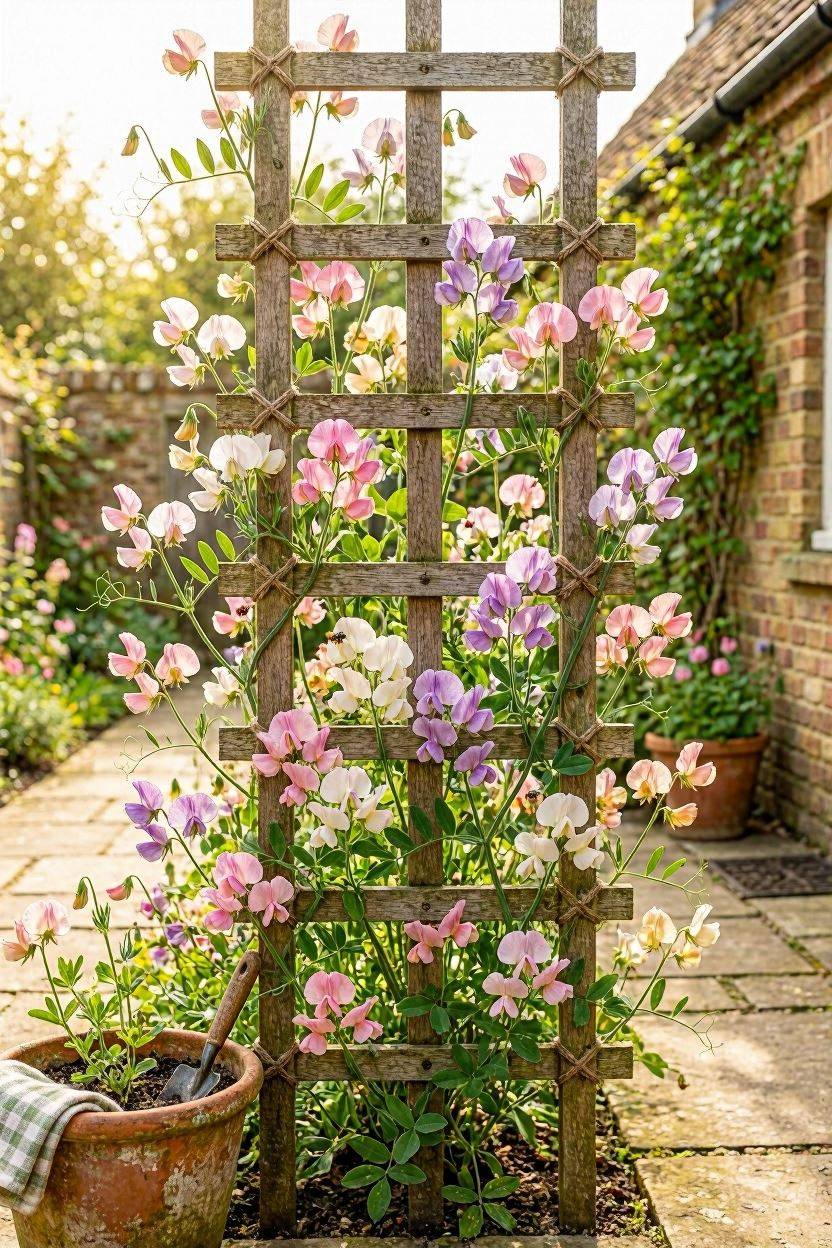
Sweet pea brings soft color and a light fragrance, and it’s one of the easiest cottage-garden climbers for beginners.
Cultivation process:
- Plant seeds in early spring in well-drained soil.
- Nick the seed coat slightly before planting to help it sprout.
- Space seeds 6 inches apart near the base of the trellis.
- Water regularly but avoid soggy soil.
- Pinch the tips once seedlings reach 4 inches to encourage bushier growth.
Cost: Seeds cost $3-$5 per packet at Lowe’s or Burpee.com.
3. Clematis
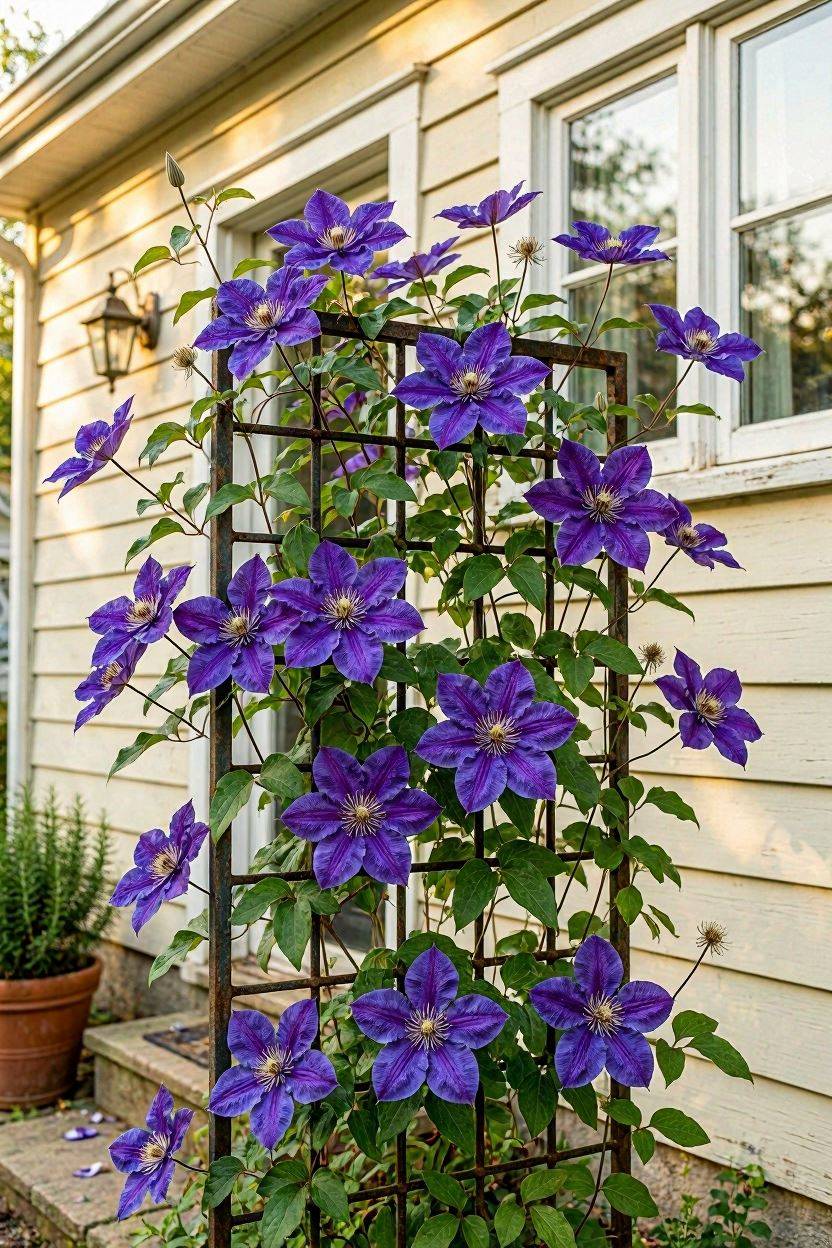
Clematis is a classic trellis favorite because of its large, showy flowers. It’s a perennial, so it’s a one-time investment that comes back year after year.
Cultivation process:
- Plant in spring or fall, keeping the roots shaded and the top in sun (“cool feet, warm face”).
- Dig a hole slightly deeper than the root ball and add compost.
- Water deeply once a week.
- Guide young vines onto the trellis with soft plant ties.
- Prune after the first bloom cycle to shape growth.
Cost: A starter plant costs $12-$20 at a local nursery or Home Depot.
4. Climbing Roses
Climbing roses give a trellis that romantic, cottage-style look without needing a big garden.
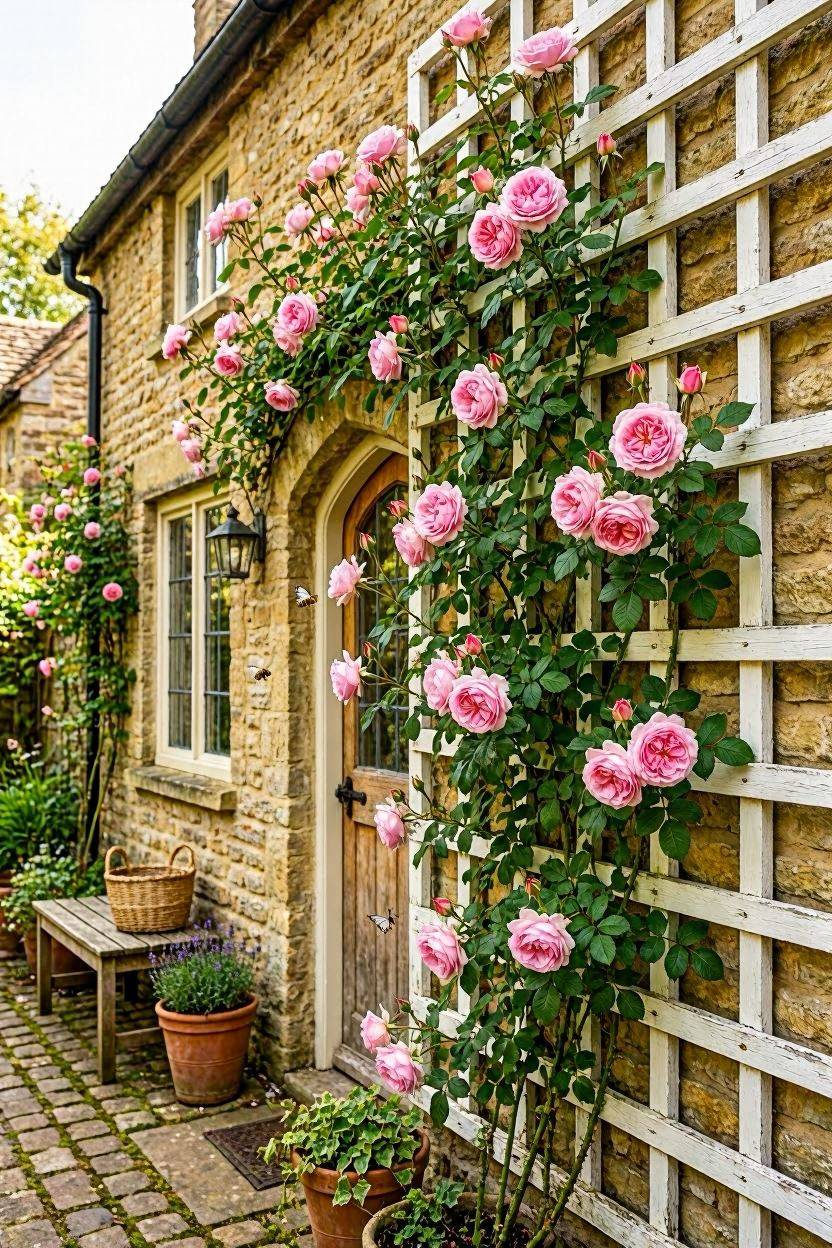
Cultivation process:
- Plant bare-root or potted roses in early spring in a sunny spot.
- Space canes evenly and tie them loosely to the trellis at an angle.
- Water at the base, not the leaves, to avoid fungus.
- Feed with rose fertilizer every 4-6 weeks during growing season.
- Prune in late winter to remove dead wood and shape the plant.
Cost: A young climbing rose plant costs $15-$25 at Lowe’s or online at Proven Winners.
5. Black-Eyed Susan Vine
This cheerful little vine is perfect for containers and small trellises on balconies or patios.
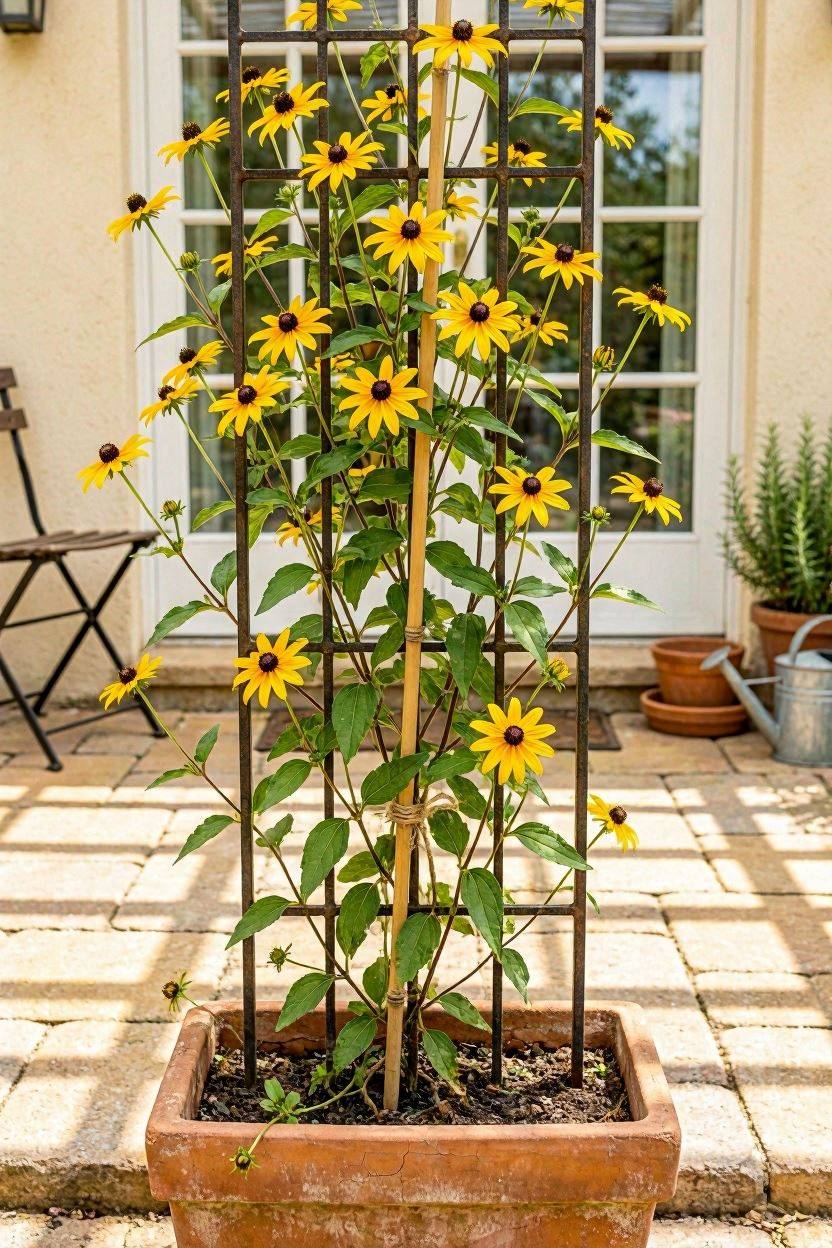 Cultivation process:
- Start seeds indoors 6-8 weeks before the last frost, or buy a small starter plant.
- Transplant outdoors once frost danger is gone.
- Place in a spot with morning sun and afternoon shade in hot climates.
- Water when the top inch of soil feels dry.
- Wind the young vines onto the trellis by hand to get them started.
Cost: Seeds or small plants cost $3-$8 at Walmart garden centers or Amazon.
6. Cucumbers
Trellising isn’t just for flowers — cucumbers grow beautifully vertical and add a fresh, kitchen-garden charm to a patio corner.
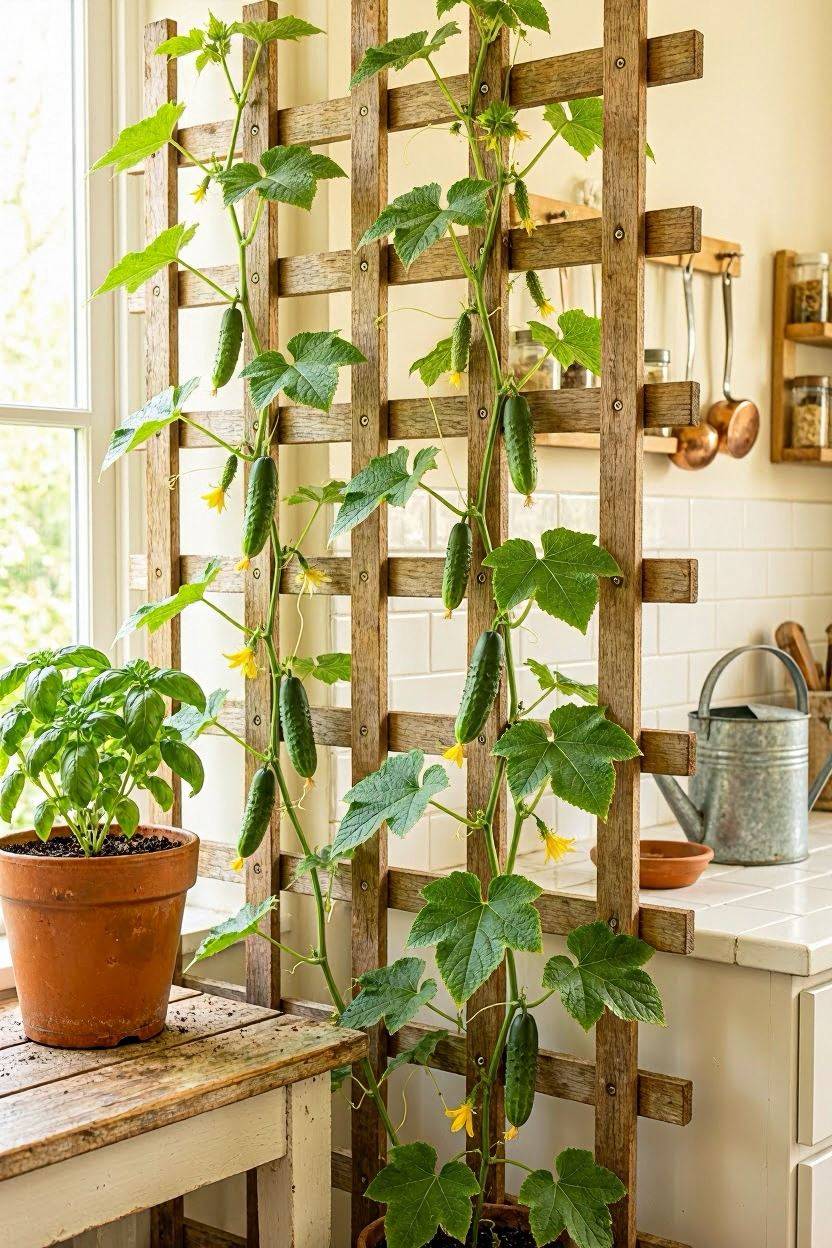
Cultivation process:
- Sow seeds directly in soil once the ground has warmed up in late spring.
- Space plants 12 inches apart at the base of the trellis.
- Water deeply 2-3 times a week, keeping leaves dry.
- Gently guide young tendrils toward the trellis until they grip on their own.
- Harvest regularly to keep the plant producing.
Cost: A seed packet costs $2-$4 at any garden supply store.
7. Pole Beans
Pole beans are one of the cheapest, fastest-growing trellis plants, and they double as a small edible harvest.
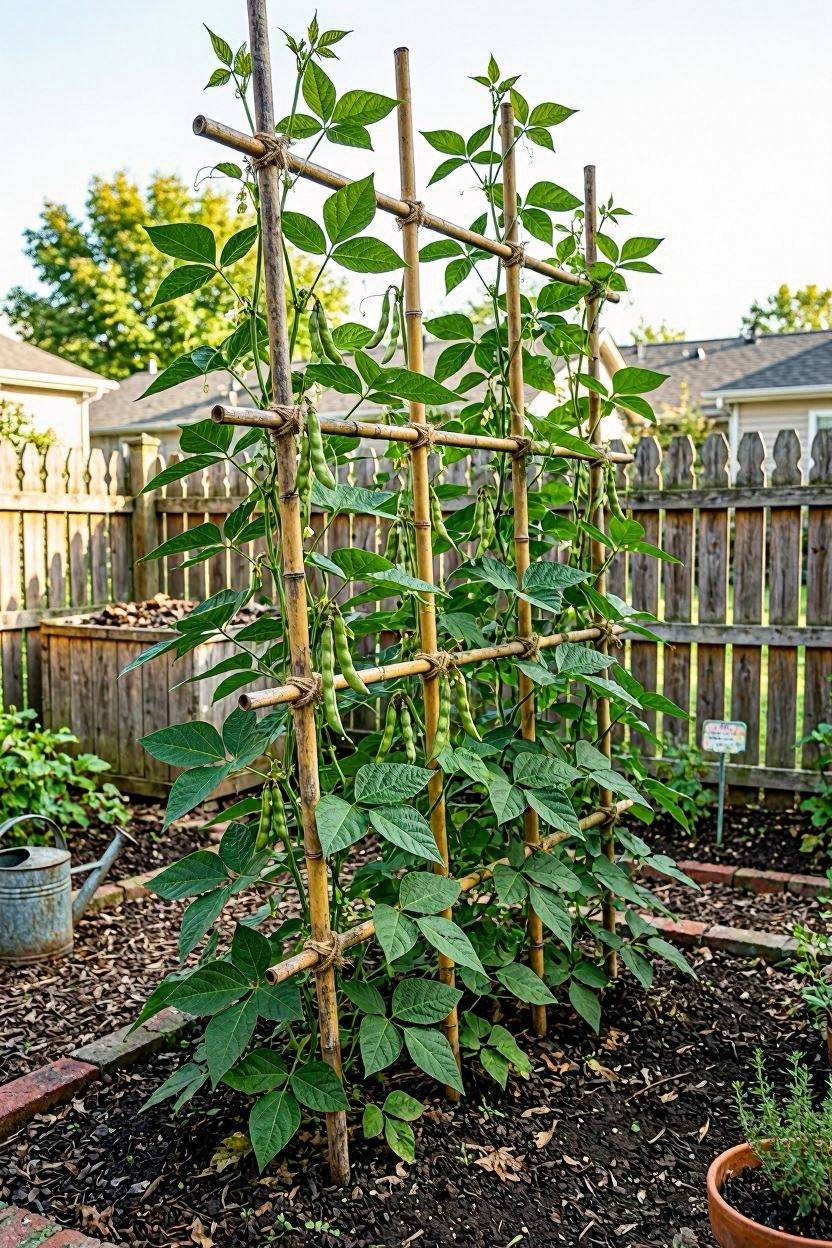
Cultivation process:
- Sow seeds directly outdoors after the last frost, 1 inch deep.
- Space seeds 4-6 inches apart along the base of the trellis.
- Water consistently, especially during flowering.
- Beans naturally twine upward, so minimal guiding is needed.
- Pick pods often to keep new ones forming.
Cost: Seeds cost $2-$3 at Home Depot or Tractor Supply Co.
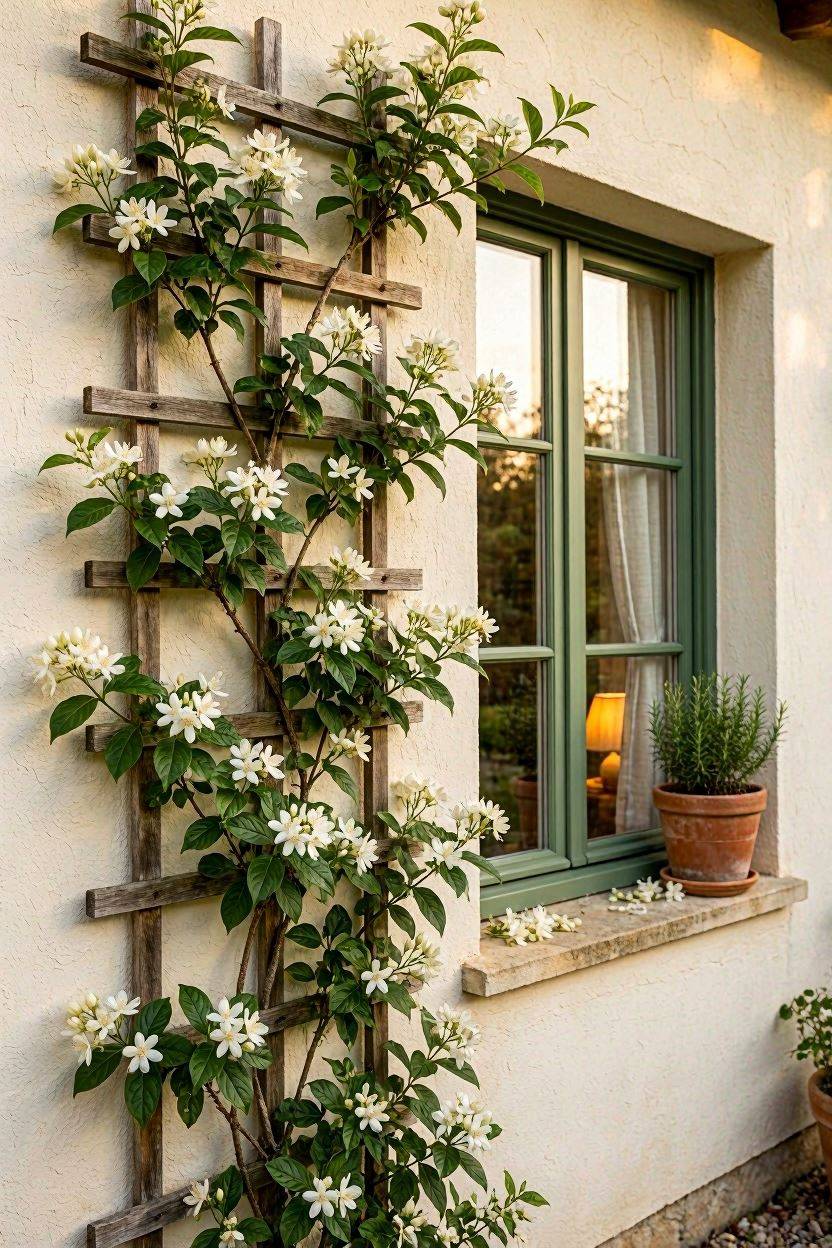
8. Jasmine
Jasmine brings fragrance and a soft, romantic look, and it thrives happily on a simple trellis by a door or window.
 Cultivation process:
- Plant in spring in well-drained, slightly acidic soil.
- Choose a spot with full sun to light shade.
- Water regularly but let soil dry slightly between waterings.
- Train young stems onto the trellis with soft ties.
- Trim after the main bloom to keep growth tidy.
Cost: A starter plant costs $10-$18 at a local nursery or Costa Farms online.
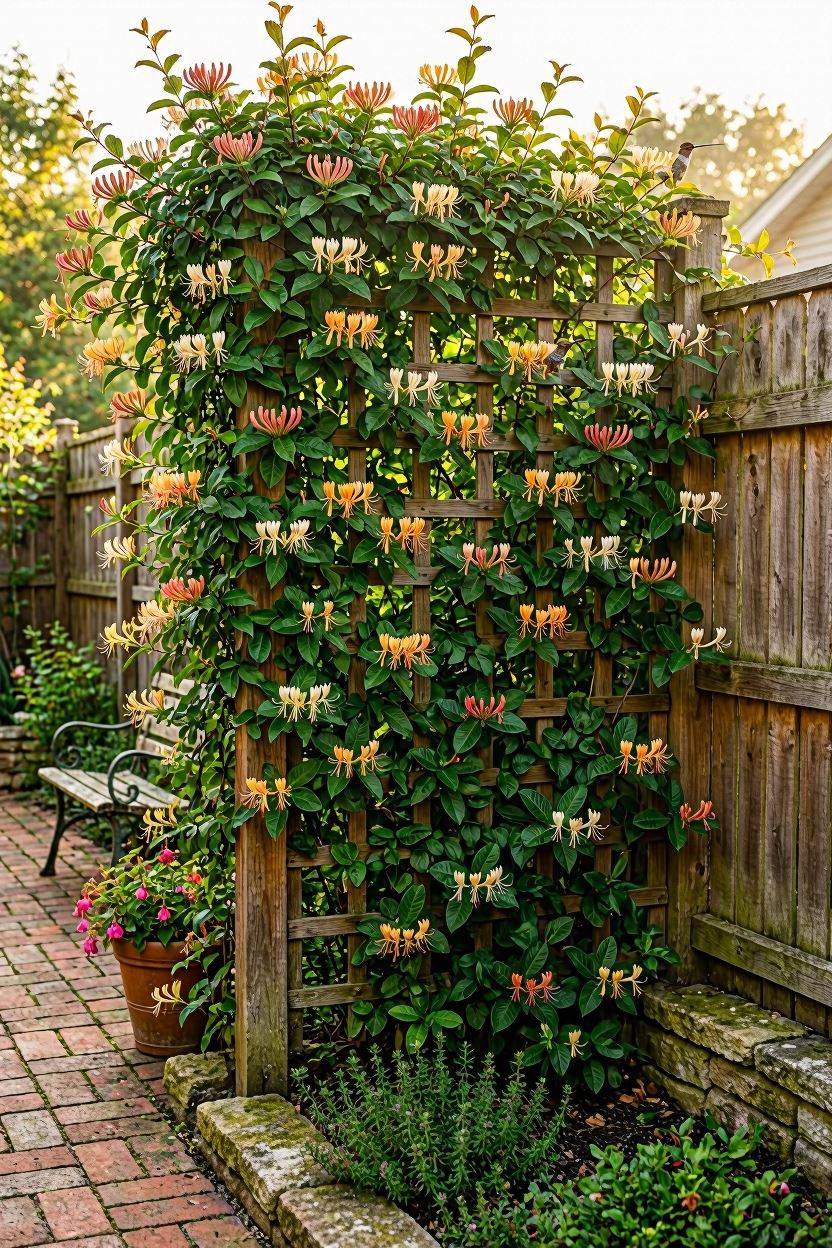
9. Honeysuckle
Honeysuckle is a tough, low-maintenance vine that fills a trellis quickly and attracts hummingbirds.
Cultivation process:
- Plant in spring or fall in a sunny to partly shaded spot.
- Water well for the first few weeks to help roots settle.
- Once established, water only during dry spells.
- Loosely tie new growth to the trellis until it starts twining on its own.
- Prune after flowering to control size.
Cost: A young plant costs $10-$15 at Lowe’s or a local garden center.
10. English Ivy
For a low-cost, evergreen trellis look that stays green all year, English ivy is hard to beat.
Cultivation process:
- Plant a small starter pot in spring in partial shade.
- Keep soil lightly moist but never waterlogged.
- Attach the first few stems to the trellis with garden clips.
- Trim regularly to keep growth neat and controlled.
- Feed lightly once a year in spring with a balanced fertilizer.
Cost: A starter pot costs $5-$10 at Walmart or The Home Depot.
Quick Comparison Table
| Plant | Type | Sunlight | Cost to Start | Bloom/Harvest Time |
|---|---|---|---|---|
| Morning Glory | Annual | Full sun | $2-$4 | 6-8 weeks |
| Sweet Pea | Annual | Full sun | $3-$5 | 8-10 weeks |
| Clematis | Perennial | Sun (roots shaded) | $12-$20 | 1 season, blooms yearly |
| Climbing Roses | Perennial | Full sun | $15-$25 | 1 season, blooms yearly |
| Black-Eyed Susan Vine | Annual/Perennial | Sun to part shade | $3-$8 | 6-8 weeks |
| Cucumbers | Annual (edible) | Full sun | $2-$4 | 8-10 weeks |
| Pole Beans | Annual (edible) | Full sun | $2-$3 | 6-8 weeks |
| Jasmine | Perennial | Sun to light shade | $10-$18 | 1 season, blooms yearly |
| Honeysuckle | Perennial | Sun to part shade | $10-$15 | 1 season, blooms yearly |
| English Ivy | Perennial (evergreen) | Partial shade | $5-$10 | Year-round foliage |
Trellis Material Cost Guide
| Trellis Type | Average Cost | Where to Buy | Best For |
|---|---|---|---|
| Bamboo trellis | $10-$20 | Home Depot, Amazon | Beans, cucumbers |
| Wooden lattice panel | $20-$40 | Lowe’s, Home Depot | Roses, clematis |
| Metal obelisk | $25-$50 | Wayfair, Gardener’s Supply Co | Clematis, jasmine |
| Wire/twine DIY frame | $5-$10 | Ace Hardware | Morning glory, sweet pea |
| String trellis on hooks | $8-$15 | Amazon, Target | Balcony vines like black-eyed Susan |
Frequently Asked Questions
Which trellis plant grows the fastest? Morning glory and pole beans are the fastest, often covering a trellis within 6-8 weeks of planting.
Can I grow trellis plants in containers? Yes. Black-eyed Susan vine, jasmine, and sweet pea all do well in large pots with a small trellis inserted into the soil.
What’s the cheapest way to build a trellis? A simple wire or twine frame stretched between two stakes costs under $10 and works well for lightweight annual vines.
Do trellis plants need a lot of watering? Most need regular watering while young, then settle into a normal weekly routine once established. Exact needs vary by plant, as noted above.
Can these plants be grown on an apartment balcony? Yes. Sweet pea, black-eyed Susan vine, and English ivy are all container-friendly and work well in smaller spaces.
Final Thoughts
A trellis is one of the smallest garden investments that gives the biggest visual reward. Whether you want fast color from morning glory, year-round green from English ivy, or a fragrant corner with jasmine, there’s a low-cost option here for almost any budget and any space. Start with one plant, get comfortable with the basics, and let your green wall grow from there.