12 Clematis Trellis Ideas That Look Stunning — DIY Builds & USA Buying Guide
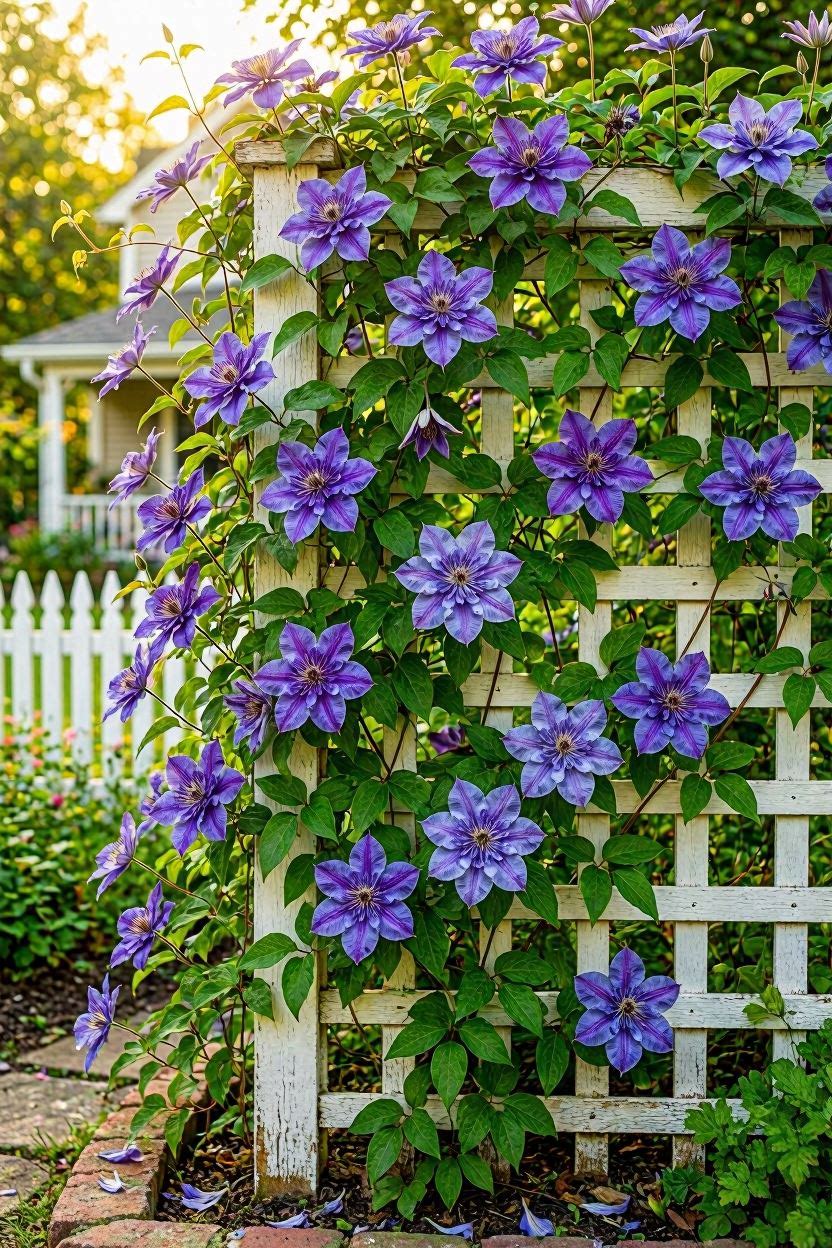
Why Clematis Needs the Right Trellis
Clematis is one of the most rewarding climbing plants you can grow — but it’s also particular. The vines grip by wrapping their leaf stems (not the main stem) around thin supports. That means thick posts alone won’t work. Clematis needs something narrow — wire, thin wood slats, mesh, or netting — to grab onto.
Get the support right and clematis practically grows itself. Here’s what works, what doesn’t, and how to build it.
1. Know Your Clematis Group First
Before you buy or build anything, identify which pruning group your clematis belongs to. This changes how tall your trellis needs to be and how you manage the vine each year.
| Group | When It Blooms | Pruning | Max Height | Best Trellis |
|---|---|---|---|---|
| Group 1 (Early) | Spring on old wood | Light trim after bloom | 20–30 ft | Large wall trellis, pergola |
| Group 2 (Large-flower) | Late spring + repeat | Light prune in early spring | 8–12 ft | Obelisk, panel trellis |
| Group 3 (Late) | Summer–fall on new wood | Hard prune to 12 in. each spring | 6–12 ft | Fence trellis, wire wall |
Beginner tip: Group 3 clematis (like Jackmanii, Viticella) are the easiest to grow and prune. They get cut back hard every spring and start fresh — much more forgiving on a simple trellis.
2. Simple Wire Wall Trellis — Best Starter Build
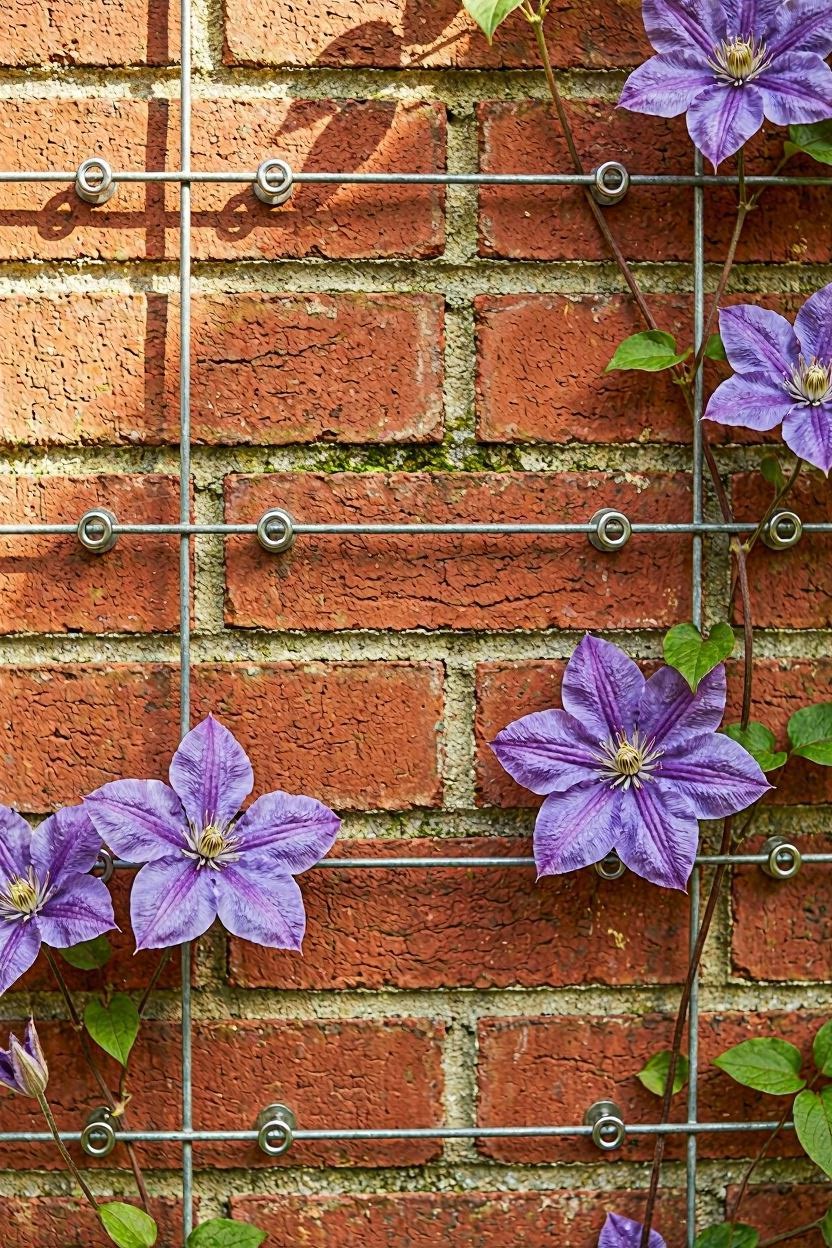
This is the most versatile clematis trellis you can install. A grid of galvanized wire stretched across a wall or fence gives the vine thousands of grip points and virtually disappears once the plant fills in.
What You Need
- Galvanized wire: 14-gauge, ~$12–$18 per 100 ft (Home Depot or Amazon)
- Vine eyes / eye bolts: 3-inch, ~$8–$12 for a pack of 25 (Amazon)
- Rawl plugs (for brick or concrete walls): ~$5–$8 for a pack
- Wire tensioners / turnbuckles: ~$2–$4 each (Home Depot)
- Drill + masonry bit for brick walls
Step-by-Step Install
Step 1 — Mark your grid. Plan horizontal wires every 12 inches, spaced across the wall. Use a pencil and level — even spacing matters for both looks and plant coverage.
Step 2 — Drill and fix eye bolts. For brick walls, drill into mortar joints (easier than brick and doesn’t damage the wall face). Push in rawl plugs, then screw in vine eyes. For wood fences, screw directly in.
Step 3 — Thread the wire. Start at one end, thread wire through the eye bolt, and loop it twice. Run wire across to the opposite eye bolt, pull taut by hand, then use a turnbuckle to tension it firm.
Step 4 — Check tension. Wire should feel like a guitar string — taut but not over-tightened. Loose wire sags under vine weight.
Step 5 — Guide the first shoots. Weave young clematis stems gently through the wire grid. Don’t force — they’ll find their own grip within days.
Total cost: $25–$50 for a 6 ft × 4 ft wall section. This is the best value system on this list.
3. Wooden Fan Trellis — Clean and Classic
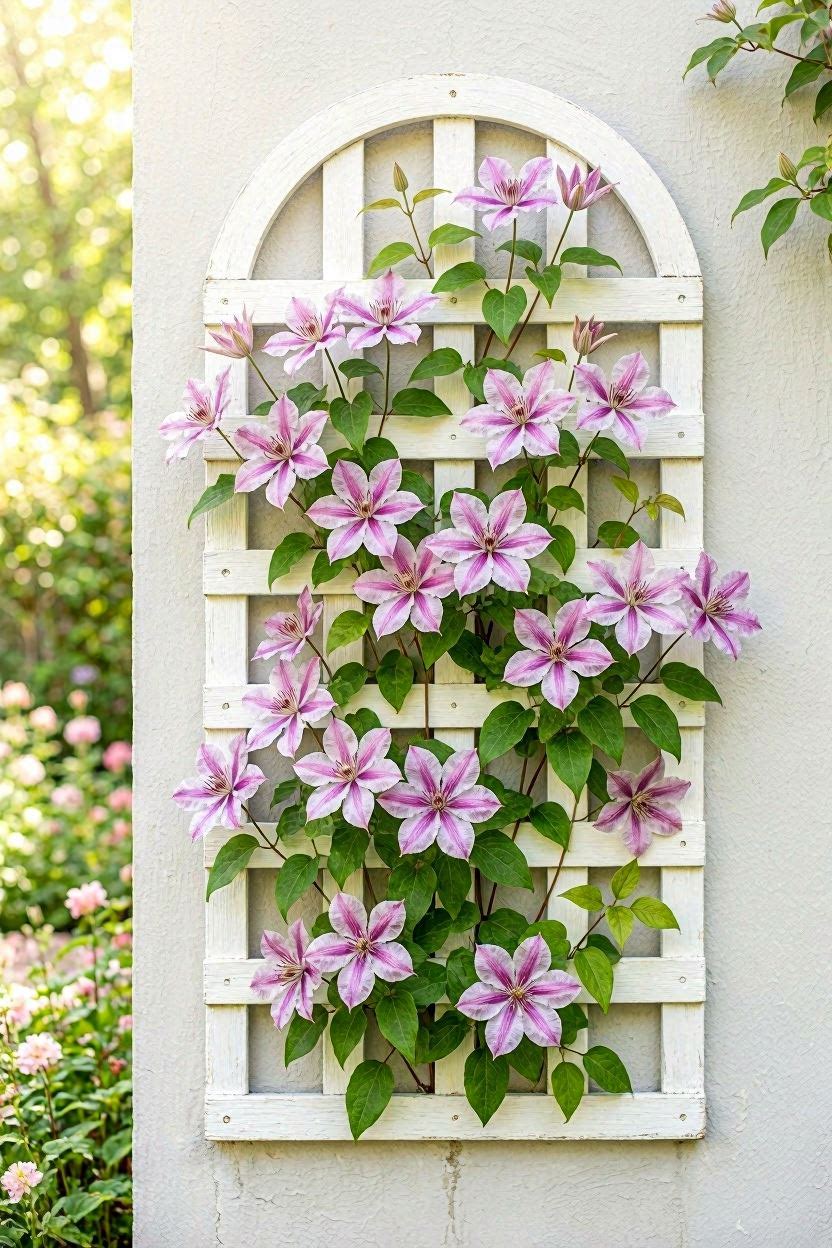
The fan trellis is the most recognizable garden support — thin wooden slats fanning outward from a narrow base. It looks beautiful even when the plant is dormant in winter.
Ready-Made Options (USA)
| Product | Size | Material | Price | Where to Buy |
|---|---|---|---|---|
| Gardman Expanding Trellis | 6×2 ft | FSC wood | $18–$25 | Amazon, Walmart |
| Panacea Wood Fan Trellis | 36 in. | Pine | $14–$20 | Home Depot, Amazon |
| Achla Designs Fan Trellis | 48 in. | Cedar | $30–$45 | Amazon |
| YARDLINK Lattice Panel | 4×8 ft | Cedar | $28–$40 | Home Depot |
DIY Version
Cut 1×2 cedar strips (roughly $1.50–$2.50 per 8-ft length at Home Depot) and nail them in a fan pattern onto a backing board. Paint or stain before installing — much easier than painting in place.
Mount it: Use 1-inch spacers (wood blocks or wall plugs) between the trellis and wall. This gap lets stems weave behind the slats and improves airflow — critical for preventing mildew on clematis.
4. Metal Obelisk Trellis — Perfect for Pots and Beds
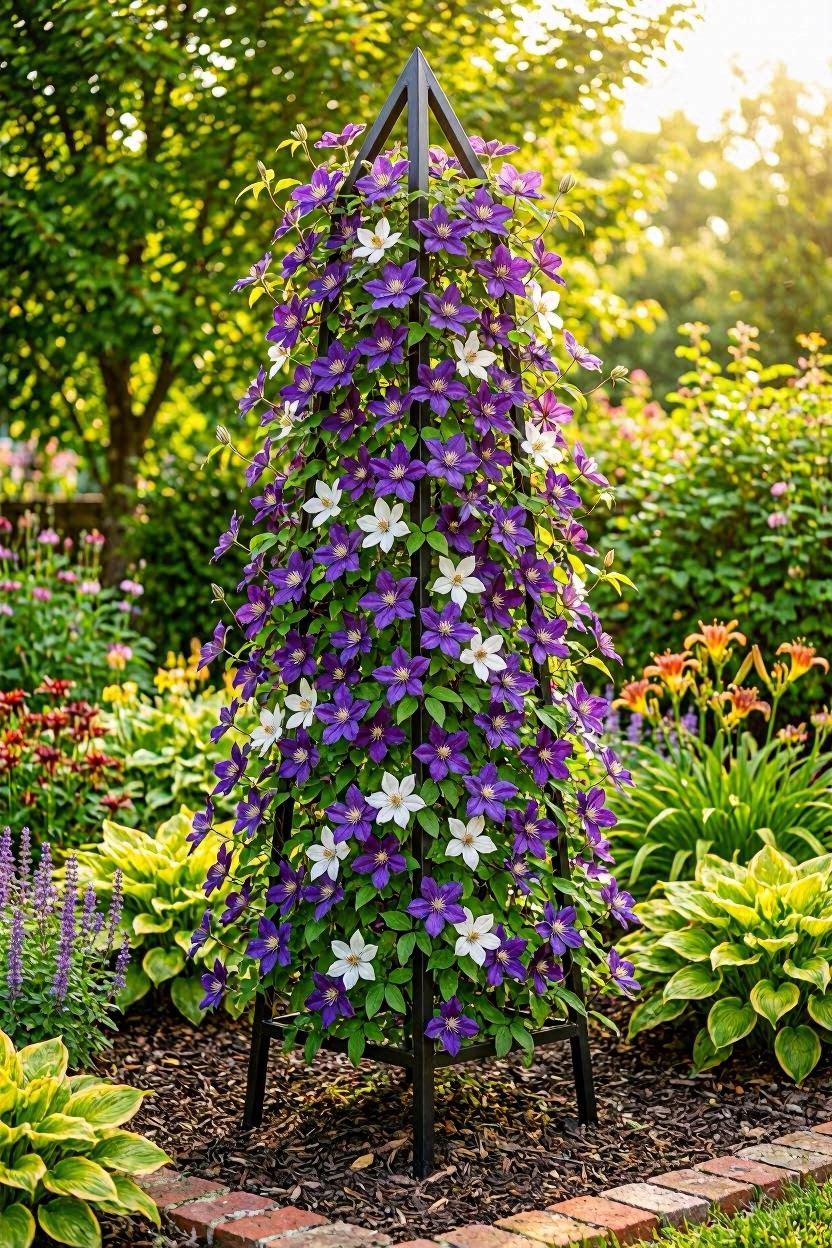
An obelisk is a freestanding metal frame — four legs that taper to a point at the top. It’s the ideal structure for Group 2 and Group 3 clematis in a border or large container.
Why It Works
- Self-supporting — no wall needed
- Moves with the plant if you need to reposition
- Looks architectural even when bare in winter
- Works in large pots (minimum 18-inch container)
Best Options in the USA
| Product | Height | Material | Price |
|---|---|---|---|
| Gardener’s Supply Obelisk | 60 in. | Powder-coated steel | $45–$65 |
| Plow & Hearth Garden Obelisk | 72 in. | Steel | $55–$80 |
| Achla Designs Obelisk | 78 in. | Wrought iron | $90–$130 |
| DeWit / Nantucket | 84 in. | Galvanized steel | $100–$150 |
For clematis, choose at least 60 inches tall — shorter obelisks get swamped in one season by any vigorous variety.
Tip: Wrap jute twine in a loose spiral around the obelisk frame when you first plant. Gives stems something to grip before they reach the metal bars.
5. Lattice Panel Trellis — Best for Fences
A lattice panel trellis — either wood or vinyl — is the fastest way to cover a fence section or blank wall with clematis.
Wood vs. Vinyl Lattice
| Feature | Wood Lattice | Vinyl Lattice |
|---|---|---|
| Cost (4×8 panel) | $18–$35 | $20–$40 |
| Lifespan | 8–12 years | 20–25 years |
| Appearance | Natural, warm | Clean, modern |
| Maintenance | Paint/stain every 3–4 yrs | Wipe clean |
| Best for | Cottage or rustic style | Contemporary gardens |
Both work. Cedar wood lattice from Home Depot (~$28 per 4×8 panel) is the most popular choice in USA cottage gardens. Vinyl from Lowe’s (~$30–$40 per panel) is the low-maintenance pick.
Installation Tip
Always mount panels 2–3 inches away from the fence or wall using standoff brackets or 2×2 wood spacers. Clematis needs airflow behind the plant to stay healthy — flush against a wall traps moisture and invites disease.
6. Bamboo Tepee Trellis — Cheapest Option ($10 or Less)
For a small garden bed or a single clematis plant in a border, a bamboo tepee is the simplest and cheapest trellis you can make.
How to Build It
- Push 4–6 bamboo canes (6 ft, ~$5–$8 for a pack of 25 at Home Depot) in a circle, about 18 inches apart
- Angle all canes inward and tie together at the top with garden twine
- Wrap twine in a spiral around the outside — gives stems plenty to grip at every level
- Plant one or two clematis at the base
Total cost: $8–$15. Works beautifully for a season and composted at the end. Replace bamboo every 2–3 years.
Best for Group 3 clematis (cut back hard each spring anyway) or annual climbers grown alongside clematis.
7. Tension Wire on a Pergola or Arbor
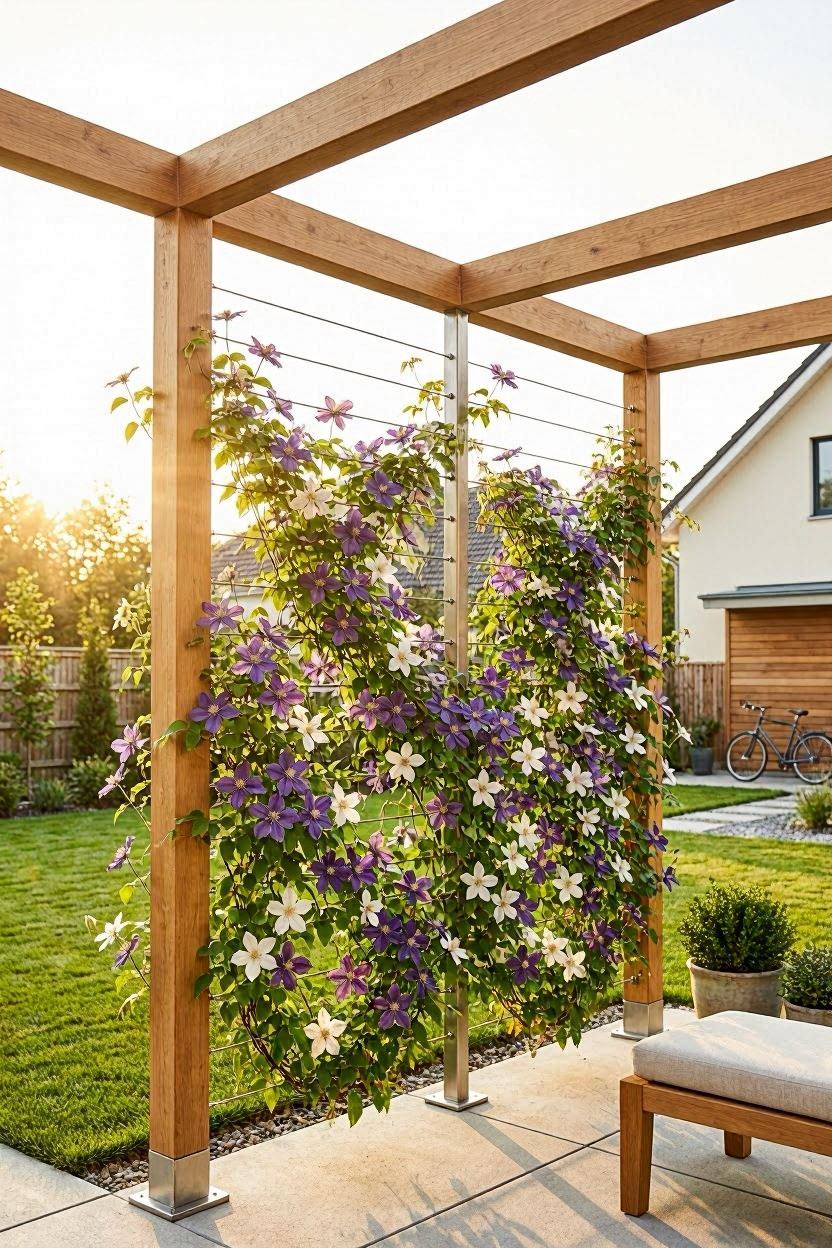
If you already have a pergola, fence posts, or free-standing posts, tension wires transform them into a clematis support with almost no visible hardware.
The System
- Stainless steel wire (3mm, marine grade) runs horizontally between posts
- Wire is anchored with swageless end fittings on each post
- Horizontal wires spaced 12 inches apart from 1 ft to 6 ft height
Materials (For a 6-ft-wide Span Between Posts)
| Item | Cost | Source |
|---|---|---|
| 3mm stainless steel wire (per 10m) | $15–$22 | Amazon, Home Depot |
| Swageless end fittings (per pair) | $8–$14 | Amazon |
| Turnbuckles | $3–$5 each | Home Depot |
| Eye bolts (stainless) | $6–$10 per pack | Amazon |
Total for 5 wire runs: ~$60–$90. Stainless steel means zero rust and a clean, modern look — far more refined than galvanized on a nice pergola.
8. Choosing the Right Clematis Variety for Your Trellis
The trellis and the variety have to match in scale. Here’s a quick cheat sheet:
| Variety | Group | Height | Flower | Trellis Match |
|---|---|---|---|---|
| Jackmanii | 3 | 8–10 ft | Deep purple | Wire wall, fence lattice |
| Nelly Moser | 2 | 6–8 ft | Pink/mauve stripes | Obelisk, fan trellis |
| Montana Rubens | 1 | 20–30 ft | Pink, small | Pergola, large wall |
| Viticella ‘Purpurea’ | 3 | 8–12 ft | Purple, small | Fence wire, lattice |
| Sweet Autumn | 3 | 15–20 ft | White, fragrant | Arbor, pergola, large wall |
| The President | 2 | 6–10 ft | Large purple | Obelisk, panel trellis |
9. How to Attach Clematis to a Trellis Without Damage
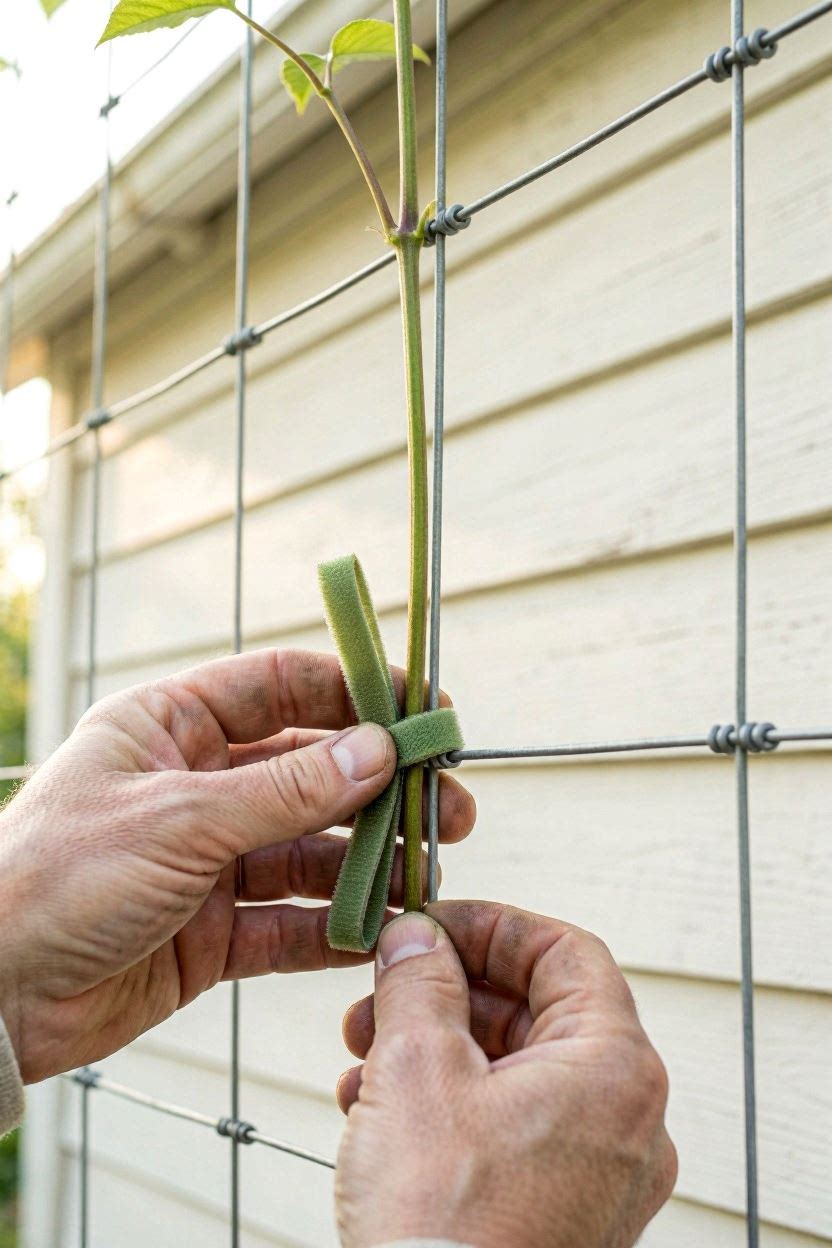
Clematis stems are surprisingly brittle. One snap at the base can set a plant back an entire season. Here’s how to guide young growth without breaking it.
The Right Way
- Use soft velcro ties — Grower’s Edge or Miracle-Gro brand, ~$6–$10 a roll on Amazon. Reusable for years.
- Figure-8 loop always — stem goes through one loop, trellis wire through the other. They never touch directly.
- Tie loosely — leave room for the stem to thicken as it grows
- Guide, don’t force — if a stem is pointing the wrong way, guide it gently over 2–3 days rather than bending it all at once
What Not to Use
- Wire ties — cut into soft bark
- Tight string or rubber bands — both strangle growth
- Staples directly into stems — obviously bad but surprisingly common
When to Tie
Do your main tying in early spring when stems are young and pliable. By midsummer the stems are woody and much harder to redirect.
10. Maintenance Tips That Keep Any Trellis Looking Good
- Check wire tension every spring — winter cold loosens everything. Retighten turnbuckles before new growth starts.
- Repaint or restain wood trellises every 3–4 years — do it in late winter when the vine is cut back. Never try to paint through a full plant.
- Leave a gap at walls — if your trellis sits flat against a wall, pull it 2 inches forward with standoff brackets. Mildew is clematis’s biggest enemy.
- Remove dead stems promptly — don’t leave old Group 3 stems on the trellis after pruning. They tangle into new growth and look messy all season.
- Check eye bolts and fixings in year 3 — the weight of a mature clematis is surprising. Loose fixings on a brick wall are a common failure point.
Frequently Asked Questions
What size trellis does clematis need?
It depends on the group. Group 3 clematis (Jackmanii, Viticella) stay under 10 ft — a 6-ft fence trellis or obelisk works well. Group 1 (Montana) can reach 30 ft and needs a pergola or large wall.
Can clematis grow on a wood fence without a trellis?
Not easily. Clematis grabs with leaf stems around thin supports — a flat fence gives nothing to grip. Add wire or mesh to the fence face and it works perfectly.
How far from a wall should a clematis trellis be?
At least 2 inches, ideally 3–4 inches. This gap lets air circulate around the plant and helps prevent powdery mildew — the most common clematis problem.
Does clematis damage brick walls?
No. Unlike ivy, clematis doesn’t stick to surfaces or grow into mortar. It climbs around wires and supports only — completely safe for any wall.
How long does a wire trellis last?
Galvanized wire lasts 10–15 years outdoors. Stainless steel wire lasts 25+ years. The eye bolts and fixings usually outlast the wire.
Final Thoughts
Clematis rewards simple, thoughtful support. You don’t need an expensive trellis — a $25 wire grid on a wall or a $15 bamboo tepee will grow a stunning plant just as well as a $150 wrought iron obelisk.
What matters most is getting the support in place before the plant needs it, mounting it with a gap from the wall, and choosing a trellis scale that matches your variety. Get those three things right and clematis does the rest.
Pick one idea from this list and get it installed this weekend — your clematis will be climbing within weeks.