15 Small Apartment Vertical Garden Layout Ideas That Actually Work (2026 Guide)

If you live in a small apartment, chances are you’ve looked at your balcony or bare wall and wished you had more space to grow plants. Good news — you don’t need a backyard.
Vertical gardening is simply growing plants upward instead of outward. You use your walls, railings, and overhead space to fit more greenery into a small footprint. This guide walks you through 15 real, doable layout ideas with costs, what to buy, and how to set it up step by step.
Why Vertical Gardening Works for Small Apartments
Before we get into the layouts, here’s why so many city dwellers are switching to vertical setups:
- Saves floor space — your floor stays open for furniture and movement
- Grows more per square foot — stacking vertically multiplies your growing area 3–5x
- Works on balconies, patios, fences, and even interior walls
- Looks beautiful — it doubles as living wall art
- Grows food, herbs, flowers, or all three
Section 1: Wall-Mounted Grid Systems
1. Metal Grid Panel with Hanging Planter Boxes
This is the most popular vertical setup for apartment balconies. You mount a metal wire grid (like a pegboard but for outdoors) directly to your wall, then clip rectangular planter boxes onto it at different heights.
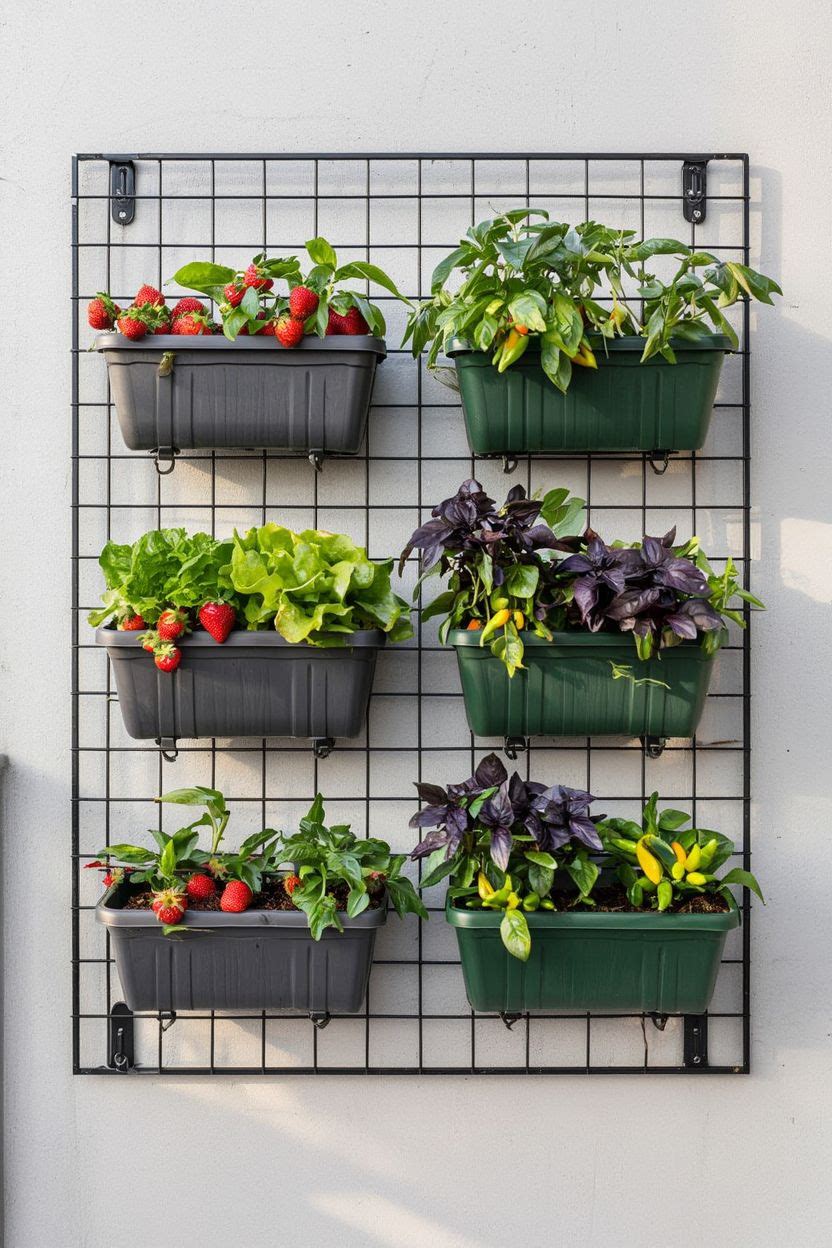
How to set it up:
- Buy a metal grid panel — look for “wire mesh garden panel” on Amazon or Home Depot (approx. $25–$45 each)
- Mount it to your wall with heavy-duty anchors or lean it against the wall using a freestanding bracket
- Attach rectangular planter boxes with S-hooks or grid clips (sold separately, $10–$20 for a set)
- Fill with lightweight potting mix and plant your herbs, leafy greens, or strawberries
- Water from the top — excess drains down through each box
Best plants for this setup: Lettuce, spinach, herbs (basil, mint, parsley), strawberries, small pepper plants
| Item | Where to Buy | Approx. Cost |
|---|---|---|
| Metal grid panel (24”x48”) | Amazon, Home Depot | $25–$45 |
| Rectangular planter clips | Amazon | $12–$20 |
| Lightweight potting mix | Lowe’s, Walmart | $8–$15 per bag |
| Wall anchors (masonry) | Home Depot | $6–$10 |
Pro tip: Start with 4–6 planter boxes. Too many at once gets heavy and hard to water evenly.
2. Individual Wall-Mounted Pot Holders
Instead of one big grid, you can mount individual pot brackets directly into the wall in a staggered pattern. This gives you more flexibility — each pot is independent, so you can rearrange them easily.
Use wall-mounted planter brackets (sold at IKEA, Amazon, and most garden centers for $5–$15 each). Space them 8–12 inches apart vertically.
Best for: Renters who don’t want permanent damage — look for adhesive or tension-rod-based versions if you can’t drill.
Section 2: Wooden Trellis and Raised Bed Combinations
3. Freestanding Wooden Trellis with Built-In Planter Boxes
This layout is a step up from the metal grid. A wooden trellis — either lattice-style or ladder-frame — stands on its own and has planter boxes built directly into the frame at each tier.
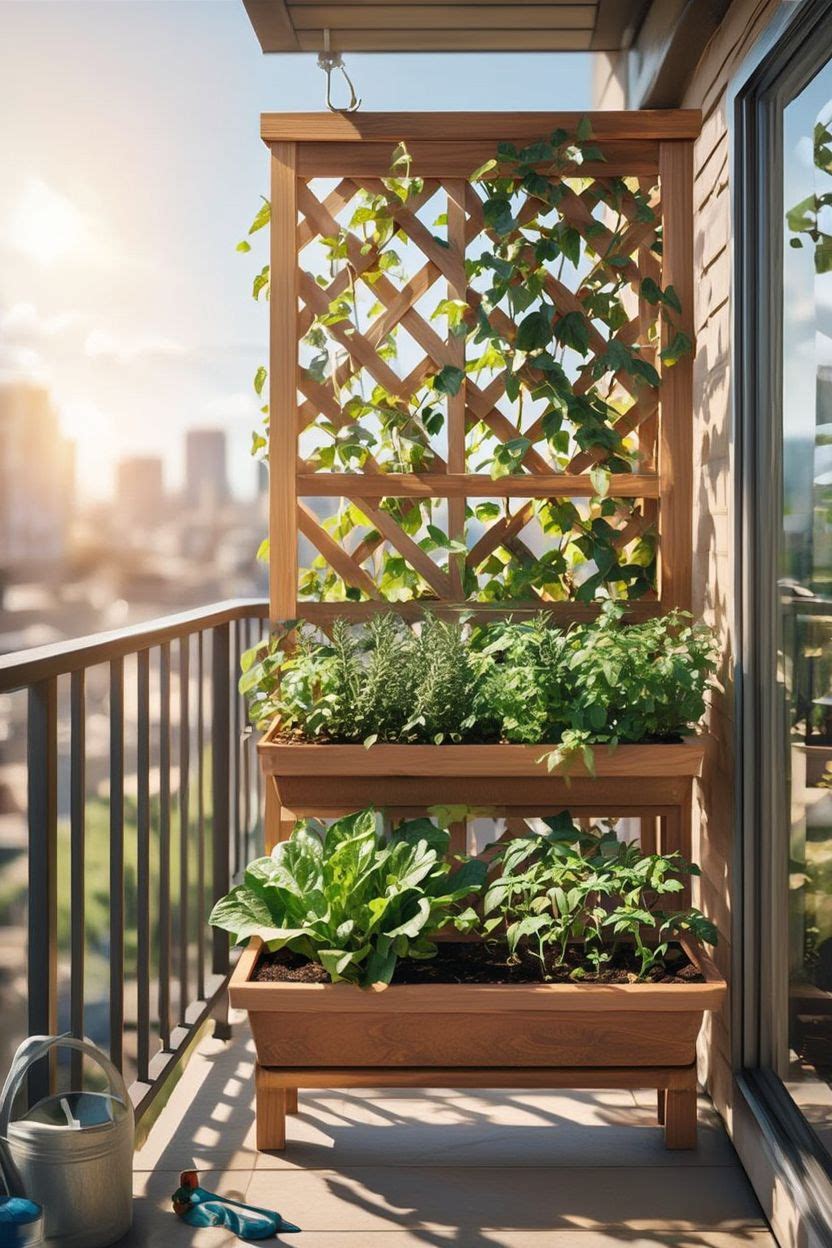
Why this works so well:
- The trellis provides vertical structure for climbing plants (beans, cucumbers, peas)
- The built-in boxes hold herbs and compact vegetables at multiple heights
- The whole unit is freestanding — no wall drilling needed
Where to buy: IKEA’s SOCKER range, Amazon’s freestanding planter trellises ($60–$150), or you can DIY with cedar boards from Home Depot for around $40–$60 in materials.
Setup steps:
- Place the trellis unit against your wall or railing
- Fill lower boxes with large plants (tomatoes, peppers), upper boxes with herbs
- Plant climbing vines (sweet potato vine, ivy, jasmine) at the base and train them up the lattice
- Water each box individually; use a drip tray beneath to catch runoff
Ideal balcony size: Works well in spaces as small as 4 feet wide × 6 feet deep.
4. Diamond-Pattern Lattice Trellis with Wall-Hung Wooden Boxes
The diamond or criss-cross lattice trellis (often called an expandable trellis) can mount flat against your wall and expand or contract in size. Pair it with small wooden wall-hung planter boxes at different heights for a rustic, cottage-garden look.
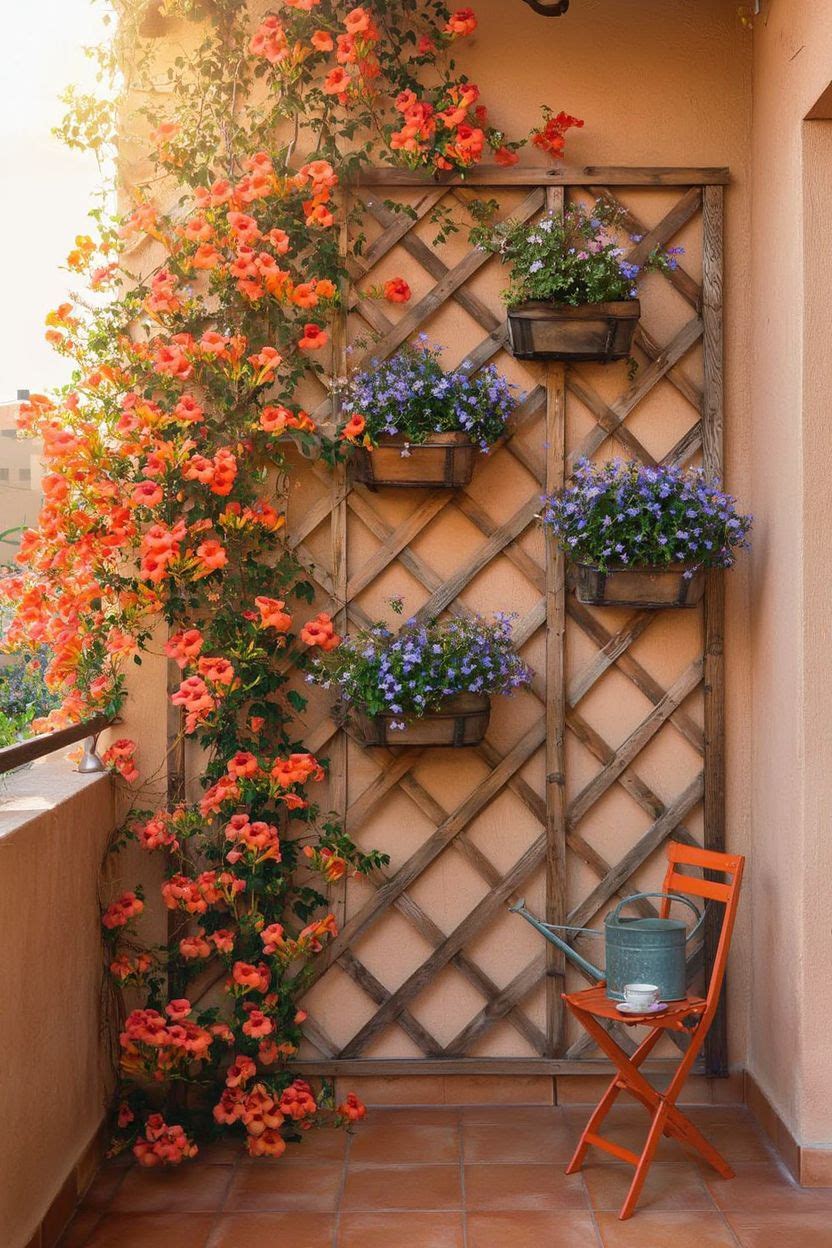
What to buy:
- Expandable diamond trellis — cedar or pine, $15–$35 at Lowe’s or Home Depot
- Wall-mount wooden planter boxes — $20–$50 at Target, Amazon, or DIY from fence boards
- Climbing plant for the trellis: Trumpet vine, passionflower, black-eyed Susan vine, or morning glory
This look is very popular on Pinterest because of the warm tones and colorful blooms. It works especially well on south- or west-facing balconies that get afternoon sun.
Section 3: Ladder-Style Plant Stands
5. Repurposed Ladder as Tiered Plant Stand
One of the cheapest and most charming vertical garden ideas is using an old wooden ladder as a plant shelf. Lean it against the wall at an angle, and place potted plants on each rung.
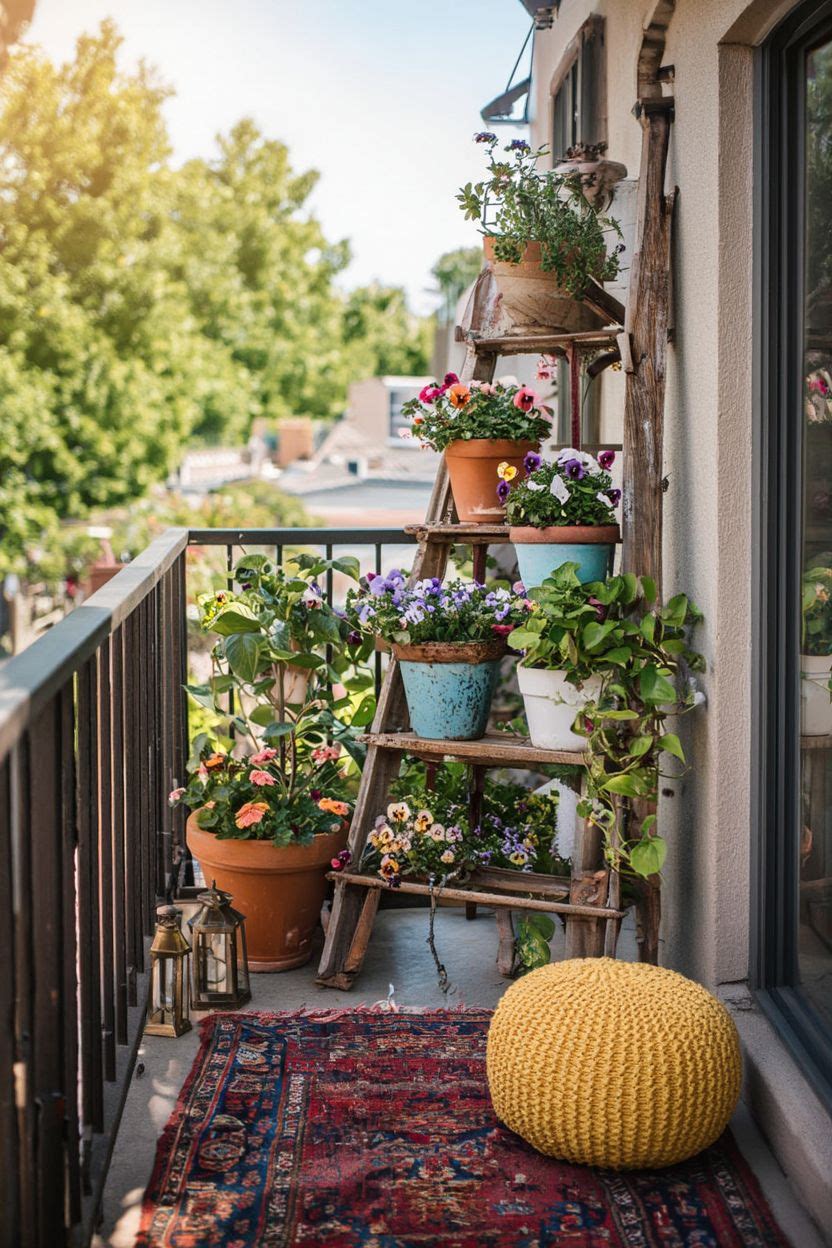
Why it works:
- No wall mounting needed
- Super affordable — often $0 (repurpose an old ladder) or $30–$60 for a decorative ladder at HomeGoods or TJ Maxx
- Easy to style with mismatched pots for a boho look
- Each rung holds 2–4 small to medium pots
Setup tips:
- Place heavier pots on lower rungs, lighter ones up top
- Mix terra cotta pots with painted pots and ceramic ones for visual interest
- Hang small pots from the top rung with S-hooks for extra vertical height
- Pair with a colorful outdoor rug below to anchor the look (like image 4)
Best plants for rungs: Petunias, pansies, geraniums, herbs, succulents, trailing pothos
| Ladder Type | Where to Find | Cost |
|---|---|---|
| Old wooden stepladder | Thrift store, garage sale | $5–$20 |
| Decorative A-frame ladder | HomeGoods, TJ Maxx | $30–$60 |
| New wooden ladder plant stand | Amazon, Wayfair | $45–$90 |
| Metal ladder shelf | Target, IKEA | $50–$80 |
6. A-Frame Step Ladder with Mixed Pots
Similar to the leaning ladder, but an A-frame stands on its own without leaning on anything. This is safer for windy balconies. You get the same tiered look, with pots on both sides of each step.
Fill it with a mix of colorful annual flowers and trailing plants (ivy, string of pearls, sweet potato vine) for a lush, overflowing look.
Section 4: Hanging and Overhead Vertical Systems
7. Ceiling-Hung Hanging Baskets
If your balcony has a ceiling or overhead beam, hanging baskets are one of the easiest ways to use vertical space. A single rod or curtain track screwed into the ceiling can hold 4–8 hanging pots.
What to buy:
- Ceiling hooks or a horizontal curtain rod mounted to the ceiling ($10–$25)
- Hanging basket planters with chains or macramé hangers ($5–$20 each)
- Use swivel hooks so you can easily rotate pots for even sun exposure
Best plants for hanging baskets: Boston fern, pothos, string of pearls, petunia, lobelia, spider plant, trailing rosemary
Ceiling clearance needed: At least 7 feet from floor to ceiling for comfortable movement beneath.
8. Railing Planter Boxes (Balcony Rail System)
Don’t overlook your balcony railing — it’s free vertical real estate. Railing planter boxes clip or hook directly onto the railing rail and hold a full row of plants along the edge.
Best railing planters (USA):
- Bloem Dura Cotta Rail Planter — $15–$25 at Walmart, Home Depot
- HC Companies Window Box — $10–$18 at Lowe’s
- Veradek Metallic Series — $35–$55 at Amazon (sleek, modern look)
Pair railing planters with wall planters above for a layered, full-coverage look.
Section 5: Multi-Layer and Full-Coverage Layouts
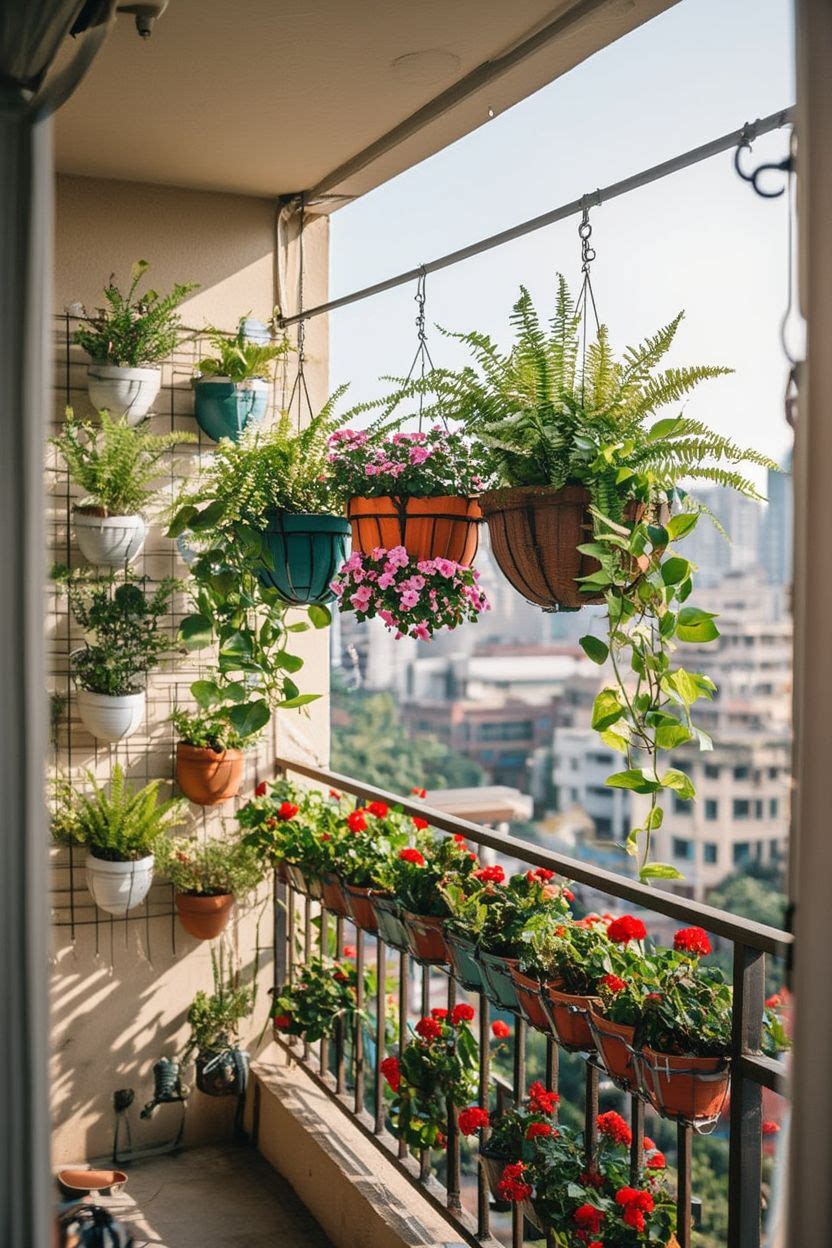
9. Three-Layer Vertical Garden: Railing + Wall + Ceiling
For the most impact in a small space, use all three planes — railing, wall, and ceiling — at the same time. This is what you see in image 5 of this post.
Layout blueprint:
- Ceiling: 3–4 hanging baskets (ferns, trailing plants)
- Wall: Wire grid panel with pot holders (flowers, herbs, ferns)
- Railing: Clip-on planters (low-maintenance flowers or herbs)
- Floor: 2–3 statement pots (large leafy plants for base grounding)
This creates a “garden room” feel even on a 40–50 square foot balcony.
Approximate total cost: $120–$250 depending on materials chosen
10. Modular Pocket Planters (Fabric Wall Pockets)
Fabric pocket planters are vertical felt or canvas panels with multiple pockets — each pocket holds one plant. They mount to the wall with two nails or screws and are incredibly lightweight.
Great for: Herbs, succulents, small flowers, strawberries
Where to buy: Amazon sells them for $15–$35 (search “vertical garden pocket planter”). Mr. Stacky and Woolly Pocket are popular brands in the USA.
Section 6: Style and Plant Pairing Tips
11. Matching Your Planter Style to Your Balcony Aesthetic
The containers you choose matter as much as the plants. Here’s a quick style guide:
| Aesthetic | Best Planter Material | Colors | Plants to Feature |
|---|---|---|---|
| Modern / Minimalist | Black metal, concrete | Black, grey, white | Structural succulents, ferns, herbs |
| Boho / Rustic | Terra cotta, wicker, wood | Earth tones, warm orange | Trailing ivy, wildflowers, mixed herbs |
| Cottage / Romantic | Wood boxes, ceramic | White, blue, pastel | Lavender, pansies, roses, clematis |
| Urban / Industrial | Metal grid, steel | Charcoal, rust | Grasses, tomatoes, climbing beans |
| Tropical / Lush | Dark plastic, rattan | Deep green, natural | Monstera, ferns, pothos, croton |
12. Best Plants for Bangalore’s Climate (Warm, Tropical Conditions)
If you’re gardening in Bangalore or a similar warm, humid city, your plant choices can be slightly different from the USA examples above. You have the advantage of year-round growing weather.
Vegetables: Spinach, methi (fenugreek), curry leaf, green chilli, cherry tomatoes, beans Herbs: Tulsi, mint, coriander, lemongrass Flowers: Bougainvillea (climbing), marigold, portulaca, ixora Tropicals: Money plant (pothos), ferns, spider plant, snake plant
These all work beautifully in vertical grids, wall pockets, and hanging baskets.
13. Watering Strategy for Vertical Gardens
Watering is the #1 challenge in vertical setups. Here’s how to do it efficiently:
Manual watering: Use a long-spout watering can and water top-to-bottom. The water trickles down through multiple planters.
Self-watering planters: These have a built-in water reservoir and wick system. They reduce watering frequency to every 5–7 days. Look for Lechuza planters ($25–$60) or self-watering window boxes on Amazon.
Drip irrigation kit: For serious setups, install a basic balcony drip kit ($30–$50 on Amazon) with a timer. It waters everything automatically every morning.
14. Weight Considerations for Balconies
Soil is heavy. Most apartment balconies are rated for 40–60 lbs per square foot, but a large planter filled with regular garden soil can weigh 50–80 lbs alone.
Solutions:
- Use lightweight potting mix instead of garden soil (Miracle-Gro Lightweight is excellent)
- Add perlite to your mix (30% perlite reduces weight by up to 40%)
- Choose plastic or fabric planters instead of ceramic or concrete
- For large setups, consult your building manager or check your lease for weight limits
15. Budget Breakdown: From Starter to Full Setup
| Setup Level | What You Get | Approx. Cost (USA) |
|---|---|---|
| Starter (beginner) | 1 grid panel + 4 planter boxes | $50–$80 |
| Mid-range | Grid + railing planters + 2 hanging baskets | $120–$180 |
| Full coverage | Grid + trellis + railing + hanging system | $200–$350 |
| Premium (self-watering, teak wood) | Full system with drip irrigation | $400–$600+ |
Final Thoughts
You don’t need a big yard or a big budget to have a real garden. A small apartment balcony — even just 4 feet wide — can become a thriving green space with the right vertical layout.
The key is to start small, pick one system, and build from there. A single metal grid panel with 4 planter boxes is enough to start growing herbs, greens, and flowers this weekend.
Once you see how much life a vertical garden adds to your space — and how much better your morning coffee tastes surrounded by plants — you’ll keep adding more.
Frequently Asked Questions
Q: Can I do vertical gardening as a renter? Yes. Use freestanding systems (ladder stands, trellis units) or tension-rod-based wall planters that don’t require drilling. Always check your lease first.
Q: How much sun do vertical gardens need? Most vegetables need 6+ hours of direct sun. Herbs and leafy greens can manage with 4 hours. Ferns and pothos do well in indirect light. Face your setup south or west for maximum sun exposure.
Q: What’s the easiest vertical garden for a complete beginner? A ladder plant stand with potted herbs is the easiest. No installation, no drilling, and herbs like basil, mint, and chives are almost impossible to kill.
Q: Can I grow food in vertical planters? Absolutely. Lettuce, spinach, herbs, strawberries, green onions, and cherry tomatoes all do very well in vertical planter boxes. Just make sure each box is at least 6 inches deep.
Q: How do I keep my vertical garden from looking messy? Stick to a consistent planter material (all black, all terra cotta, or all wood). Use 2–3 plant colors max. Trim trailing plants regularly so they don’t overwhelm the design.