15 Feng Shui Bedroom Ideas That Actually Improve Sleep and Energy
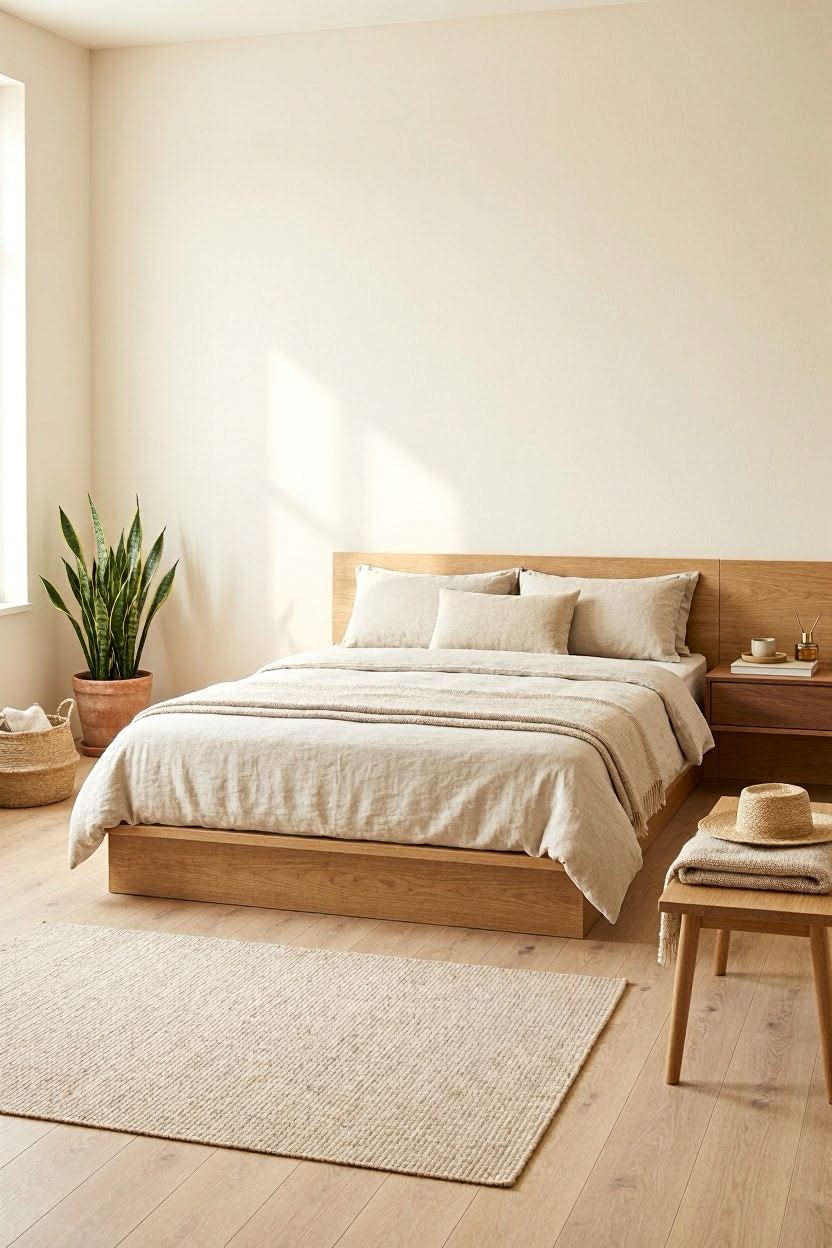
Why Feng Shui Your Bedroom?
Your bedroom is where you spend roughly a third of your life. When the layout, colors, and objects are out of balance, it can affect how well you sleep, how stressed you feel, and even your relationships. Feng shui is not about superstition — it’s about intentional design. Most of its principles come down to reducing clutter, improving airflow, and creating a calm, balanced space.
This guide covers 15 practical feng shui bedroom ideas, step by step. No expensive renovations needed. Most of these changes cost little to nothing and take an afternoon.
Section 1: The Core Principles — What Feng Shui Aims to Fix
Before diving into the ideas, here’s what feng shui is actually trying to solve in a bedroom:
| Problem | Feng Shui Principle | Fix |
|---|---|---|
| Poor sleep | Bed placement + no electronics | Command position, no TV in bedroom |
| Stress and anxiety | Clutter | Clear under the bed, reduce objects |
| Low energy | Stale air + dark corners | Plants, mirrors, open windows |
| Relationship issues | Symmetry | Matching nightstands, balanced lighting |
| Feeling stuck | Blocked pathways | Clear walking paths on both sides of bed |
Section 2: 15 Feng Shui Bedroom Ideas Step by Step
2.1 — Place Your Bed in the Command Position
What it means: The command position means your bed is against a solid wall, you can see the door from the bed, but you’re not directly in line with the door.
Why it matters: It gives you a sense of safety and control while you sleep. You can see who enters without being startled.
Steps:
- Move your bed so it sits against the wall farthest from the door.
- Make sure you have a clear sightline to the bedroom door when lying down.
- Do not place the bed directly in front of the door — your feet should not point straight at the door.
- Never put the bed under a window if you can avoid it — that weakens the sense of support behind you.
- If you live in a small room and options are limited, place a solid headboard as a substitute for a wall.
2.2 — Choose a Solid Headboard
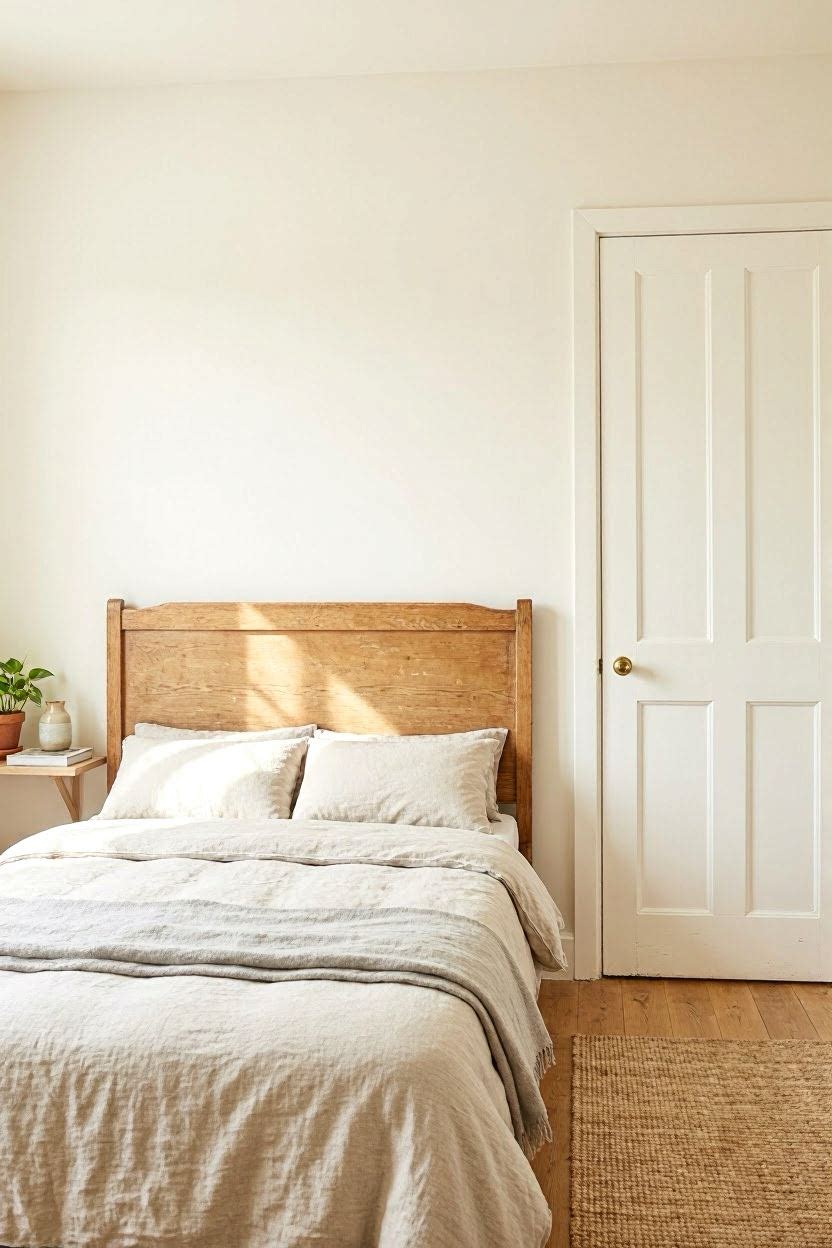
What it means: A solid, tall headboard made of wood or upholstered fabric represents strength and support in your life.
Steps:
- Replace slatted, metal bar, or floating headboards with a solid wood or upholstered option.
- The headboard should be attached to or pushed firmly against the wall — not floating.
- Avoid headboards with cutouts, sharp angles, or open shelving built in.
Budget options:
- IKEA HEMNES headboard (solid wood): ~$80
- Wayfair upholstered headboards: $100–$300
- West Elm upholstered beds: $500+
2.3 — Clear Everything Under the Bed
What it means: Storing items under the bed — especially boxes, clothes, or old belongings — creates stagnant energy directly below where you sleep.
Steps:
- Pull everything out from under your bed.
- Donate or discard items you no longer use.
- If storage is essential, only store soft, sleep-related items: spare linens, pillows, blankets.
- Never store shoes, electronics, paperwork, or emotionally charged items under the bed.
- Vacuum the floor under the bed every few months.
2.4 — Use Calming, Earthy Color Palettes
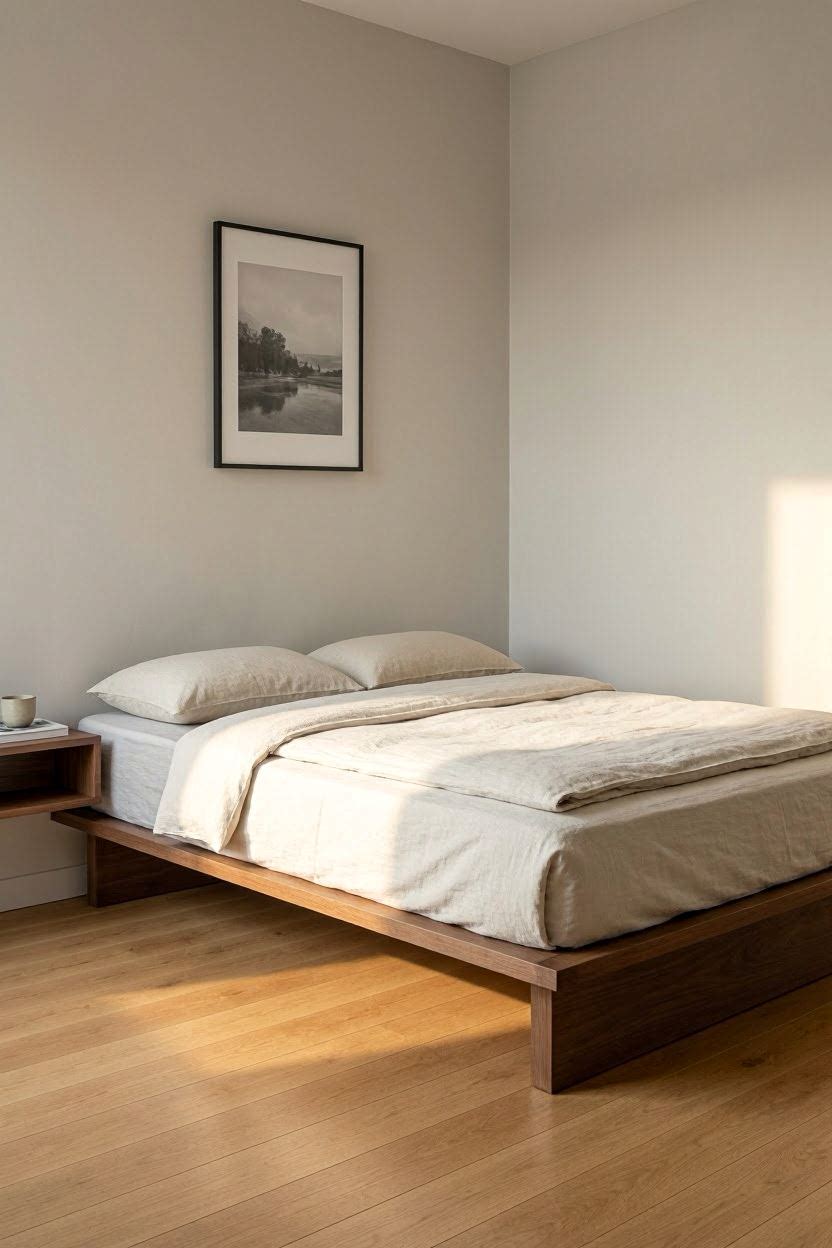
What it means: Feng shui favors skin tones and earth tones for bedroom walls — colors that feel warm, safe, and grounding.
| Color Type | Good Feng Shui Colors | Avoid |
|---|---|---|
| Walls | Warm white, cream, soft beige, terracotta, blush | Bright red, bright orange, stark white |
| Bedding | Soft grey, sage green, dusty pink, warm taupe | Black, electric blue, bold patterns |
| Accents | Earthy gold, muted brown, muted green | Neon colors, heavy dark tones |
Steps:
- Paint walls in a warm neutral: Benjamin Moore “White Dove” or “Pale Oak” are popular options (~$60/gallon).
- Switch bedding to a single solid color in a muted, warm tone.
- Add 1–2 earthy accent colors through pillows, a throw blanket, or a rug.
2.5 — Add Matching Nightstands on Both Sides
What it means: Symmetry is a key feng shui principle for relationships and balance. Having a nightstand only on one side creates imbalance in the space.
Steps:
- Place a nightstand on each side of the bed — even if you sleep alone.
- They do not need to be identical, but should be similar in height and visual weight.
- Keep each surface clear: one lamp, one small object maximum.
- Avoid overloading one side while the other is empty.
Budget options:
- IKEA MALM nightstand: ~$60 each
- Amazon nightstands (set of 2): $80–$150
- Target threshold nightstands: $70–$120 each
2.6 — Remove or Cover Mirrors Facing the Bed
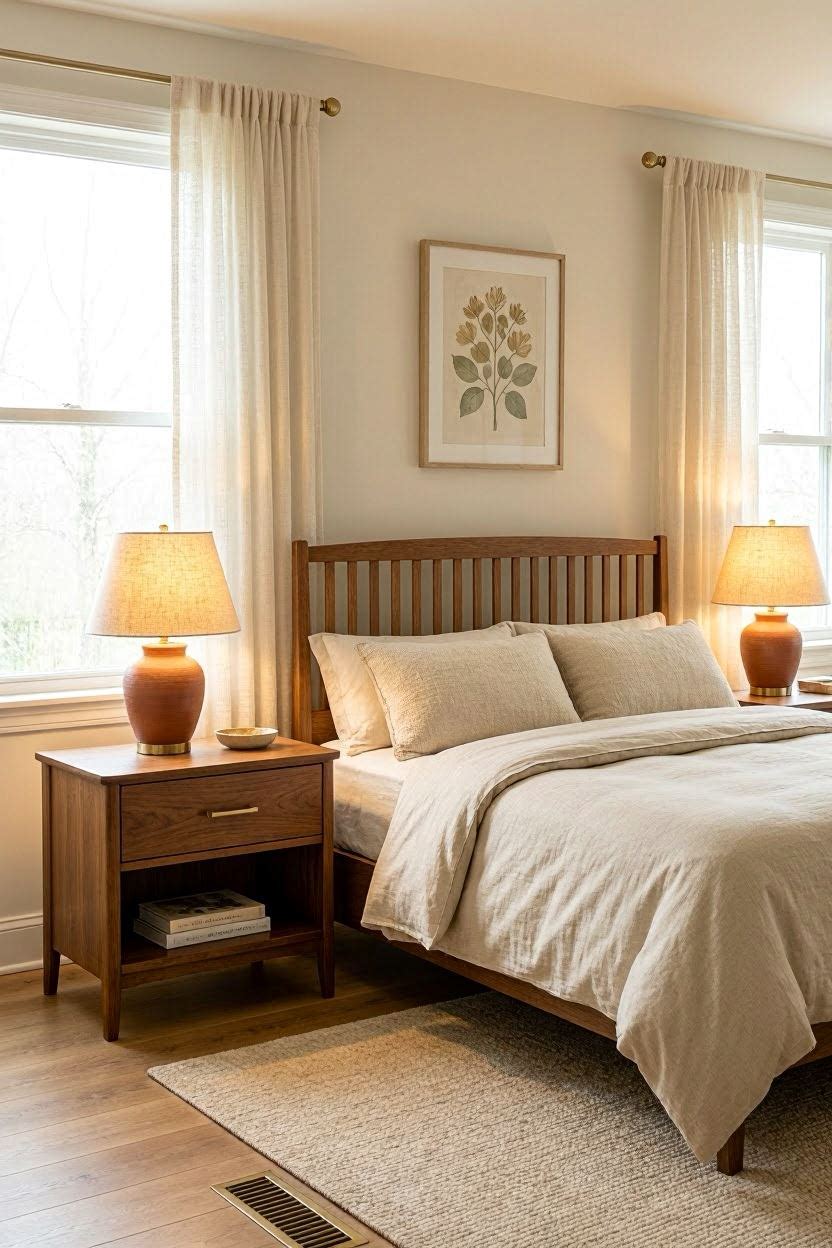
What it means: Mirrors facing the bed are one of the most common feng shui mistakes. They are said to bounce energy around the room while you sleep, disrupting rest.
Steps:
- Walk around your bedroom and note every mirror.
- If any mirror reflects the bed directly, move or reposition it.
- If moving it isn’t possible, cover the mirror at night with a light curtain, scarf, or panel.
- Mirrors on closet doors facing the bed: use a removable fabric panel or frosted film ($10–$20 on Amazon).
- Mirrors beside or behind the bed — at an angle — are generally fine.
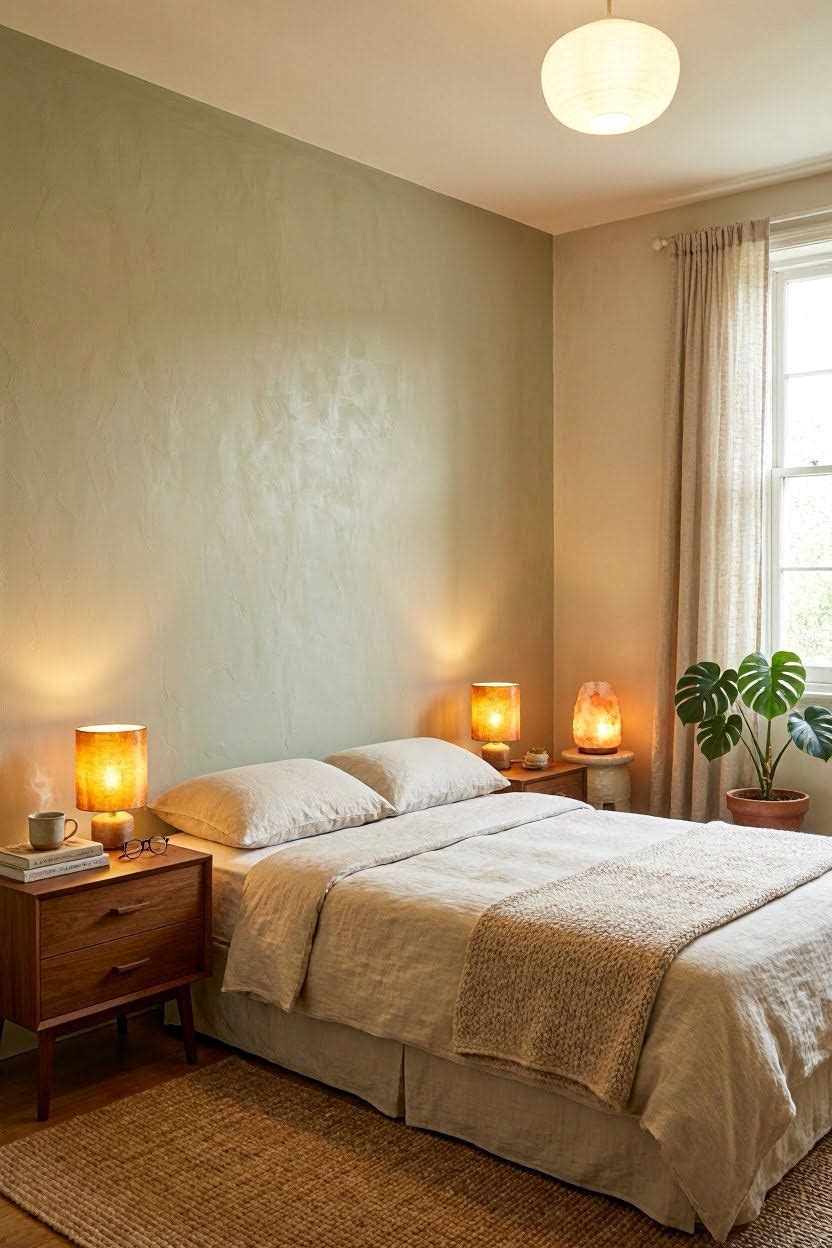
2.7 — Bring in Soft, Layered Lighting
What it means: Harsh overhead lighting disrupts rest and creates an energetically sharp environment. Soft, layered light promotes calm.
Steps:
- Remove or dim bright overhead fixtures. Use a dimmer switch (~$20 at Home Depot).
- Add a warm-toned bedside lamp on each nightstand (2700K bulbs, not daylight).
- Use salt lamps or warm LED candles for ambient glow in corners.
- Consider smart bulbs like Philips Hue (starts ~$15/bulb) to shift from bright to warm tones at night.
- Avoid blue-light sources (TV, laptop) in the bedroom entirely, or use blue light blocking modes after 8 PM.
2.8 — Keep Bedroom Doors and Closets Closed at Night
What it means: Open doors — especially closet doors and en-suite bathroom doors — let energy (chi) flow out of the room and disrupt your sleep space.
Steps:
- Make it a habit to close all closet doors before bed.
- If you have an attached bathroom, keep that door closed at night.
- The bedroom door itself can stay open or closed — just be consistent.
- Tidy the inside of closets periodically — chaotic closets behind closed doors still affect energy.
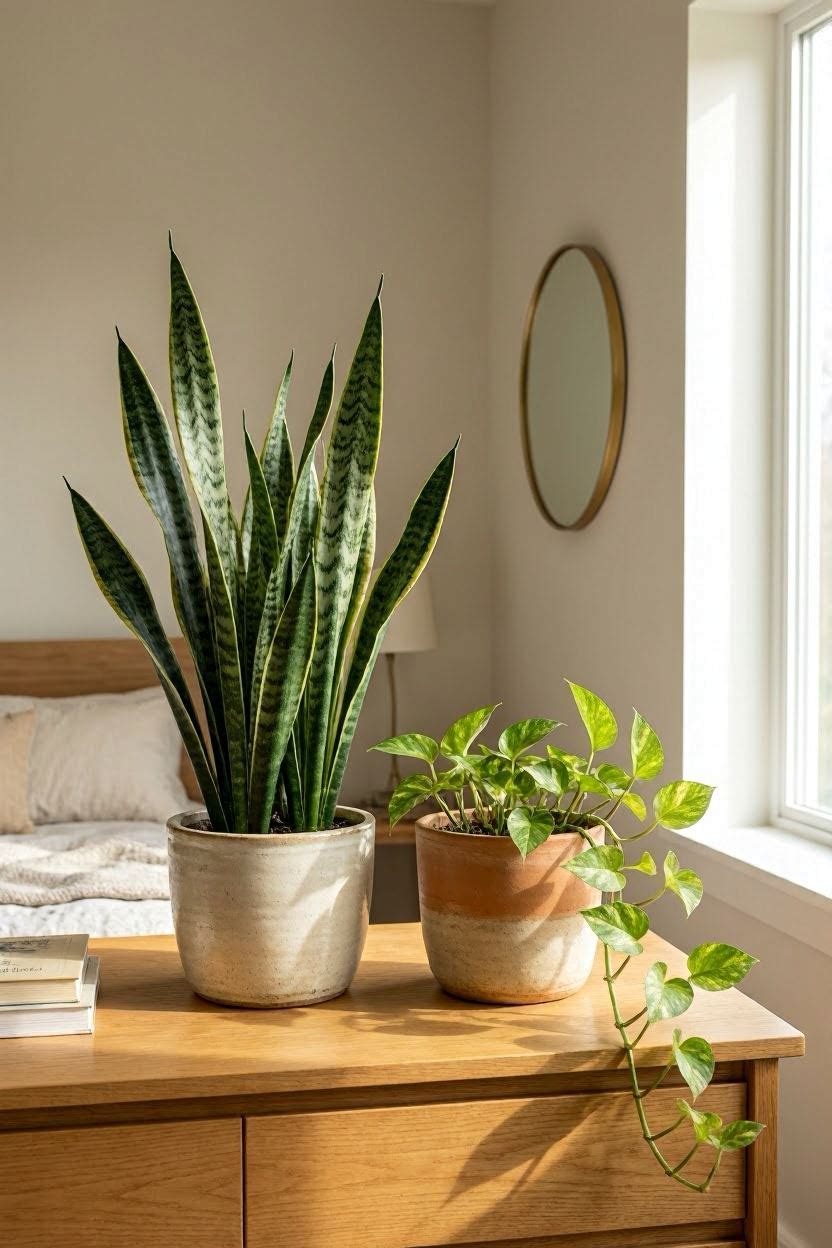
2.9 — Add One or Two Healthy Plants
What it means: Living plants bring wood energy into the room — growth, vitality, and fresh air. The key is choosing the right plants and not overdoing it.
Best bedroom plants for feng shui:
| Plant | Light Needed | Cost | Where to Buy |
|---|---|---|---|
| Snake plant | Low | $15–$30 | Home Depot, Lowe’s |
| Peace lily | Low | $10–$25 | Trader Joe’s, Walmart |
| Pothos | Low to medium | $5–$15 | Most garden centers |
| Bamboo (lucky bamboo) | Low | $8–$20 | Amazon, Asian grocery stores |
| ZZ plant | Very low | $15–$35 | Home Depot, online |
Steps:
- Choose one or two low-maintenance plants from the list above.
- Place them in a corner or on a dresser — not directly beside the bed.
- Keep plants healthy — dead or wilting plants create negative energy.
- Avoid large, spiky plants (cactus, spiky succulents) in the bedroom.
2.10 — Remove Electronics and Work Items
What it means: TVs, computers, work bags, and exercise equipment bring active, stimulating energy into a space meant for rest.
Steps:
- Remove the TV from the bedroom if possible. If not, place it inside a cabinet or cover with a cloth at night.
- Move work laptops, bags, and files out of the bedroom entirely.
- Keep your phone charger across the room — not on the nightstand — so your phone is not the last and first thing you see.
- Remove exercise equipment; move it to a living area or spare room.
- If your bedroom doubles as a home office, use a room divider or curtain (~$40–$80 at Target) to visually separate the work area from the sleep area.
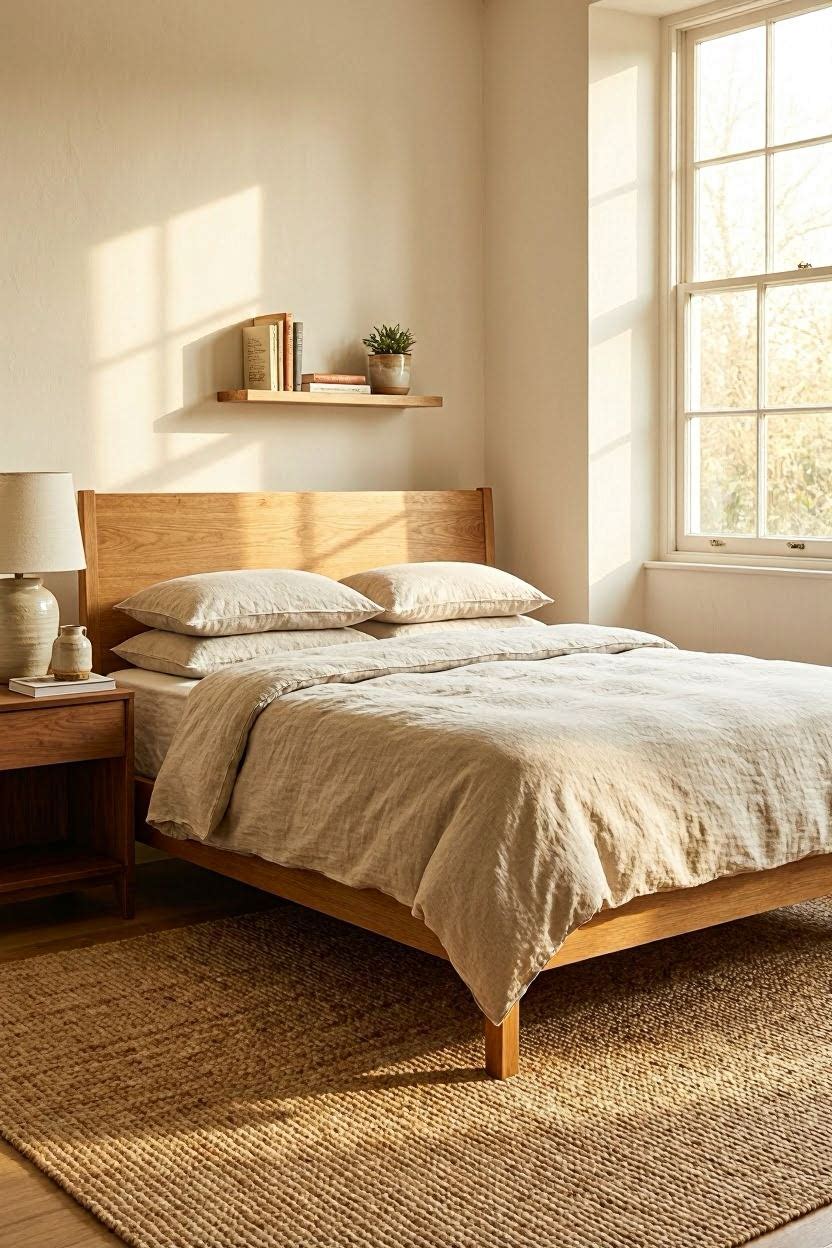
2.11 — Use Natural Materials
What it means: Feng shui favors natural materials — wood, cotton, linen, stone, and ceramic — over synthetic, plastic, or metal-heavy decor.
Steps:
- Switch to natural fiber bedding: 100% cotton or linen sheets (Brooklinen, Target’s Threshold linen collection: $40–$120).
- Choose a wood bed frame over metal if replacing furniture.
- Add a natural fiber rug: jute, wool, or cotton ($50–$200 at Rugs USA or Wayfair).
- Use ceramic or stone accessories on nightstands instead of plastic.
- Bring in wood accents: a wooden tray, wooden lamp base, or wooden photo frames.
2.12 — Declutter and Organize Visible Surfaces
What it means: Clutter is one of the biggest blockers of good feng shui. It holds stagnant energy and makes the mind feel overwhelmed.
Steps:
- Clear all flat surfaces: dresser top, windowsill, floor corners.
- Keep only 3–5 intentional objects on display per surface.
- Store everything else in drawers, baskets, or closed storage.
- Do a full bedroom declutter at least once a season.
- Remove anything broken, gifted items you dislike, or items connected to negative memories.
2.13 — Balance the Five Feng Shui Elements
What it means: Feng shui is built on five elements — wood, fire, earth, metal, and water. A balanced room includes a touch of each.
| Element | Represents | How to Add It |
|---|---|---|
| Wood | Growth, vitality | Plants, wooden furniture, green colors |
| Fire | Passion, energy | Candles, warm lighting, red or orange accents |
| Earth | Stability, grounding | Earthy colors, ceramic, stone, square shapes |
| Metal | Clarity, precision | Metal frames, white/grey tones, round shapes |
| Water | Flow, wisdom | Dark navy accents, mirrors (carefully placed), flowing artwork |
Steps:
- Walk through your bedroom and check which elements are missing.
- Add small touches of each — you don’t need large items.
- Earth and wood are most important for bedrooms. Add these first.
- Use fire sparingly — candles count, and so does warm lighting.
2.14 — Hang Intentional Wall Art
What it means: What you see first thing in the morning and last thing at night influences your mood and mindset. Feng shui recommends uplifting, peaceful, and meaningful images.
Steps:
- Remove art that depicts loneliness, conflict, or chaotic scenes.
- Hang artwork that feels calming: nature scenes, abstract soft shapes, or personal meaningful imagery.
- Art above the bed should be firmly secured — nothing that feels like it could fall.
- For couples, display art in pairs or imagery that feels connected and balanced.
- Avoid artwork showing single figures if you want to attract or maintain a relationship.
- Keep the overall number of wall pieces minimal — 1 to 3 pieces maximum in a bedroom.
2.15 — Clear Energy with Scent and Sound
What it means: Feng shui isn’t just visual. Sound and scent are tools for clearing stagnant energy and setting the tone for rest.
Steps:
- Diffuse calming essential oils: lavender, sandalwood, or bergamot (diffuser: $20–$40 on Amazon; oils: $8–$15 each).
- Use a Himalayan salt lamp as both light and air purifier ($20–$40 at TJ Maxx or Amazon).
- Play soft white noise or ambient music during sleep — avoid silence if the space feels heavy.
- Open windows for at least 10 minutes each morning to let fresh air clear the room.
- Smudging with sage or palo santo is optional but popular for clearing negative energy ($5–$15 at natural grocery stores or Amazon).
Section 3: Quick Reference — What to Do vs. What to Avoid
| Do | Avoid |
|---|---|
| Bed in command position | Bed under window |
| Solid headboard | Slatted or metal headboard |
| Matching nightstands | Single nightstand |
| Warm earthy colors | Bright red, neon, stark white |
| Natural materials | Plastic, synthetic decor |
| Soft layered lighting | Harsh overhead only |
| Closed doors at night | Open closet / bathroom doors |
| 1–2 small plants | Large spiky plants or too many plants |
| Clear under the bed | Clutter under the bed |
| Uplifting, calm art | Dark, chaotic, or lonely imagery |
Section 4: Room Layout Tips by Bedroom Size
| Room Size | Priority Changes | Skip For Now |
|---|---|---|
| Small (under 120 sq ft) | Command position, clear clutter, soft lighting | Multiple plants, large rugs |
| Medium (120–200 sq ft) | All bed placement rules + symmetrical nightstands | Major furniture changes |
| Large (200+ sq ft) | Full five elements + art + scent + full declutter | Nothing — do it all |
FAQ
Does feng shui really work? Most feng shui principles come down to good interior design — clear space, balanced layouts, calm colors, and natural materials. Whether or not you believe in chi, a bedroom designed by these principles tends to feel calmer and sleep better.
What is the most important feng shui bedroom rule? Bed placement in the command position is considered the single most important rule. It’s also one of the easiest to implement.
Can I have a mirror in my bedroom at all? Yes — just avoid mirrors that directly reflect the bed. Side walls, behind closet doors (facing the closet), or entryway areas are all fine.
What colors are best for feng shui bedrooms? Warm neutrals like cream, warm white, soft beige, blush, and terracotta. Muted greens and soft earthy tones also work well.
Can I feng shui a small bedroom? Yes. Feng shui actually works especially well in small spaces because small changes make a big difference. Start with bed placement and clearing clutter.
Final Thoughts
You don’t need to overhaul your entire bedroom or spend thousands of dollars to apply feng shui. Start with the two most impactful changes: put your bed in the command position and clear everything out from under it. Then work through the rest of the list one step at a time. Even small adjustments — a second nightstand, softer lighting, closing the closet door at night — can shift how a room feels. The goal is a bedroom that makes you feel safe, calm, and rested the moment you walk in.